Battle off Samar: The U.S. Escort Ships That Faced Japan’s Battleships
Period
World War II, Pacific theater, October 1944
Place
Samar Island, Philippines; Leyte Gulf
On October 25, 1944, lightly armed American escort carriers and destroyers met a far stronger Japanese battle fleet. Navy photographs show the smoke, gunfire and rescue.
At dawn on October 25, 1944, American sailors off the Philippine island of Samar saw an enemy force they had not expected to find. The U.S. escort carriers of Task Unit 77.4.3—known as Taffy 3—were built to support troops ashore, not to fight Japanese battleships. Yet the powerful fleet led by Vice Admiral Takeo Kurita was closing fast.
The Americans had six small escort carriers and a screen of destroyers and destroyer escorts. Their aircraft carried weapons intended largely for ground support and anti-submarine missions. Faced with heavy shellfire, the carriers turned away while their escorts laid smoke and charged toward larger ships. Destroyers USS Johnston and USS Hoel, and destroyer escort USS Samuel B. Roberts, fought attacks that helped disrupt the Japanese advance. All three were lost. Escort carrier USS Gambier Bay was also sunk.
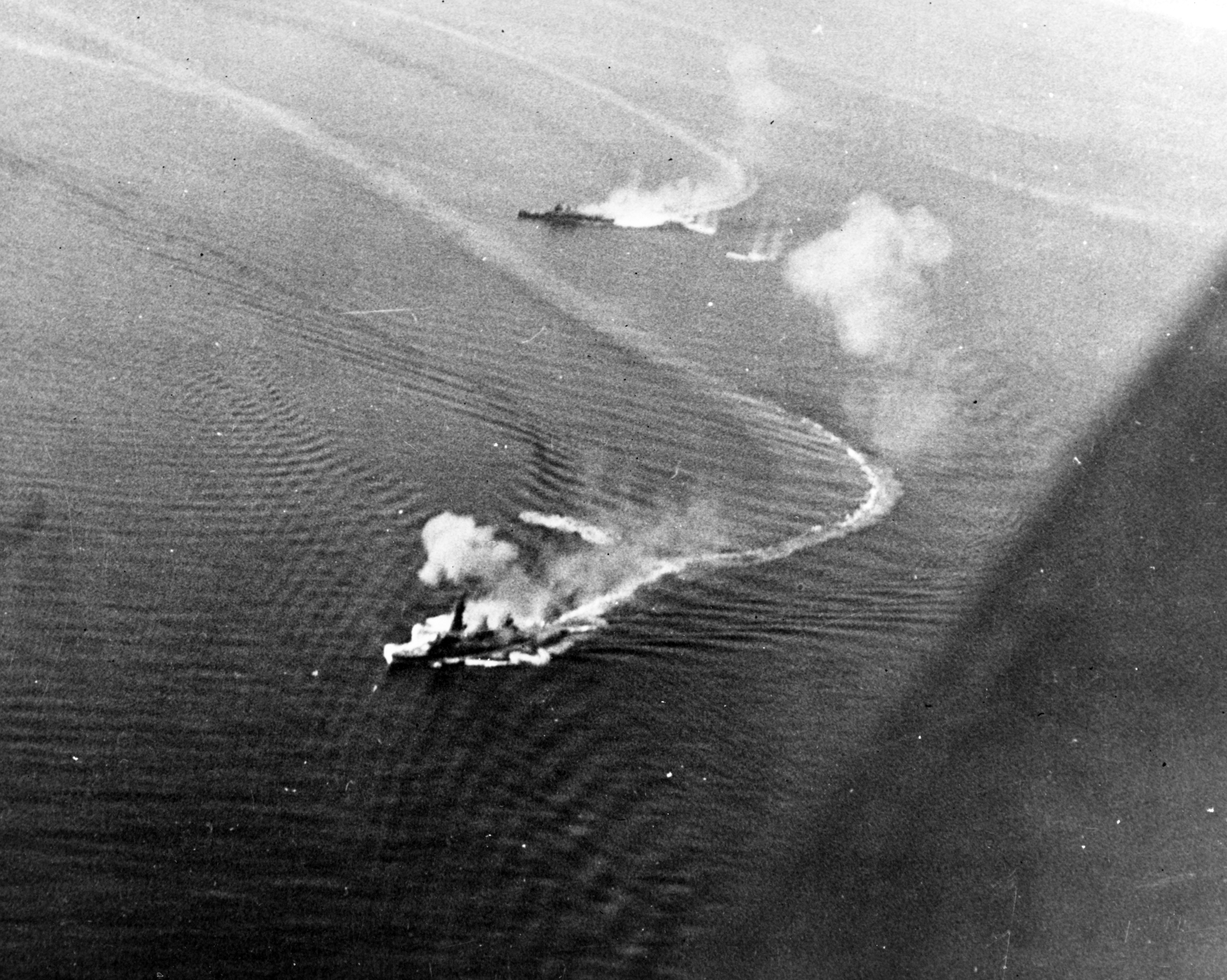
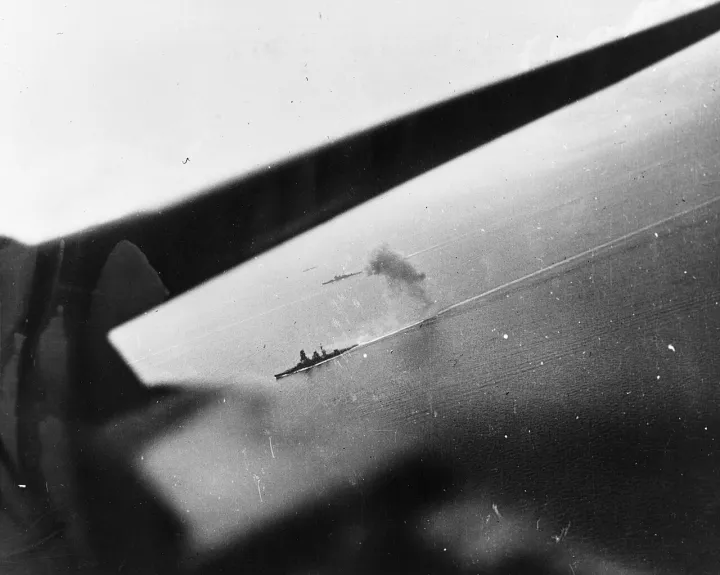
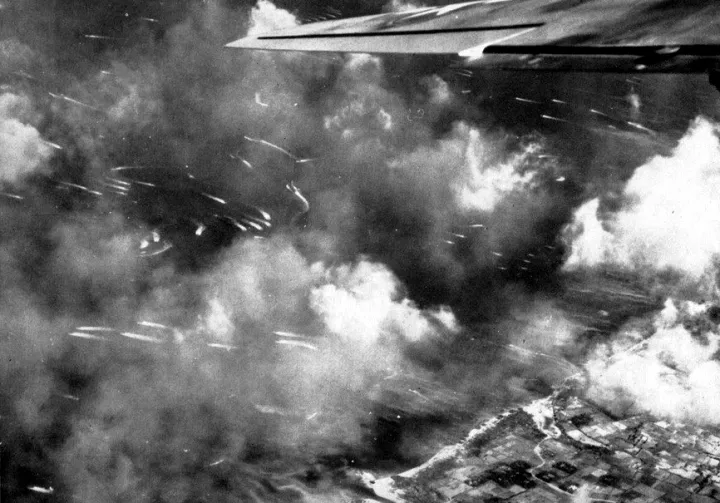
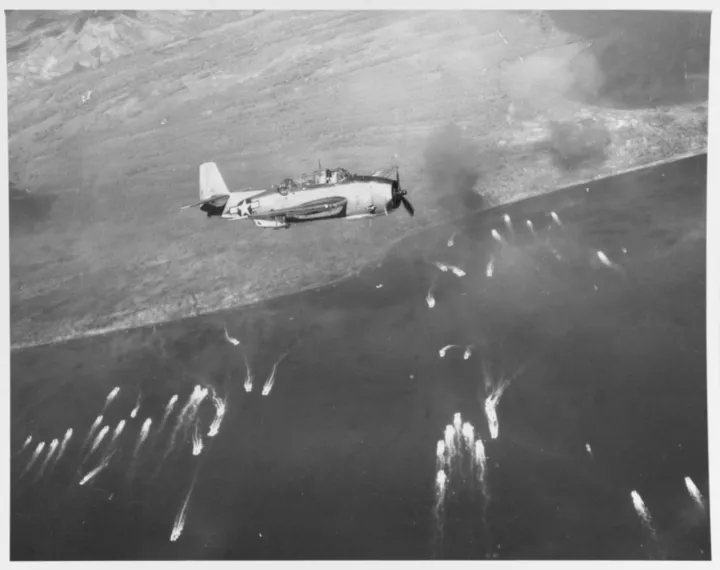
The surviving photographs are unusually direct. They show carriers under shellfire, escorts making smoke, and survivors finally hauled from the water. The rescue picture was taken on October 26, a day after the fighting. Not every image was made at the same moment; together, they preserve the sequence of danger and loss.
Kurita eventually turned north and withdrew, sparing the vulnerable American landing forces off Leyte from further attack by his ships. The battle became one of the most remarkable examples of smaller vessels fighting an overwhelmingly stronger opponent in the Pacific War. These images also record its price.
Topic: Battle off Samar; Taffy 3; USS Gambier Bay; Leyte Gulf; World War II
01 / 04
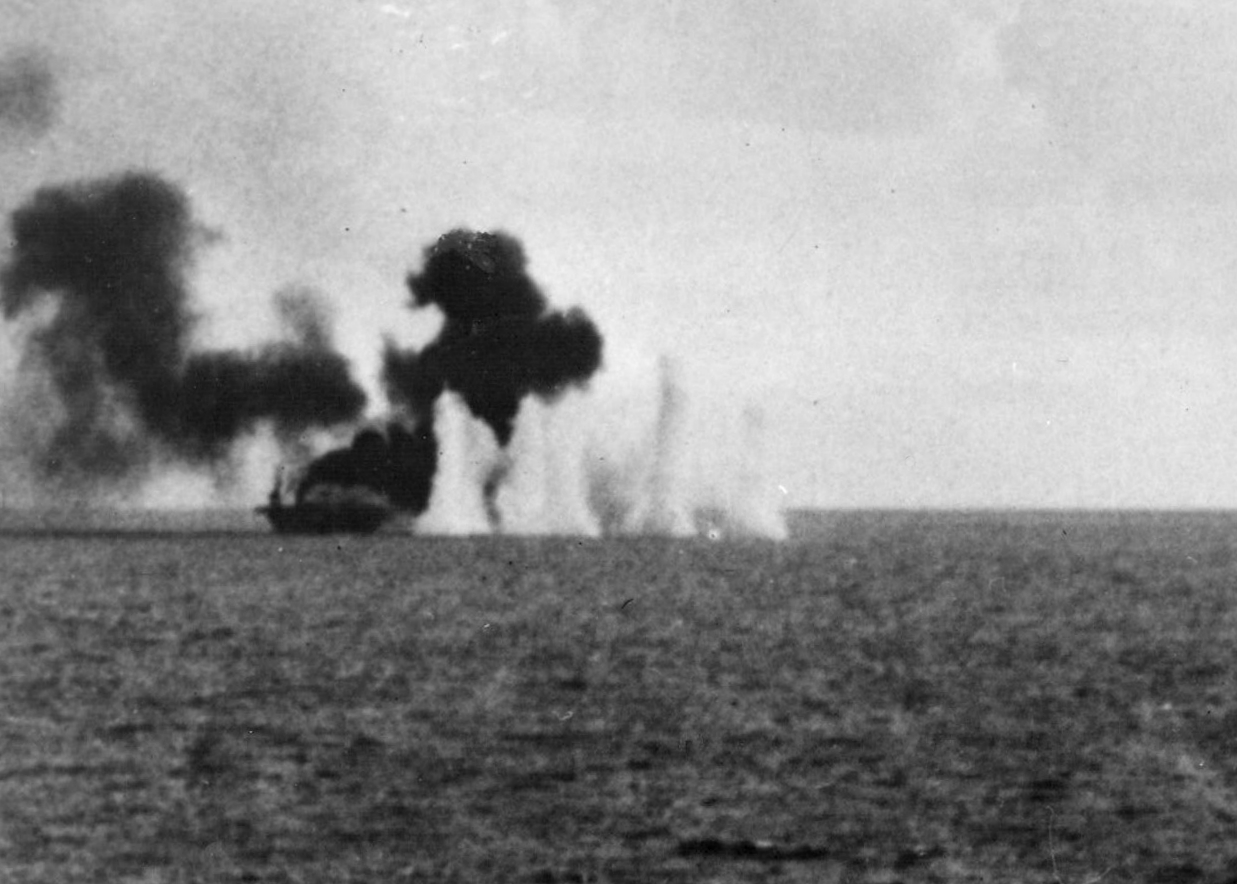
USS Gambier Bay under Japanese gunfire
The U.S. escort carrier Gambier Bay is bracketed by Japanese shells during the Battle off Samar. Her small size and limited protection left her vulnerable to the heavy surface ships of Kurita’s force. She became the only American aircraft carrier sunk by enemy naval gunfire during World War II. The photograph is dated October 25, 1944, in the U.S. naval archive.
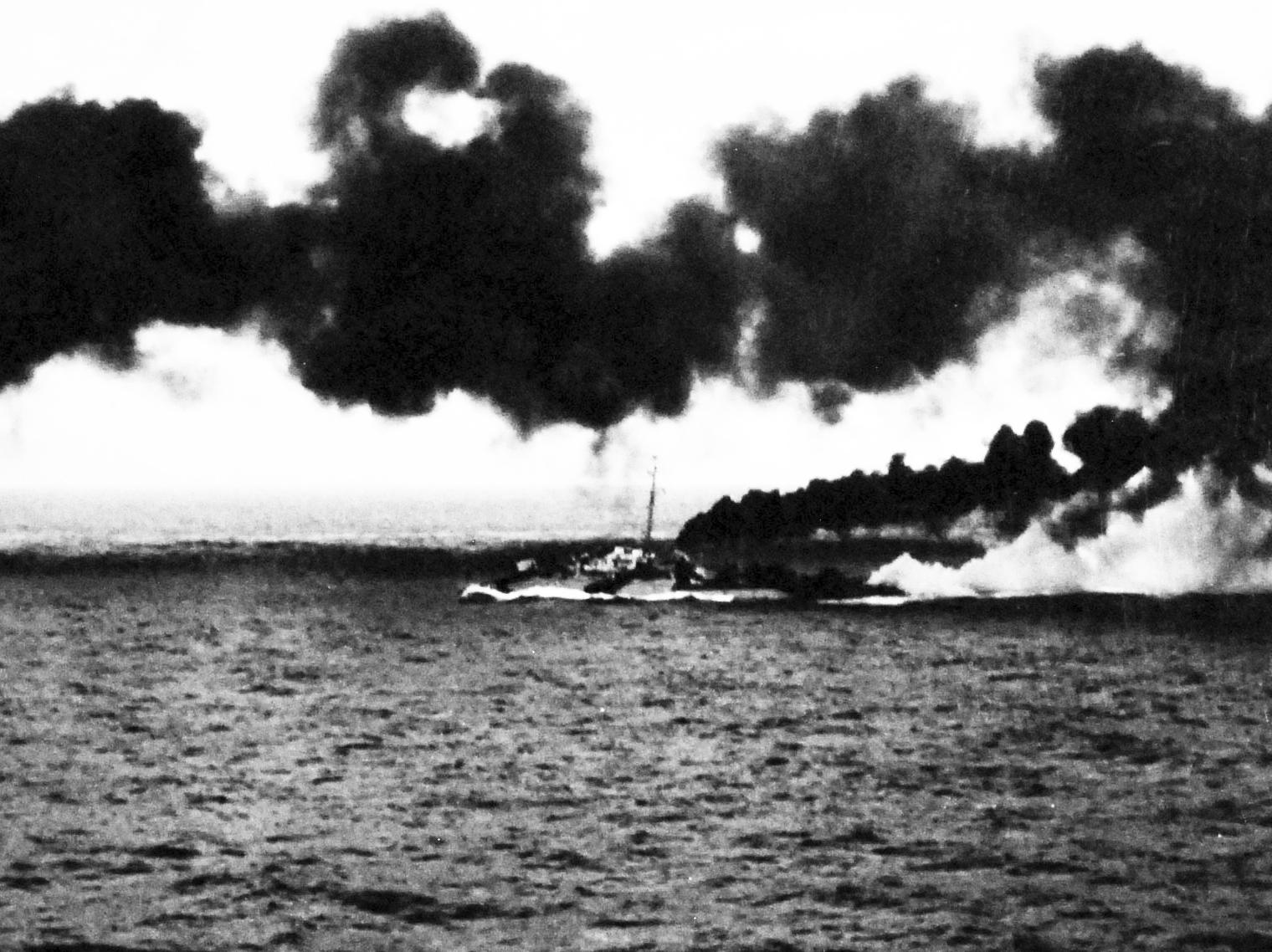
Destroyer escort USS Dennis spreads smoke across the water during the battle. Smoke bought the escort carriers time and made it harder for Japanese gunners to follow their targets. The picture documents an essential part of Taffy 3’s defense: smaller ships using maneuver and concealment to protect carriers unable to stand and fight a battle line.
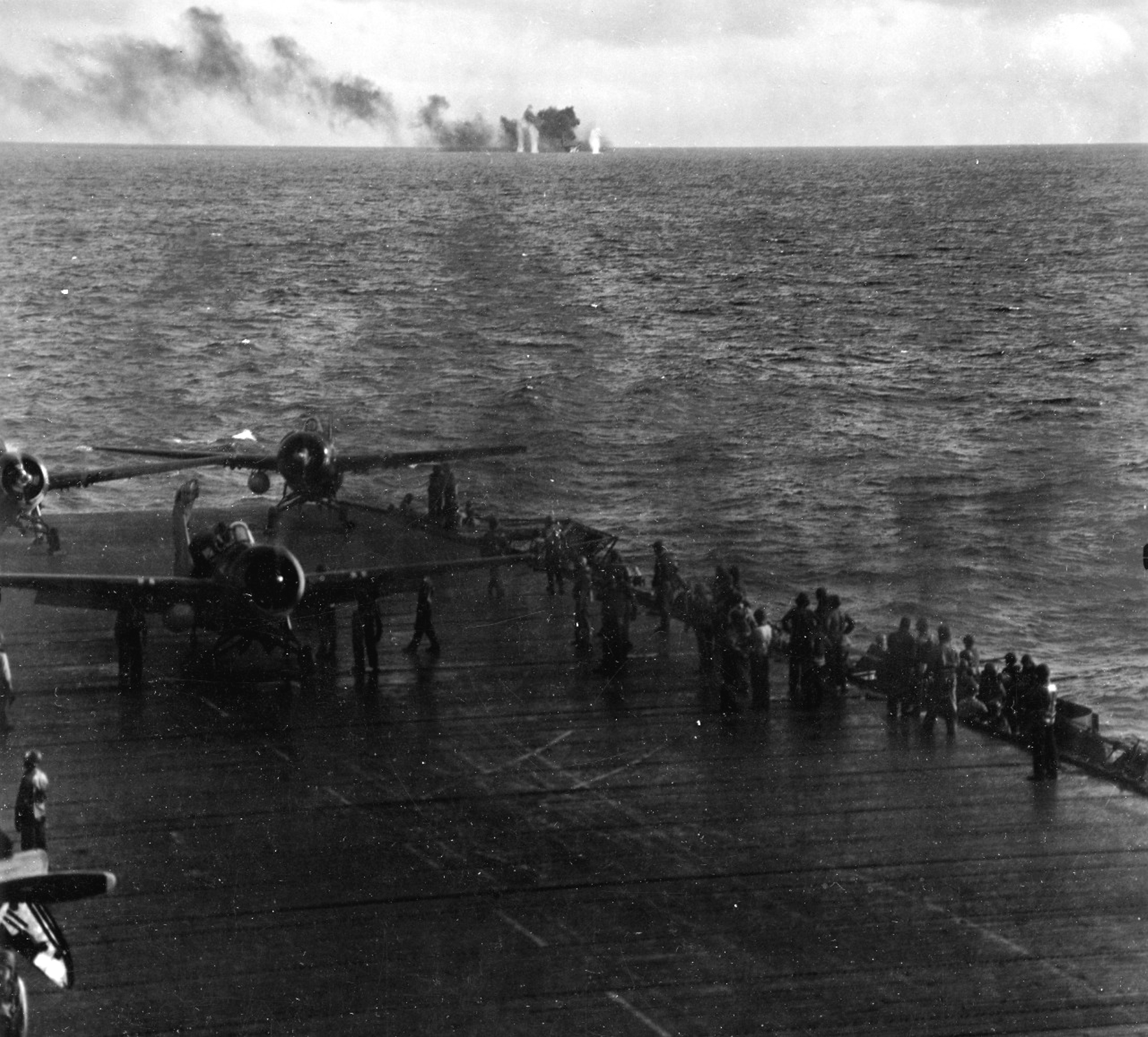
Water columns rise close to the escort carrier Fanshaw Bay as Japanese shells find her range. The plumes are evidence of how near the heavier enemy guns came to the lightly protected American ships. Taken during the morning battle, this image helps explain why the escorts’ attacks and smoke screens mattered so much.
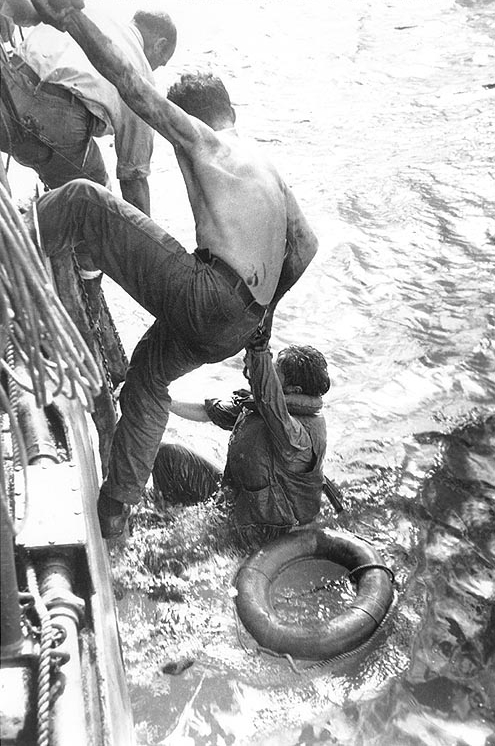
After the battle, hundreds of Americans remained in the sea, some for many hours. This U.S. military photograph shows the rescue of survivors on October 26, the day after the encounter. Men from ships including Gambier Bay, Hoel, Johnston and Samuel B. Roberts had endured combat and the danger of being left in open water. The rescue deserves its own place in the record of Samar.