Black Thursday, October 24, 1929: The Day Wall Street Panicked
Published
Period
October 1929
Place
New York City, United States
On October 24, 1929, nearly 12.9 million shares changed hands as panic swept Wall Street. Six archival photographs and contemporary records follow Black Thursday, the renewed crash and the human cost of the Depression.
On Thursday, October 24, 1929, Wall Street opened on an avalanche of sell orders. Prices plunged during the morning, brokers struggled to keep up with trading, and crowds gathered around the New York Stock Exchange. Nearly 12.9 million shares changed hands that day—an extraordinary volume for the time.
After years of rising stock prices, many Americans had come to regard the market as a reliable source of wealth. Margin loans allowed investors to buy shares with borrowed money. When prices fell, demands for additional collateral forced some of those investors to sell, adding pressure to an already falling market. A group of leading New York bankers arranged large purchases to calm the panic. Prices recovered from their worst intraday losses, offering a temporary reprieve.
It did not last. On October 28 and 29, the market fell again with exceptional force. The crash damaged confidence and helped set the stage for the Great Depression, though bank failures, monetary policy, and collapsing demand later deepened the economic catastrophe. These archival photographs show the people and machinery caught up in the turmoil. Dates in the captions refer to when each photograph was taken, not merely to the day commemorated by this album.
Historical reference: Federal Reserve History, “Stock Market Crash of 1929” (federalreservehistory.org/essays/stock-market-crash-of-1929).
Topic: Wall Street Crash of 1929
01 / 06
Outside the New York Stock Exchange on Black Thursday
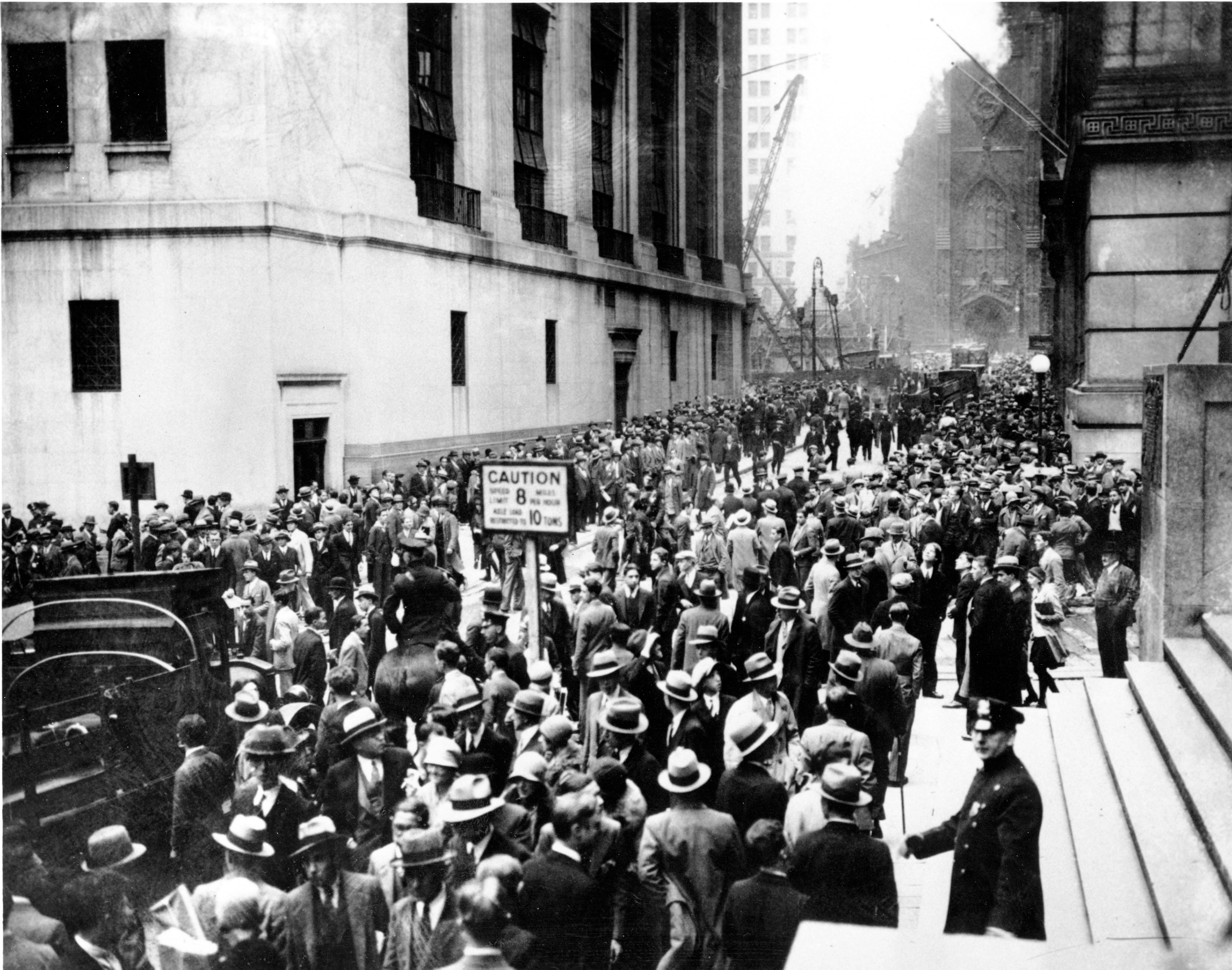
On October 24, 1929, crowds gathered in Wall Street as panic selling overtook the New York Stock Exchange. The Associated Press caption dates this scene to Black Thursday itself. Inside, trading reached a volume rarely imagined a few years earlier; outside, people waited for news about savings and investments whose value was changing by the hour.
Photo details
Date
October 24, 1929
Location
Wall Street, Manhattan, New York City, United States
Associated Press / Wikimedia Commons (public domain in the United States)
02 / 06
The crowd on the steps opposite the exchange
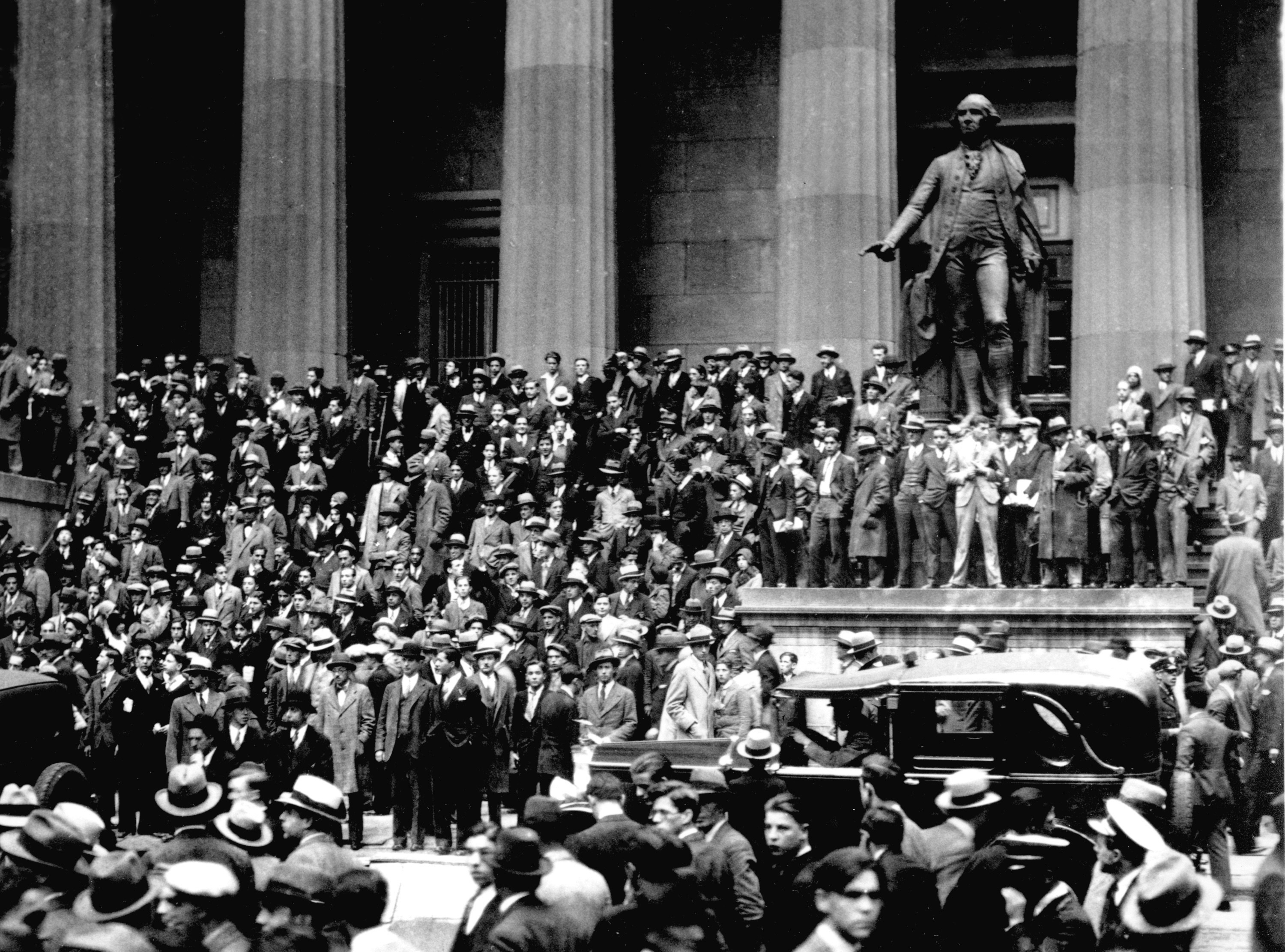
People assembled on the steps of the United States Sub-Treasury building across from the exchange on October 24, 1929. The building overlooked the financial district at the center of the sell-off. This photograph records the crowds watching the crisis unfold rather than the frantic trading floor itself. Its date is independently recorded in the archival image caption.
Photo details
Date
October 24, 1929
Location
Federal Hall / former U.S. Sub-Treasury steps, Wall Street, New York City
Associated Press / Wikimedia Commons (U.S. public domain)
03 / 06
Brokers confront the crash the next day
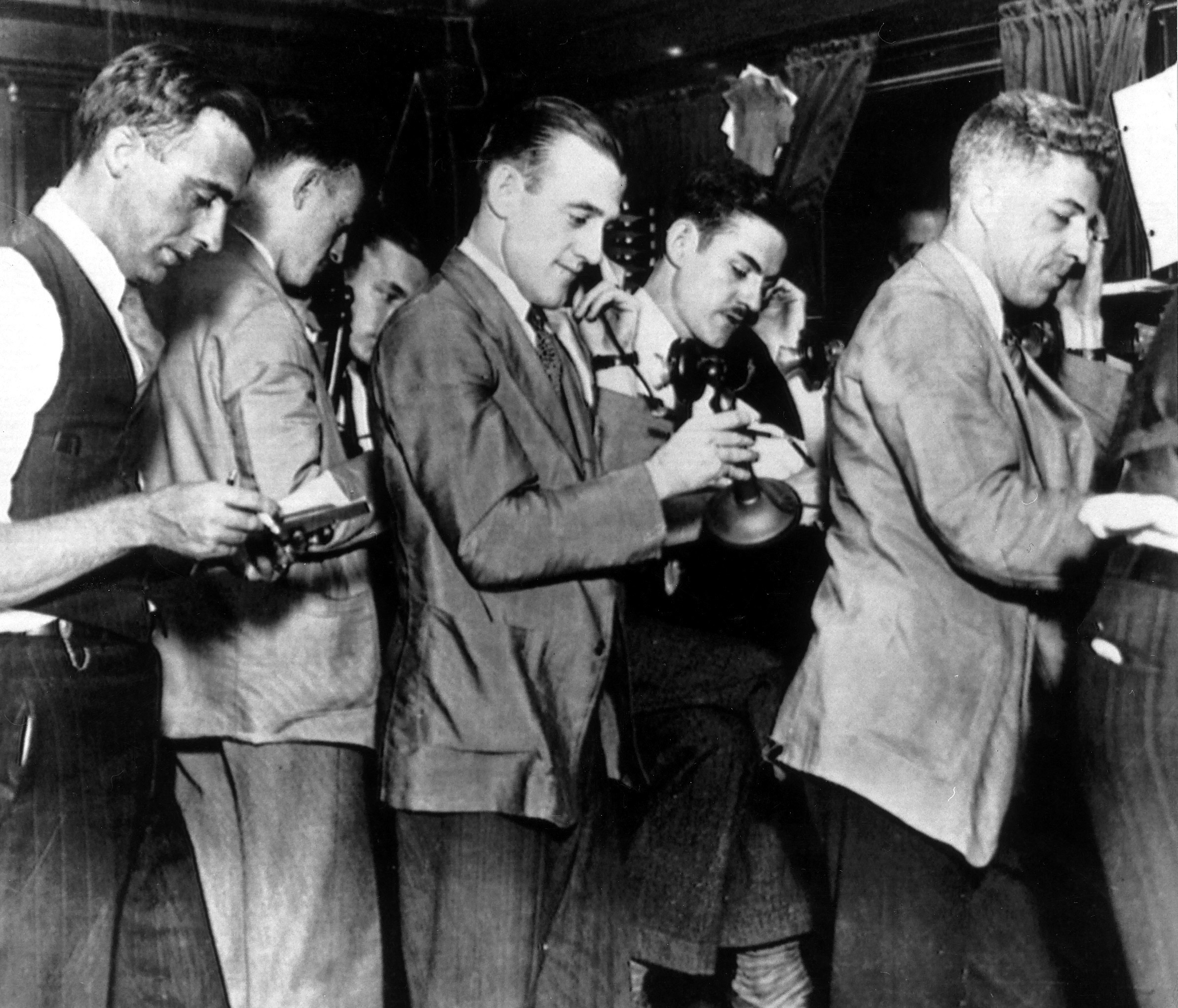
An Associated Press photograph dated October 25, 1929 shows stockbrokers at the New York Stock Exchange in the immediate aftermath of Black Thursday. The market had briefly stabilized after major bankers intervened, but fear remained. The photograph was taken on Friday, not on the Thursday that gives this album its anniversary date.
Associated Press / Wikimedia Commons (U.S. public domain)
04 / 06
Watching prices before the bubble burst
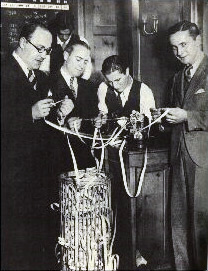
Before digital screens, ticker machines printed share prices onto thin paper strips that crowds read as the market moved. This historical image, believed to have been taken around 1929, captures that everyday practice. Its exact date is unknown; it should not be mistaken for a photograph taken on October 24. Heavy trading in October 1929 made the flow of timely market information especially important.
Photo details
Date
Probably 1929; precise date unverified
Location
United States; precise location unverified
Photographer / artist
Unknown; archival reproduction by U.S. Social Security Administration
Archive / collection
U.S. Social Security Administration history archive / Wikimedia Commons
U.S. Social Security Administration historical archive / Wikimedia Commons (public domain)
05 / 06
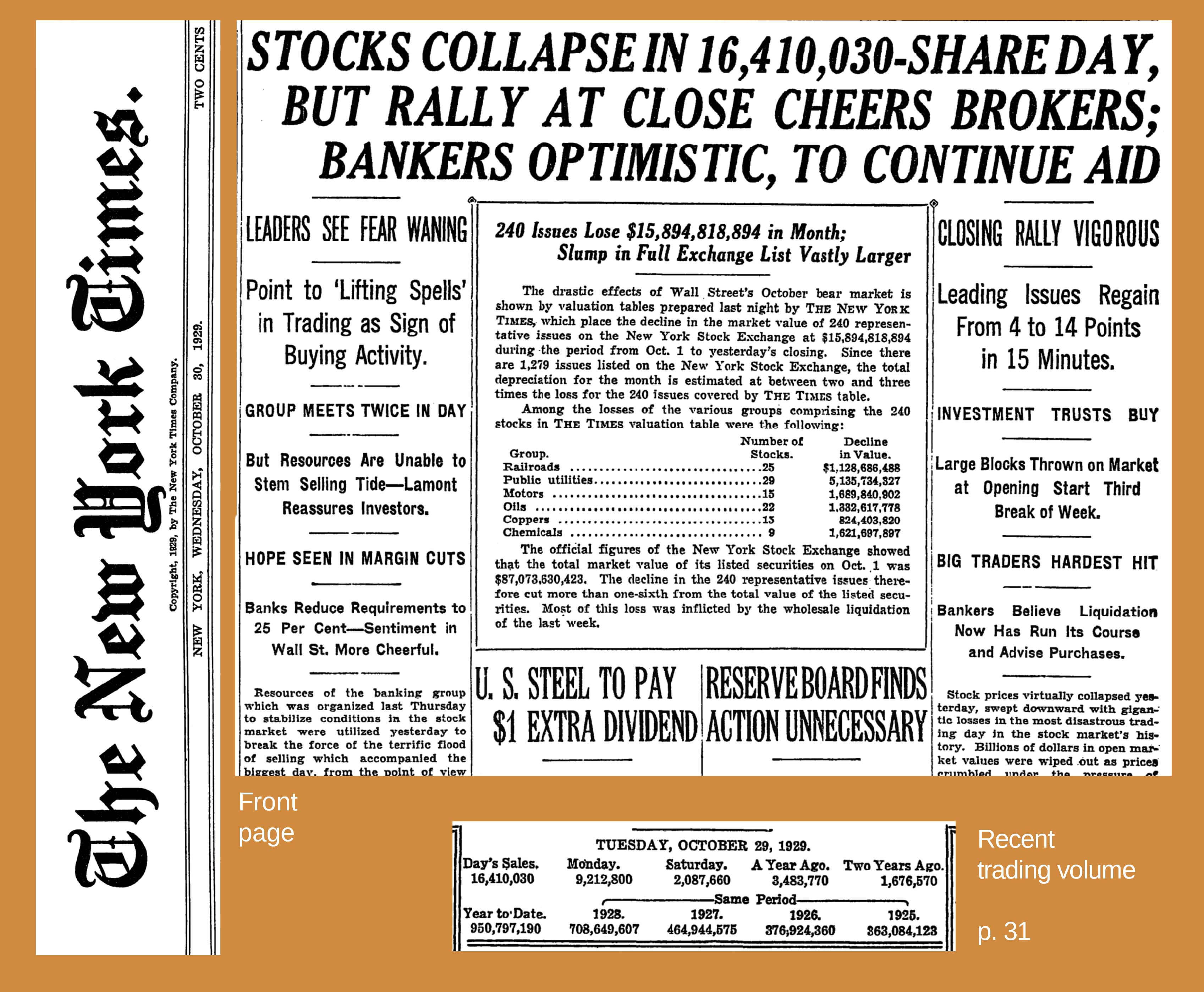
The New York Times records Black Tuesday
This October 30, 1929, New York Times page recorded the wreckage of the previous day’s trading. Black Thursday had produced an extraordinary panic on October 24, but bankers’ emergency buying briefly halted the slide. The heavier losses came on October 28 and 29. Newspaper headlines preserved the shift from nervous hope to a sense that something larger had broken. This is a contemporary newspaper reproduction, not a photograph taken on the exchange floor.
Photo details
Date
October 30, 1929
Location
New York City, United States
Photographer / artist
The New York Times editorial and production staff
Archive / collection
The New York Times TimesMachine / Wikimedia Commons
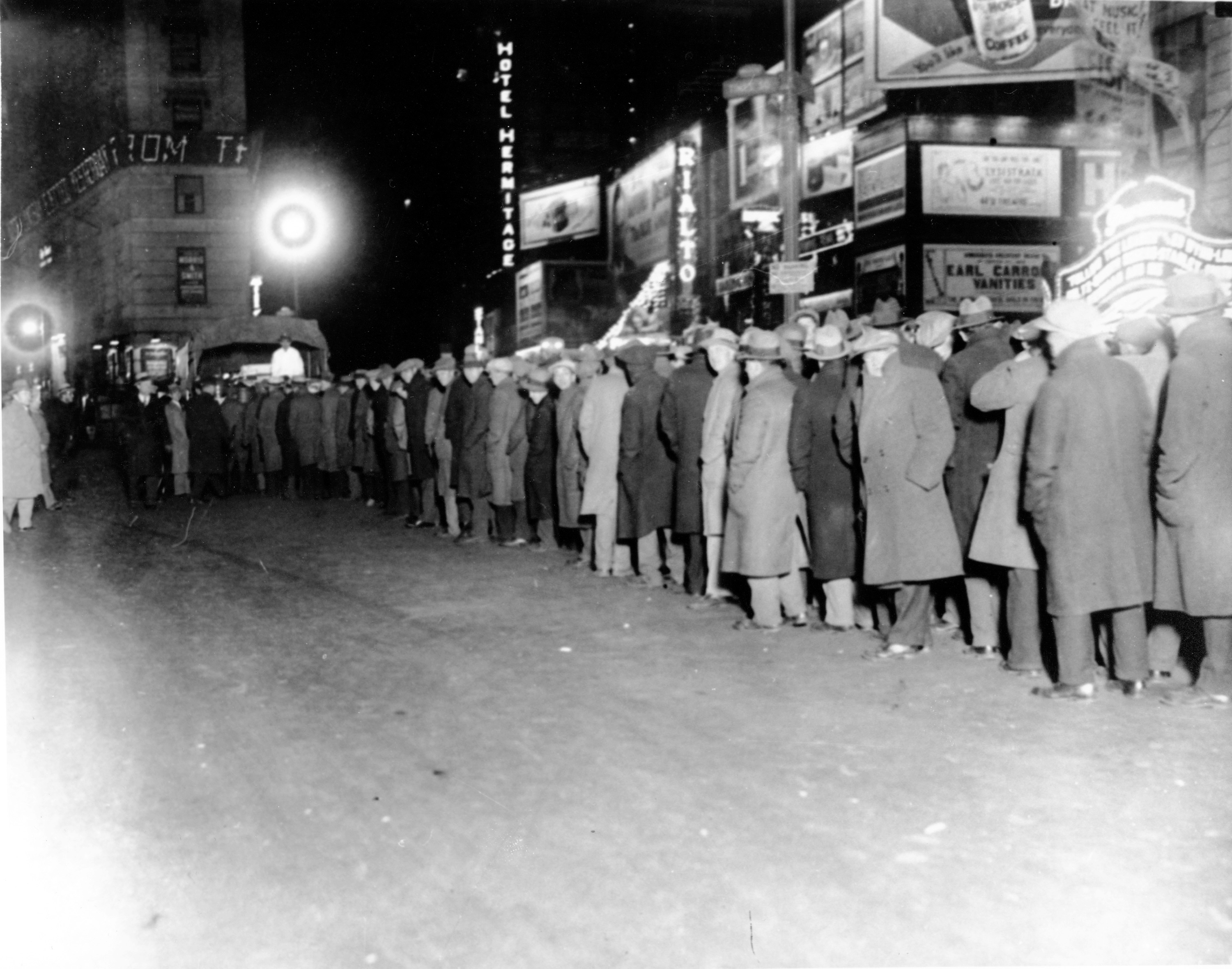
The crisis reaches the streets: a New York food line
More than a year after Black Thursday, people queued for sandwiches and coffee near Times Square and 43rd Street. The Associated Press dates this scene to December 8, 1930. This image does not show the stock-market panic itself; it shows the deepening unemployment and hardship that followed during the Great Depression. The market crash alone did not cause the entire economic collapse, but it became one of the most visible moments in a much larger crisis.
Photo details
Date
December 8, 1930
Location
Times Square and West 43rd Street, Manhattan, New York City