Back to Photo History

Photo History Historium

The USA PATRIOT Act: What America Signed on October 26, 2001

Period
Post-9/11 United States, 2001–2006
Place
White House East Room, Washington, D.C., United States

Six federal archive images and the original law show how the September 11 attacks led to the USA PATRIOT Act, signed by President George W. Bush on October 26, 2001—and why its powers sparked lasting debate.

View 6 photographs
About this photo essay

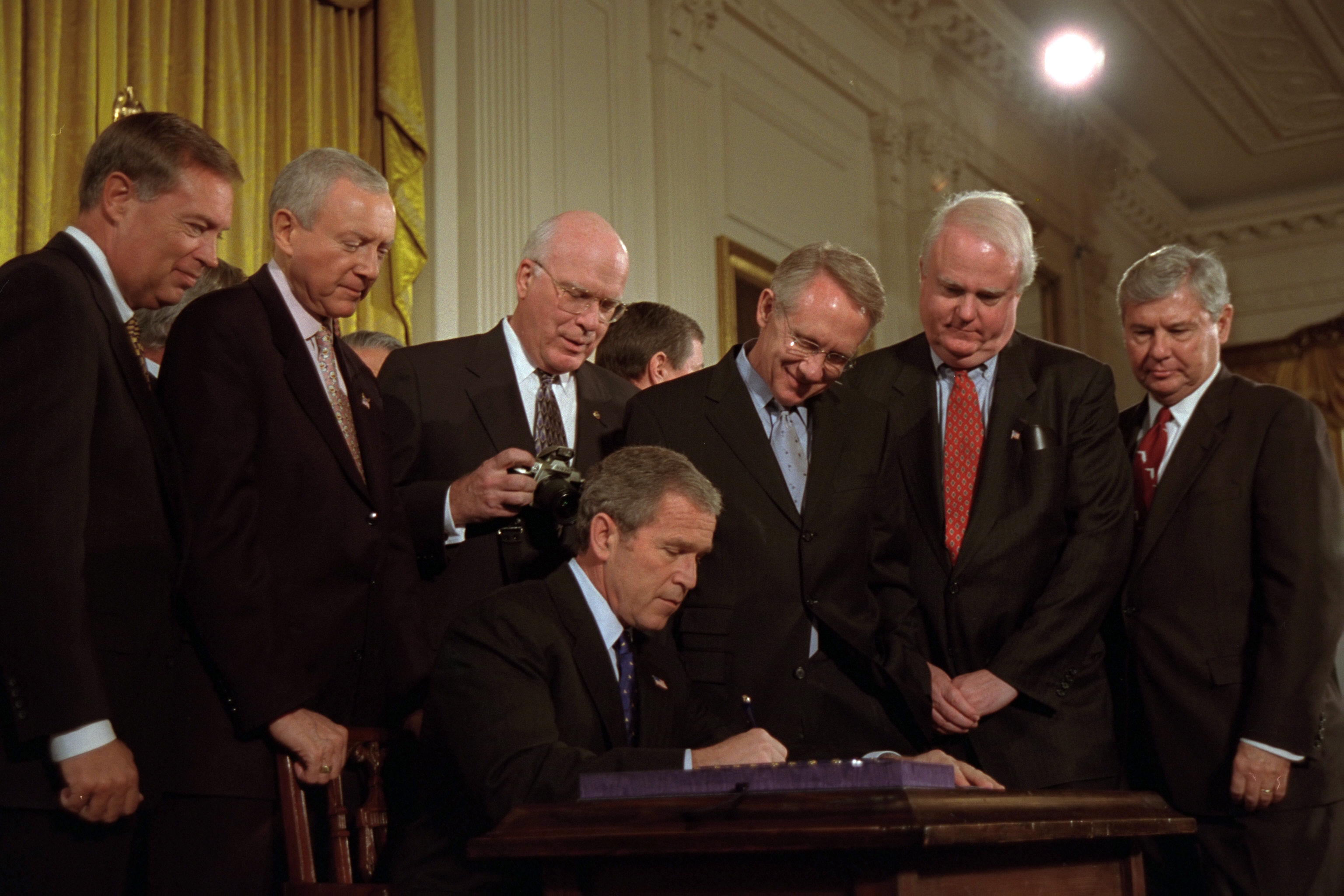
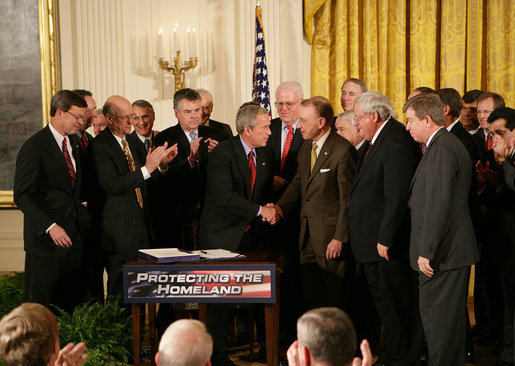
On October 26, 2001, President George W. Bush sat at a desk in the White House East Room. Behind him stood lawmakers and officials from both parties. Six weeks after the September 11 attacks, he signed a law that would reshape the relationship between American security agencies and ordinary citizens.

Its full title was a long acronym: the USA PATRIOT Act, short for “Uniting and Strengthening America by Providing Appropriate Tools Required to Intercept and Obstruct Terrorism.” Congress had moved unusually quickly. The House approved the legislation on October 24, the Senate followed, and Bush signed it on the 26th as Public Law 107-56.

Supporters argued that investigators had been forced to work with legal tools designed for a different era. The act broadened certain surveillance powers, allowed greater sharing of information between agencies and strengthened rules aimed at preventing the financing of terrorism. Attorney General John Ashcroft became one of its most recognizable advocates.

Others warned that the speed of the legislation left little time for careful scrutiny. Civil-liberties groups challenged provisions involving access to records, surveillance and the limits of judicial oversight. Section 215, in particular, became the subject of a major national debate when its use in government collection of telephone records later came to light. The fact that Americans wanted protection from further attacks did not settle the question of what powers the government should have to pursue it.

The law did not remain frozen in its 2001 form. Congress renewed and amended provisions in subsequent years, including the 2006 reauthorization, while later reforms changed other surveillance authorities. Confusing those later measures with the original October 26 signing obscures the history.

This gallery includes the genuine White House signing photograph, the first page of the original law and other official records, plus clearly dated images showing the September 11 context and subsequent policy decisions. None of the later photographs is presented as having been taken on signing day.

Sources: National Archives, Public Law 107-56; Government Publishing Office, Public Papers of President George W. Bush, October 26, 2001; U.S. House of Representatives, History, Art & Archives.

Topic: USA PATRIOT Act; October 26, 2001; September 11; civil liberties; surveillance

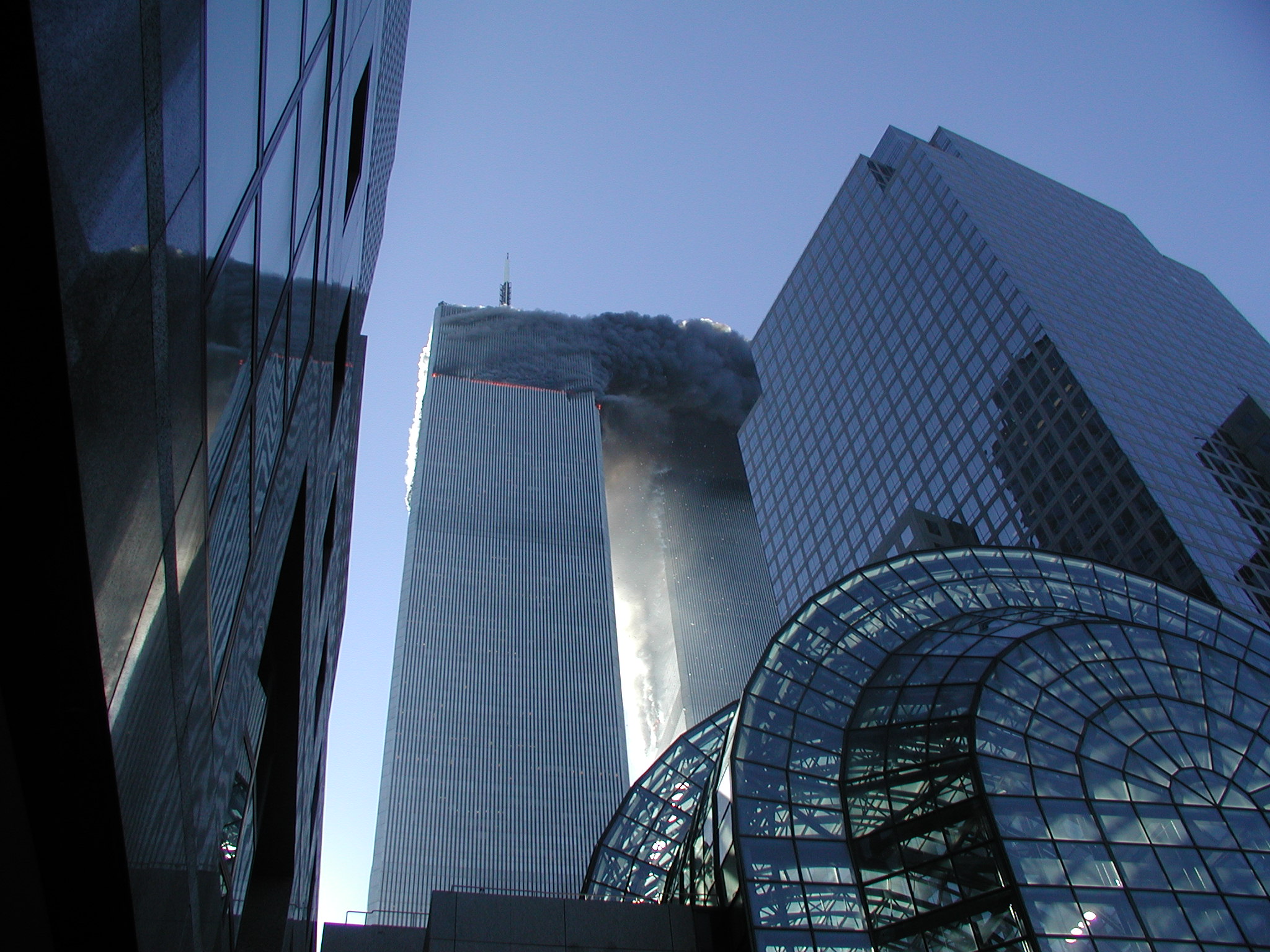
World Trade Center towers in New York during the attacks of September 11, 2001.

New York’s World Trade Center on September 11, 2001

A National Institute of Standards and Technology photograph made on September 11, 2001, shows the World Trade Center during the attacks. The scale of the deaths and the fear of another attack shaped the political atmosphere in which Congress passed the Patriot Act only weeks later. This picture was taken on September 11, not October 26.

Photo details
Date
September 11, 2001, around 09:03
Location
World Trade Center, New York City, United States
Photographer
U.S. National Institute of Standards and Technology photo collection
Archive / collection
NIST WTC investigation collection / Wikimedia Commons
Rights / license
U.S. federal government work/document in the public domain in the United States (17 U.S.C. §105); reproduce with source credit.
Credit
NIST WTC investigation collection / Wikimedia Commons / Wikimedia Commons / U.S. public domain
President George W. Bush signs the USA PATRIOT Act at the White House on October 26, 2001.

President Bush signs the USA PATRIOT Act

On October 26, 2001, George W. Bush signs the USA PATRIOT Act in the East Room of the White House. Behind him stand Attorney General John Ashcroft and congressional figures including Orrin Hatch, Patrick Leahy, Harry Reid, Jim Sensenbrenner and Bob Graham. This is the genuine signing-day photograph made by White House photographer Eric Draper.

Photo details
Date
October 26, 2001
Location
East Room, White House, Washington, D.C.
Photographer
Eric Draper, White House photographer
Archive / collection
George W. Bush Presidential Library / U.S. National Archives, item 5997381
Rights / license
U.S. federal government work/document in the public domain in the United States (17 U.S.C. §105); reproduce with source credit.
Credit
George W. Bush Presidential Library / U.S. National Archives, item 5997381 / Wikimedia Commons / U.S. public domain
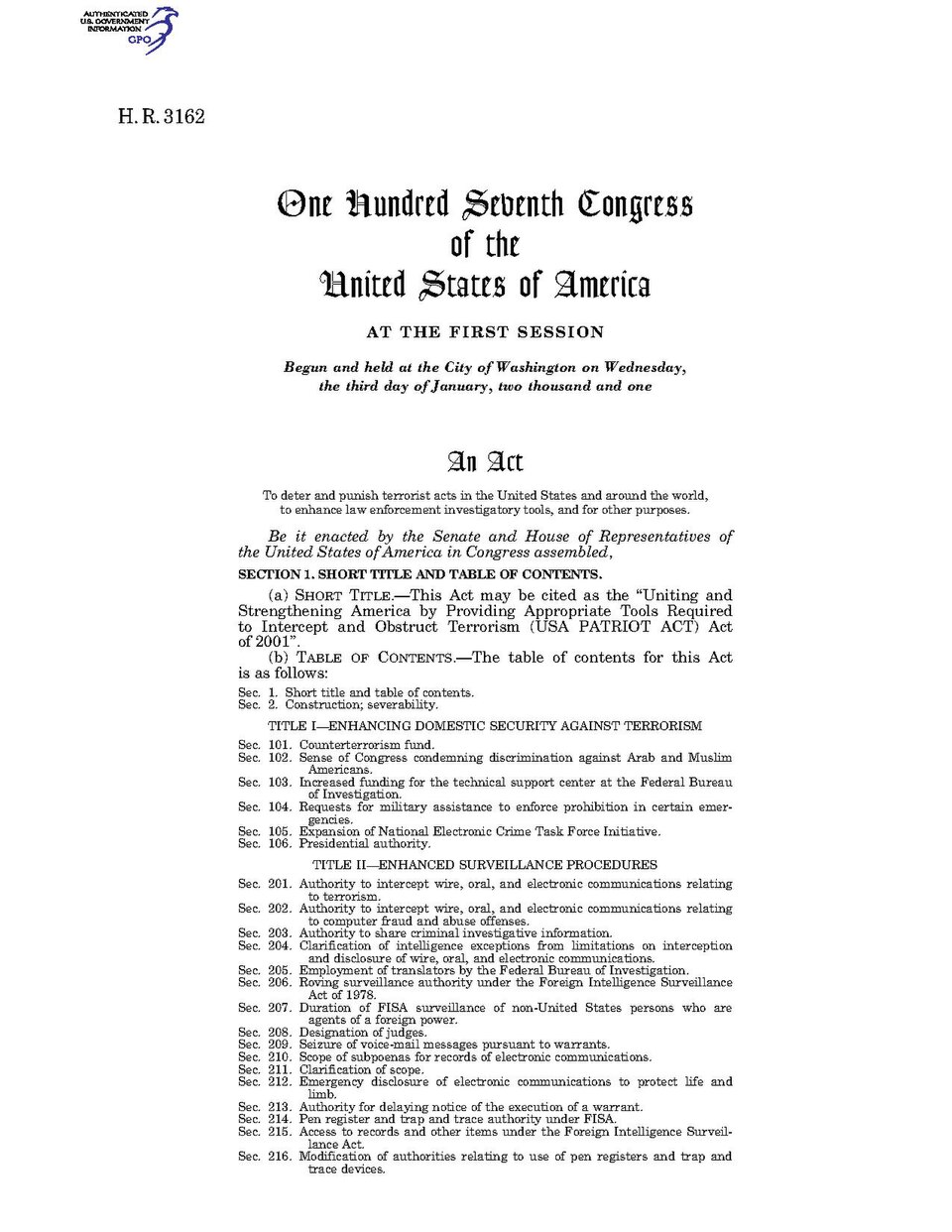
First page of the USA PATRIOT Act, Public Law 107-56, approved October 26, 2001.

The first page of Public Law 107-56

The real text of the USA PATRIOT Act, approved on October 26, 2001, as Public Law 107-56. The long official title spells out the legislation’s intended anti-terrorism purpose. This image is a faithful JPEG rendering of the first page of the 2001 federal law, not a separate photograph. The full document is preserved by the U.S. government.

Photo details
Date
October 26, 2001 (original law; first-page scan)
Location
United States Congress, Washington, D.C.
Photographer
United States Congress / Government Printing Office
Archive / collection
U.S. government public law 107-56 / Wikimedia Commons PDF preview
Rights / license
U.S. federal government work/document in the public domain in the United States (17 U.S.C. §105); reproduce with source credit.
Credit
U.S. government public law 107-56 / Wikimedia Commons PDF preview / Wikimedia Commons / U.S. public domain
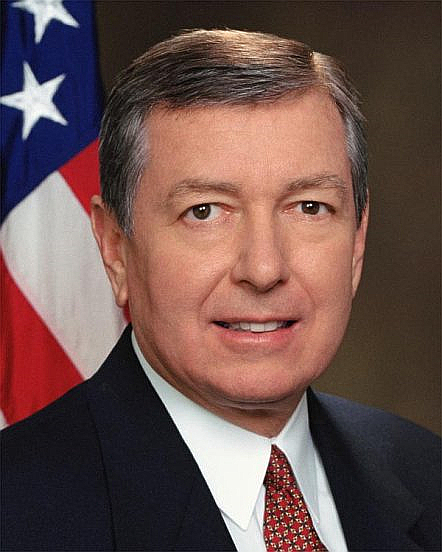
Official 2001 portrait of U.S. Attorney General John Ashcroft.

Attorney General John Ashcroft in 2001

Official portrait of John Ashcroft, the U.S. attorney general who championed the Patriot Act. His Justice Department argued that investigators needed broader tools to respond to terrorist threats. Critics of the legislation warned that new powers could intrude on civil liberties and privacy. This is a 2001 portrait, not a photo of the signing ceremony.

Photo details
Date
2001 (exact portrait day not specified)
Location
Washington, D.C., United States
Photographer
U.S. Department of Justice official photographer
Archive / collection
U.S. Department of Justice / Wikimedia Commons
Rights / license
U.S. federal government work/document in the public domain in the United States (17 U.S.C. §105); reproduce with source credit.
Credit
U.S. Department of Justice / Wikimedia Commons / Wikimedia Commons / U.S. public domain
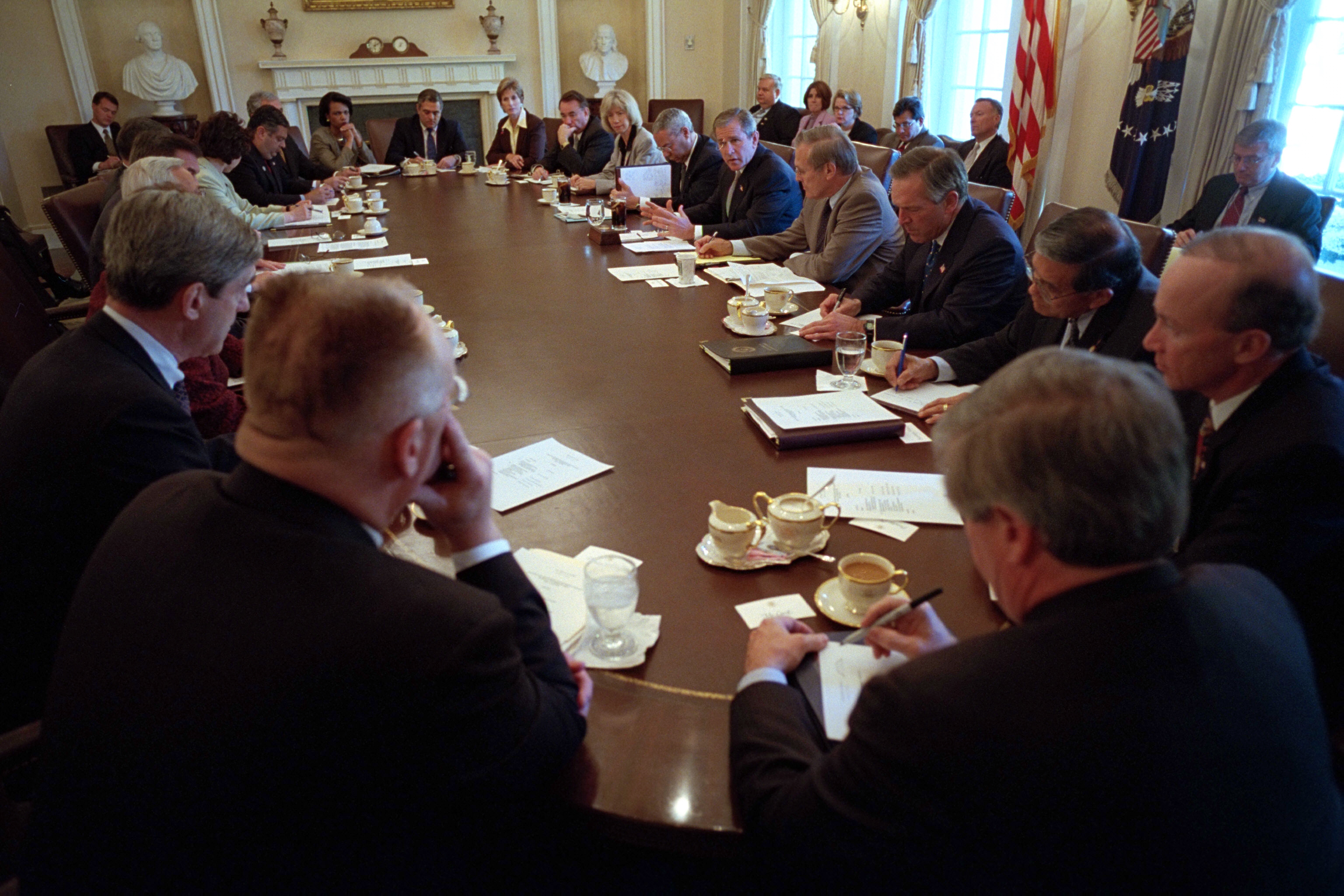
President George W. Bush meets the Homeland Security Council at the White House on October 29, 2001.

Bush meets the Homeland Security Council days later

Three days after the Patriot Act was signed, President Bush convened the Homeland Security Council in the White House Cabinet Room. This photo, dated October 29, 2001, records how national security policy was being reorganized after September 11. The meeting is a related follow-up, not part of the October 26 signing.

Photo details
Date
October 29, 2001
Location
Cabinet Room, White House, Washington, D.C.
Photographer
U.S. White House official photographer
Archive / collection
George W. Bush Presidential Library / Wikimedia Commons
Rights / license
U.S. federal government work/document in the public domain in the United States (17 U.S.C. §105); reproduce with source credit.
Credit
George W. Bush Presidential Library / Wikimedia Commons / Wikimedia Commons / U.S. public domain
President George W. Bush at the signing of Patriot Act reauthorization legislation in March 2006.

A later change: Patriot Act reauthorization in 2006

This image shows a different ceremony, on March 9, 2006: Bush signs the USA PATRIOT Improvement and Reauthorization Act. Its presence illustrates how the 2001 law was amended and extended, not a second photograph of the original October 26, 2001 signing. The distinction matters when tracing how surveillance law changed over time.

Photo details
Date
March 9, 2006 (later reauthorization)
Location
East Room, White House, Washington, D.C.
Photographer
Eric Draper, White House photographer
Archive / collection
George W. Bush White House Photo Office / Wikimedia Commons
Rights / license
U.S. federal government work/document in the public domain in the United States (17 U.S.C. §105); reproduce with source credit.
Credit
George W. Bush White House Photo Office / Wikimedia Commons / Wikimedia Commons / U.S. public domain

More Photo History

Read the story