A photograph of Titanic can mean several different things: the ship under construction, a boat carrying survivors, or a street crowded with people waiting for news. Bringing those views together gives the disaster a wider frame. The liner struck an iceberg late on 14 April 1912 and sank in the early hours of the following morning. Carpathia reached the survivors after the ship had disappeared. More than 1,500 people died, while families on shore had to make sense of incomplete reports.
This gallery follows that movement from a monumental hull to individual rescue and public uncertainty. Its four photographs come from the Library of Congress, with their catalogue identifiers and rights advisories attached. They are records of particular scenes rather than illustrations of every stage of the sinking. The rescue boat is not assigned a number that its source does not establish, and the unidentified people on Carpathia’s deck remain unidentified here.
Dates need the same care. A newspaper photograph could be catalogued by its publication or copyright date, long after the camera exposure. Where the archive distinguishes those dates, the captions explain the difference. Small qualifications help preserve what makes these pictures valuable: evidence that can be examined, rather than a familiar story made to fit any available image.
Topic: Titanic and maritime history
01 / 04
Before the maiden voyage
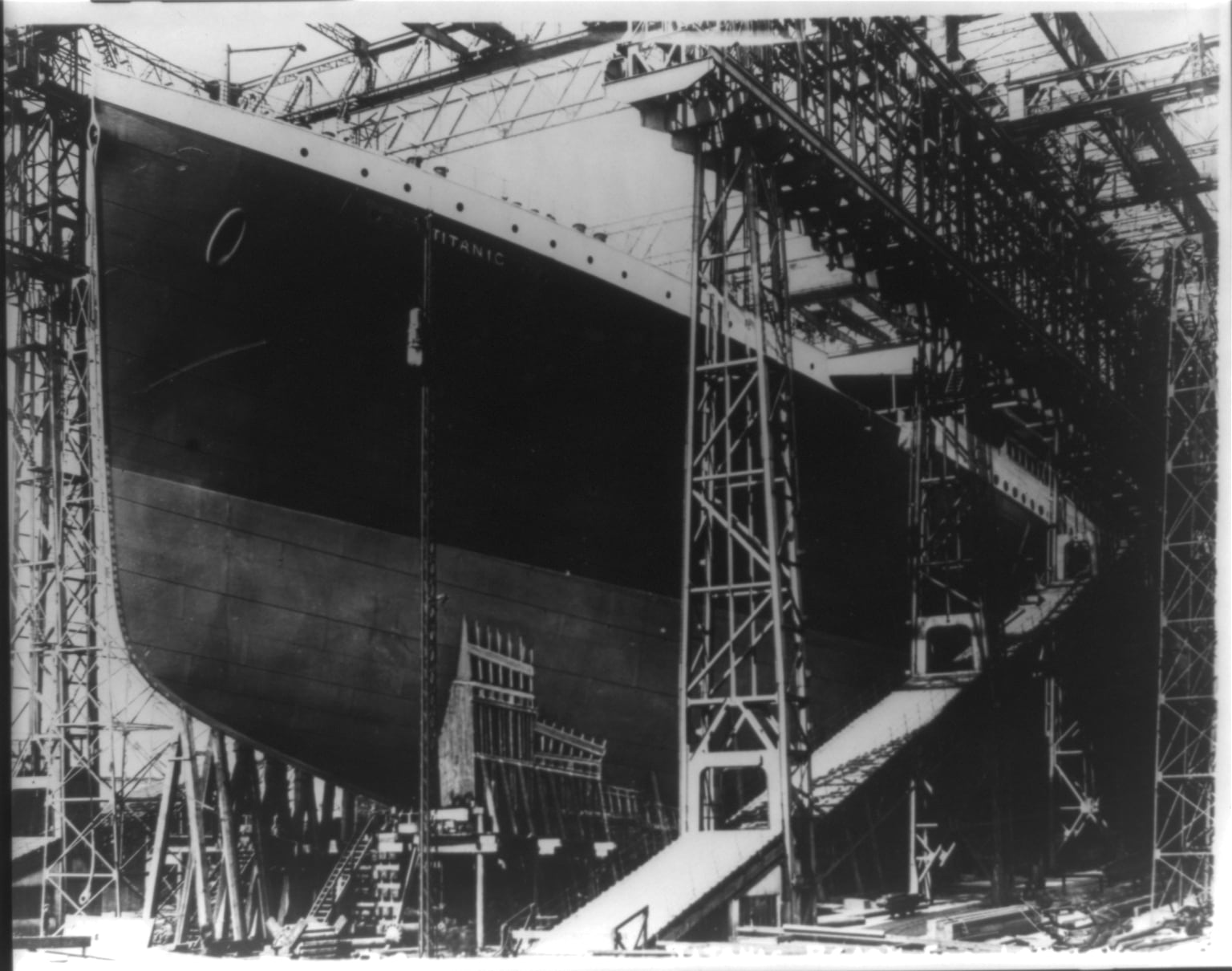
The ship’s high bow rises within a forest of steel scaffolding. This is a view of a vessel being built, not the liner setting off on its final voyage. The Library of Congress notes a date of April or May 1911 on the image, although its main catalogue field gives 15 April 1912. That discrepancy is a useful reminder that press photographs circulated again when their subjects became news. Read the supports and working surroundings as part of the scene. Before Titanic became a disaster story, its scale had to be assembled and supported on land.
Photo details
Date
Circa April–May 1911; archive also records 15 April 1912
Location
Belfast, Ireland (now Northern Ireland)
Photographer
Bain News Service attribution; individual photographer not identified
Archive / collection
Library of Congress, Bain Collection — LC-USZ62-26743 / cph.3a27541
Rights / license
The Library of Congress reports no known restrictions on reproduction or publication for this item. Archive and creator credits are retained. https://www.loc.gov/pictures/item/2001704326/
Bain News Service / Library of Congress, LC-USZ62-26743. Scene date qualified from the archive’s note.
02 / 04
Rescue seen at the scale of a lifeboat
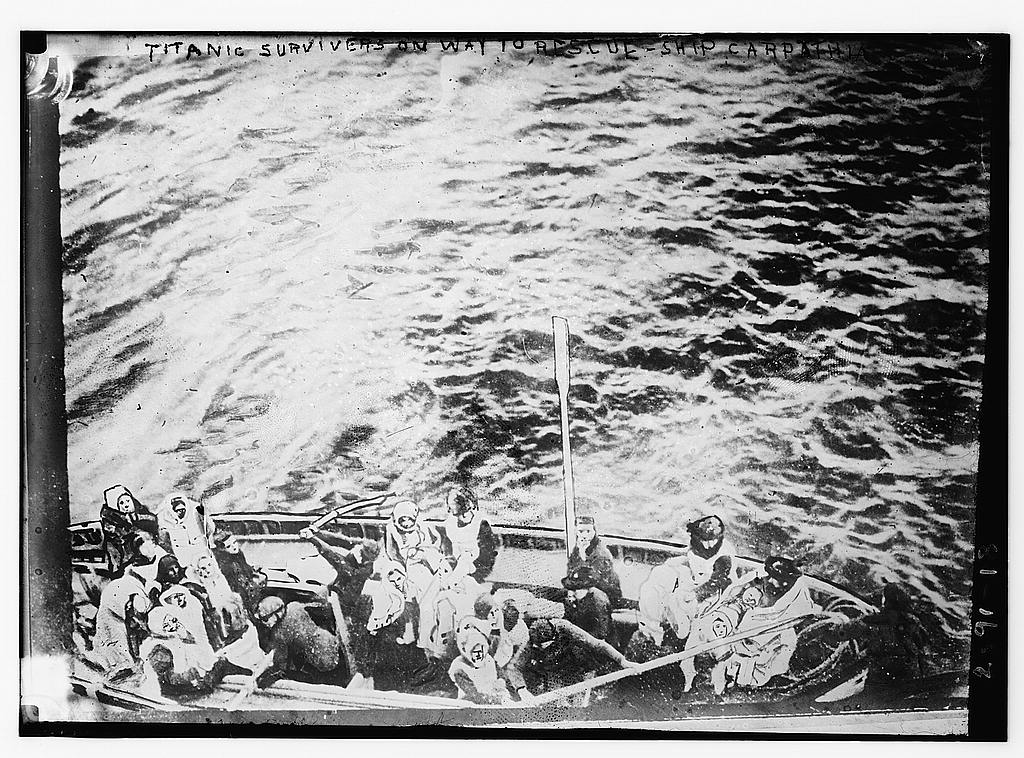
The people in the boat occupy a small patch of water within a broad frame. After the size of Titanic’s hull, the contrast is stark: survival depended on much smaller craft and on reaching another ship. The Library of Congress identifies this scene as survivors travelling towards Carpathia in April 1912. It does not name every passenger or establish a lifeboat number, so neither is supplied here. Bain News Service distributed the photograph, but that credit does not identify the person who operated the camera. Its historical value lies in the visible boat and the documented rescue context, without additions borrowed from other photographs.
Photo details
Date
April 1912; rescue context
Location
North Atlantic, near the Titanic rescue site
Photographer
Individual photographer not identified; Bain News Service, publisher
Archive / collection
Library of Congress, Bain Collection — LC-DIG-ggbain-10348
Rights / license
The Library of Congress reports no known restrictions on reproduction or publication for this item. Archive and creator credits are retained. https://www.loc.gov/rr/print/res/274_bain.html
Library of Congress, Bain News Service Collection, LC-DIG-ggbain-10348.
03 / 04
A deck becomes a place of refuge
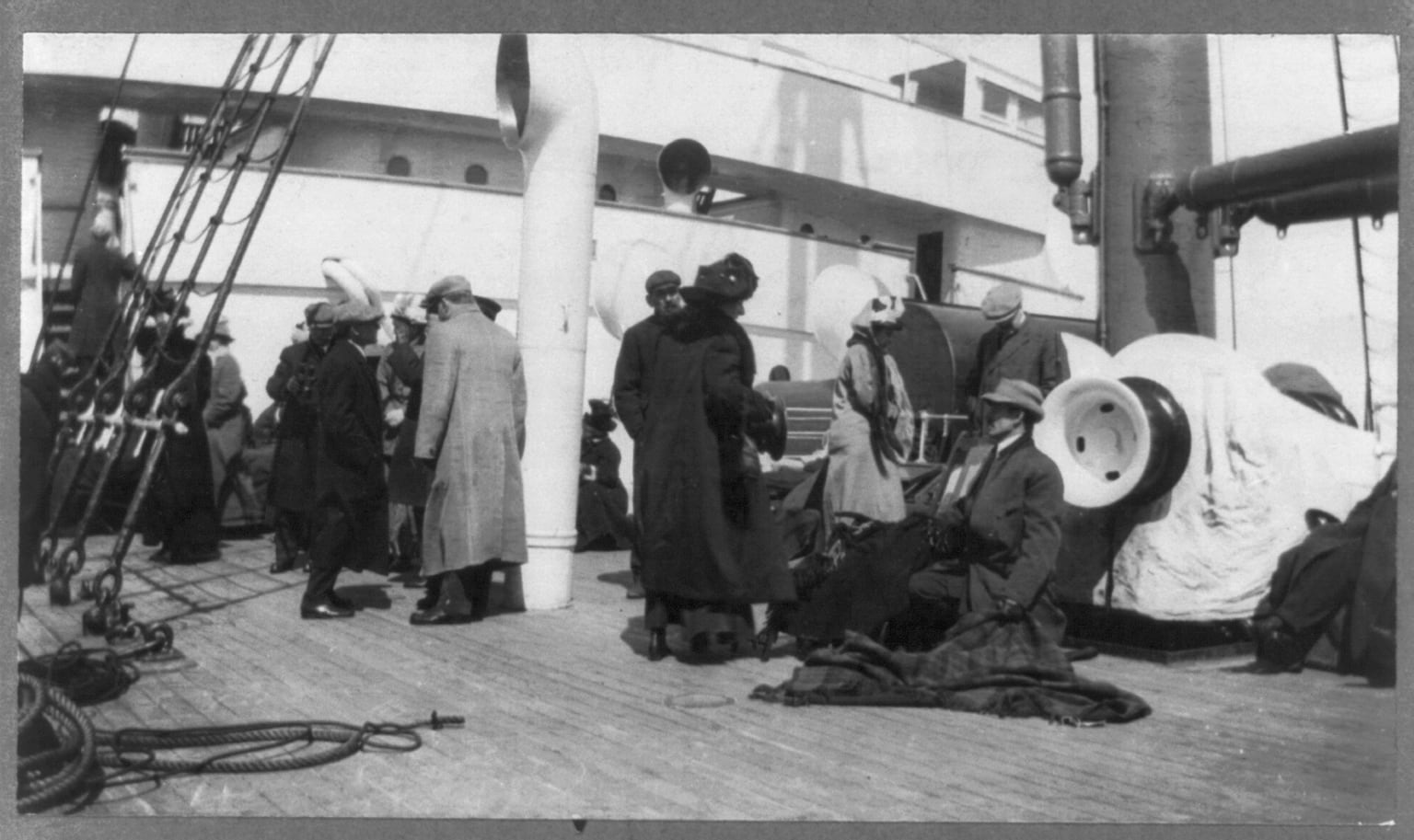
People gather on Carpathia’s working deck, beside ropes, deck fittings and the ship’s superstructure. The archive identifies them as an unidentified group of Titanic survivors. That label is important: faces in a clear photograph do not automatically give us names, conversations or private thoughts. The scene shifts the story from getting out of a lifeboat to being accommodated aboard the rescue vessel. Its catalogue date includes 27 May 1912, a copyright or publication date that should not be mistaken for the April rescue. Kept beside the photograph, that distinction helps explain the life of the image after the event it records.
Photo details
Date
April 1912 scene; archive publication/copyright date 27 May 1912
Location
Aboard RMS Carpathia, North Atlantic
Photographer
Individual photographer not identified in the archive record
Archive / collection
Library of Congress, Prints & Photographs Division — LC-USZ62-56453 / cph.3b04287
Rights / license
The Library of Congress reports no known restrictions on reproduction or publication for this item. Archive and creator credits are retained. https://www.loc.gov/resource/cph.3b04287/
Library of Congress, LOT 10630, LC-USZ62-56453. No individual photographer named in the consulted record.
04 / 04
The disaster reaches the city
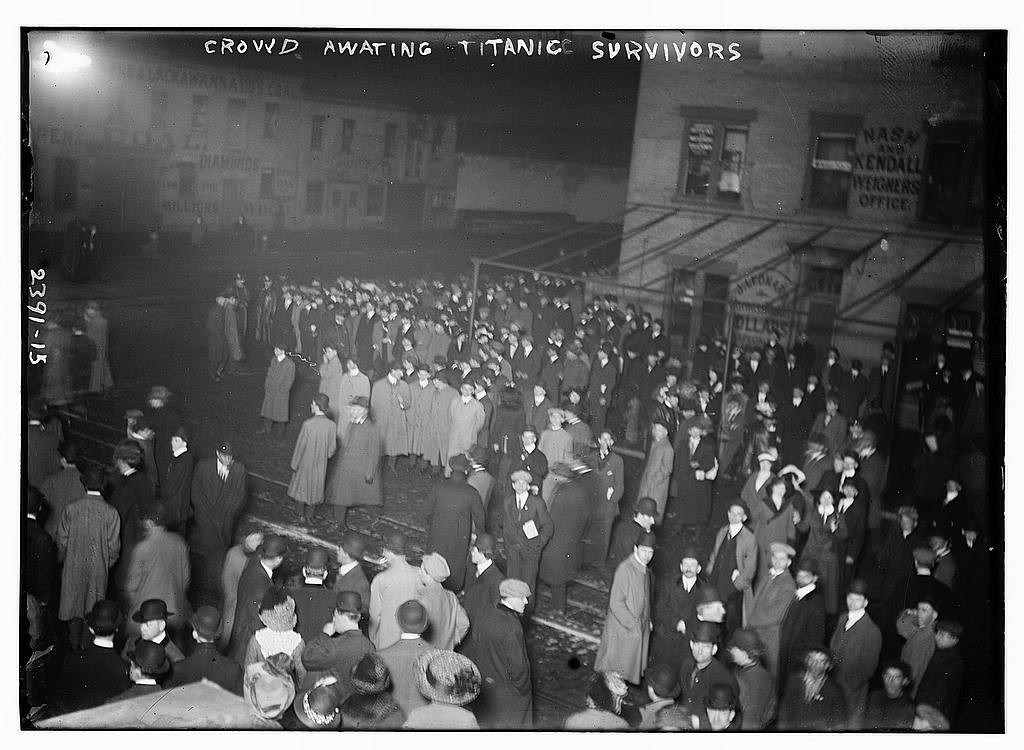
A dense crowd fills the street, with shopfronts and bright night lighting beyond it. The photograph brings Titanic’s story ashore. Its archive title identifies people waiting for survivors; the catalogue supplies April 1912 but does not fix the exposure to an exact day. Carpathia’s arrival in New York turned distant wireless reports into the presence of rescued passengers. This frame preserves the other side of that passage: people gathered to learn who had returned. It cannot tell us which onlookers were relatives, reporters or curious strangers. The crowd is documented; those individual relationships remain outside the evidence supplied by the picture.
Photo details
Date
April 1912; exact day not specified in this record
Location
New York City, United States
Photographer
Individual photographer not identified; Bain News Service, publisher
Archive / collection
Library of Congress, Bain Collection — LC-DIG-ggbain-10346
Rights / license
The Library of Congress reports no known restrictions on reproduction or publication for this item. Archive and creator credits are retained. https://www.loc.gov/rr/print/res/274_bain.html