Back to Photo History

Photo History Historium

Thirteen Days on the Edge: The Cuban Missile Crisis in Photographs

Period
14 October–7 November 1962; one undated portrait
Place
Cuba; Washington, D.C.; New York City; waters near Cuba

Nine archival photographs trace the Cuban Missile Crisis from the U-2 discovery on October 14, 1962, to the Soviet missile withdrawal in November.

View 9 photographs
About this photo essay

From the air, the evidence was easy to miss: long trailers, tents, and unfamiliar equipment scattered across Cuban fields. In the photographs taken on October 14, 1962, American analysts recognized signs of Soviet medium-range ballistic missiles. President John F. Kennedy was briefed on October 16. What followed became the most dangerous confrontation of the Cold War.

The deployment grew out of a wider struggle. Fidel Castro feared another American invasion after the Bay of Pigs, while Nikita Khrushchev sought to protect Cuba and strengthen the Soviet strategic position. Washington already had nuclear missiles in Turkey. As Kennedy and his advisers debated air strikes, invasion, and a naval quarantine, the people of Cuba stood at the center of decisions that could bring war to their island.

Photography helped drive those decisions. Reconnaissance images exposed the missile sites, low-level flights followed their development, and enlarged prints became evidence before the United Nations. Other cameras recorded the quieter surfaces of the emergency: a diplomatic meeting, a presidential signature, Marines waiting for transport, and a pilot who would not return from a reconnaissance flight.

The thirteen days usually refer to October 16–28, from Kennedy’s briefing to Khrushchev’s acceptance of missile withdrawal. The settlement combined a public U.S. pledge not to invade Cuba with a private understanding that American Jupiter missiles would leave Turkey. The danger did not disappear in a single announcement: dismantling, verification, and negotiations continued into November. The naval quarantine ended on November 20.

This gallery begins with the October 14 discovery and ends with a November 7 photograph of missiles leaving Cuba. The submarine image has only a month-level date; Rudolf Anderson’s portrait is undated and accompanies the account of his death on October 27. Most images come from U.S. government collections, which document American surveillance and decision-making more fully than Cuban civilian experience or Soviet deliberations.

Historical references: John F. Kennedy Presidential Library and Museum, https://www.jfklibrary.org/learn/about-jfk/jfk-in-history/cuban-missile-crisis ; U.S. Department of State, Office of the Historian, https://history.state.gov/milestones/1961-1968/cuban-missile-crisis ; National Security Archive, Dino A. Brugioni photograph collection, https://nsarchive.gwu.edu/cuban-missile-crisis-photo-collection . Individual image sources and rights information appear with each photograph.

Topic: Cuban Missile Crisis; Cold War; nuclear diplomacy; aerial reconnaissance

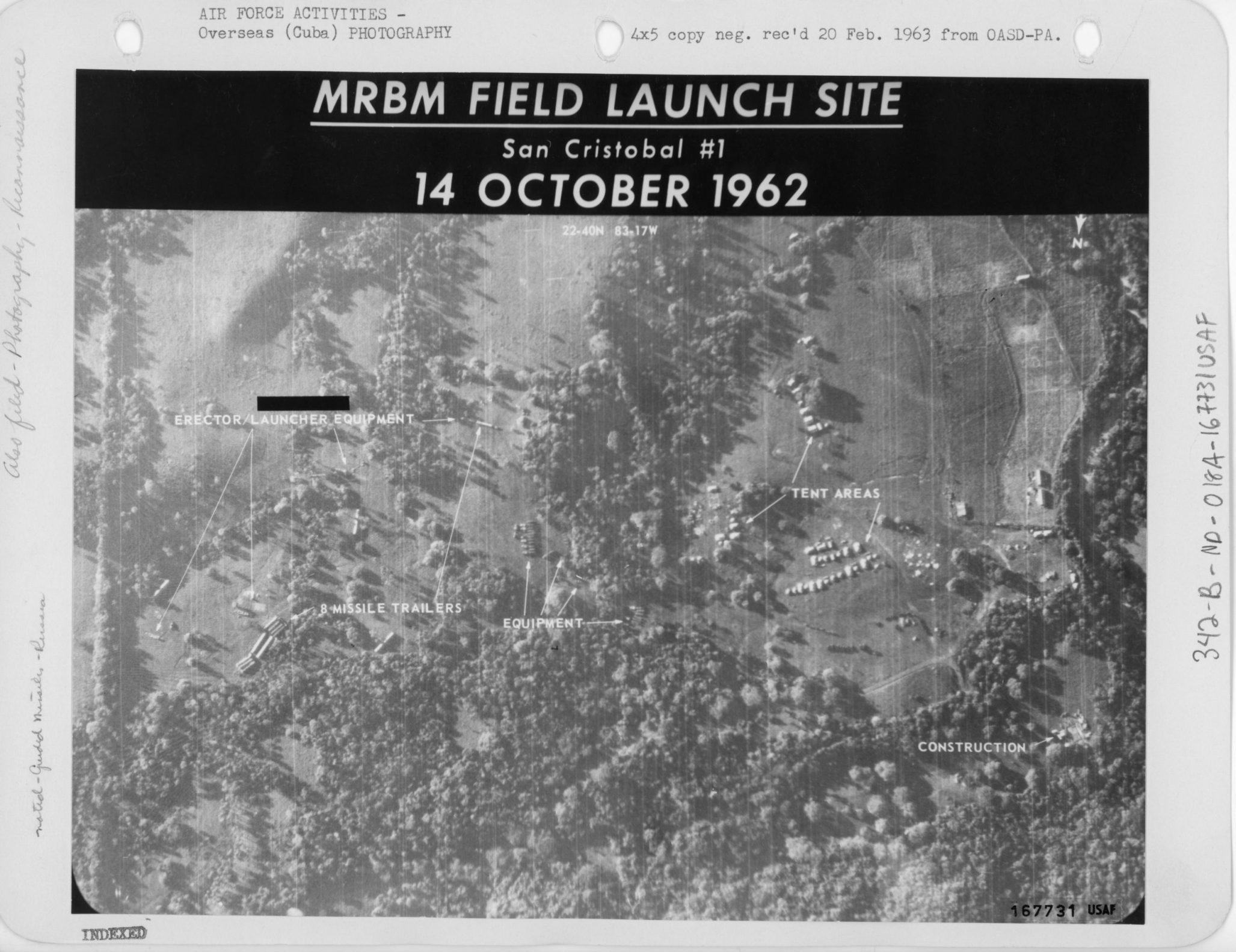
Annotated aerial photograph of San Cristóbal missile site no. 1 showing missile trailers, tent areas and launch equipment on October 14, 1962.

October 14: the evidence in the fields

The labels turn a patchwork of fields into a military installation: missile trailers, tent areas, and erector equipment appear beside trees and farm tracks. This annotated U-2 photograph records the Soviet missile deployment near San Cristóbal on October 14, 1962. Analysts identified the significance of the reconnaissance imagery the following day; Kennedy was briefed on October 16. The image survives as an intelligence document, with its arrows, archival border, and later filing notes intact. Its importance lay in what trained interpreters could recognize in an otherwise ordinary landscape.

Photo details
Date
14 October 1962 — aerial exposure; annotated archival print
Location
San Cristóbal missile site no. 1, Cuba
Photographer
U.S. aerial reconnaissance; individual camera operator not credited
Archive / collection
U.S. National Archives — 342-B-ND-018A-167731USAF; NAID 404793165
Rights / license
U.S. government photograph. NARA states that the photographs in its Cuban Missile Crisis feature have no copyright restrictions.
Credit
U.S. National Archives, photo no. 342-B-ND-018A-167731USAF. Digital copy from The Unwritten Record. Original annotations and archival border retained; no colorization or reconstruction.
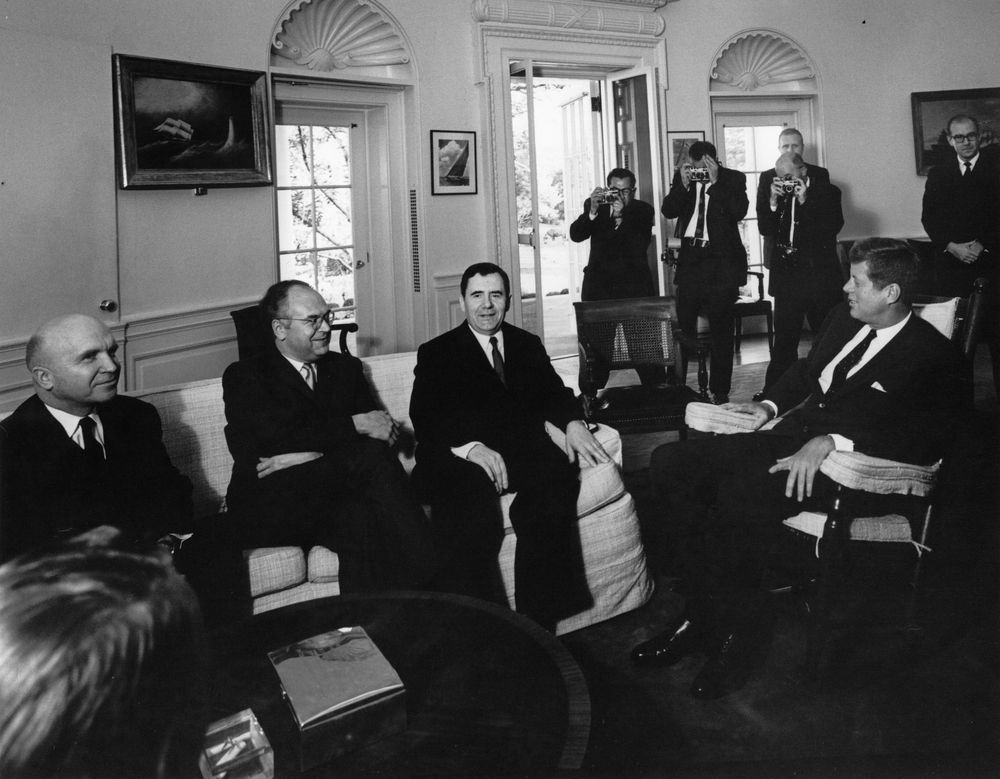
President Kennedy seated opposite Soviet Foreign Minister Andrei Gromyko and other Soviet officials, with press photographers behind them in the Oval Office.

October 18: diplomacy before the disclosure

Photographers cluster behind the seated visitors as Kennedy meets Soviet Foreign Minister Andrei Gromyko in the Oval Office. The formal smiles belong to a meeting conducted under an extraordinary imbalance of information: Kennedy already knew about the missile sites but did not reveal his evidence. Gromyko maintained that Soviet assistance to Cuba was defensive. Abbie Rowe’s photograph captures the public face of diplomacy while the American response was still being debated in private. The missiles themselves are absent, yet they determined what could—and could not—be said in the room.

Photo details
Date
18 October 1962
Location
Oval Office, White House, Washington, D.C., United States
Photographer
Abbie Rowe
Archive / collection
John F. Kennedy Presidential Library and Museum — White House Photographs, AR7552-B
Rights / license
Official U.S. government photograph; cataloged on Wikimedia Commons as public domain in the United States.
Credit
Abbie Rowe. White House Photographs. John F. Kennedy Presidential Library and Museum, Boston, AR7552-B. Digital copy via Wikimedia Commons. Source framing retained.
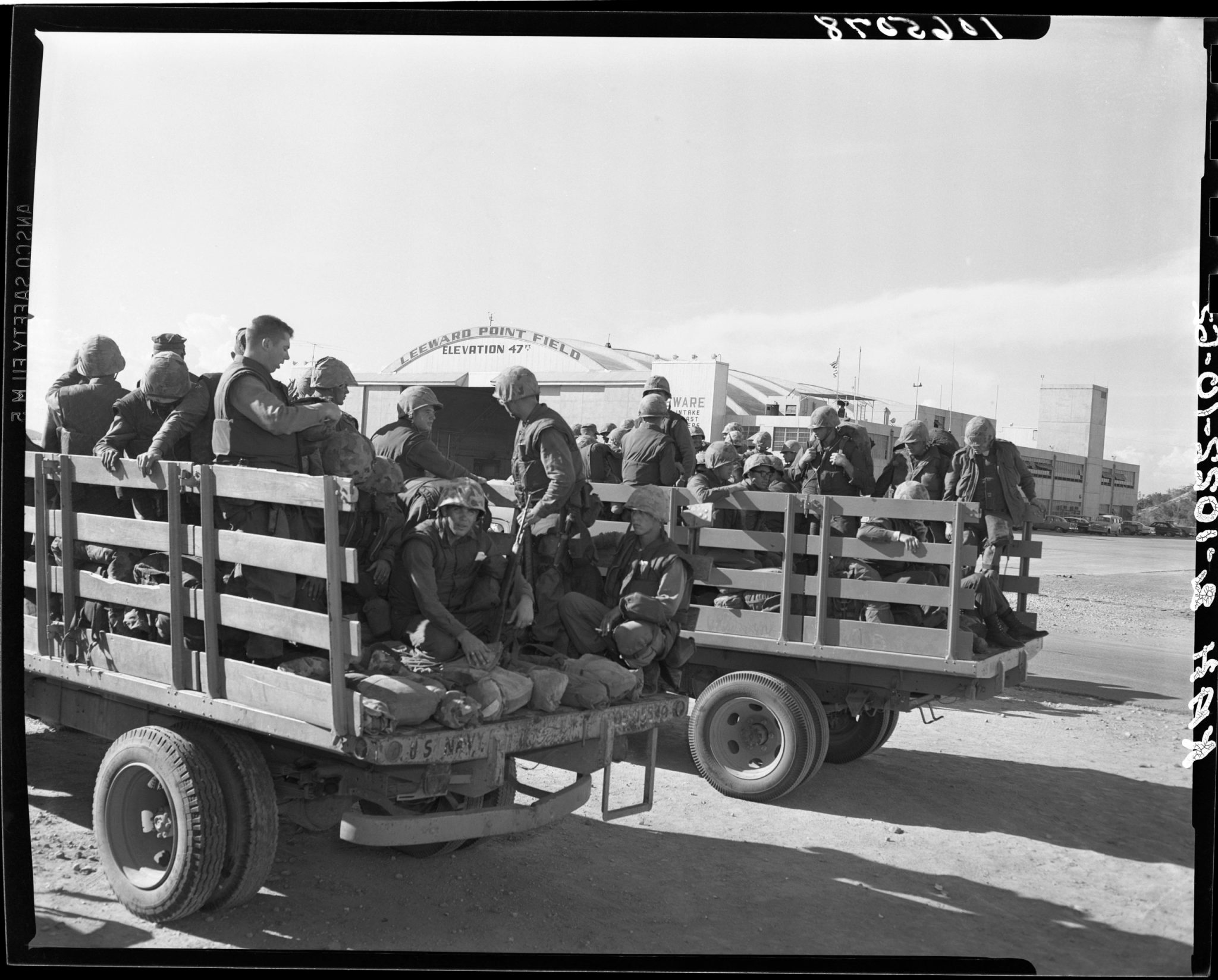
U.S. Marines with helmets and packs sitting on open trailers in front of the Leeward Point Field hangar at Guantánamo Bay.

October 22: reinforcements at Guantánamo

Marines crowd onto open trailers outside the Leeward Point Field hangar, their helmets and packs gathered around them. They had been flown to the U.S. naval base at Guantánamo Bay and were waiting to move to their stations. On the same date, Kennedy publicly announced the discovery of Soviet missiles and the planned naval quarantine. This photograph brings the crisis down from maps and meeting rooms to the practical work of military readiness: moving men, distributing equipment, and preparing a base on Cuban soil for an uncertain next step.

Photo details
Date
22 October 1962
Location
Leeward Point Field, U.S. Naval Base Guantánamo Bay, Cuba
Photographer
U.S. Navy; individual photographer not identified
Archive / collection
U.S. National Archives — 428-N-1065078; NAID 404793623
Rights / license
U.S. government photograph. NARA states that the photographs in its Cuban Missile Crisis feature have no copyright restrictions.
Credit
U.S. National Archives, photo no. 428-N-1065078. Digital copy from The Unwritten Record. Negative edge and source framing retained.
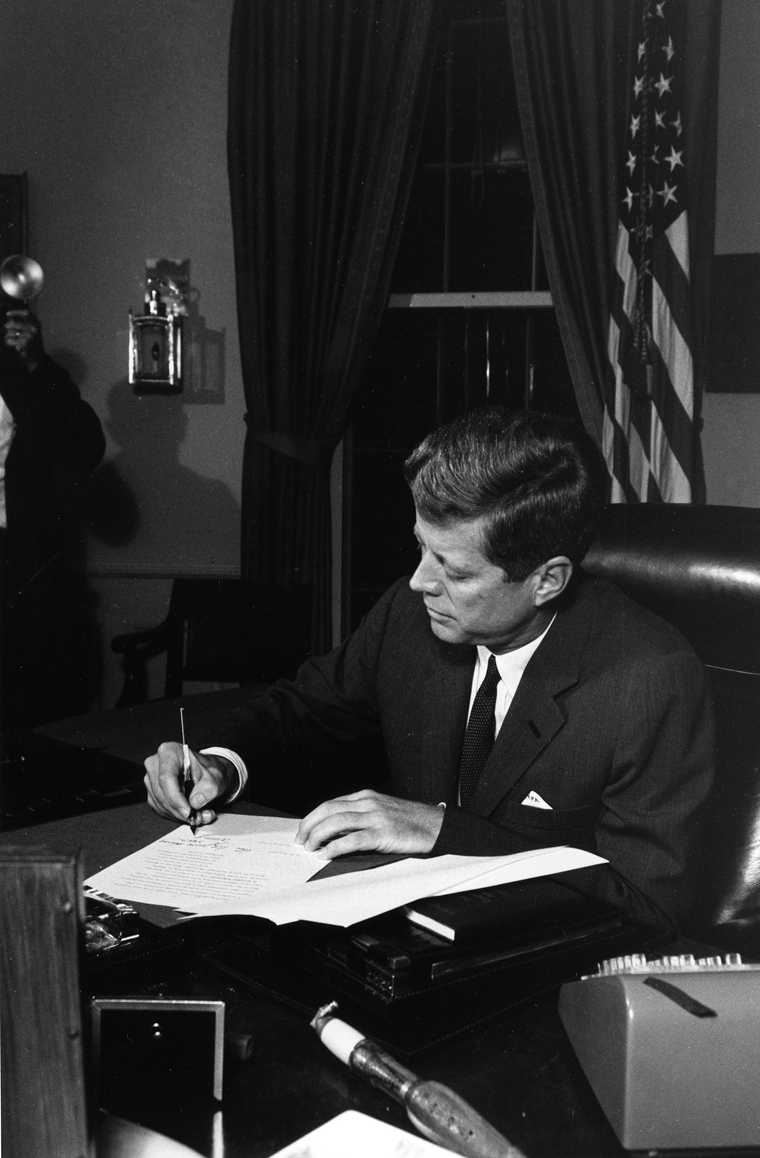
President John F. Kennedy signing the Cuba quarantine proclamation at his Oval Office desk, with the American flag behind him.

October 23: a signature becomes a naval order

Kennedy bends over the document at his desk, with a photographer’s flash visible at the edge of the frame. He is signing Proclamation 3504, authorizing the interdiction of offensive weapons being delivered to Cuba. The administration called the operation a quarantine, a deliberately chosen term intended to distinguish it from a wartime blockade. Cecil Stoughton’s photograph gives a vast naval operation a deceptively small physical form: a sheet of paper, a pen, and a signature. Enforcing that order would bring American forces into direct contact with ships approaching the island.

Photo details
Date
23 October 1962
Location
Oval Office, White House, Washington, D.C., United States
Photographer
Cecil Stoughton
Archive / collection
John F. Kennedy Presidential Library and Museum — White House Photographs, ST-459-10-62
Rights / license
Official White House photograph by Cecil Stoughton; public domain as a work made in the course of U.S. government duties.
Credit
Cecil Stoughton. White House Photographs. John F. Kennedy Presidential Library and Museum, Boston, ST-459-10-62. Digital copy via Wikimedia Commons. Source framing retained.
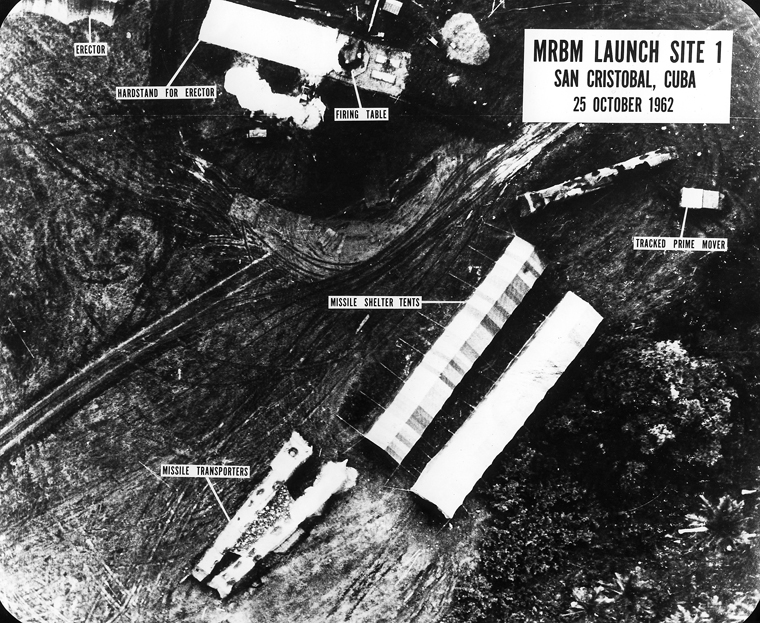
Annotated close aerial view of missile shelter tents, transporters, an erector and vehicle tracks at San Cristóbal on October 25, 1962.

October 25: the missile site comes into focus

Long shelter tents, missile transporters, and a tracked vehicle stand out in this close aerial view of San Cristóbal. Curving wheel tracks cut across the ground between them. Compared with the high-altitude discovery photograph, the equipment is much easier to distinguish. The surviving annotated image was later used as briefing board 16 in Secretary of Defense Robert McNamara’s February 6, 1963 press briefing. Its two dates record different uses of the same evidence: surveillance during the emergency, followed by a public explanation of what American intelligence had seen.

Photo details
Date
25 October 1962 — exposure; briefing board used 6 February 1963
Location
San Cristóbal missile launch site no. 1, Cuba
Photographer
U.S. Department of Defense; individual photographer not identified
Archive / collection
John F. Kennedy Presidential Library and Museum — PX 66-20:16
Rights / license
U.S. Department of Defense photograph; public domain in the United States as an official federal work.
Credit
U.S. Department of Defense photograph, John F. Kennedy Presidential Library and Museum, Boston, PX 66-20:16. Digital copy via Wikimedia Commons, 760 × 623 pixels. Original briefing-board labels retained.
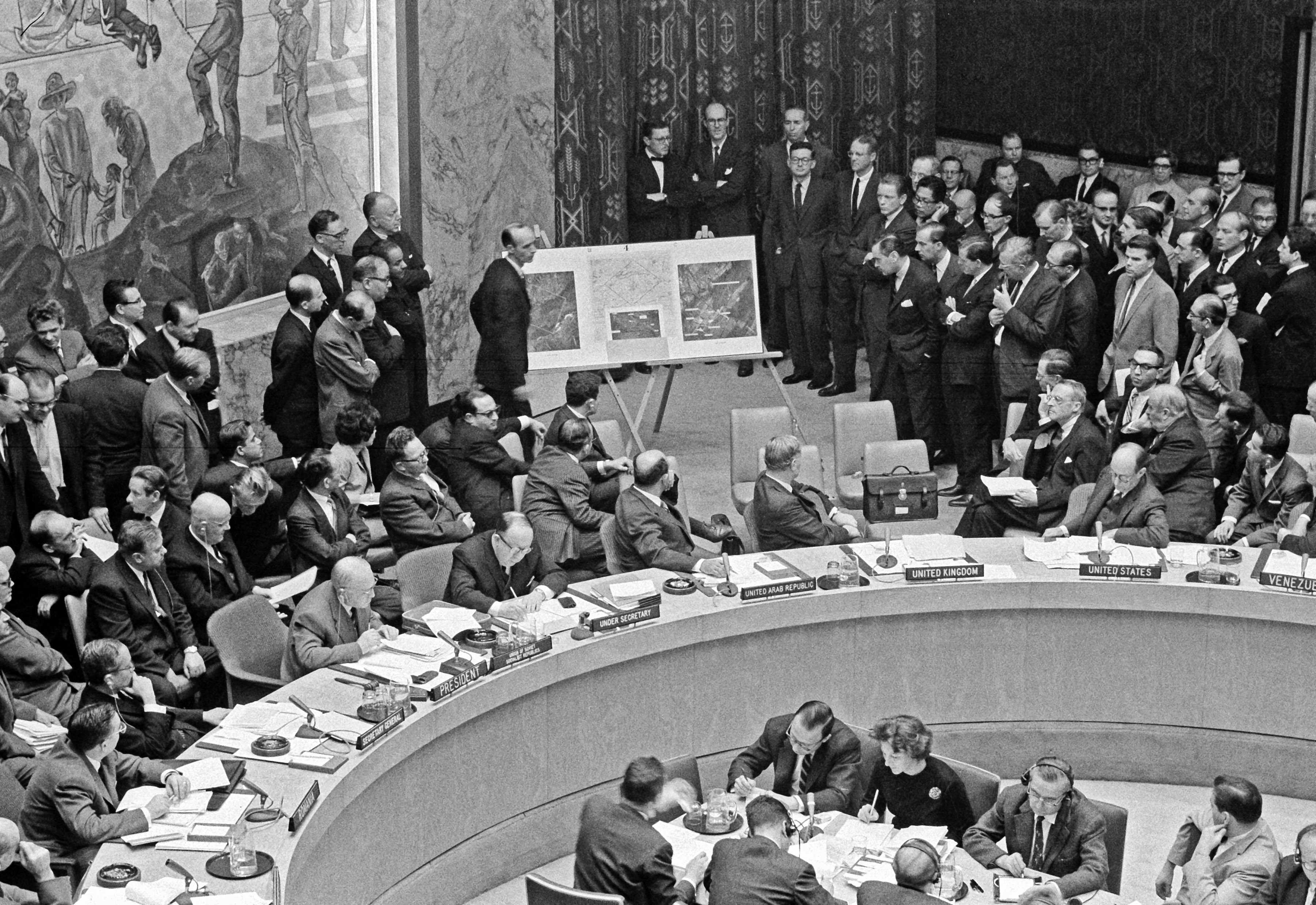
Adlai Stevenson at the United Nations Security Council, with David Parker standing beside enlarged reconnaissance photographs of Cuban missile sites.

October 25: the photographs reach the United Nations

Large photographic boards stand behind the curved Security Council table, surrounded by delegates and observers. U.S. Ambassador Adlai Stevenson presented the reconnaissance evidence as part of the confrontation with Soviet Ambassador Valerian Zorin. David Parker of the National Photographic Interpretation Center stands beside the display. Images once examined by a small group of intelligence specialists had become instruments of public diplomacy. The photograph shows that transition plainly: the same fields and installations now had to be made legible to an international audience.

Photo details
Date
25 October 1962
Location
United Nations Security Council chamber, New York City, United States
Photographer
Individual photographer unidentified; source credits the U.S. government
Archive / collection
Wikimedia Commons; source record cites the Smithsonian National Air and Space Museum image LE283L5A
Rights / license
Wikimedia Commons identifies the image as a U.S. government work and marks it public domain in the United States. The individual photographer is not named in that record.
Credit
U.S. government photograph, photographer unidentified, as credited in the Wikimedia Commons record; cited source: Smithsonian National Air and Space Museum, LE283L5A. Digital copy via Wikimedia Commons. Source framing retained.
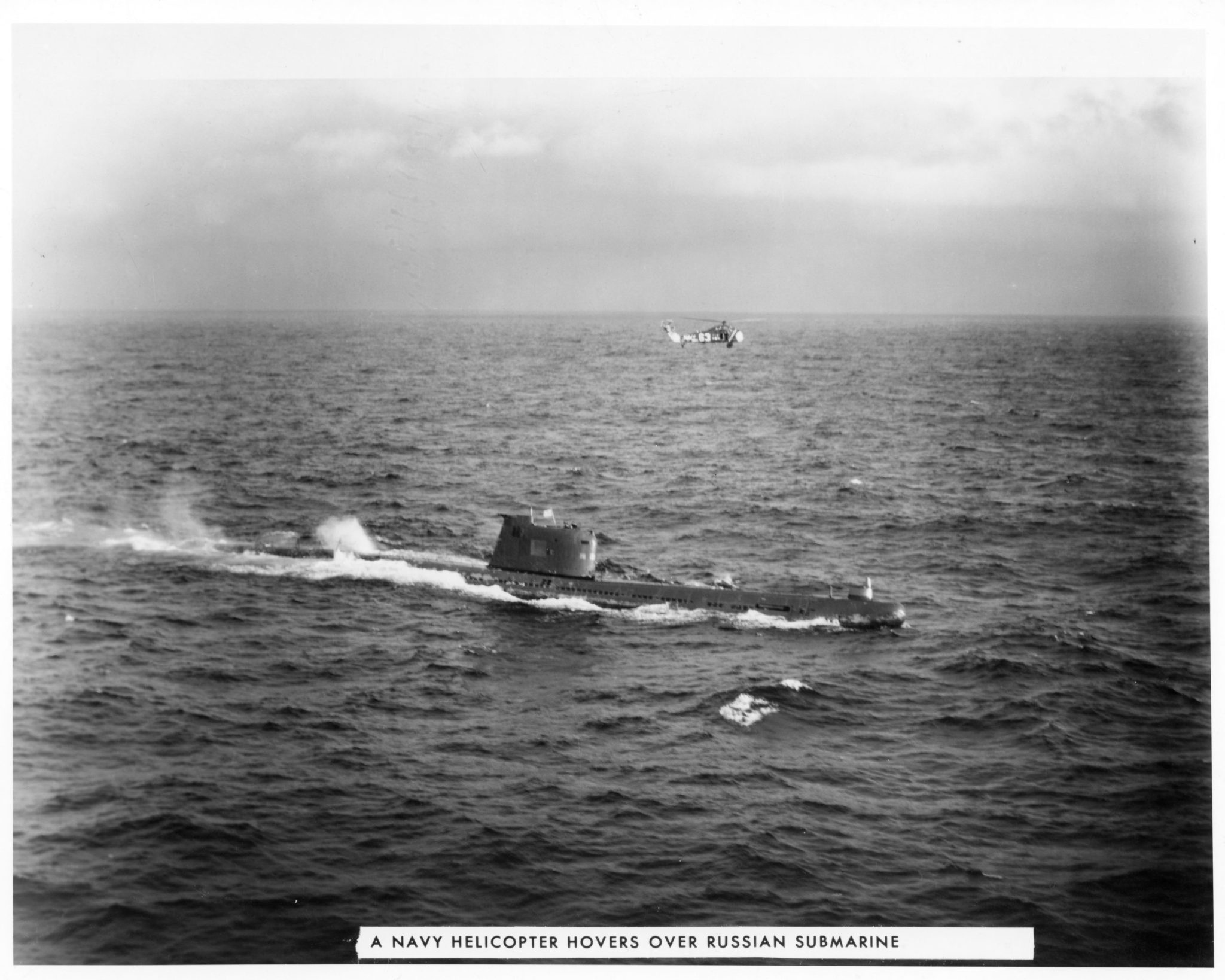
A surfaced Soviet submarine underway at sea with a U.S. Navy helicopter hovering beyond it during the Cuban quarantine.

October: the confrontation at sea

A surfaced Soviet submarine cuts through the water while a U.S. Navy helicopter hovers nearby. The scene records the close surveillance that accompanied quarantine operations around Cuba. Unlike the dated photographs of presidential meetings, this archival record gives only October 1962. It does not identify the submarine or establish the exact encounter shown. Those limits matter: several submarine episodes belong to the crisis, and this image alone cannot be assigned to the famous confrontation involving B-59. What it does show is the proximity of opposing forces far from the negotiating rooms.

Photo details
Date
October 1962 — exact day not established
Location
Waters near Cuba during U.S. quarantine operations; exact position not specified
Photographer
U.S. Navy; individual photographer not identified
Archive / collection
U.S. National Archives — 306-PSD-62-7108; NAID 404792934
Rights / license
U.S. Navy photograph. NARA states that the photographs in its Cuban Missile Crisis feature have no copyright restrictions.
Credit
U.S. Navy / U.S. National Archives, photo no. 306-PSD-62-7108. Digital copy from The Unwritten Record. Original caption strip retained. Submarine identity and exact date not supplied by the cited record.
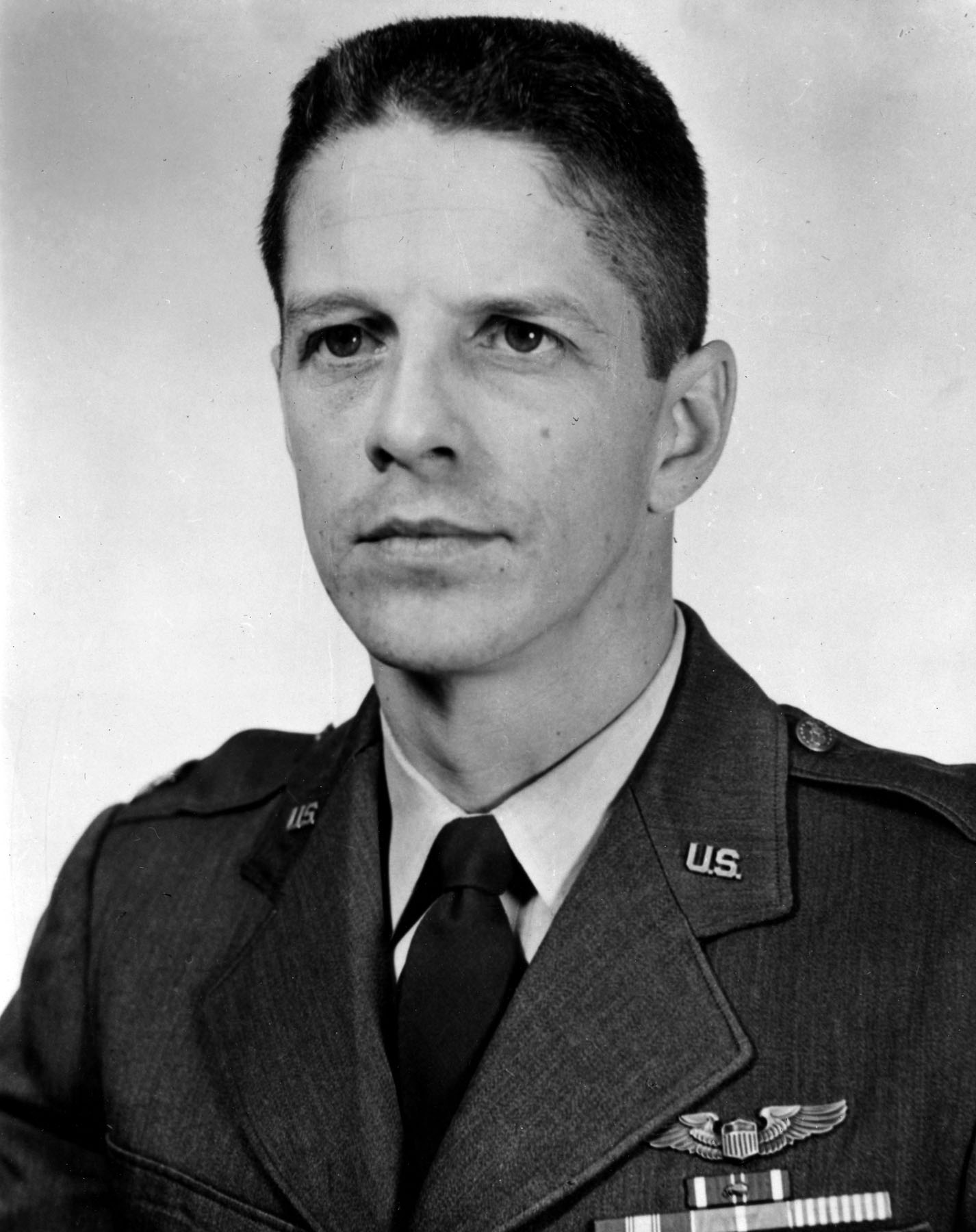
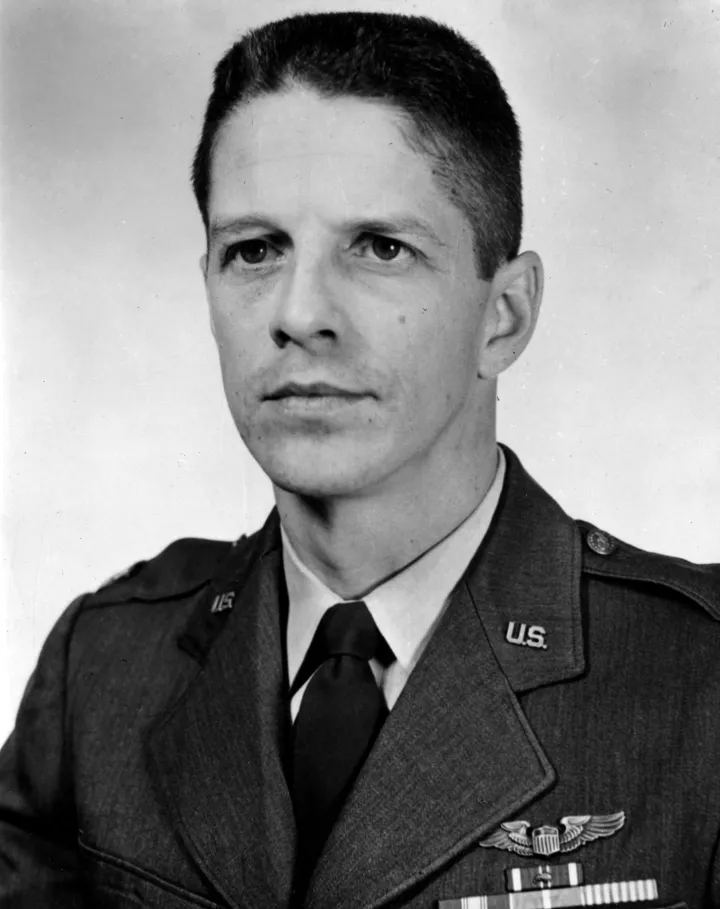
Undated black-and-white service portrait of U.S. Air Force Major Rudolf Anderson Jr. wearing his uniform and pilot wings.

October 27: the pilot who did not return

This undated service portrait shows Major Rudolf Anderson Jr. in uniform. It is included here to mark October 27, when a Soviet surface-to-air missile brought down his U-2 over Cuba and killed him. Reconnaissance had supplied the evidence guiding the crisis, but gathering that evidence exposed pilots to lethal danger. Anderson was posthumously awarded the first Air Force Cross. The portrait gives a human face to a day otherwise remembered through military signals and diplomatic messages. It is not a photograph taken on his final mission.

Photo details
Date
Portrait date unknown — associated event: 27 October 1962
Location
Portrait location not recorded; final mission over Cuba
Photographer
U.S. Air Force; individual photographer uncredited
Archive / collection
National Museum of the U.S. Air Force; digital copy on Wikimedia Commons
Rights / license
U.S. Air Force photograph; public domain in the United States as an official federal work.
Credit
U.S. Air Force photograph, via the National Museum of the U.S. Air Force and Wikimedia Commons. The Commons version records a minor lossless edge crop in 2022; no further crop, colorization or reconstruction added.
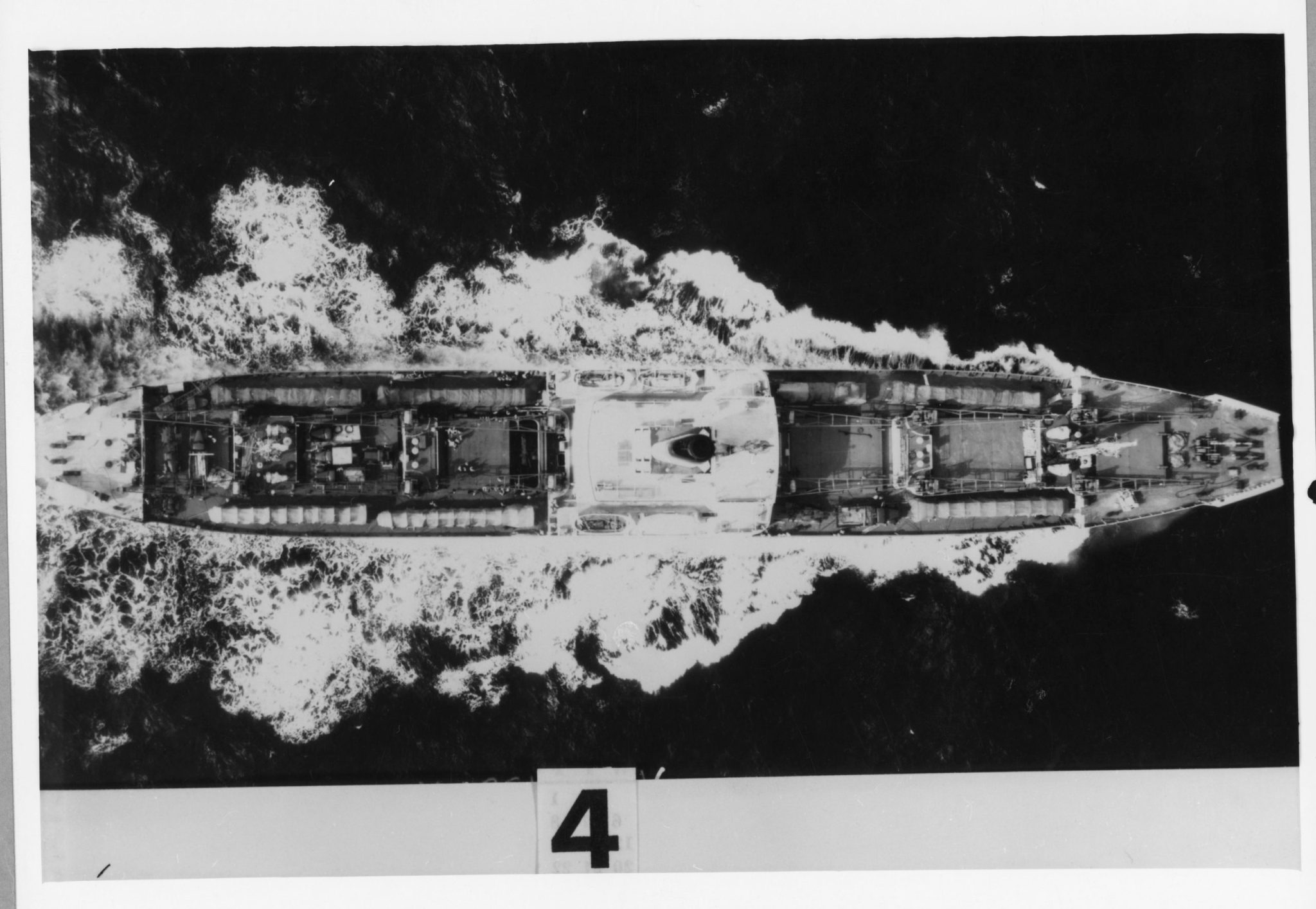
Overhead photograph of the Soviet ship Fizik Kurchatov with six canvas-covered missile transporters on deck as it leaves Cuba.

November 7: the missiles leave Cuba

Seen from almost directly overhead, the Soviet ship Fizik Kurchatov carries long, canvas-covered loads along its deck. The National Archives identifies six missile transporters carrying missiles and dates the photograph to the ship’s departure from Cuba on November 7. Khrushchev’s October 28 announcement had opened a route out of the confrontation, but implementation still had to be checked. Surveillance photography now served a different purpose: documenting removal. The gallery ends with that reversal, from finding missiles arriving in Cuban fields to watching them travel away by sea.

Photo details
Date
7 November 1962
Location
At sea after departure from Cuba; exact position not specified
Photographer
U.S. Department of Defense; individual photographer not identified
Archive / collection
U.S. National Archives — 306-PSD-62-7100; NAID 404792931
Rights / license
U.S. Department of Defense photograph. NARA states that the photographs in its Cuban Missile Crisis feature have no copyright restrictions.
Credit
U.S. Department of Defense / U.S. National Archives, photo no. 306-PSD-62-7100. Digital copy from The Unwritten Record. Source border and image label retained.

More Photo History

Read the story