Born on November 6, 1814, Adolphe Sax became famous for an instrument whose later career he never lived to hear. These objects place him in his own century. Five images are modern museum photographs of nineteenth-century instruments; the portrait is an 1844 lithograph. The final trumpet has later decoration, applied after its manufacture.
Topic: Music and Invention
01 / 06
The workshop he grew up in
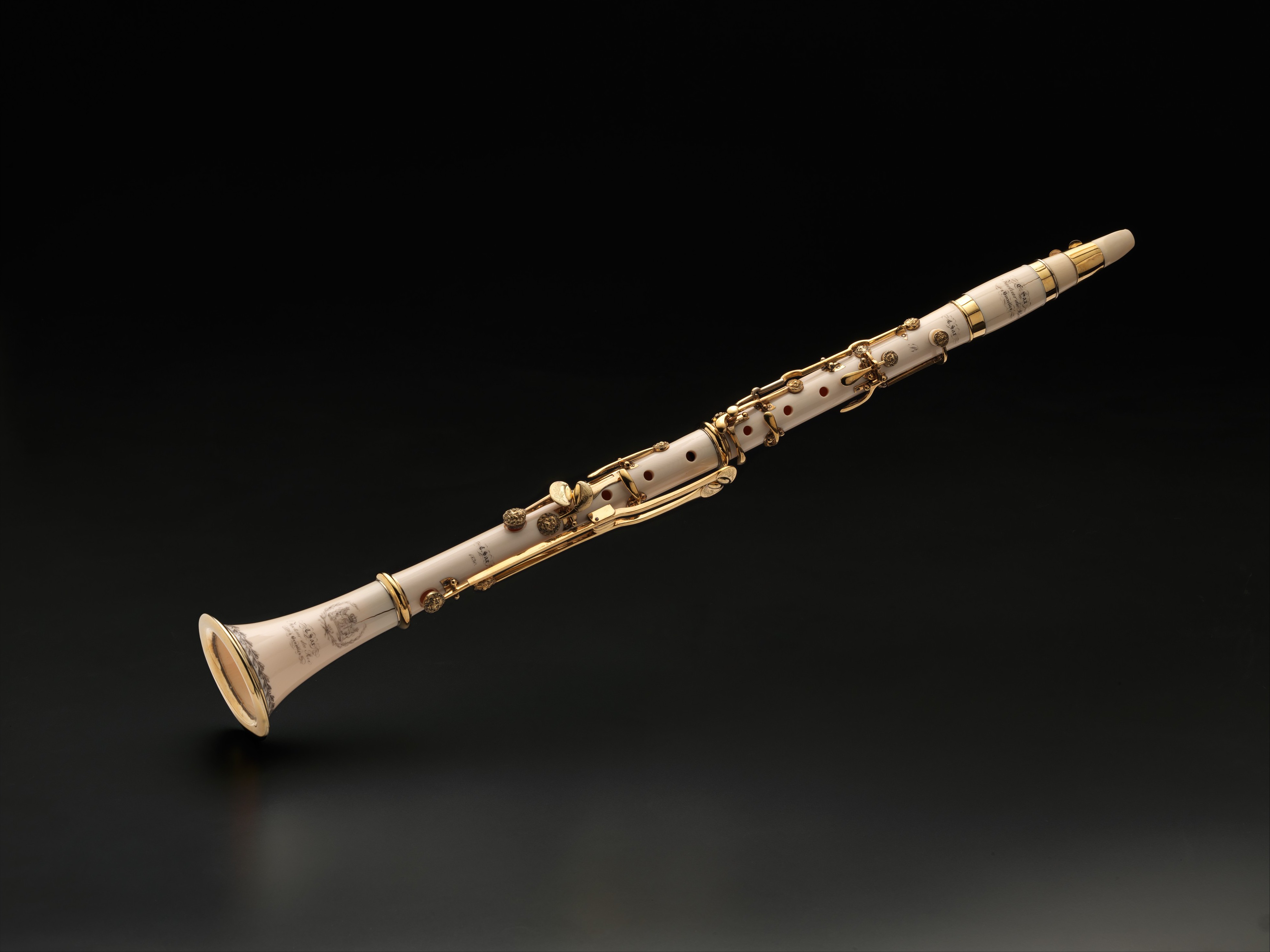
This clarinet was made by Charles Joseph Sax, Adolphe’s father, in Brussels in 1830. Ivory and gilded metal gave it an unusually elaborate finish, while its thirteen keys reflected a practical development in clarinet design. The museum photograph shows the object today; it is not a photograph of the Sax workshop.
Photo details
Date
1830 instrument; modern museum photograph
Location
Brussels, Belgium; photographed for The Met
Photographer
The Metropolitan Museum of Art; instrument by Charles Joseph Sax
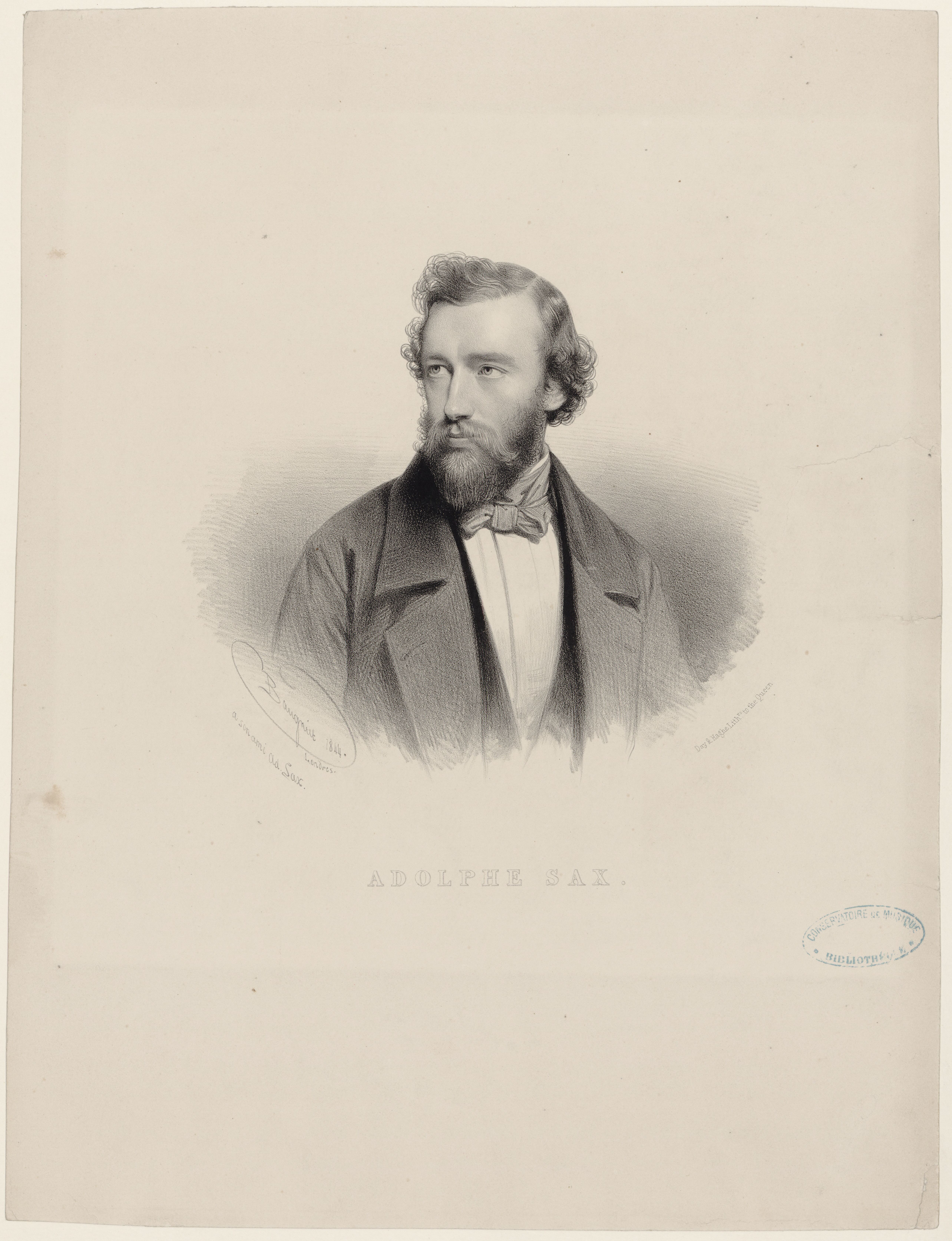
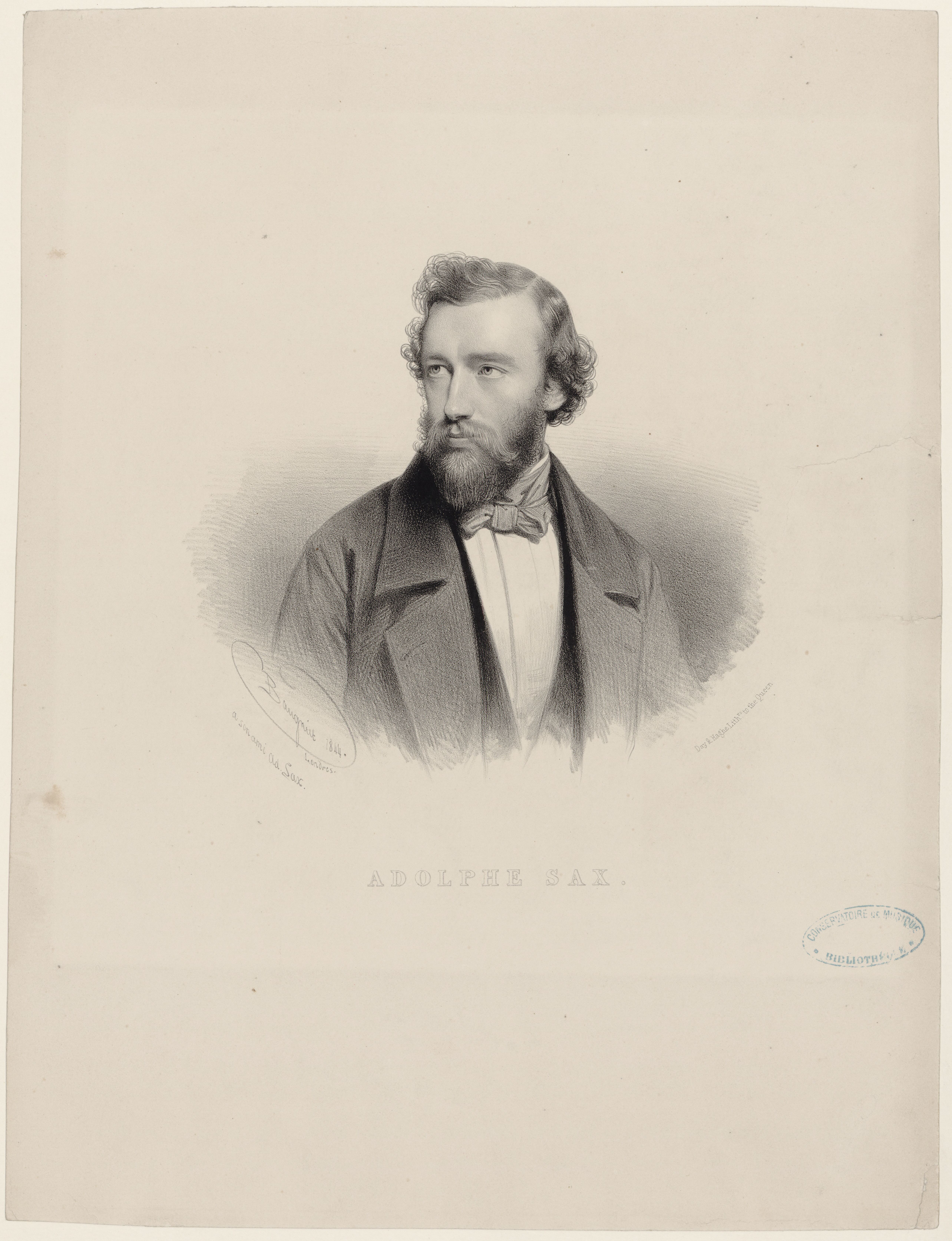
Charles Baugniet drew this portrait of Adolphe Sax in London in 1844, two years after Sax settled in Paris. Printed by Day & Haghe, it presents an already established professional. The image is a lithograph, not a photograph, and predates the 1846 patent for the saxophone.
Bibliothèque nationale de France, Gallica, btv1b8424771b
03 / 06
A relative of the first experiment
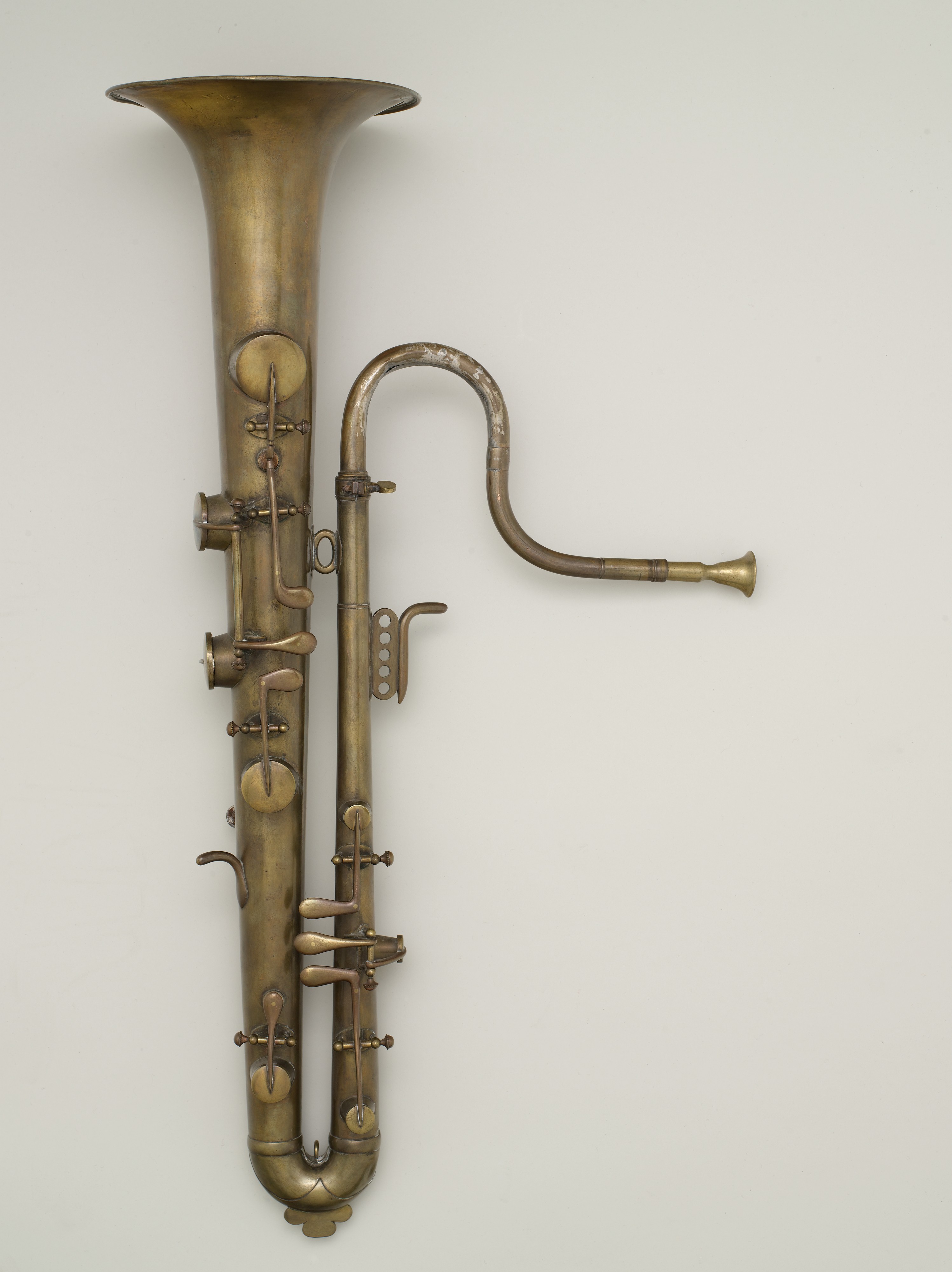
Sax made this soprano ophicleide in the middle of the nineteenth century. The keyed brass instrument helps explain the materials he worked with: the Met describes his experiments placing a bass-clarinet mouthpiece on an ophicleide. This surviving example illustrates that instrument family; it is not identified as the original experimental prototype.
Photo details
Date
Mid-19th century instrument; modern museum photograph
Location
France; photographed for The Met
Photographer
The Metropolitan Museum of Art; instrument by Adolphe Sax
89.4.2306; The Crosby Brown Collection of Musical Instruments, 1889
04 / 06
An early alto saxophone
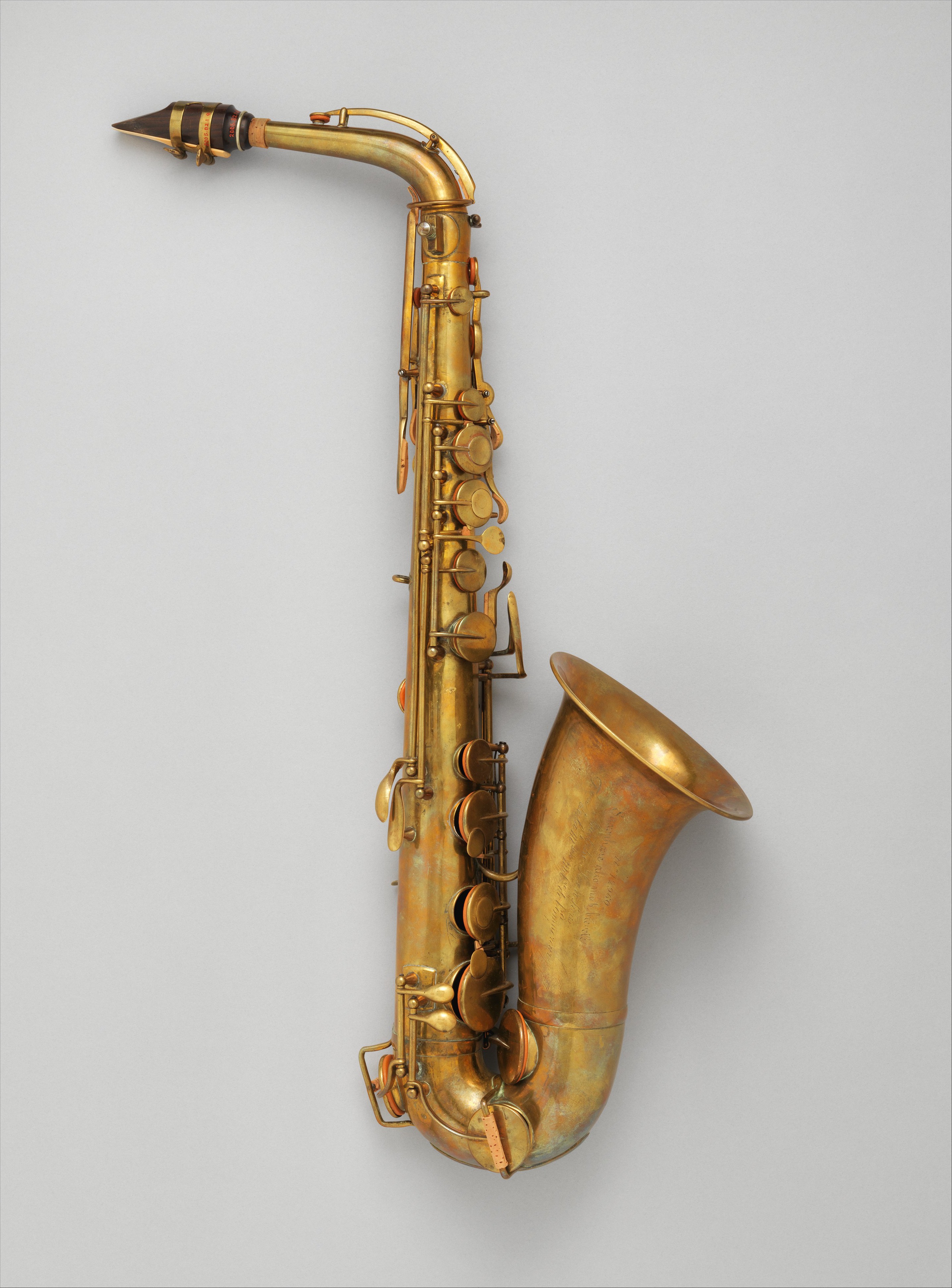
Made in Paris around 1855, this alto saxophone belongs to the first decades of the instrument’s history. Its brass body and network of keys make the family resemblance to later saxophones clear. Sax hoped to strengthen bands and orchestras; the jazz performances now associated with the instrument lay far in the future.
Photo details
Date
Circa 1855 instrument; modern museum photograph
Location
Paris, France; photographed for The Met
Photographer
The Metropolitan Museum of Art; instrument by Adolphe Sax
2005.82.1a–e, .2a–y; Purchase, Robert Alonzo Lehman Bequest, 2005
05 / 06
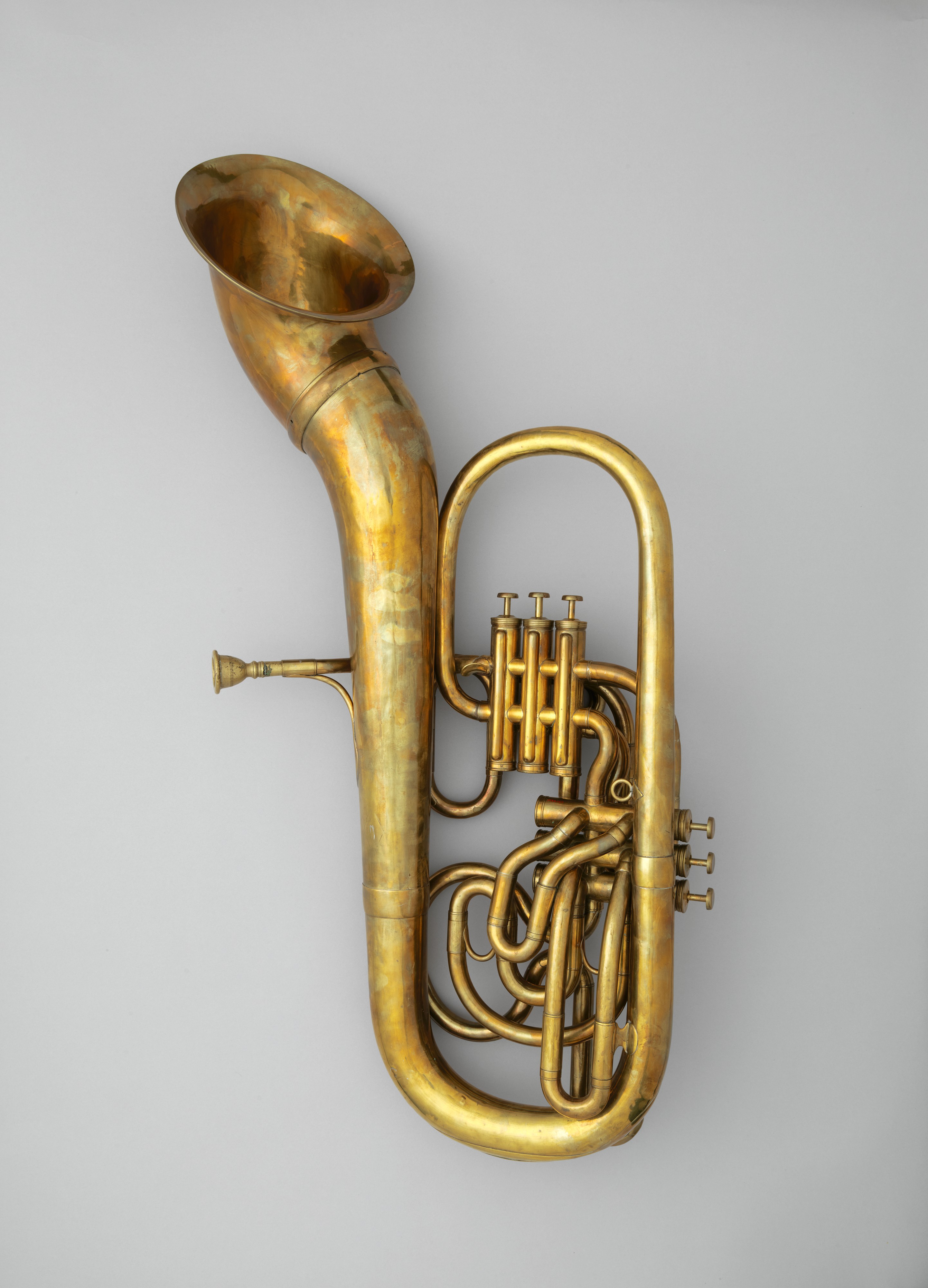
Six valves and a movable bell
This bass saxhorn from 1863 combines six independent valves with a bell that the player could turn to redirect the sound. Sax sought to improve tuning when valves were used in different combinations. Instruments of this type were used in the stage band he directed at the Paris Opéra.
Photo details
Date
1863 instrument; modern museum photograph
Location
Paris, France; photographed for The Met
Photographer
The Metropolitan Museum of Art; instrument by Adolphe Sax
1993.164; Purchase, Clara Mertens Bequest, in memory of André Mertens, 1993
06 / 06
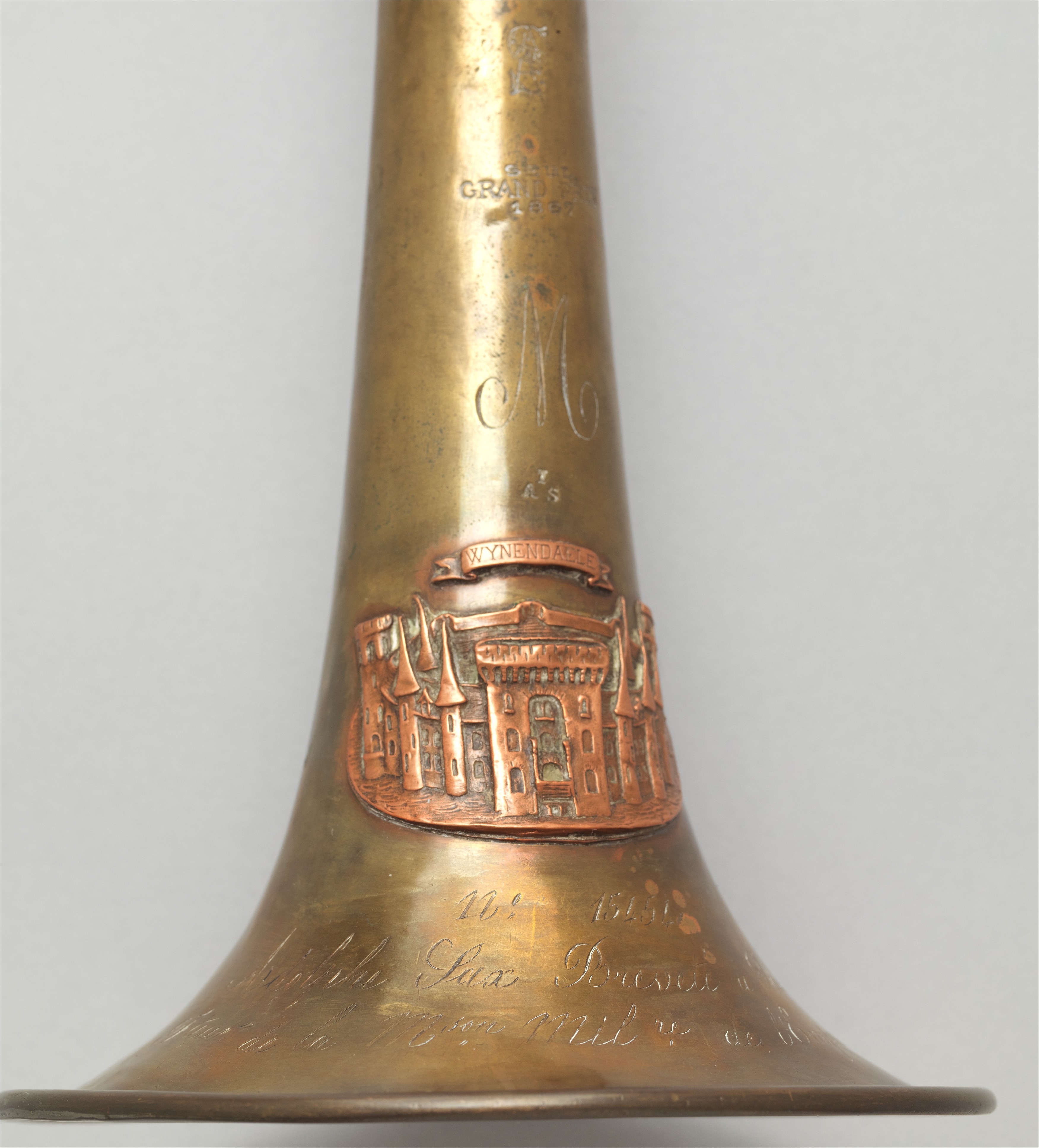
A trumpet bearing a castle’s badge
The bell of this trumpet carries a copper image of Wynendaele Castle in Belgium. Sax manufactured the instrument in 1856, but the decoration depicts the castle after its 1877 remodeling, suggesting a later sale from workshop stock. The design originated in Sax’s ceremonial trumpets for Napoleon III’s Cent Gardes.
Photo details
Date
1856 instrument; decoration after 1877; modern museum photograph
Location
Paris, France; photographed for The Met
Photographer
The Metropolitan Museum of Art; instrument by Adolphe Sax