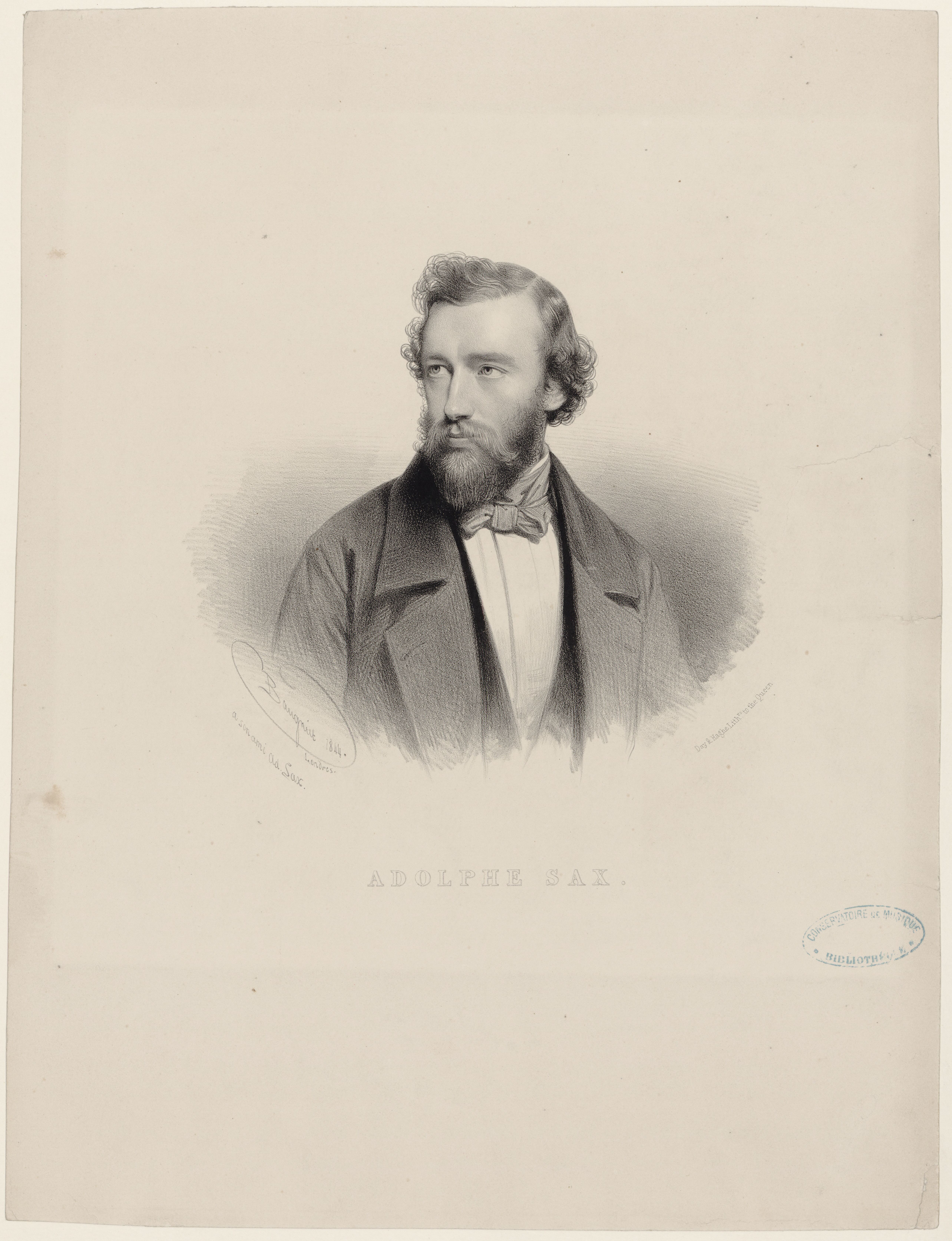
Sax grew up around tools as well as music. His father, Charles Joseph Sax, manufactured instruments, and the family moved to Brussels while Adolphe was young. Training in the workshop accompanied formal musical study. He learned how an instrument behaved from both ends, as the person making it and the person trying to play it.
A family business, and an ambitious son
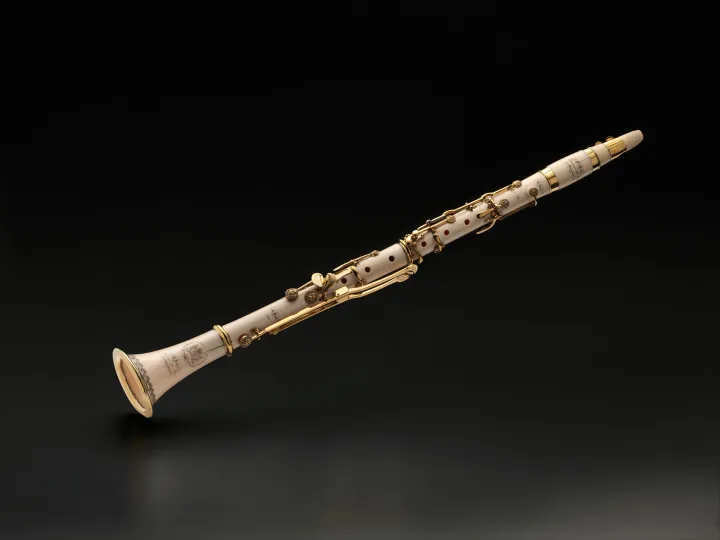
A clarinet his father made in 1830 shows the sophistication of that workshop. Its ivory body and richly worked metal keys look almost ceremonial. Underneath the decoration was a practical improvement: a thirteen-key system associated with Ivan Müller. The instrument belongs to a trade in which alterations to holes, keys and tubing could change what musicians were able to do.
Adolphe carried that experimental approach to Paris in 1842. There he found a much larger musical market and an influential advocate in the composer Hector Berlioz. Sax was trying to solve problems within existing ensembles, rather than invent a future genre. Among them was the need for a powerful lower voice in the woodwind family.
One promising experiment brought together two familiar pieces of equipment: a reed mouthpiece and the body of an ophicleide, a keyed brass instrument. The combination pointed toward the saxophone. Although its body was metal, the vibrating reed placed it in a different sound-producing family from a trumpet or horn. The crucial choice was how the player set the air in motion.
More than a saxophone
The saxophone patent followed in 1846. Winning a place in an orchestra proved harder than securing a patent. Established composers and players did not automatically welcome an unfamiliar voice, and the instrument made more immediate headway in bands. An alto saxophone made in Paris around 1855, now at the Metropolitan Museum of Art, records an early stage of a design that would later travel in directions its maker could not control.
Sax's workshop also supplied brass instruments. His saxhorn family helped reshape band music, with descendants including the euphonium, baritone and tenor horn. That part of his career can disappear behind the fame of the saxophone, yet it mattered enormously to musicians who played in local and military ensembles.
Some commissions joined acoustics to spectacle. Sax devised fanfare trumpets for Napoleon III's mounted imperial guard, the Cent Gardes, drawing on ancient Greek and Roman models. A surviving trumpet manufactured in 1856 was later supplied to a Belgian castle and decorated with its image. Music could also advertise rank, wealth and ceremony.
The working musician's problems
A bass saxhorn from 1863 shows another side of his restless engineering. Its bell can be turned to direct the sound, and it has six independent valves. Sax devised that system to tackle tuning difficulties that arose when players combined the valves of conventional three-valve instruments. Instruments of this kind served the Paris Opéra's stage band, which he organized and directed for decades.
These objects make the scale of his ambition tangible. Sax was concerned with projection, tuning, range and the practical demands of performance. His name survived most conspicuously on the saxophone, but his working life extended across a crowded family of instruments. Later musicians supplied the expressive styles that made his invention famous. The workshop had given them something new to work with.
Cover image: Bibliothèque nationale de France, Gallica, btv1b8424771b