Back to Photo History

Photo History Historium

72 Days in the Andes: Flight 571 in Photographs

Period
13 October–23 December 1972; later photographs, 2006 and 2018
Place
Andes, Argentina; Chile; the Flight 571 crash site and memorial

Two photographs from 1972 and two later views trace the Andes crash, the survivors' return, and the wreckage and memorial left in the mountains.

View 4 photographs
About this photo essay

On October 13, 1972, Uruguayan Air Force Flight 571 crashed in the Andes while traveling to Santiago, Chile. The aircraft carried 45 people: 40 passengers and five crew members. Among them were players from Montevideo's Old Christians rugby club, relatives and friends. The broken fuselage became a shelter for people who had left home expecting a rugby trip.

They endured injuries, freezing nights and dwindling supplies. When the food ran out, the survivors faced the decision that would later dominate accounts of their ordeal: to stay alive, they ate flesh from the bodies of those who had died. On October 29, an avalanche buried the fuselage and killed eight more people. Survival depended on shared work, improvised equipment and repeated attempts to find a way out.

On December 12, Nando Parrado, Roberto Canessa and Antonio Vizintín set out toward Chile. Vizintín returned to the wreckage, leaving his food with the other two. After a journey across the mountains, Parrado and Canessa found the Chilean herdsman Sergio Catalán, whose help brought the authorities to the survivors. Helicopters evacuated the men still at the crash site on December 22 and 23. Sixteen people survived the ordeal; 29 of those aboard had died.

This gallery begins with two photographs from 1972, then follows the story through later views of the aircraft's remains and the mountain memorial. The later pictures are dated as later records, rather than presented as photographs of the original rescue. The men's survival also became the subject of Alive and Society of the Snow.

Historical context: Museo Andes 1972 — https://mandes.uy/tragedia-milagro/ ; ¡Viven! chronology — https://www.viven.com.uy/dia-a-dia/ ; Nando Parrado's account — https://www.parrado.com/about/ . Individual image sources and rights notes appear in each photograph's credits.

Topic: Uruguayan Air Force Flight 571; the 1972 Andes disaster; survival and remembrance

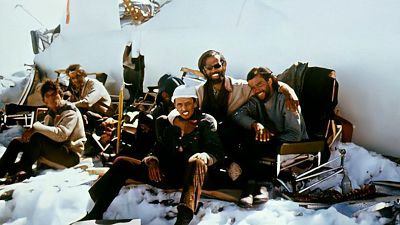
Survivors sitting in snow beside the torn fuselage and exposed seat frames of Flight 571 in the Andes.

December 1972: life beside the broken fuselage

Men sit in the snow beside Flight 571's damaged fuselage. Torn panels, exposed seating and the open cabin show how little separated their shelter from the mountains around it. Several men smile for the camera, although a photograph cannot record the freezing nights, injuries and hunger that continued beyond the frame.

The survivors used the aircraft's remains, luggage and seat materials to protect themselves. This small color image preserves a moment of company inside a struggle that lasted more than two months. The Commons record dates it to December 9, 1972; that precise exposure date has not been independently established.

Photo details
Date
December 1972 — Commons lists 9 December; precise day unconfirmed
Location
Flight 571 crash site, Andes, Mendoza Province, Argentina
Photographer
Photographer unconfirmed; Commons credits “Gustavo Cervino”
Archive / collection
Wikimedia Commons; source record cites Galería del Museo del Milagro Andino
Rights / license
Public reuse has not been verified. The Commons record applies a generic United States public-domain tag without a documented publication basis or permission from the underlying rights holder. This is a draft reference image pending rights confirmation.
Credit
Digital copy via Wikimedia Commons, “Sobrevivientes en la Montaña.jpg”. The record cites Galería del Museo del Milagro Andino and credits “Gustavo Cervino”; that attribution remains unconfirmed. Source resolution: 400 × 225 pixels. Source framing and color retained; no reconstruction.
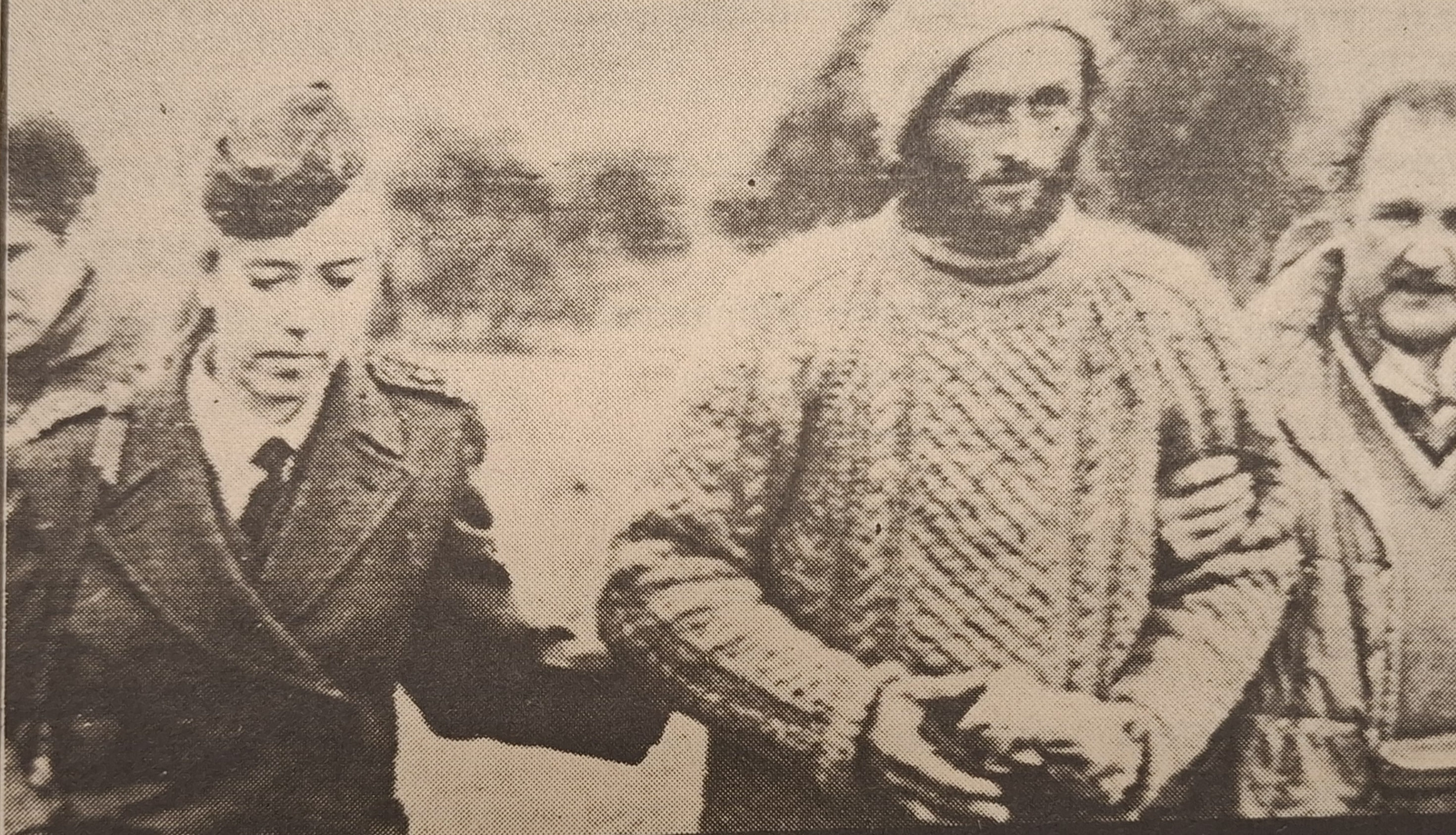
Newspaper photograph of a bearded Roberto Canessa in a thick sweater, identified by the source as the central man, standing among other men.

After the mountains: Roberto Canessa in December 1972

A bearded man in a thick sweater stands between other men, one of whom holds his arm. The Commons source identifies the central figure as Roberto Canessa. The printed dots and paper texture belong to a newspaper reproduction, rather than a modern restoration.

Canessa and Nando Parrado had crossed the mountains to find help. Their encounter with Sergio Catalán enabled the rescue of the men still at the wreckage on December 22 and 23. This photograph was published in Thailand's Daily News on December 26, 1972, according to its source record. That publication date is not evidence that the camera exposure occurred on the same day.

Photo details
Date
December 1972 — published 26 December; exact exposure date unspecified
Location
Exact location not specified in the source record
Photographer
Individual photographer not identified
Archive / collection
Daily News (Thailand), 26 December 1972; digital copy via Wikimedia Commons
Rights / license
The Commons record marks this newspaper reproduction as public domain in Thailand under its stated 50-year term. It does not establish the underlying photograph’s origin or permission for worldwide republication. Draft reference image pending rights confirmation.
Credit
Daily News (Thailand), 26 December 1972, as cited by Wikimedia Commons file “Fernando Parrado.jpg”. The source identifies the central man as Roberto Canessa despite the filename. Individual photographer and exact exposure date are not supplied. Newspaper appearance and framing retained.
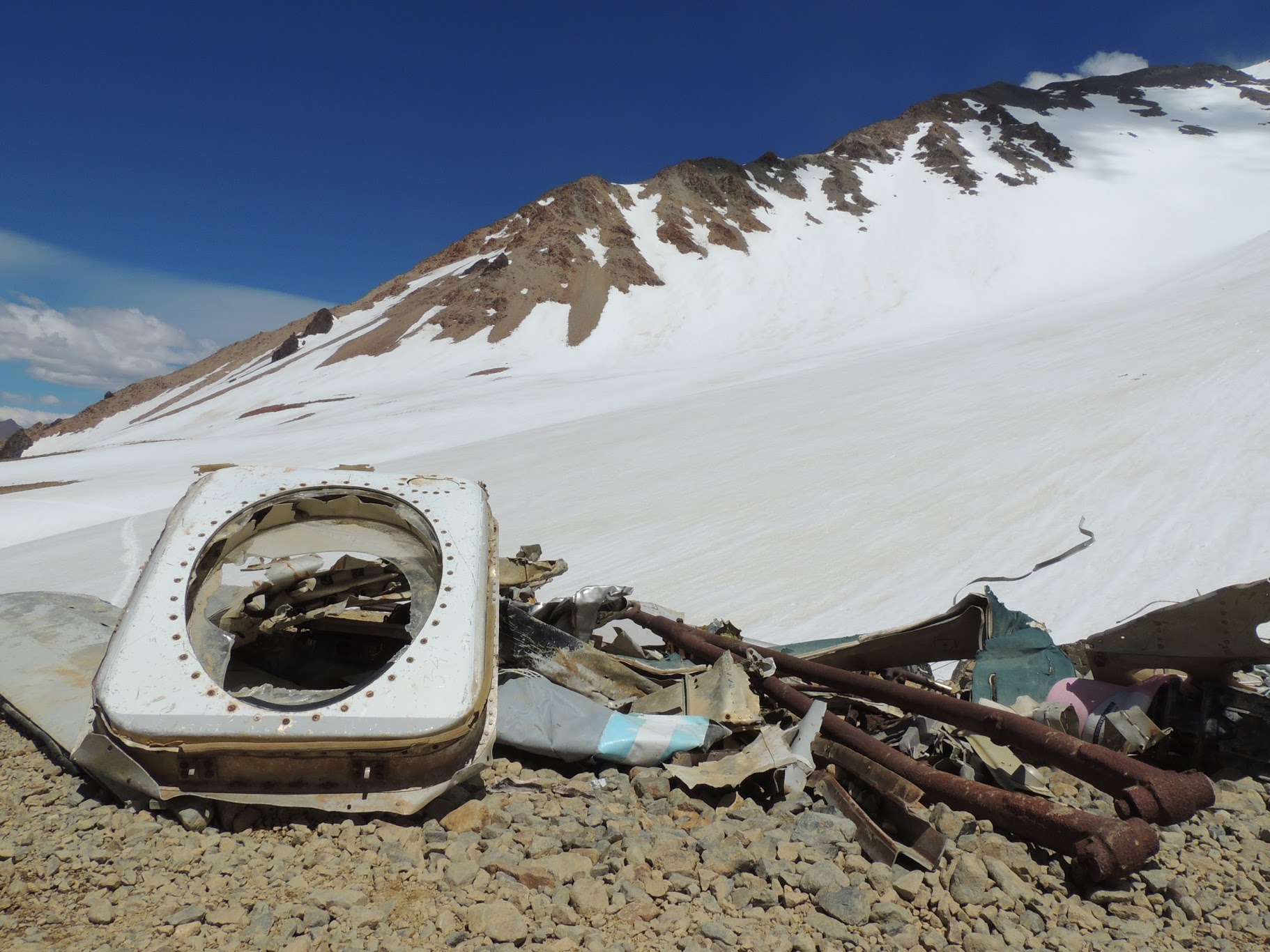
A rounded aircraft window frame and twisted fragments of Flight 571 lying below a snow-covered Andean slope.

What remains: fragments of Flight 571

A rounded aircraft window frame lies among twisted metal, torn panels and scattered wreckage against a snowy mountain slope. The Wikimedia Commons record identifies these as surviving fragments of Flight 571 and dates this photograph to March 10, 2018.

These are later remains at the accident site, rather than a photograph of the shelter as it stood in 1972. Placed after the survivors' return, the image brings the story back to its physical setting: an aircraft broken apart in a remote landscape, with material traces still visible decades later.

Photo details
Date
10 March 2018 — date in the source record
Location
Flight 571 crash site, Andes, Mendoza Province, Argentina
Photographer
Wunabbis
Archive / collection
Wikimedia Commons — Restos del vuelo 571.jpg
Rights / license
CC BY-SA 4.0 International. Credit Wunabbis, link to the source and license, and identify any changes. Adapted display versions of this image retain the same license. The supplied framing and color are retained.
Credit
Wunabbis / Wikimedia Commons, “Restos del vuelo 571.jpg” / CC BY-SA 4.0. Supplied framing and color retained.
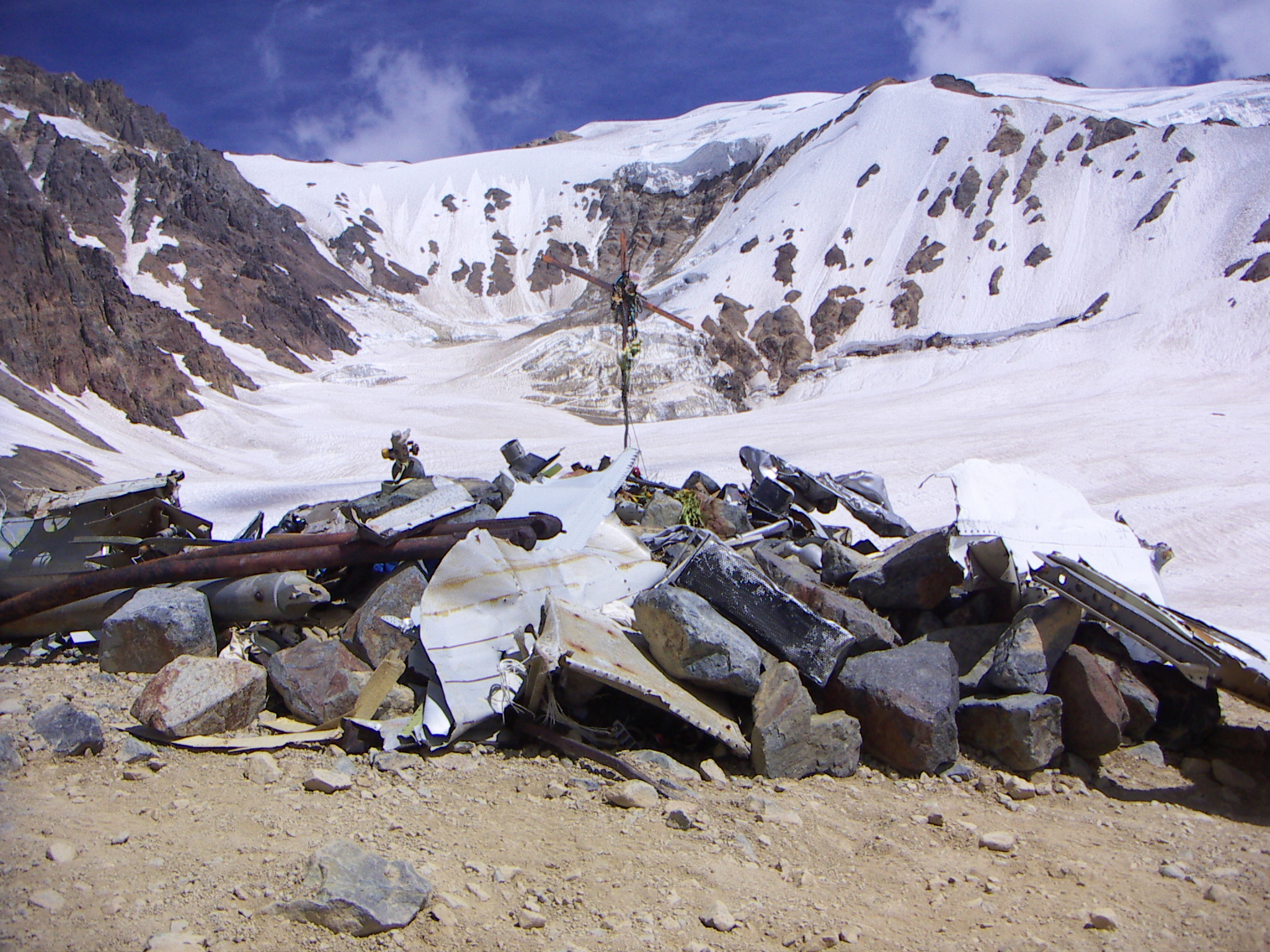
A cross and scattered aircraft fragments at the Flight 571 memorial below steep, snow-covered mountains.

A memorial in the valley

A cross rises above aircraft fragments and stones in a snow-filled mountain basin. The source describes this view as the crash memorial in February 2006, looking west toward the mountain crossed by Parrado and Canessa in their effort to reach help.

The gallery closes here because the story belongs to all 45 people aboard the flight. Sixteen returned; 29 did not. The memorial brings those losses into the same landscape that made the survivors' rescue so difficult. This is a later record of remembrance, taken more than three decades after the accident.

Photo details
Date
February 2006
Location
Flight 571 crash-site memorial, Andes, Argentina — view toward the west
Photographer
BoomerKC
Archive / collection
Wikimedia Commons — Crash site.JPG
Rights / license
The photographer released this own-work photograph into the public domain worldwide, as documented in the Commons licensing record (PD-self). Credit is retained. Supplied framing and color are retained.
Credit
BoomerKC / Wikimedia Commons, “Crash site.JPG”, February 2006. Public-domain release by the photographer (PD-self). Supplied framing and color retained.

More Photo History

Read the story