The Hercules flew only once, on November 2, 1947. Its photographs tell a longer story: a designer talking about giant flying boats before the war, an airframe taking shape, and a machine whose preservation required decades of work.
These images span 1938 to the museum era. Four belong to the aircraft’s construction or preservation record, one shows Hughes before the project, and the final view examines the surviving aircraft. Dates and later views are identified individually.
Topic: Aviation History
01 / 06
A flying-boat idea before the war
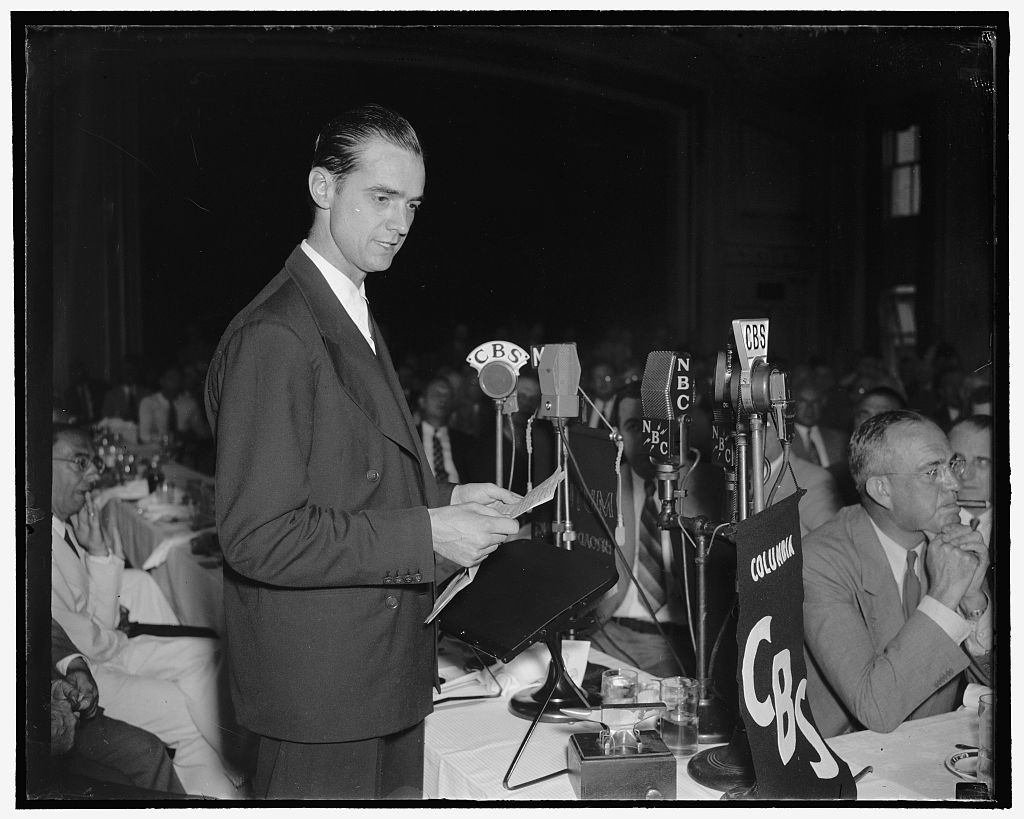
Hughes addressed the National Press Club after his celebrated round-the-world flight. The original caption records him discussing giant flying boats for Atlantic travel. This 1938 appearance predates the Hughes-Kaiser wartime project, but the ambition was already part of his public thinking.
Photo details
Date
July 21, 1938
Location
Washington, D.C., United States
Photographer
Harris & Ewing
Archive / collection
Library of Congress, hec.24844
Rights / license
No known restrictions on publication; Harris & Ewing Collection
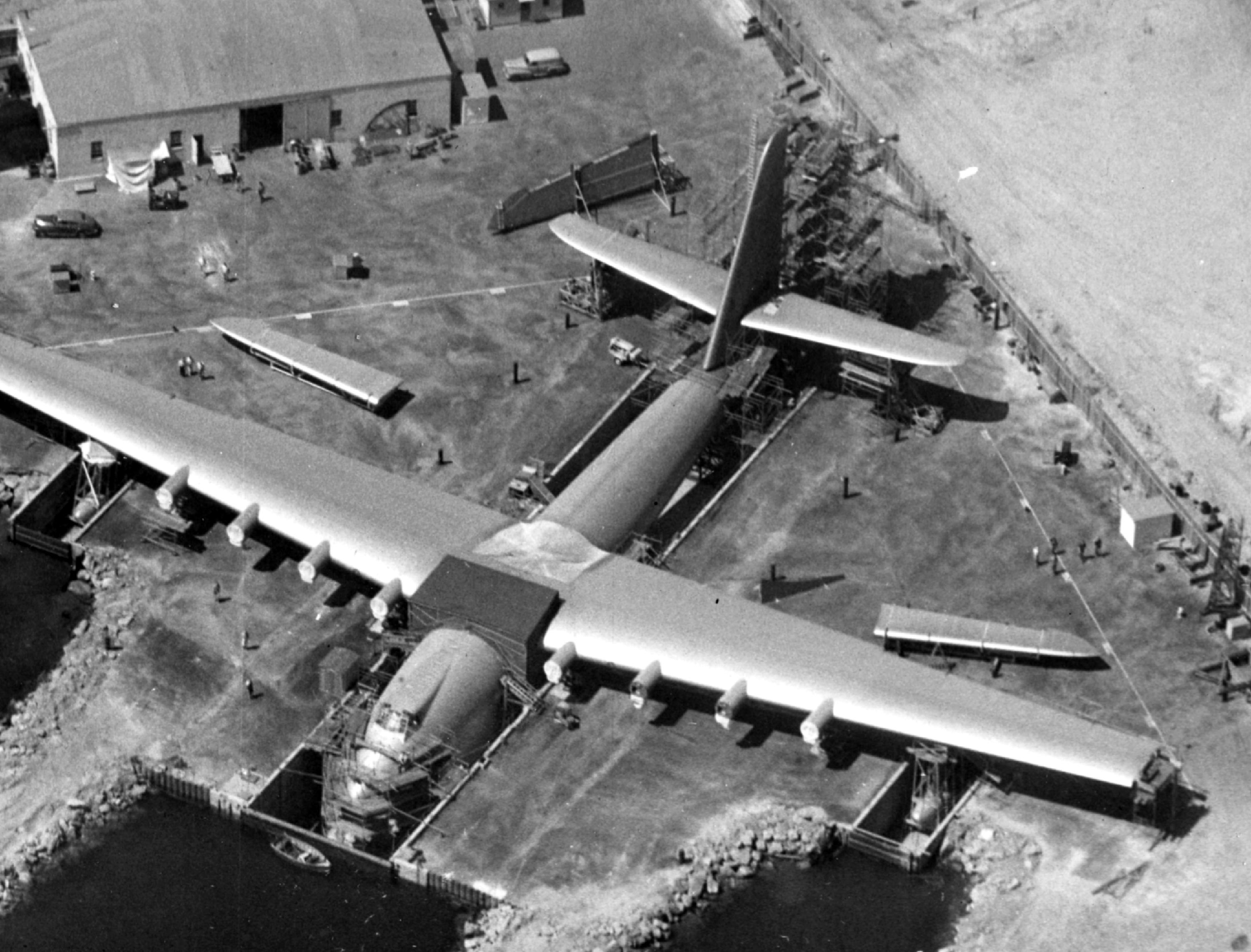
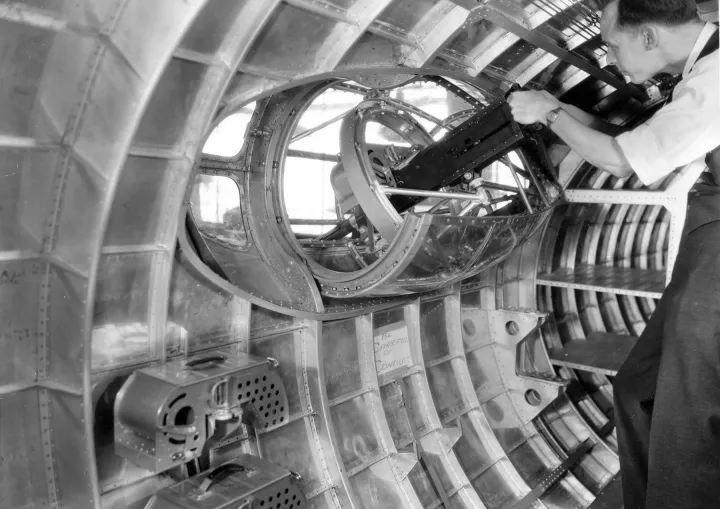
An overhead view records the Hercules during construction. The archive does not provide an exact date, and the photograph is presented here with that uncertainty intact. Wings, fuselage and the surrounding work area give a useful measure of the project’s physical scale.
Photo details
Date
Undated; construction period before November 1947
Location
Hughes Airport, California, United States
Photographer
Photographer unidentified
Archive / collection
San Diego Air & Space Museum Archives
Rights / license
No known copyright restrictions, as recorded by the museum
Photographer unidentified / San Diego Air & Space Museum Archives
03 / 06
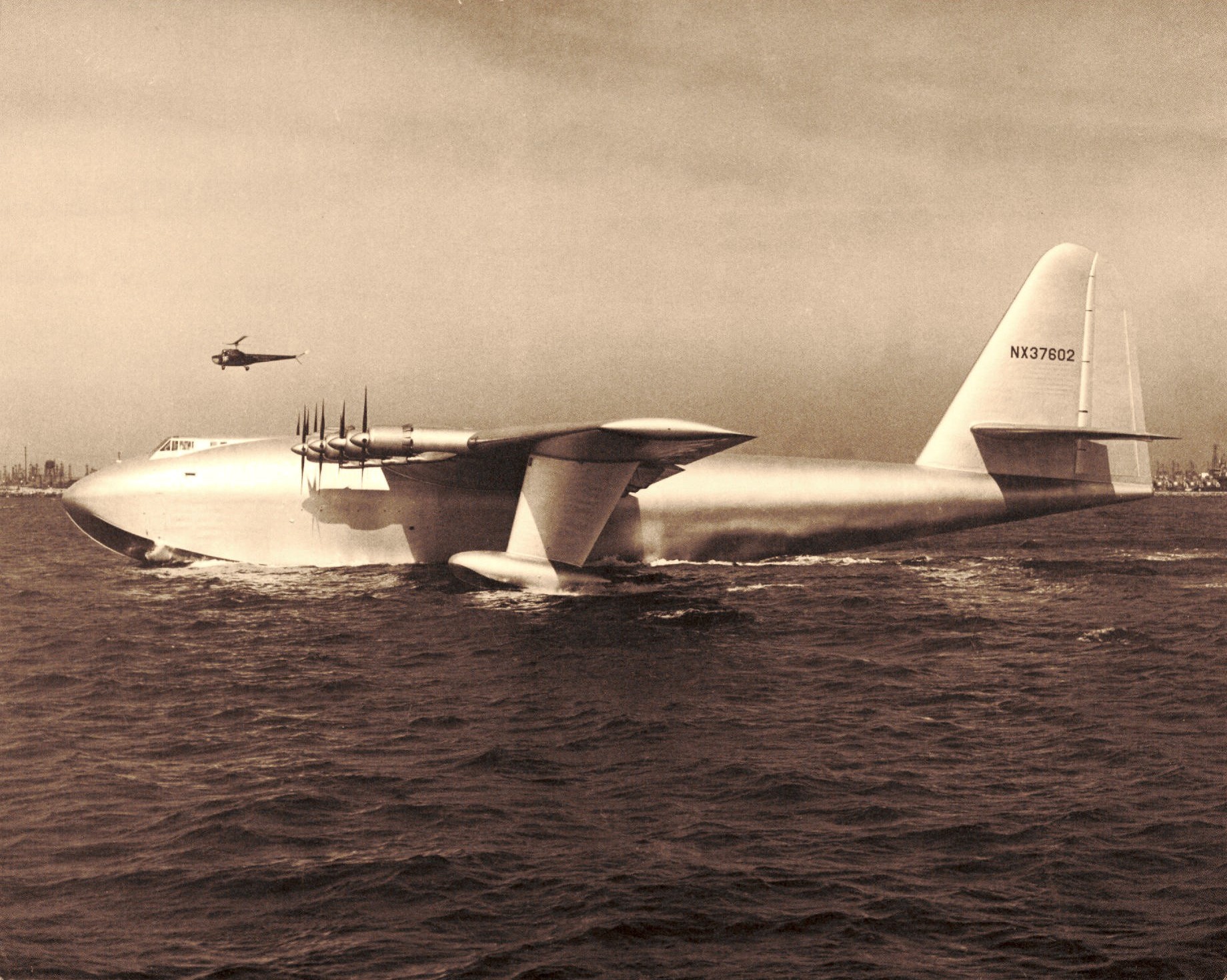
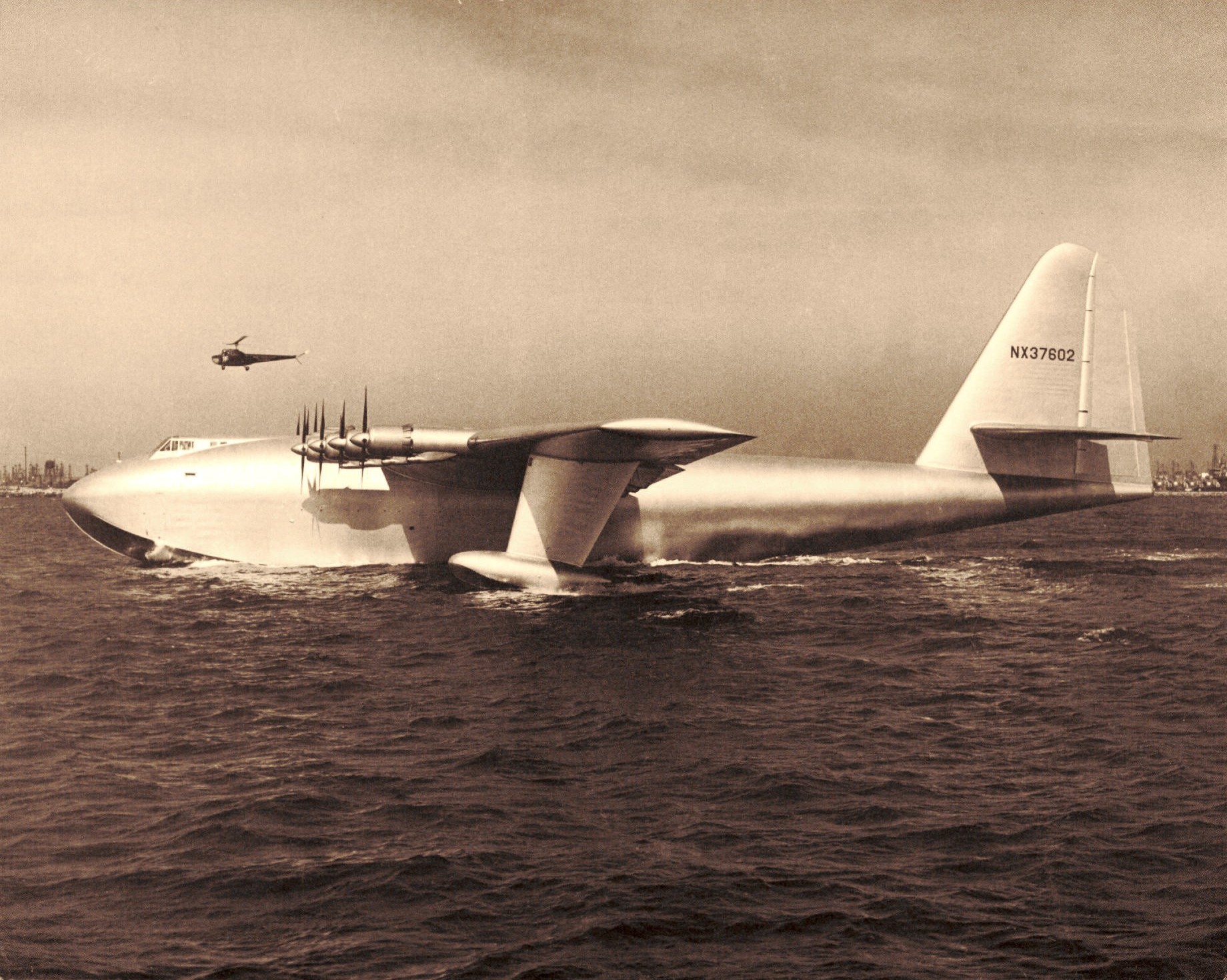
The Hercules on the water
The completed flying boat sits on the water in this photograph cataloged as circa 1947. It shows the hull and long wing carrying four engines on each side. The image is not presented as proof that the aircraft is airborne: the documented first and only flight came on November 2.
Photo details
Date
Circa 1947
Location
California, United States
Photographer
Photographer unidentified
Archive / collection
San Diego Air & Space Museum Archives; Wikimedia Commons
Rights / license
No known copyright restrictions, as recorded by the museum
Photographer unidentified / San Diego Air & Space Museum Archives; Wikimedia Commons
04 / 06
Preparing for a public life
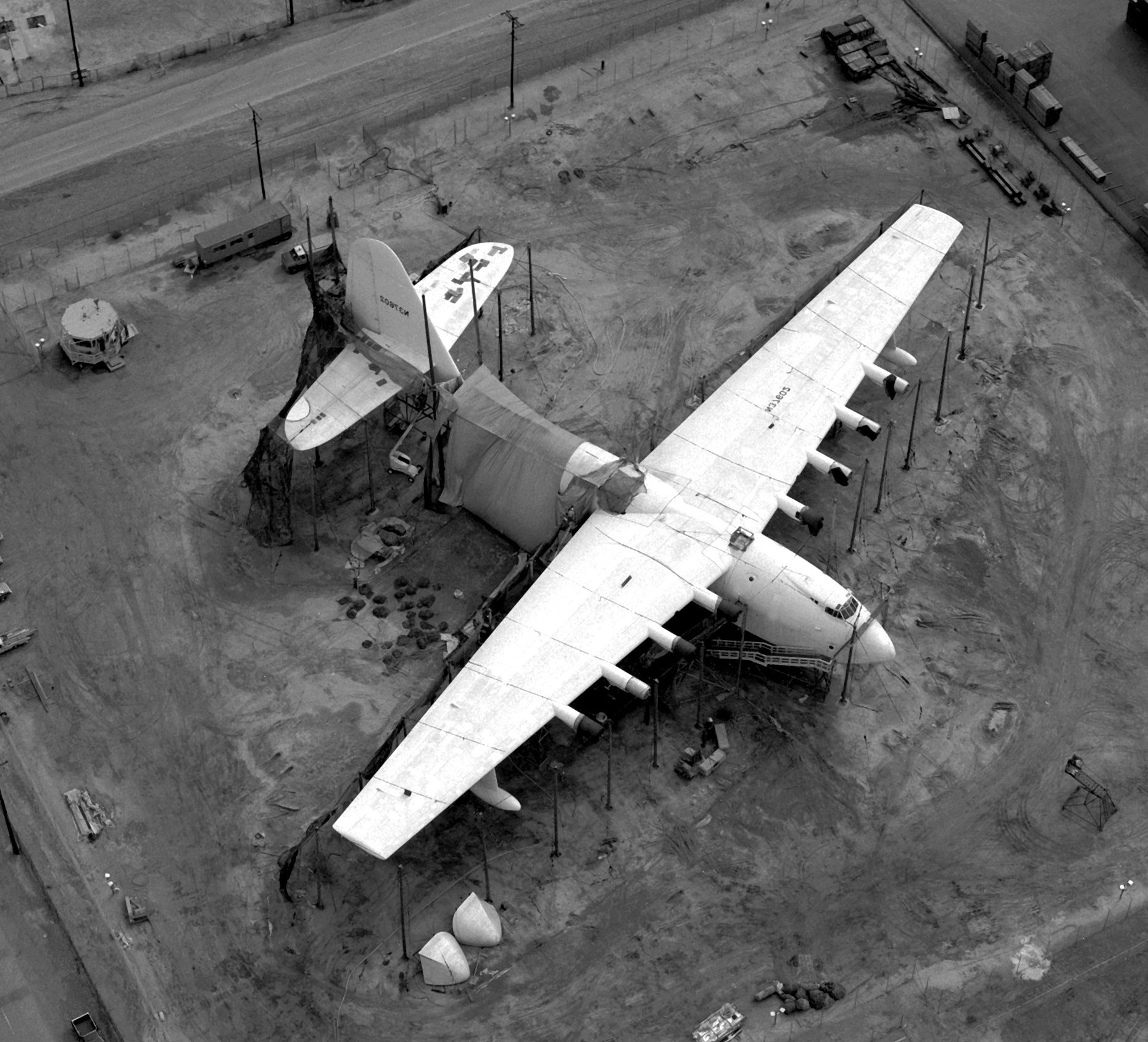
Navy photographer Robert G. Swan photographed the aircraft at Long Beach in March 1982. More than three decades had passed since the flight. Its preservation depended on keeping an enormous, unusual structure intact even though it no longer had an operational role.
Photo details
Date
March 13, 1982
Location
Long Beach, California, United States
Photographer
PH1 Robert G. Swan, U.S. Navy
Archive / collection
U.S. Department of Defense, DN-SN-82-05646
Rights / license
Public domain in the United States; official U.S. military photograph
PH1 Robert G. Swan, U.S. Navy / U.S. Department of Defense, DN-SN-82-05646
05 / 06
A new journey by water
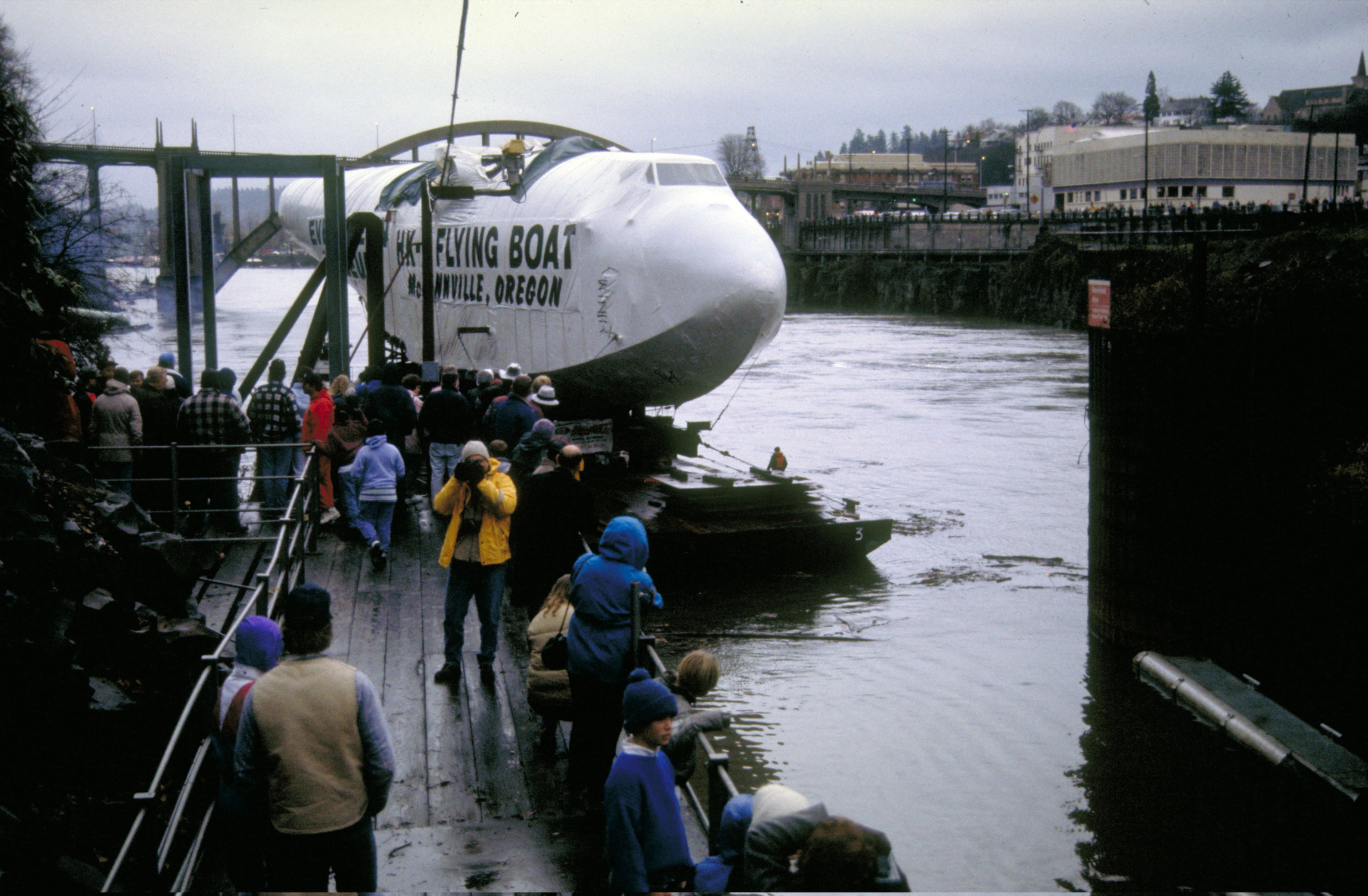
The detached fuselage passed through the Willamette Falls Locks on its way to McMinnville. Moving the aircraft required separating components that had once been designed to function as a single flying machine. This Corps of Engineers record belongs to the preservation journey of 1992, not to the 1947 test.
Portland Corps / U.S. Army Corps of Engineers, Portland District
06 / 06
Four engines beneath one wing
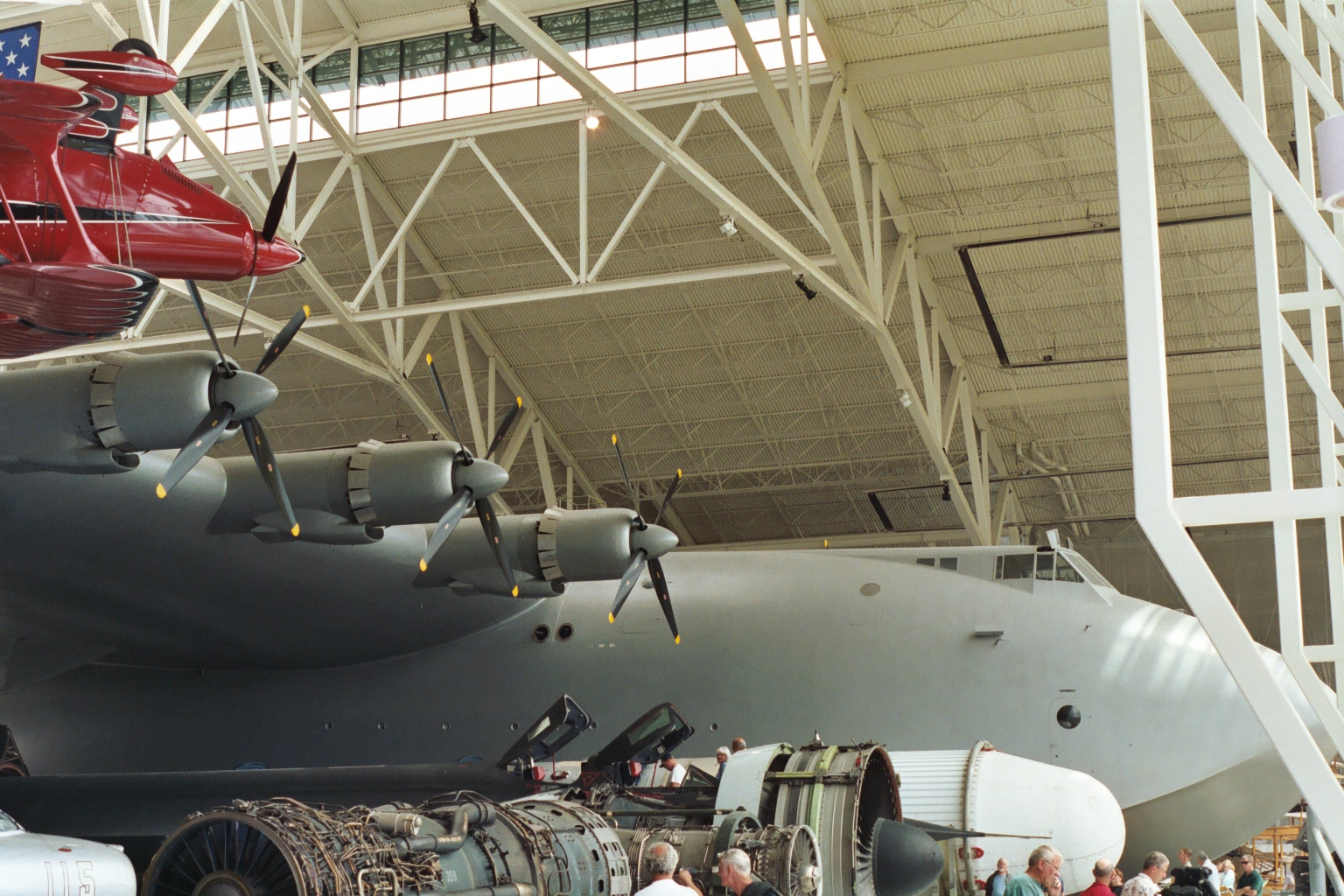
This later museum photograph brings the nose, cockpit and starboard engines into the same frame. It is a view of the surviving aircraft, not a period flight photograph. Preserving the machine allows details that disappear in distant harbor pictures to be examined at close range.
Photo details
Date
Photograph uploaded August 31, 2005; exact capture date not recorded
Location
McMinnville, Oregon, United States
Photographer
Karl Dickman
Archive / collection
Wikimedia Commons
Rights / license
Released into the public domain worldwide by the photographer