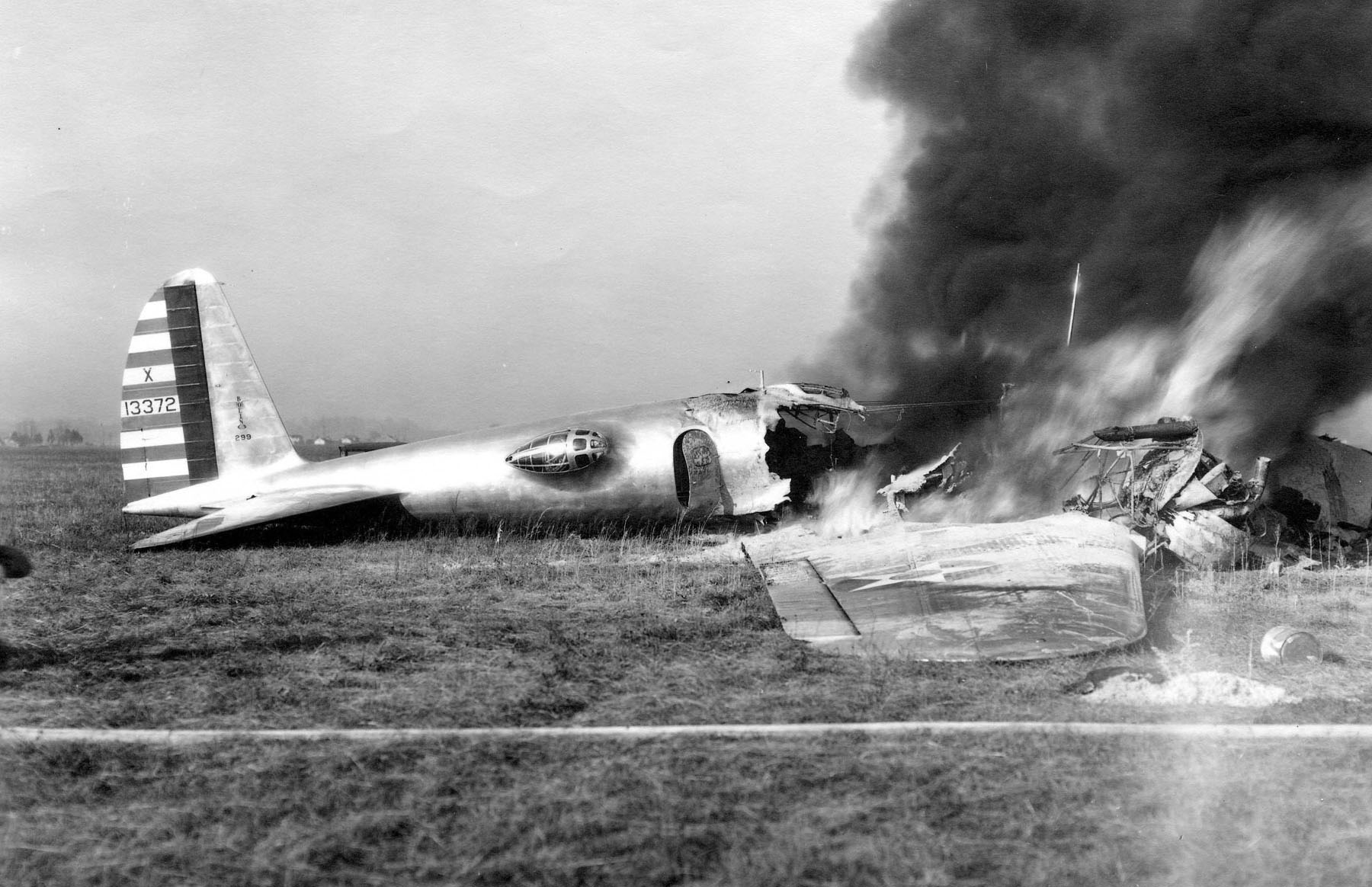
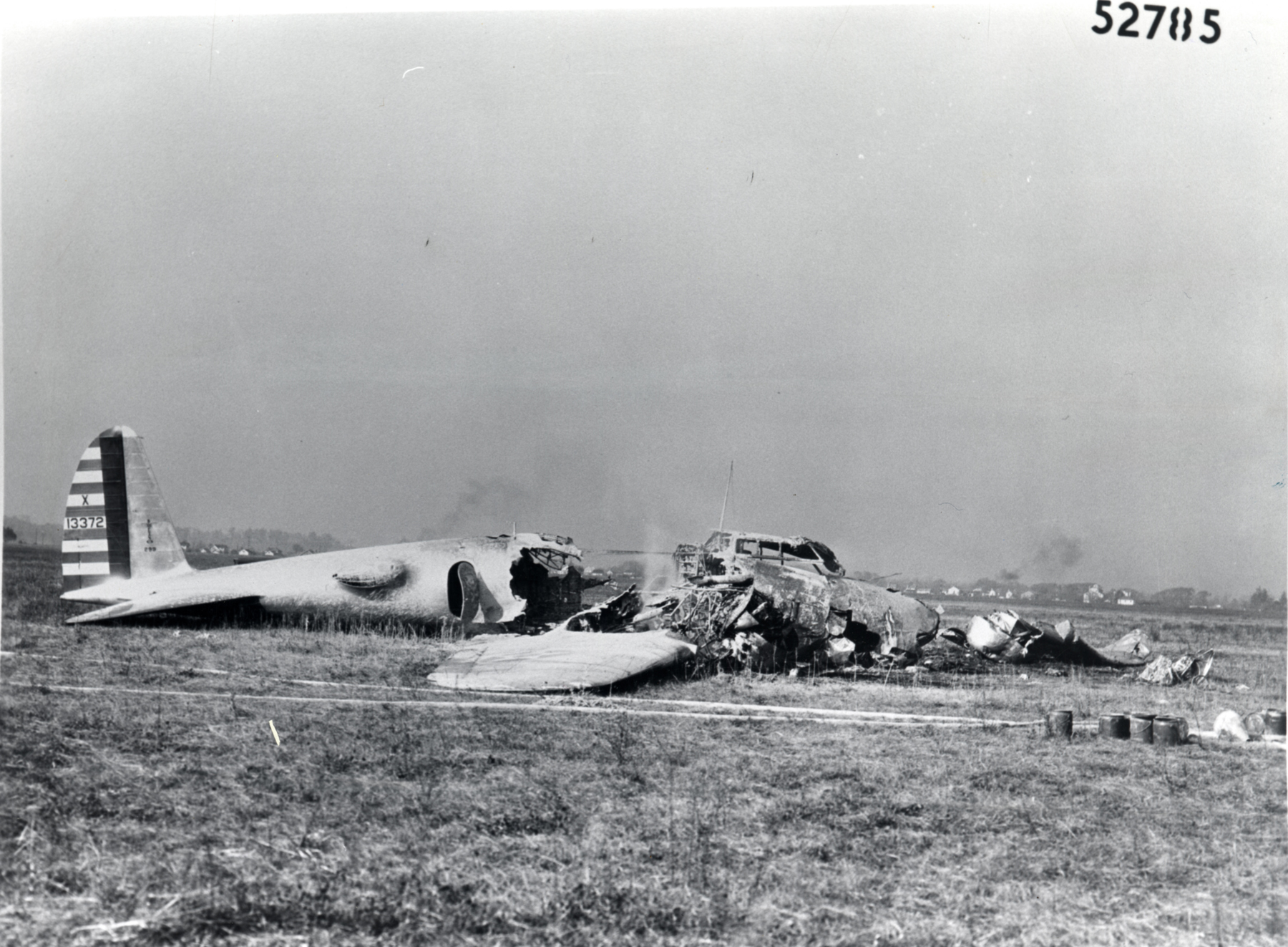
Boeing’s Model 299 crashed at Wright Field on October 30, 1935. Its rudder and elevator controls had remained locked for takeoff. These official photographs begin with the intact prototype and its development, then follow the fire and the wreckage that investigators examined. The aircraft was lost; the design continued toward the B-17, and the accident helped establish written cockpit checks.
Topic: Aviation History
01 / 06
A prototype before the loss
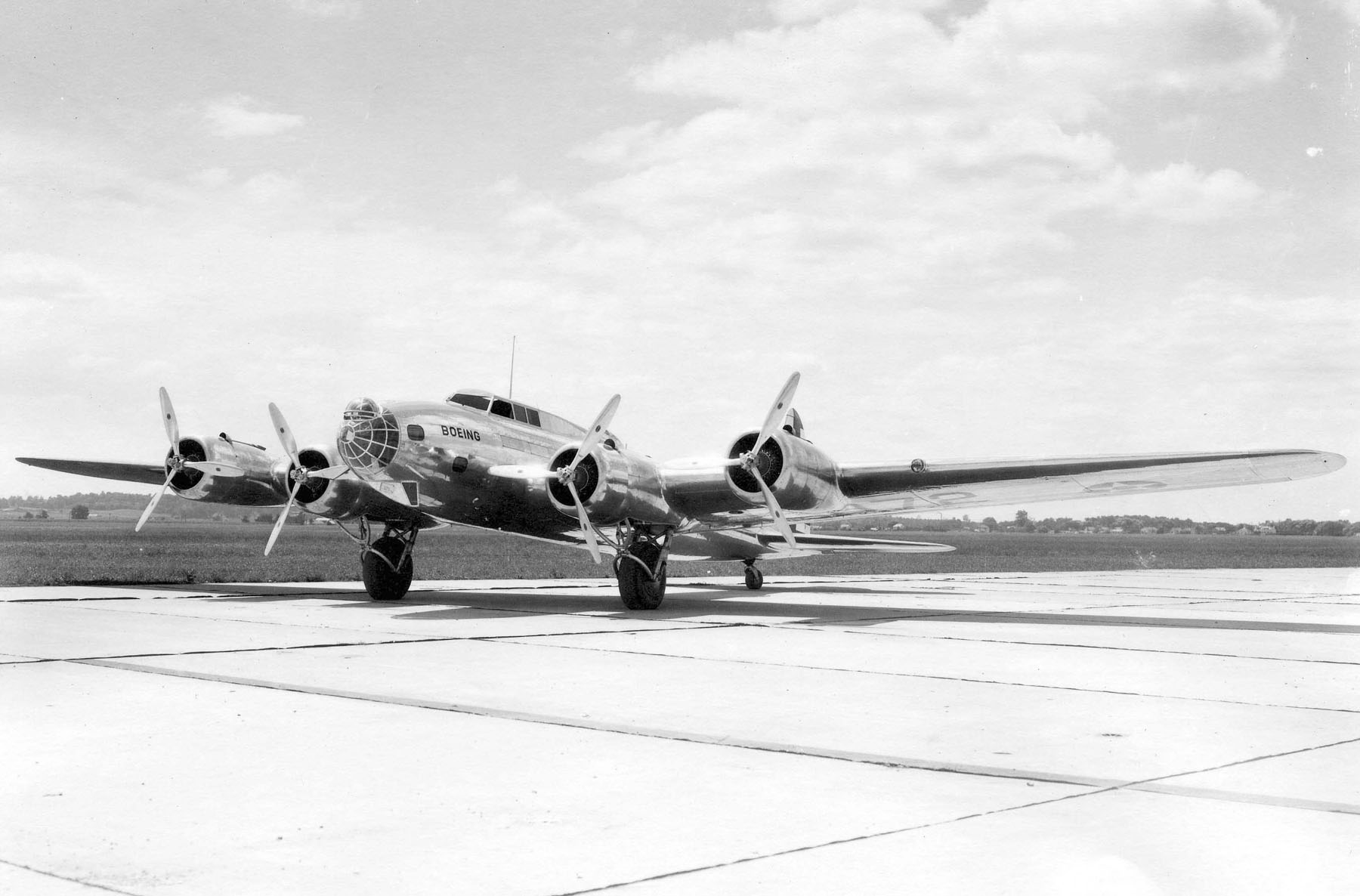
Boeing’s prototype brought four engines and several gun positions into one large bomber. This photograph records the intact aircraft before the October crash; the archive supplies the year, not the day. Later B-17s inherited the basic idea but accumulated changes in engines, equipment, structure and armament.
Photo details
Date
1935, before October 30
Location
Boeing Model 299; exact photographic location not specified
Photographer
U.S. military photographer; individual not identified
Archive / collection
National Museum of the U.S. Air Force, 060706-F-1234S-002
Rights / license
Public domain in the United States; official U.S. government photograph.
U.S. Air Force / National Museum of the U.S. Air Force; public domain.
02 / 06
A defensive position takes shape
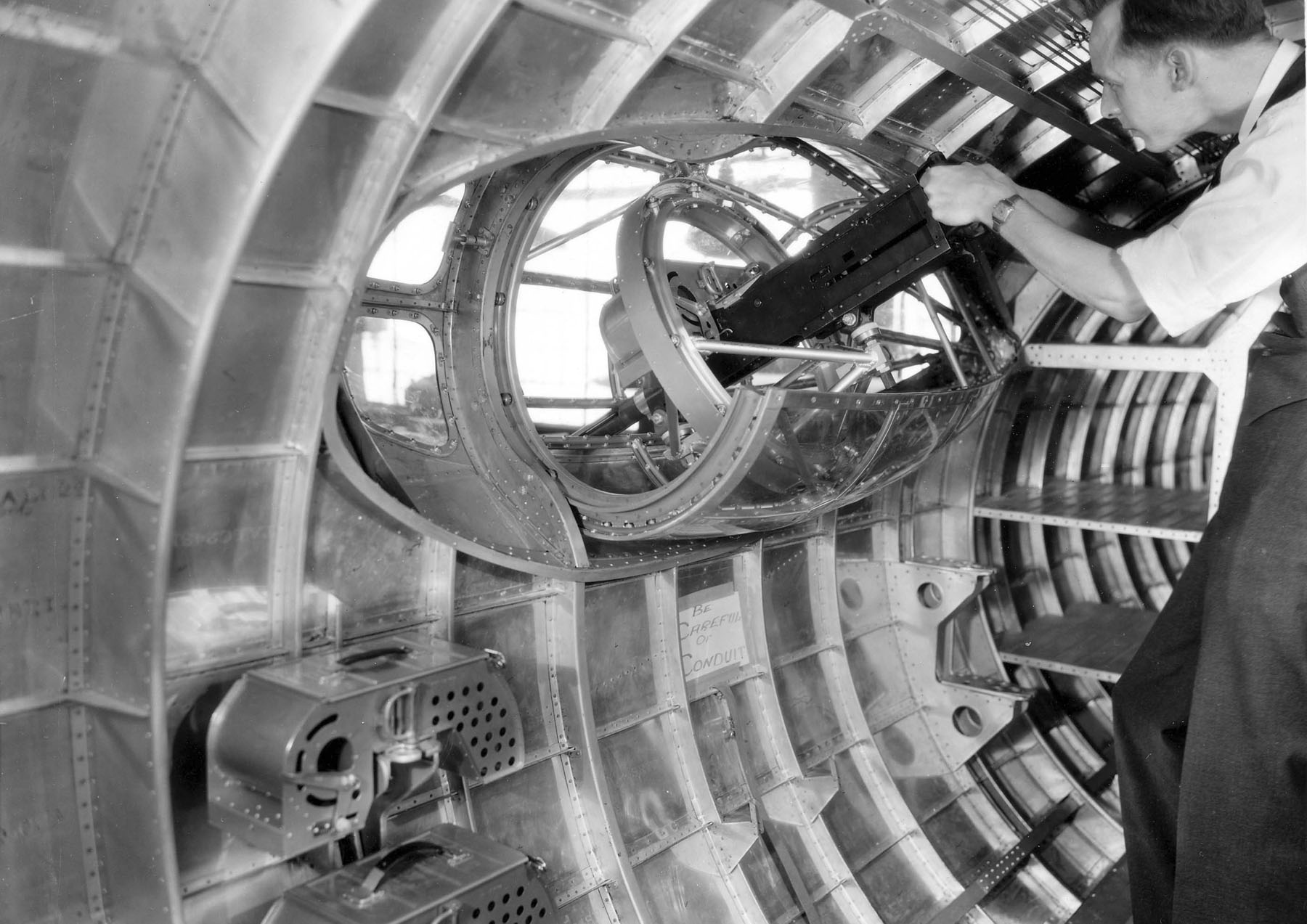
The streamlined waist blister accommodated a defensive gun position. Such fittings helped give the prototype its Flying Fortress reputation, but each station added equipment and responsibilities for the crew. The photograph belongs to the aircraft’s development period, months before the Army evaluation ended in a fatal crash.
Photo details
Date
June 18, 1935
Location
Boeing Model 299 interior; location not specified
Photographer
U.S. military photographer; individual not identified
Archive / collection
National Museum of the U.S. Air Force, 060706-F-1234S-009
Rights / license
Public domain in the United States; official U.S. government photograph.
U.S. Air Force / National Museum of the U.S. Air Force; public domain.
03 / 06
The cockpit and its demands
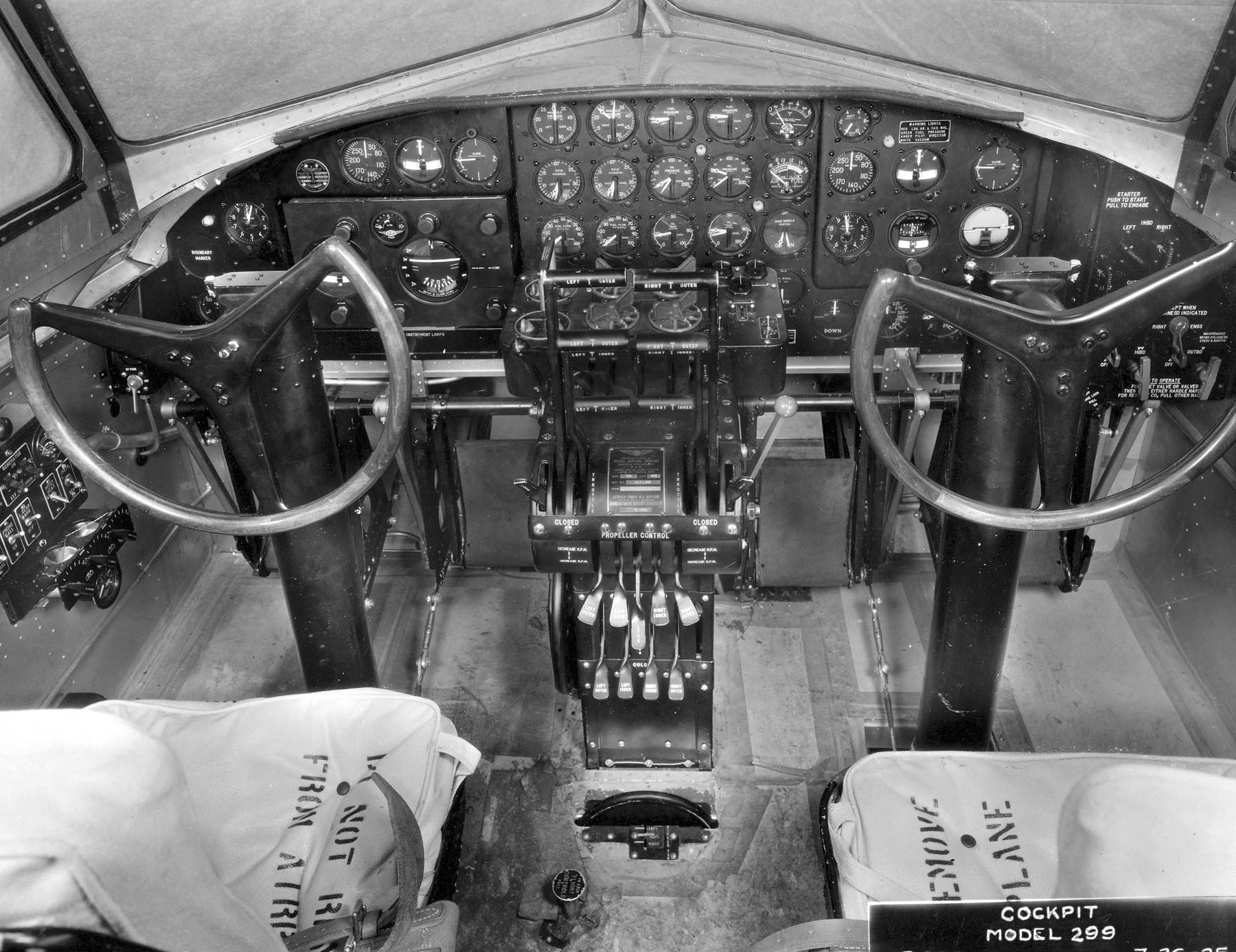
The instrument panel and paired controls show the working space of the prototype’s pilots. Operating four engines and an unfamiliar aircraft required more than confidence at the controls. After the crash, the locked tail controls became the central finding; this earlier cockpit photograph helps place that finding in the crew’s working environment.
Photo details
Date
July 26, 1935
Location
Boeing Model 299 cockpit; location not specified
Photographer
U.S. military photographer; individual not identified
Archive / collection
National Museum of the U.S. Air Force, 060706-F-1234S-004
Rights / license
Public domain in the United States; official U.S. government photograph.
U.S. Air Force / National Museum of the U.S. Air Force; public domain.
04 / 06
The view below the nose
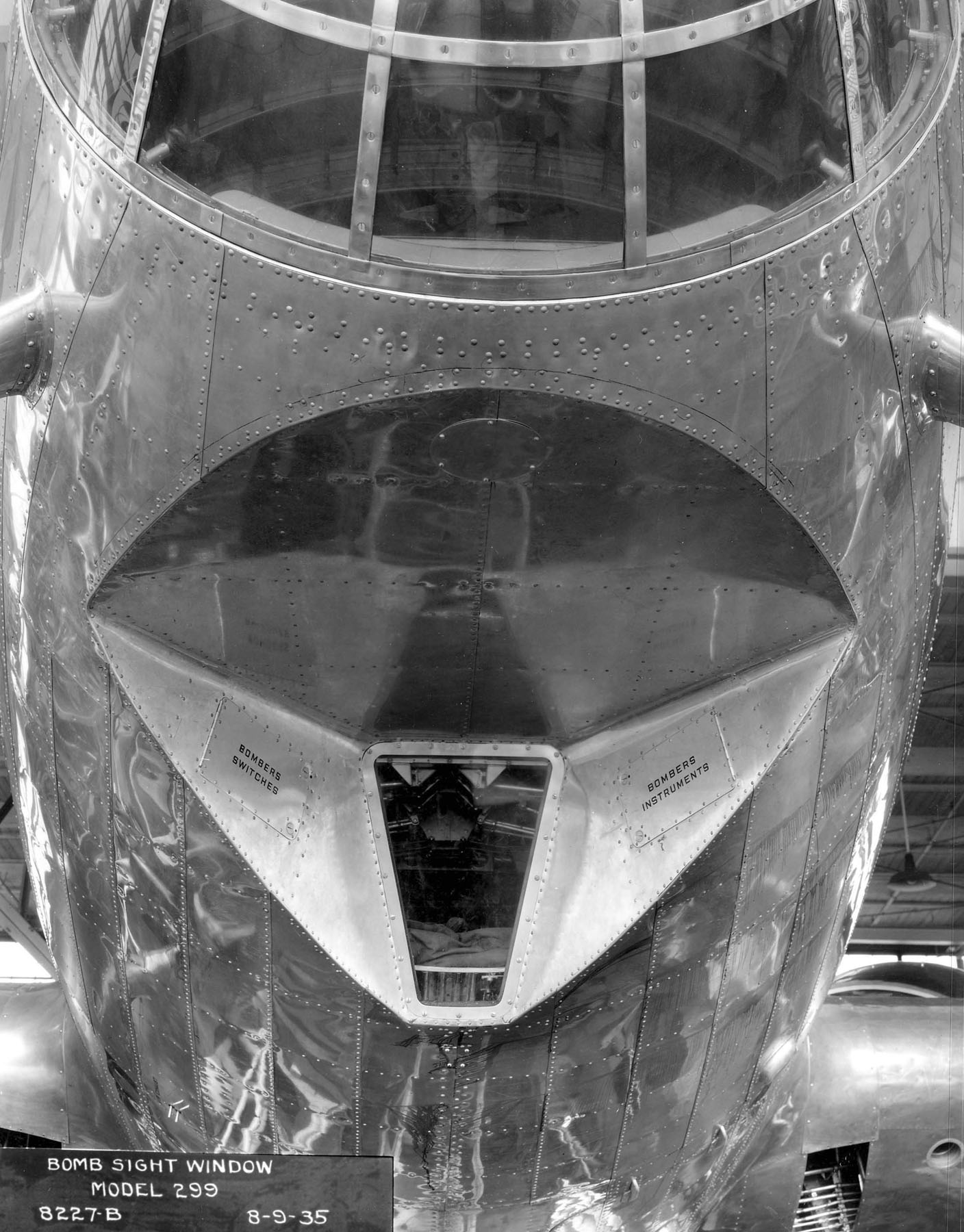
This view records the prototype’s bomb-sight window. The machine had been designed for a military task: taking a bomb load over distance and aiming it at a target. Its promise to the Air Corps extended beyond speed or appearance, helping explain why supporters did not abandon the design after the loss.
Photo details
Date
August 9, 1935
Location
Boeing Model 299; location not specified
Photographer
U.S. military photographer; individual not identified
Archive / collection
National Museum of the U.S. Air Force, 060706-F-1234S-006
Rights / license
Public domain in the United States; official U.S. government photograph.
U.S. Air Force / National Museum of the U.S. Air Force; public domain.
05 / 06
Fire at Wright Field
Smoke rises from Model 299 after the failed takeoff. Rescue efforts began quickly because the aircraft came down on the field. Major Ployer Hill died that day; Boeing pilot Leslie Tower died later from his injuries. Three other men aboard survived. The loss prompted an immediate investigation.
Photo details
Date
October 30, 1935
Location
Wright Field, Dayton, Ohio, United States
Photographer
U.S. military photographer; individual not identified
Archive / collection
National Museum of the U.S. Air Force, 060710-F-1234S-001
Rights / license
Public domain in the United States; official U.S. government photograph.
U.S. Air Force / National Museum of the U.S. Air Force; public domain.
06 / 06
The aircraft the board examined
The remains of the prototype provided physical evidence for the inquiry. Investigators combined the position of the control locks with survivor testimony and accounts from the ground. Their November report rejected structural or engine failure as the cause. The aircraft had taken off with controls that the pilots needed still locked.
Photo details
Date
October 30, 1935
Location
Wright Field, Dayton, Ohio, United States
Photographer
U.S. military photographer; individual not identified
Archive / collection
National Museum of the U.S. Air Force, 050406-F-1234P-030
Rights / license
Public domain in the United States; official U.S. government photograph.