The last spike is one of Canada’s best-known photographs. Read it beside the telegram, workers and unfinished bridges, and the ceremony becomes part of a much larger construction record. These six archival images range from the early 1880s to continuing railway work in 1889.
Topic: Canadian Pacific Railway last spike
01 / 06
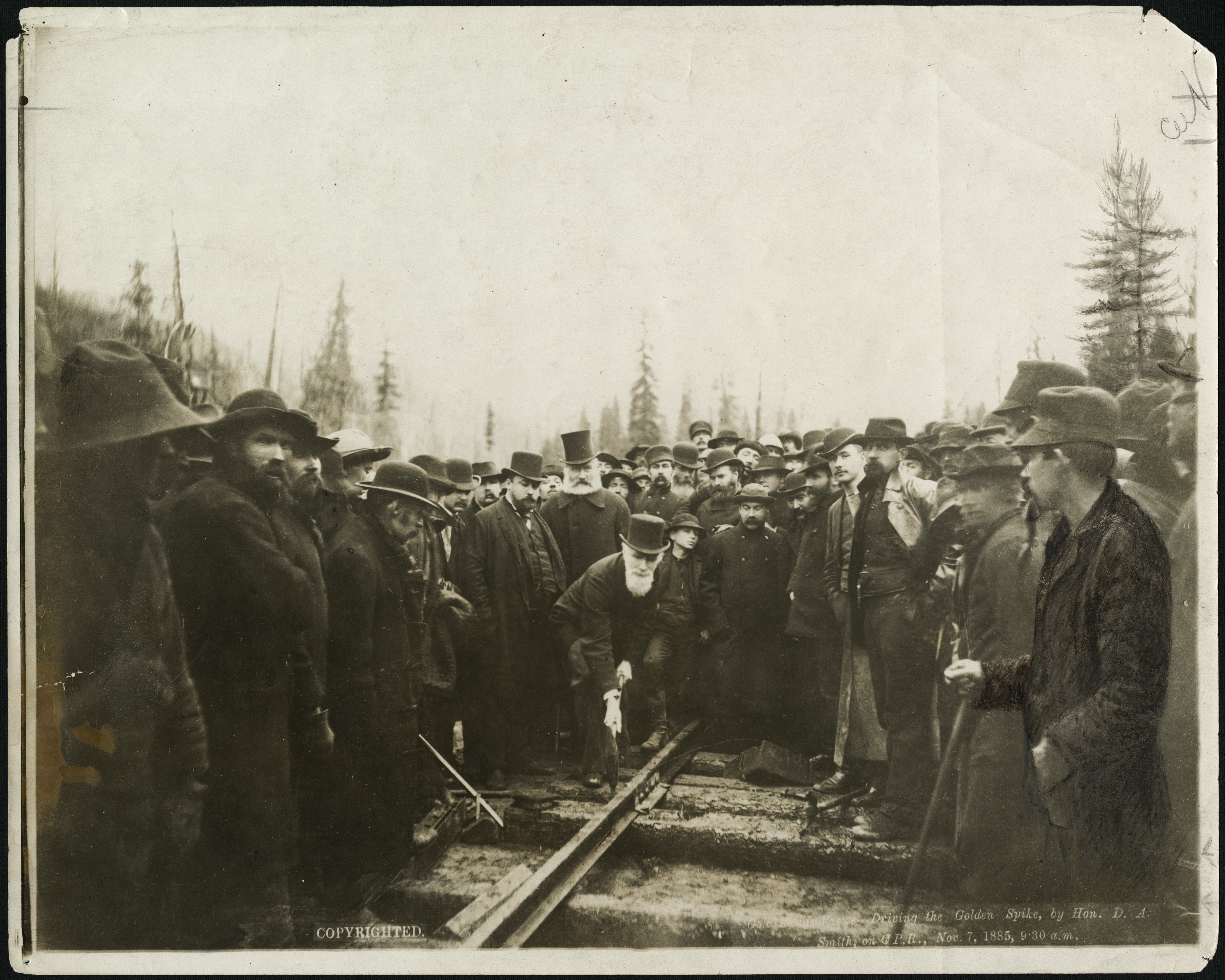
The ceremony at Craigellachie
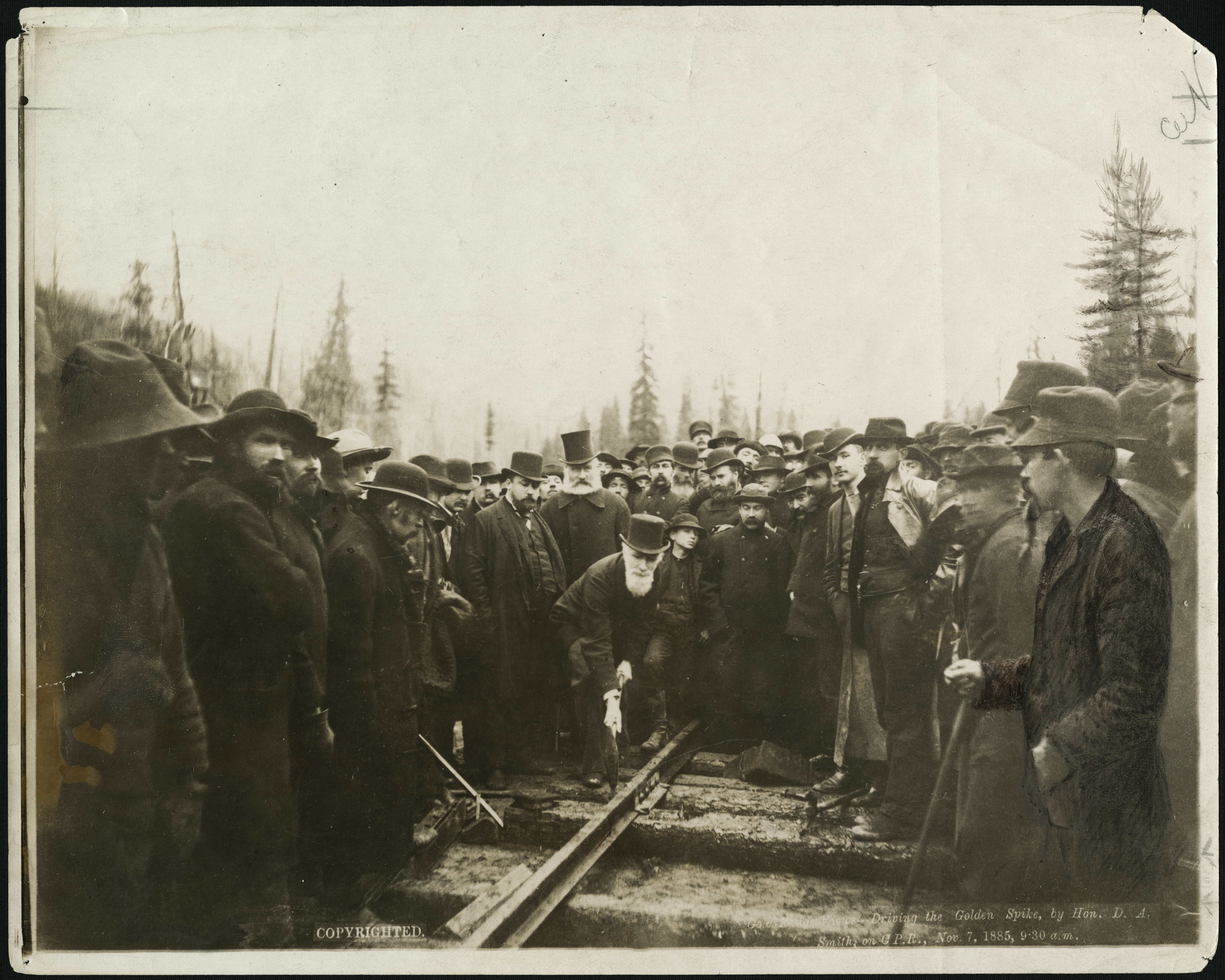
Donald A. Smith drives the ceremonial last spike as officials and workers gather around him. Alexander Ross took the photograph on November 7, 1885. Chinese workers, whose labor was essential to the western section, are absent from this celebrated group.
Alexander Ross / Library and Archives Canada, C-003693. Historical photograph in the public domain; archive scan also offered under CC BY 2.0, unchanged
02 / 06
The news goes to Ottawa
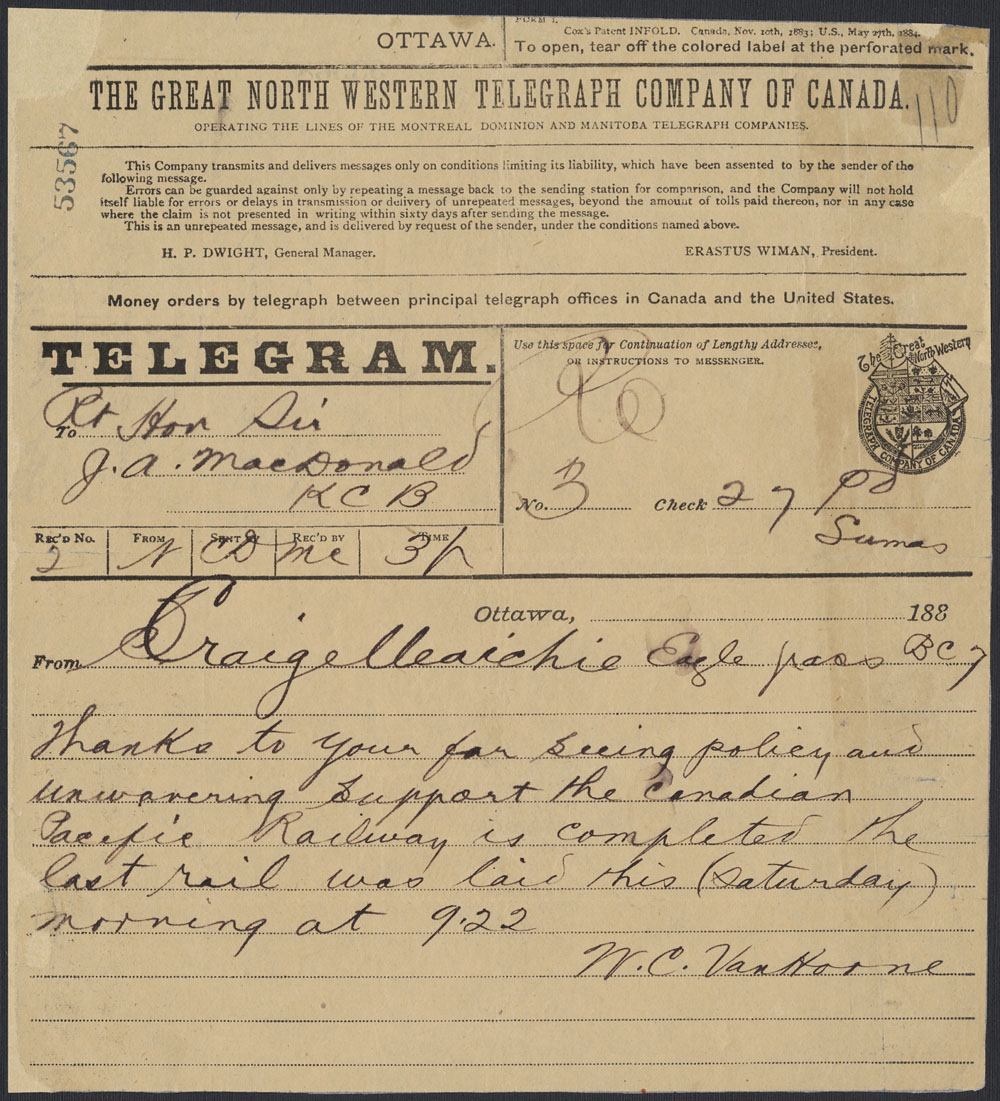
William Cornelius Van Horne’s telegram informed Prime Minister John A. Macdonald that the railway had been completed. Its date ties the document directly to the last-spike ceremony. The telegraph could carry the announcement east long before a traveler could make the same journey.
William Cornelius Van Horne, author / Library and Archives Canada, e011081135. Public domain; expired Crown copyright. Archive scan originally released CC BY 2.0, unchanged
03 / 06
Making the roadbed
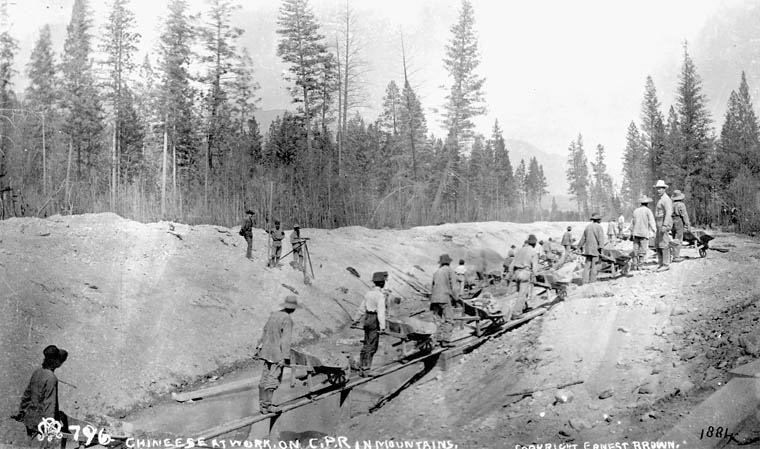
Chinese workers labor on the railway in British Columbia in 1884. The archive identifies Ernest Brown as creator and gives Boorne & May in its credit line. The visible cutting and scattered equipment show the work that had to happen before rails could provide a continuous route.
Ernest Brown, as cataloged; Boorne & May credit / Library and Archives Canada, C-006686B. CC BY 2.0; no changes
04 / 06
Work after the last spike
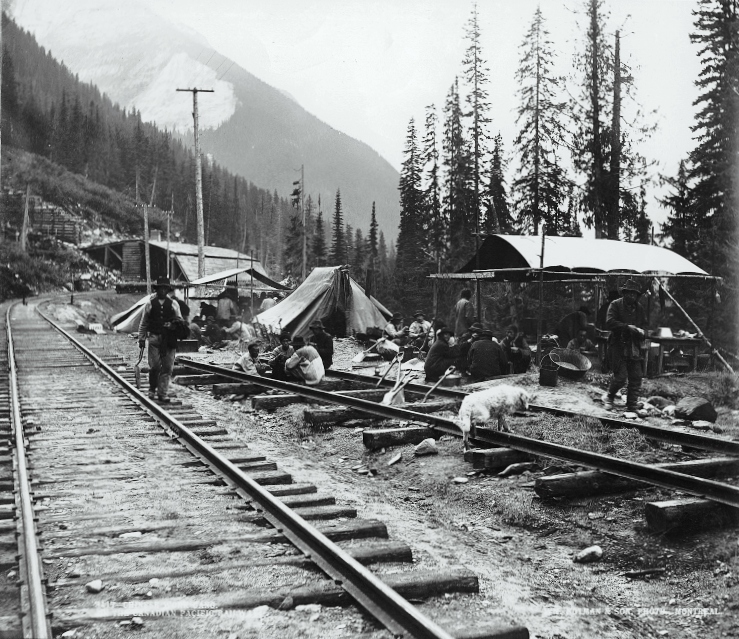
William McFarlane Notman photographed this Chinese work gang at Glacier Park four years after the ceremony. Tracks required continuing repairs and maintenance. This is an 1889 scene, not a picture of the final construction day in 1885.
William McFarlane Notman / McCord Stewart Museum, VIEW-2117. Public domain; historical Canadian photograph
05 / 06
A crossing in Ontario
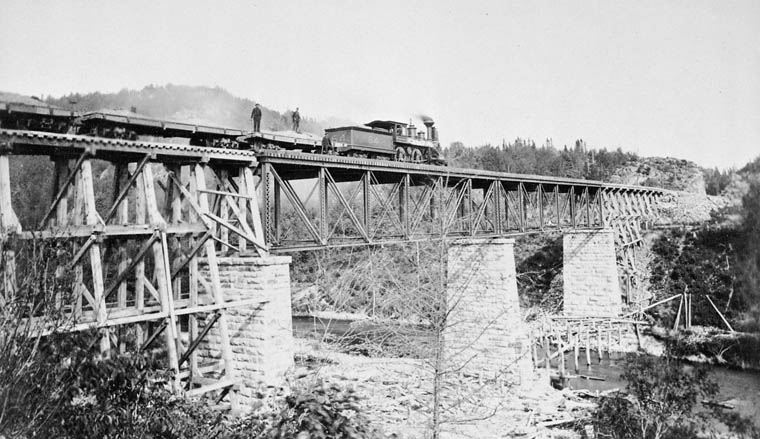
A locomotive stands on the CPR bridge over the Steel River. Library and Archives Canada dates the photograph to 1884–1885, a narrower range than the Commons page. The crossing reminds us that the route’s difficult engineering extended well beyond the Rocky Mountains.
Photo details
Date
1884–1885
Location
Steel River, Ontario, Canada
Photographer
Unknown photographer
Archive / collection
Library and Archives Canada, C-003411, item 3264849
Unknown photographer / Library and Archives Canada, C-003411, item 3264849. Public domain; historical Canadian photograph and expired publication term
06 / 06
The gap a railway could not leave
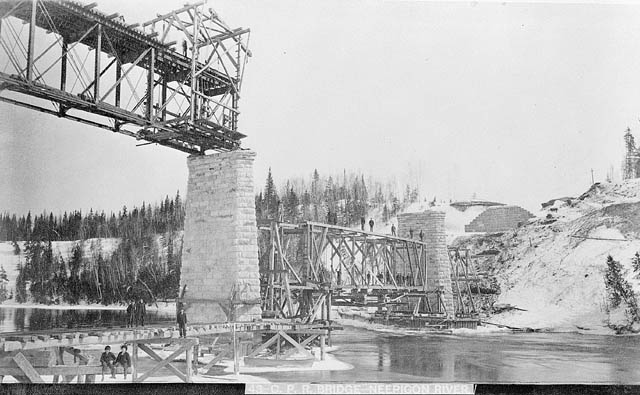
The Nipigon River bridge appears during construction, with separate bridge sections and substantial temporary timberwork visible. The record dates the photograph between 1882 and 1885. A continental route depended on finishing each local crossing, whether or not it would later become a famous national image.
Photo details
Date
1882–1885
Location
Nipigon River, Ontario, Canada
Photographer
Unknown photographer
Archive / collection
Library and Archives Canada, C-021981, item 3264827