The famous election broadcast occupies one night in a longer story. These photographs follow Frank Conrad’s equipment, KDKA’s early studios, a baseball figure at the microphone and the later preservation of radio’s material history.
The sequence runs from a scene dated 1920 to a marker photographed in 2015. None of the later images is presented as a photograph taken during the Harding–Cox broadcast.
Topic: Science and Society
01 / 06
Conrad’s home station
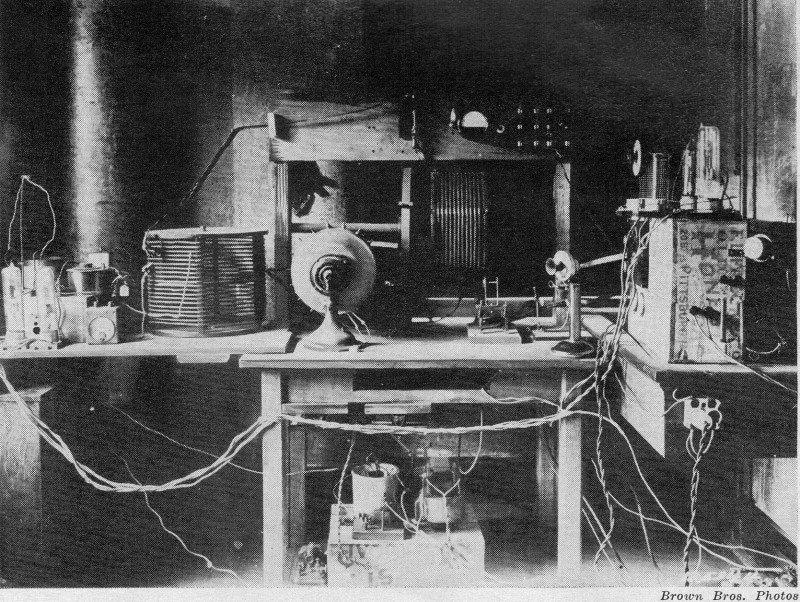
Conrad’s amateur station 8XK grew out of workshop experimentation. The photograph is identified as showing his equipment in July 1920; the source used for this reproduction is a 1958 magazine. Keeping those dates separate prevents a later publication date from becoming the date of the scene.
Photo details
Date
July 1920; reproduced in April 1958
Location
Wilkinsburg, Pennsylvania
Photographer
Original photographer unidentified; reproduction credited to T. R. Kennedy Jr.
Archive / collection
Radio-Electronics, April 1958, p. 51; Wikimedia Commons
Rights / license
Public domain in the United States, as recorded by Wikimedia Commons
Original photographer unidentified; reproduction credited to T. R. Kennedy Jr. / Radio-Electronics, April 1958, p. 51; Wikimedia Commons
02 / 06
An early transmission room
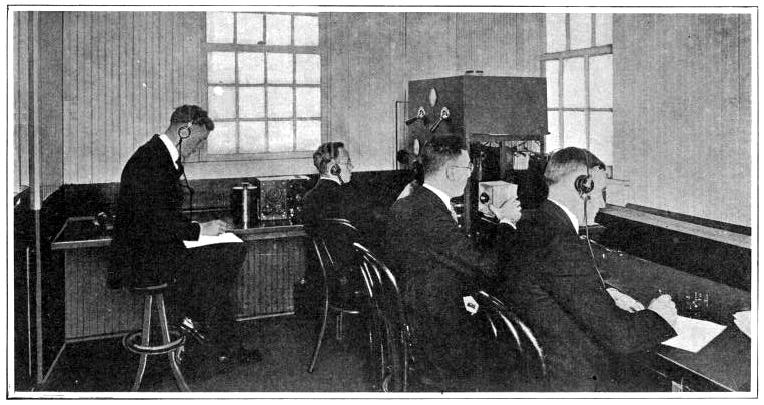
A small room holds the announcer and receiving operators. This photograph was published in a 1922 guide to radio and is cataloged as an early KDKA transmission room, circa 1921. It belongs to the station’s first years, rather than serving as proof of who stood where on election night.
Photo details
Date
Circa 1921; published in 1922
Location
East Pittsburgh, Pennsylvania
Photographer
Photographer unidentified; published by Austin C. Lescarboura
Archive / collection
Radio for Everybody, p. 62; Wikimedia Commons
Rights / license
Public domain in the United States; published before 1931
Photographer unidentified; published by Austin C. Lescarboura / Radio for Everybody, p. 62; Wikimedia Commons
03 / 06
A room made for broadcasting
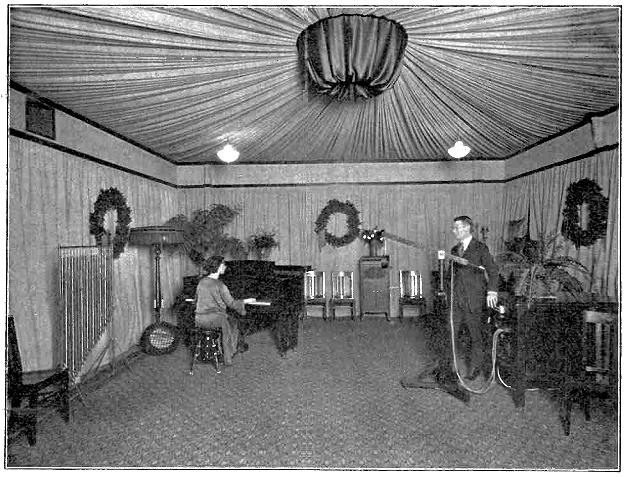
A magazine announced this new studio at the Westinghouse main works in December 1922. The photograph records an expanding operation with a continuing schedule. By then the station’s purpose extended well beyond a single night’s election returns, and its working environment was developing with it.
Photo details
Date
Published December 30, 1922
Location
East Pittsburgh, Pennsylvania
Photographer
Photographer unidentified
Archive / collection
Radio Broadcasting News, December 30, 1922, p. 1; Wikimedia Commons
Rights / license
Public domain in the United States; published before 1931
Photographer unidentified / Radio Broadcasting News, December 30, 1922, p. 1; Wikimedia Commons
04 / 06
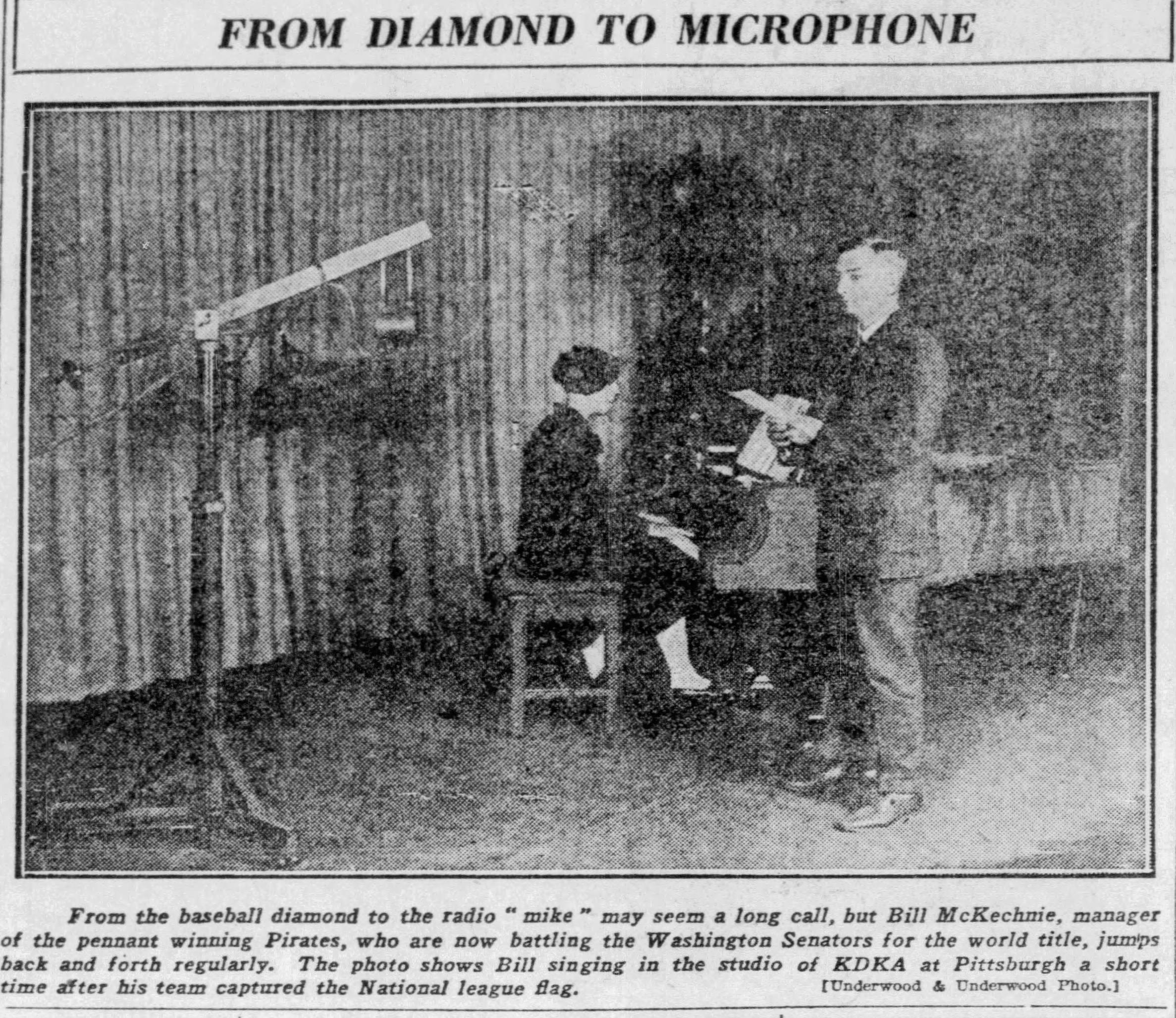
Baseball enters the studio
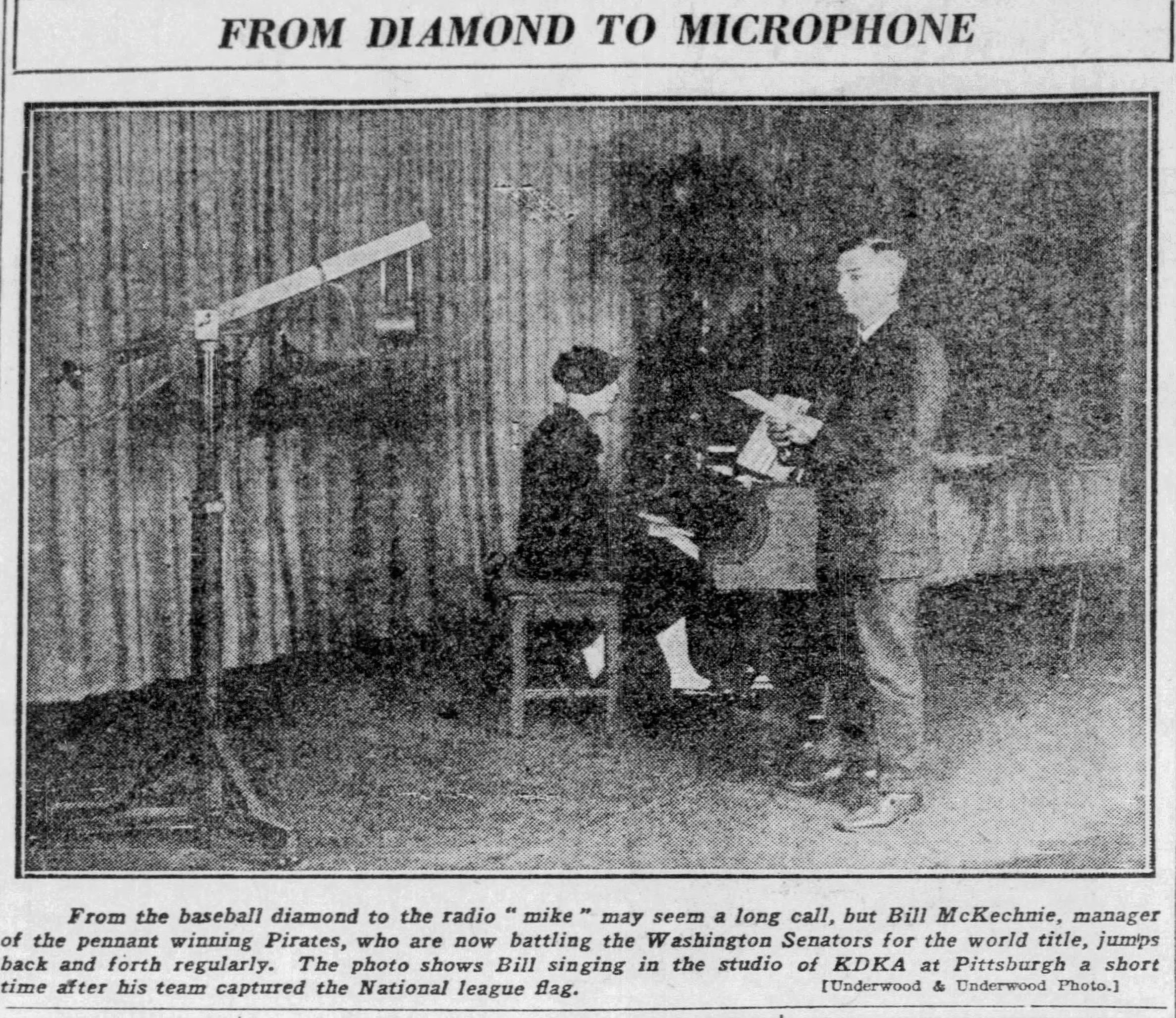
The newspaper caption identifies Pirates manager Bill McKechnie singing at KDKA shortly after his team won the National League pennant. Radio brought familiar local figures into a different setting. This was a studio appearance, not a photograph of a play-by-play broadcast from the ballpark.
Photo details
Date
Published October 11, 1925
Location
Pittsburgh, Pennsylvania
Photographer
Underwood & Underwood
Archive / collection
Chicago Tribune, October 11, 1925, p. 62; Wikimedia Commons
Rights / license
Public domain in the United States; published before 1931
Underwood & Underwood / Chicago Tribune, October 11, 1925, p. 62; Wikimedia Commons
05 / 06
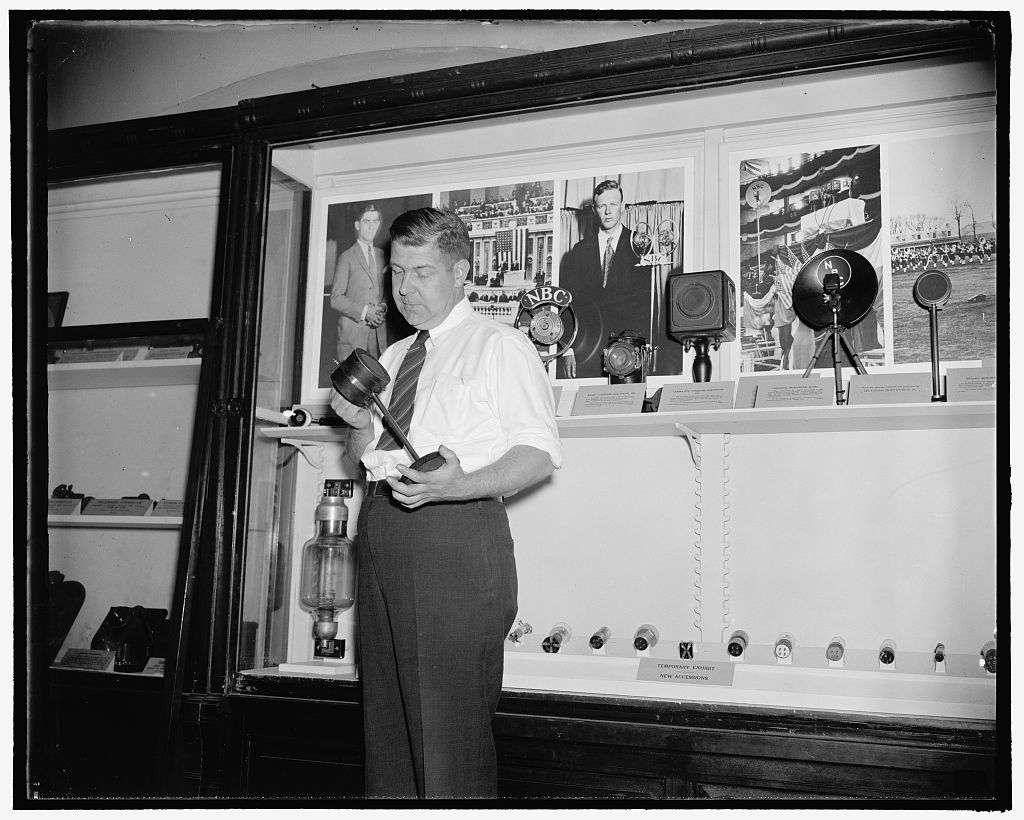
The microphone becomes a museum object
Fred C. Reed poses with the microphone at the Smithsonian in 1938. The museum identifies it as the instrument used for the November 2, 1920 election bulletins. The photograph documents its preservation eighteen years later; the object’s age and the photograph’s date are different pieces of information.
Photo details
Date
October 28, 1938
Location
Washington, D.C.
Photographer
Harris & Ewing
Archive / collection
Library of Congress, hec.25264; Wikimedia Commons
Rights / license
No known restrictions on publication; Harris & Ewing collection. Resized for web display.
Harris & Ewing / Library of Congress, hec.25264; Wikimedia Commons
06 / 06
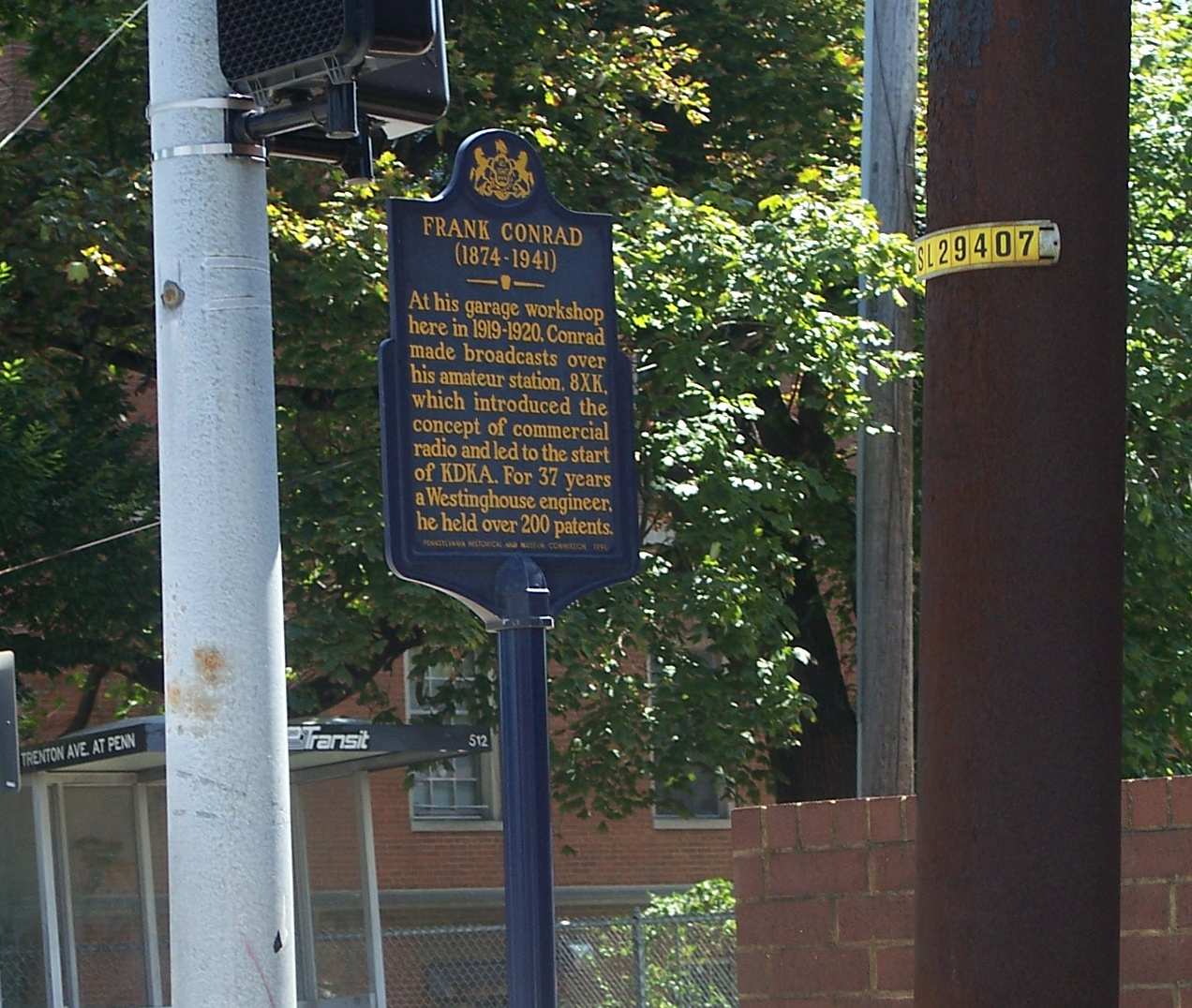
Remembering the workshop
The roadside marker points back to Conrad’s experimental station and the broadcasting venture that followed. This is a modern photograph of commemoration, included at the end of the sequence. It is evidence of how the episode is remembered locally, not a surviving view of the 1920 workshop.
Photo details
Date
August 23, 2015
Location
Penn Avenue near Trenton Avenue, Wilkinsburg, Pennsylvania