On November 4, 1922, excavators found the first step leading to Tutankhamun’s tomb. The photographs usually attached to that anniversary show several different moments: the entrance after discovery, visitors at the site, shrine removal and the later examination of the coffins.
This sequence keeps those stages apart and includes the Egyptian workers whose labor appears more clearly in photographs than in the expedition’s written accounts. The final treasury view has no securely established photographic day; it is identified as an undated view from the excavation years.
Topic: Archaeology
01 / 06
The entrance, after the discovery
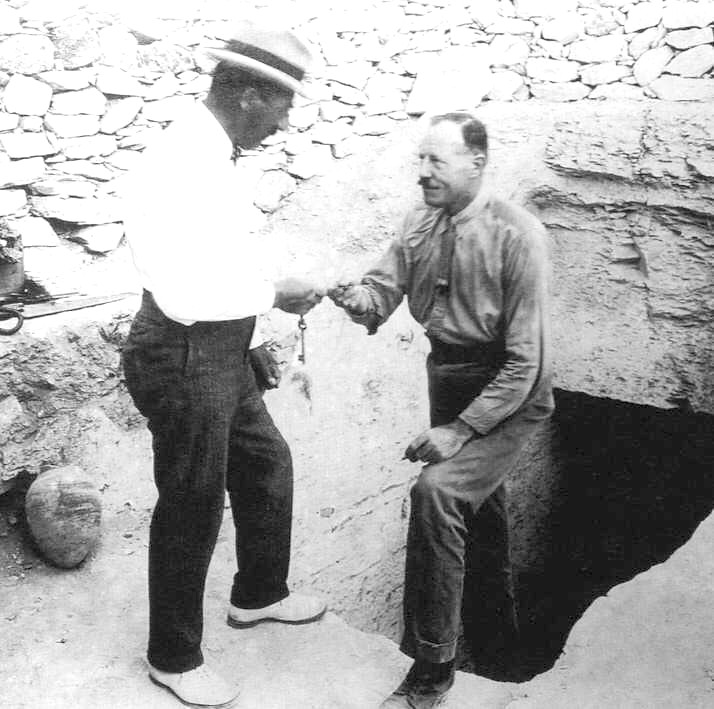
Howard Carter and Arthur Callender stand at the entrance to Tutankhamun’s tomb. The file’s old title names Carnarvon, but its corrected description identifies Callender. The photograph records the opened site; it does not show the instant the first step was uncovered on November 4.
Photo details
Date
1922; exact day not recorded
Location
Tomb of Tutankhamun (KV62), Valley of the Kings, Egypt
Photographer
Harry Burton
Archive / collection
Howard Carter and Arthur Mace, Tut-ench-Amun, 1927 edition
Public domain: Harry Burton died in 1940; Commons marks these pre-1931 publications PD-old-80-expired. Existing source crops retained; no restoration or colorization.
Harry Burton / Howard Carter and Arthur Mace, Tut-ench-Amun, 1927 edition · Public domain
02 / 06
Carnarvon arrives
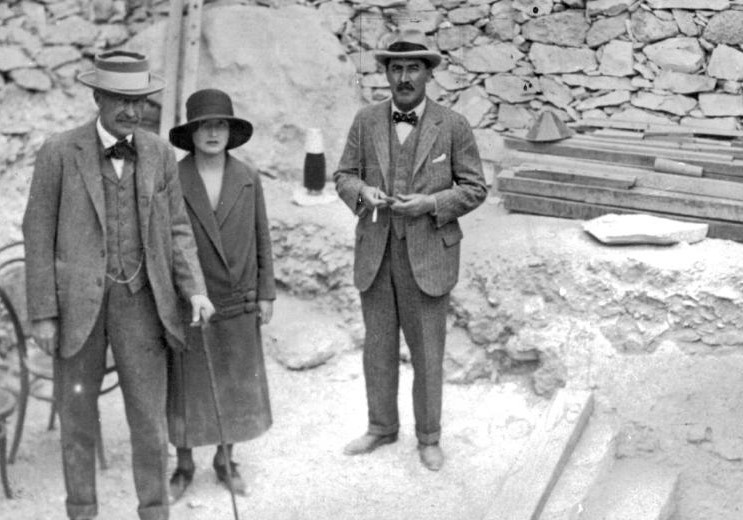
Lord Carnarvon, Lady Evelyn Herbert and Howard Carter pose beside the entrance. Carnarvon reached Luxor on November 23, after Carter had protected the initial discovery. The familiar group portrait belongs to the period of opening and inspection, rather than the day the stair first appeared.
Photo details
Date
November 1922
Location
Tomb of Tutankhamun (KV62), Valley of the Kings, Egypt
Public domain: Harry Burton died in 1940; Commons marks these pre-1931 publications PD-old-80-expired. Existing source crops retained; no restoration or colorization.
Harry Burton / Griffith Institute, University of Oxford · Public domain
03 / 06
Lifting a shrine roof
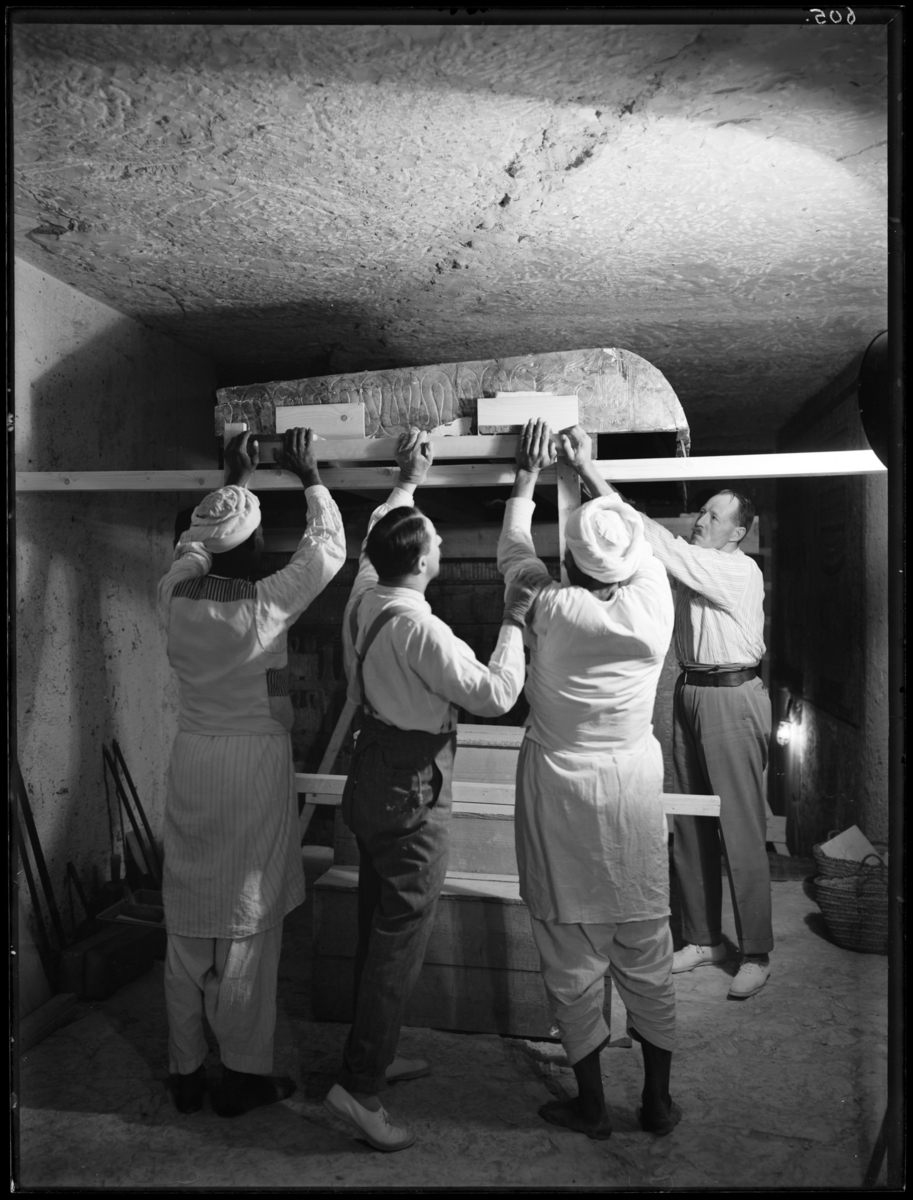
Two Egyptian foremen, Howard Carter and Arthur Callender lift part of the outer burial shrine using a supporting framework. The men’s positions explain why removing the tomb’s contents demanded planning as well as strength. The Egyptian foremen are visible participants in the work, although this record does not securely identify them by name.
Photo details
Date
December 16, 1923
Location
Tomb of Tutankhamun (KV62), Valley of the Kings, Egypt
Public domain: Harry Burton died in 1940; Commons marks these pre-1931 publications PD-old-80-expired. Existing source crops retained; no restoration or colorization.
Harry Burton / Griffith Institute, Burton photograph P0605 · Public domain
04 / 06
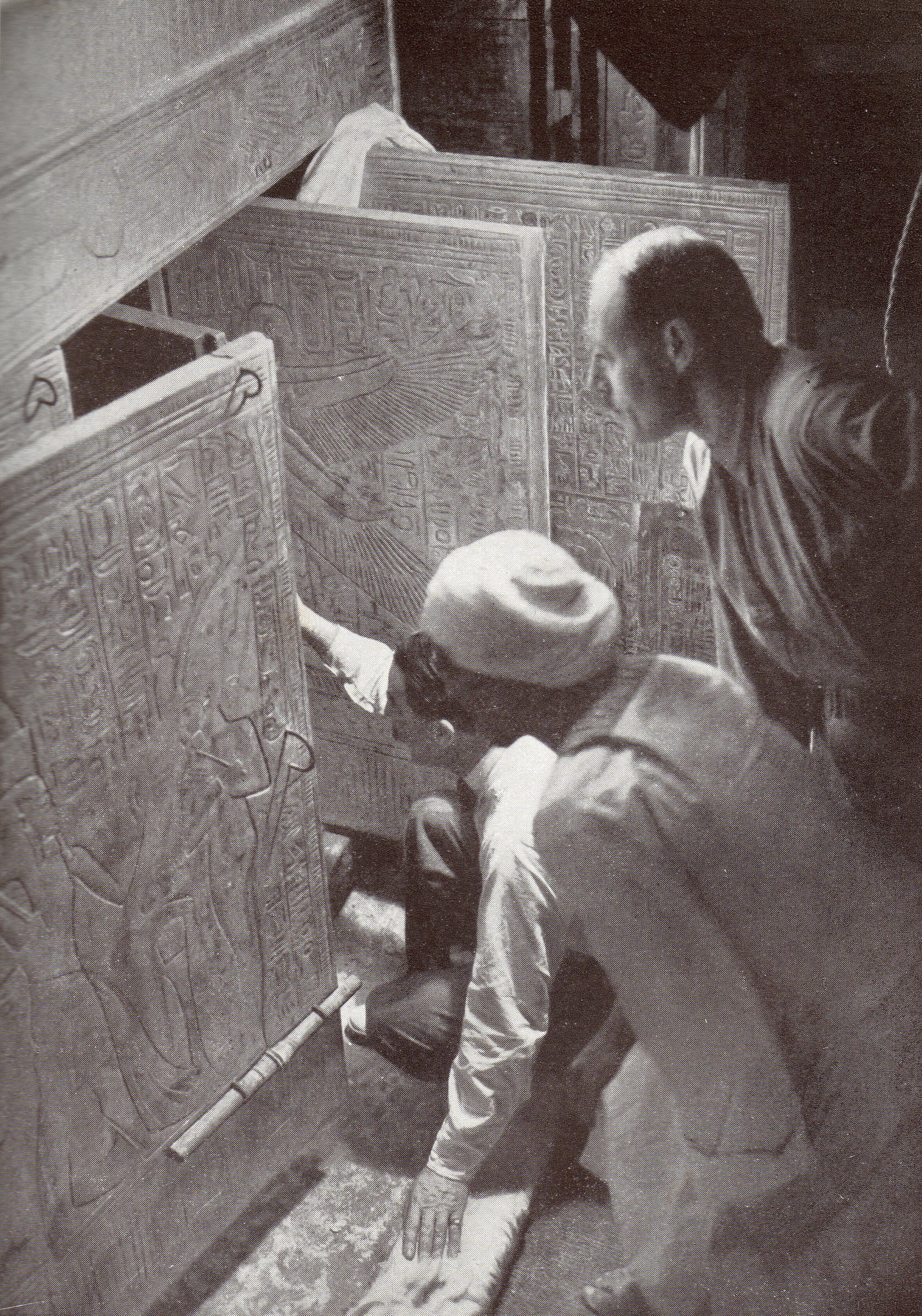
Behind the shrine doors
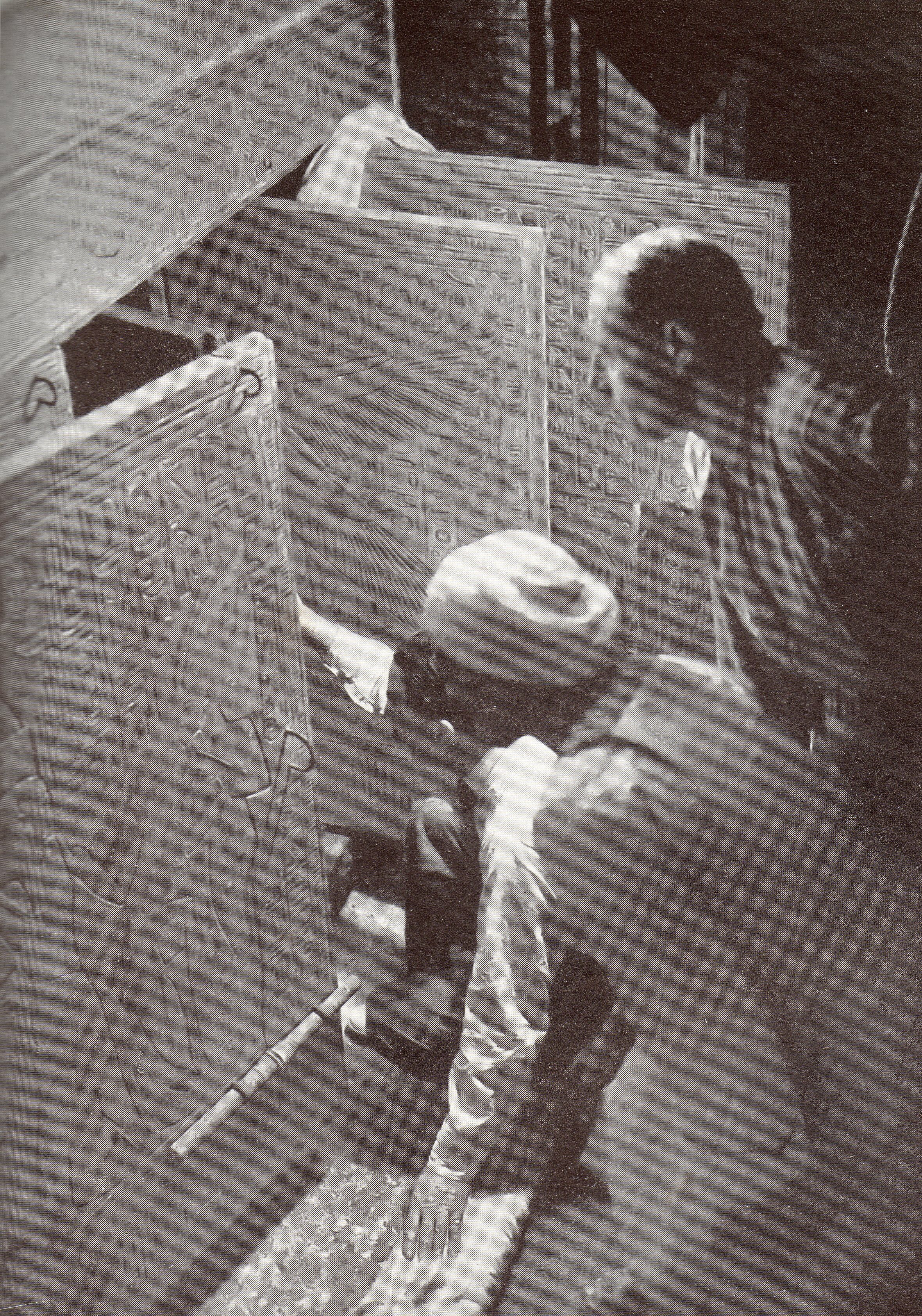
Carter kneels at the shrine doors beside an Egyptian worker and Arthur Callender. Carter’s diary and the photographic record leave the precise day within January 3–4 uncertain; the image may restage the opening for Burton’s camera. It is often reproduced as the discovery itself, though the entrance had been found fourteen months earlier.
Photo details
Date
January 3–4, 1924
Location
Tomb of Tutankhamun (KV62), Valley of the Kings, Egypt
Photographer
Harry Burton
Archive / collection
New York Times photo archive; Medelhavsmuseet HB06
Public domain: Harry Burton died in 1940; Commons marks these pre-1931 publications PD-old-80-expired. Existing source crops retained; no restoration or colorization.
Harry Burton / New York Times photo archive; Medelhavsmuseet HB06 · Public domain
05 / 06
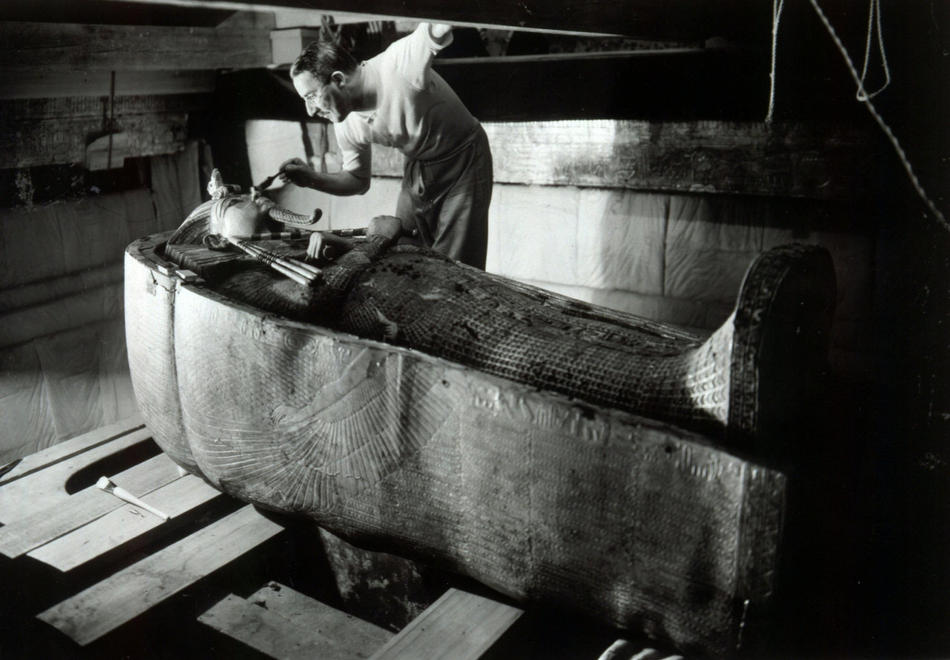
Working above a coffin
Carter bends over a decorated coffin while the suspended equipment above him reveals the cramped working conditions. This is a later phase of the excavation, after the burial chamber and shrines had been opened. The photograph should not be dated from a generic 1922 discovery label attached to some online copies.
Photo details
Date
1925; coffin examination phase
Location
Tomb of Tutankhamun (KV62), Valley of the Kings, Egypt
Photographer
Harry Burton
Archive / collection
Harry Burton excavation photographs; Wikimedia Commons copy
Public domain: Harry Burton died in 1940; Commons marks these pre-1931 publications PD-old-80-expired. Existing source crops retained; no restoration or colorization.
Harry Burton / Harry Burton excavation photographs; Wikimedia Commons copy · Public domain
06 / 06
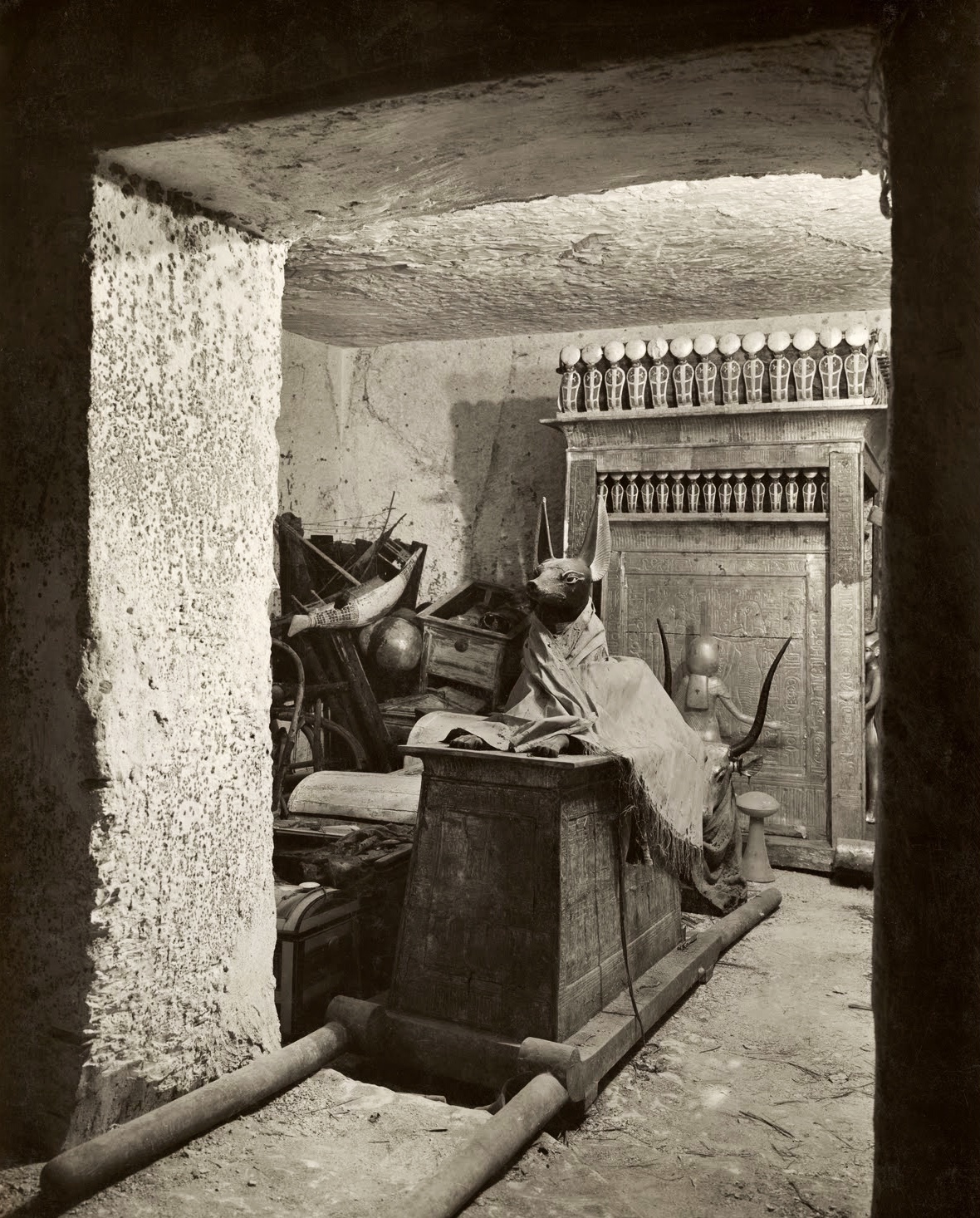
Anubis at the treasury entrance
A jackal figure lies on its shrine amid the treasury’s densely packed objects. This undated excavation view closes the sequence with the setting the team had to record before removal. Its value lies in the relationships between objects and the room, details that an isolated museum photograph cannot preserve.
Photo details
Date
1920s; exact photographic date not established
Location
Tomb of Tutankhamun (KV62), Valley of the Kings, Egypt
Photographer
Harry Burton
Archive / collection
Harry Burton excavation photographs; Wikimedia Commons copy
Public domain: Harry Burton died in 1940; Commons marks these pre-1931 publications PD-old-80-expired. Existing source crops retained; no restoration or colorization.