In 2007, a visitor to Palmyra could still walk around the sanctuary of the Temple of Bel. In Mosul, worshippers gathered at the shrine of Nabi Yunus, and the leaning al-Hadba minaret stood above the Old City. Within a decade, ISIS had destroyed all three landmarks.
The group dynamited the Nabi Yunus mosque and shrine on July 24, 2014. It blew up the Temple of Bel’s inner sanctuary on August 30, 2015, and destroyed the al-Hadba minaret and al-Nuri Mosque on June 21, 2017. These attacks targeted places that held centuries of religious, architectural and civic history.
Seven archival photographs show the buildings before the explosions, the ruins left behind and the reconstructed al-Hadba minaret. The pairs were taken from different viewpoints. Dates identify the condition recorded in each image: the photographs of rubble are historical records, while the final photograph shows the rebuilt tower in 2026.
The al-Nuri Mosque complex was inaugurated after reconstruction on September 1, 2025. Its return to Mosul’s skyline records years of work by Iraqi craftspeople and heritage specialists, supported by UNESCO and international partners.
Topic: Cultural heritage destroyed by ISIS
01 / 07
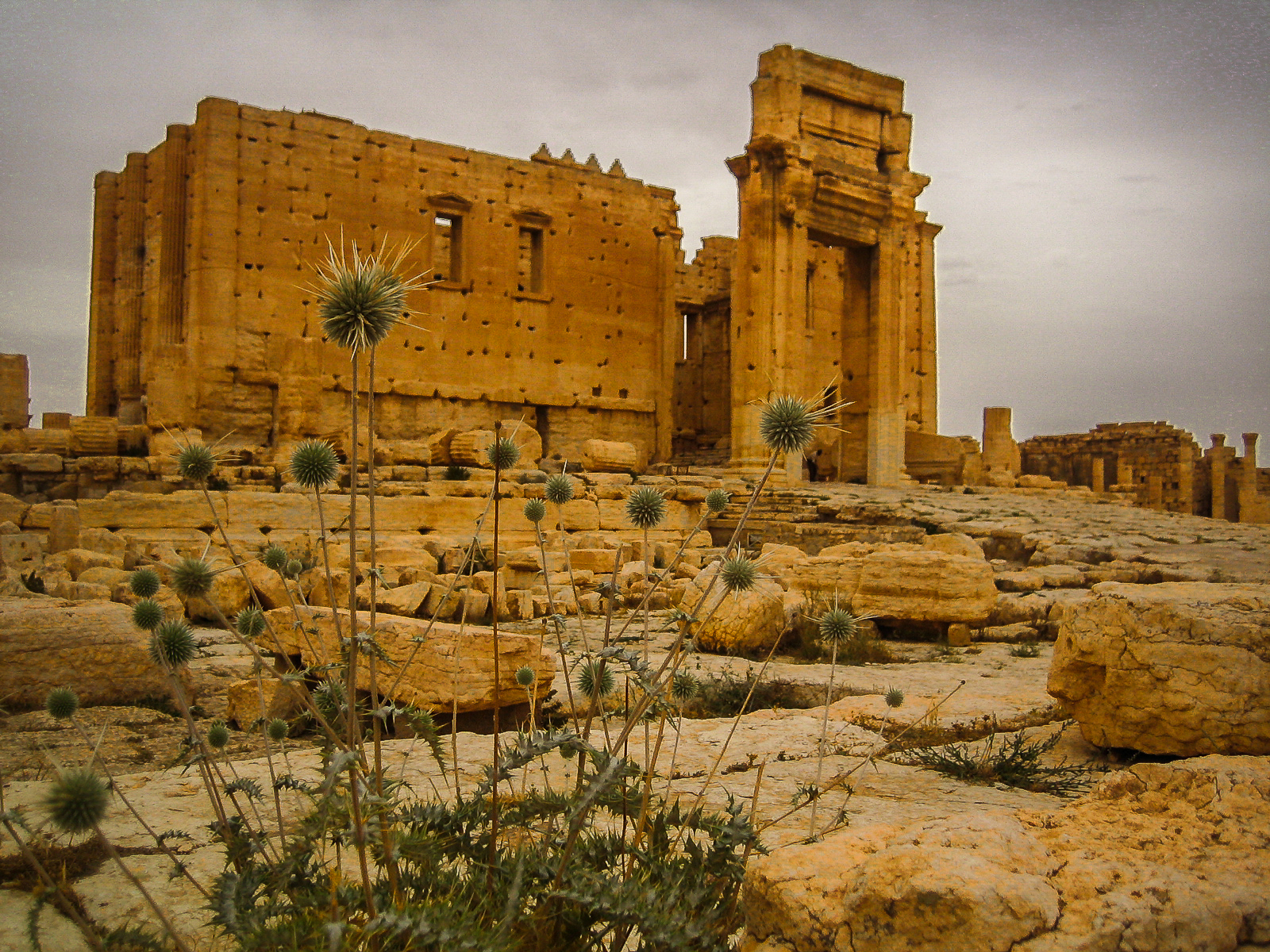
Before · 2007 — The Temple of Bel
Drouyn Cambridge photographed the Temple of Bel on May 10, 2007. The sanctuary walls and monumental entrance were still standing. The building combined local religious traditions with the architectural influences of the wider Greco-Roman world.
ISIS destroyed the inner sanctuary with explosives on August 30, 2015. The next photograph records the site after that attack.
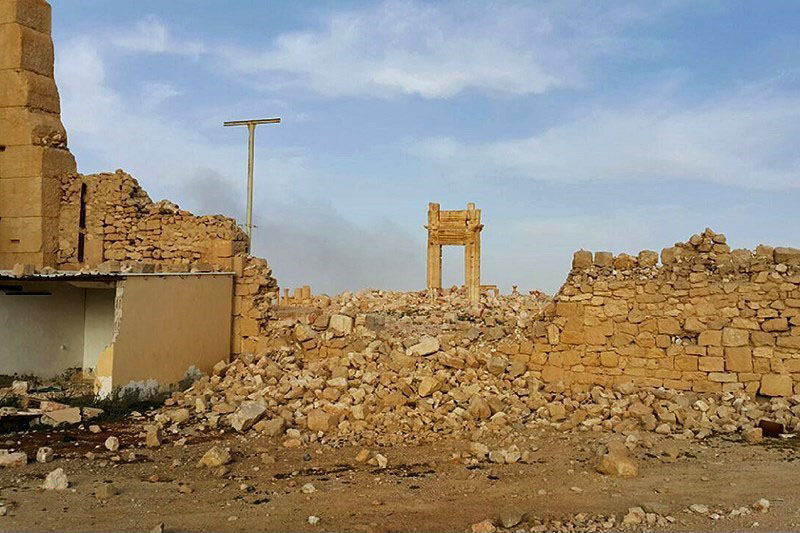
Jawad Shaar photographed the temple complex on March 28, 2016, seven months after ISIS blew up the sanctuary. The camera looks across collapsed stonework toward the surviving monumental entrance.
This is the same temple complex seen in the previous photograph, viewed from a different position. The image records conditions in 2016.
Jawad Shaar / Tasnim News Agency / Wikimedia Commons · CC BY 4.0
03 / 07
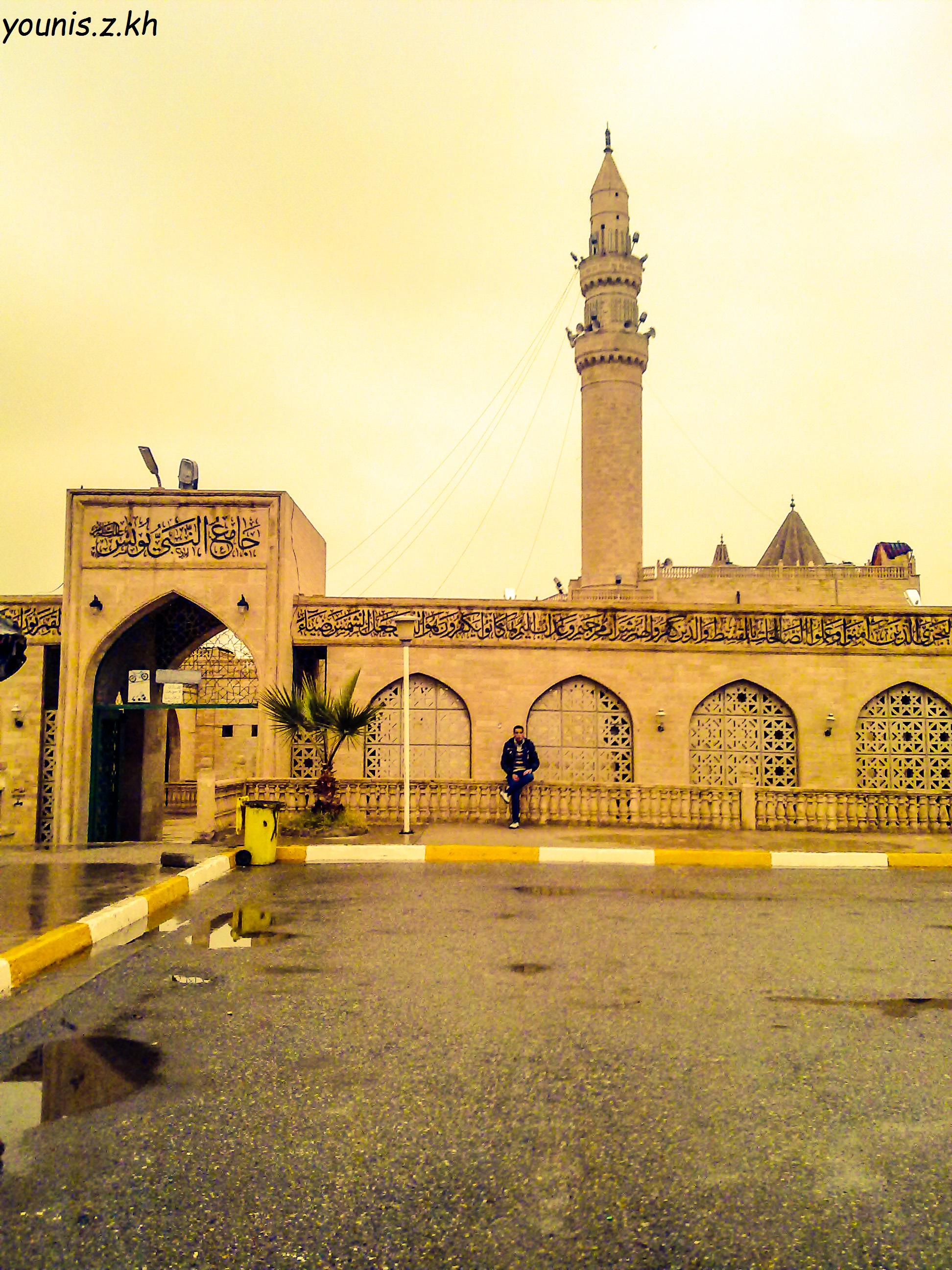
Before · 2011 — The Mosque and Shrine of Nabi Yunus
The minaret and decorated exterior of the Nabi Yunus mosque in Mosul, photographed by Younis Ziyad on December 10, 2011. The complex stood on a hill associated with the Prophet Jonah, known as Yunus in Islam.
ISIS dynamited the mosque and shrine on July 24, 2014. UNESCO condemned the destruction of a place that had served worshippers and pilgrims for centuries.
Creative Commons Attribution-ShareAlike 4.0 International (CC BY-SA 4.0). Original Commons photograph; resized for display. The photograph retains its original license.
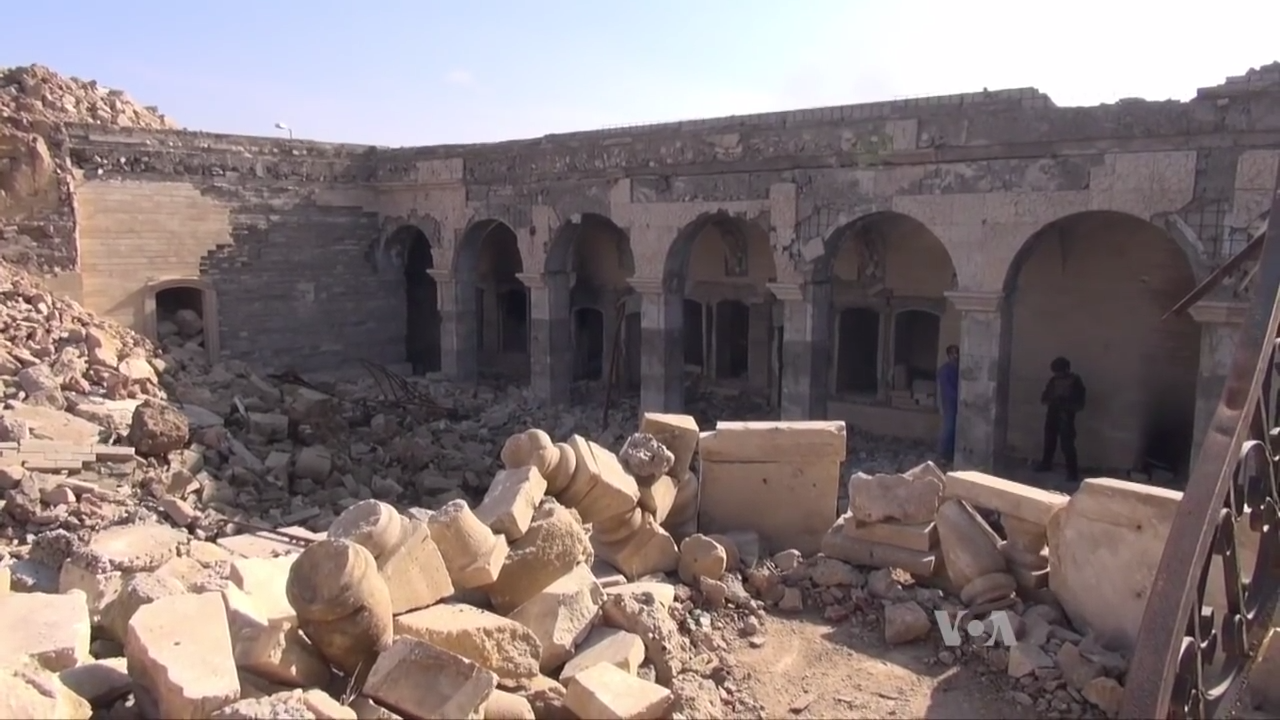
This Voice of America photograph, dated January 18, 2017, shows broken masonry and surviving arches at the Nabi Yunus mosque and shrine. ISIS had destroyed the complex in July 2014.
The view differs from the exterior photograph taken in 2011. Together, the two images document the same site before the demolition and in its aftermath.
Photo details
Date
January 18, 2017
Location
Mosul, Iraq
Photographer
Voice of America
Archive / collection
Voice of America / Wikimedia Commons
Rights / license
Public domain in the United States: Voice of America federal-government work, as identified and reviewed on the Wikimedia Commons file page. Resized for display.
Voice of America / Wikimedia Commons · Public domain (United States)
05 / 07
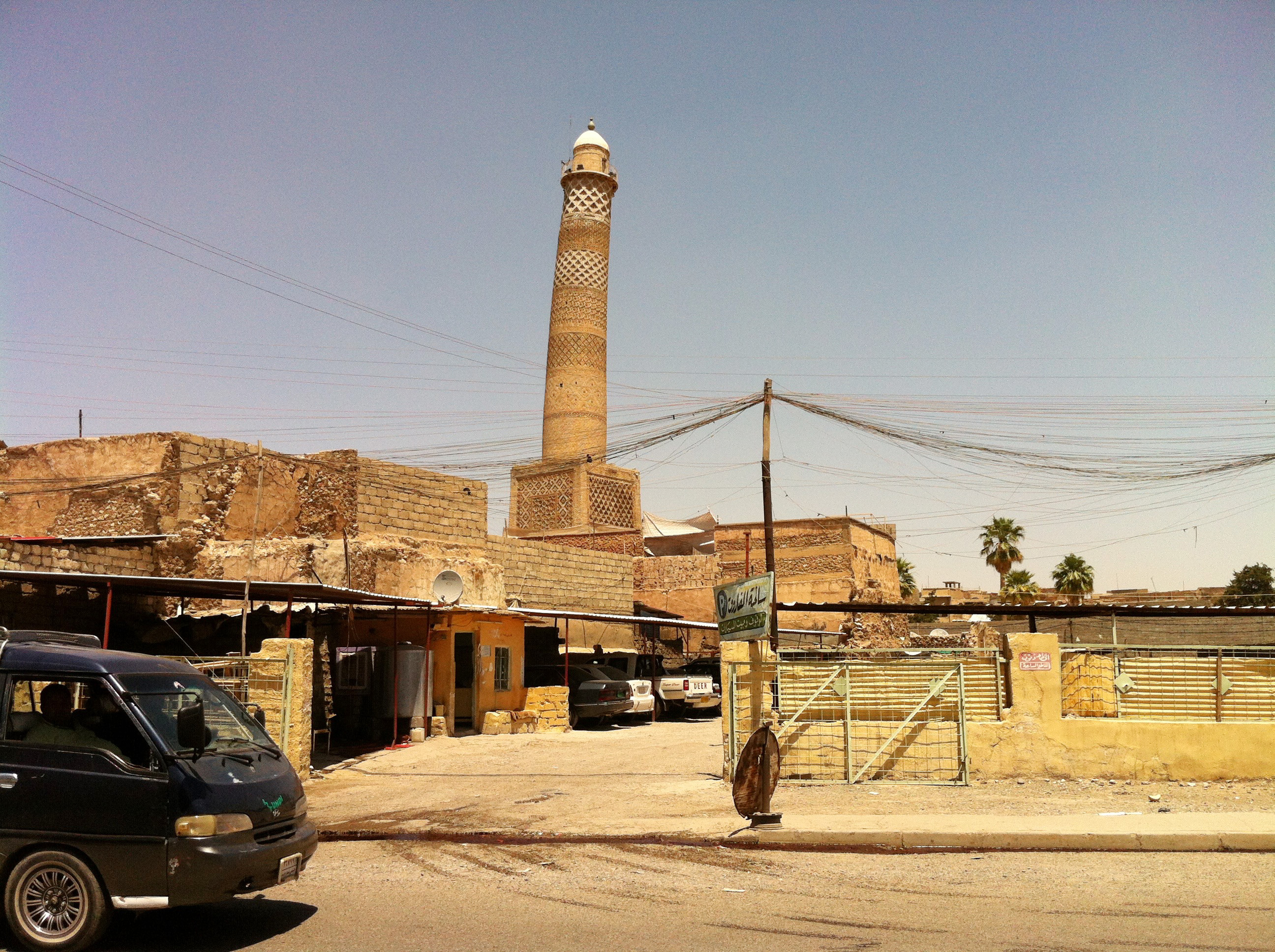
Before · 2013 — Mosul’s Leaning Al-Hadba Minaret
Al-Hadba rises above a street in Mosul in this photograph taken by Faisal Jeber on June 6, 2013. Its leaning brick shaft made it one of the city’s most recognizable landmarks. The minaret belonged to the al-Nuri Mosque complex, whose origins date to the twelfth century.
Four years later, the tower was destroyed as ISIS retreated during the Battle of Mosul.
Creative Commons Attribution-ShareAlike 4.0 International (CC BY-SA 4.0). Commons records a brightened revision by Doug4 in 2017. Resized for display; the photograph retains its original license.
Faisal Jeber / Wikimedia Commons · Brightened Commons revision by Doug4 · CC BY-SA 4.0
06 / 07
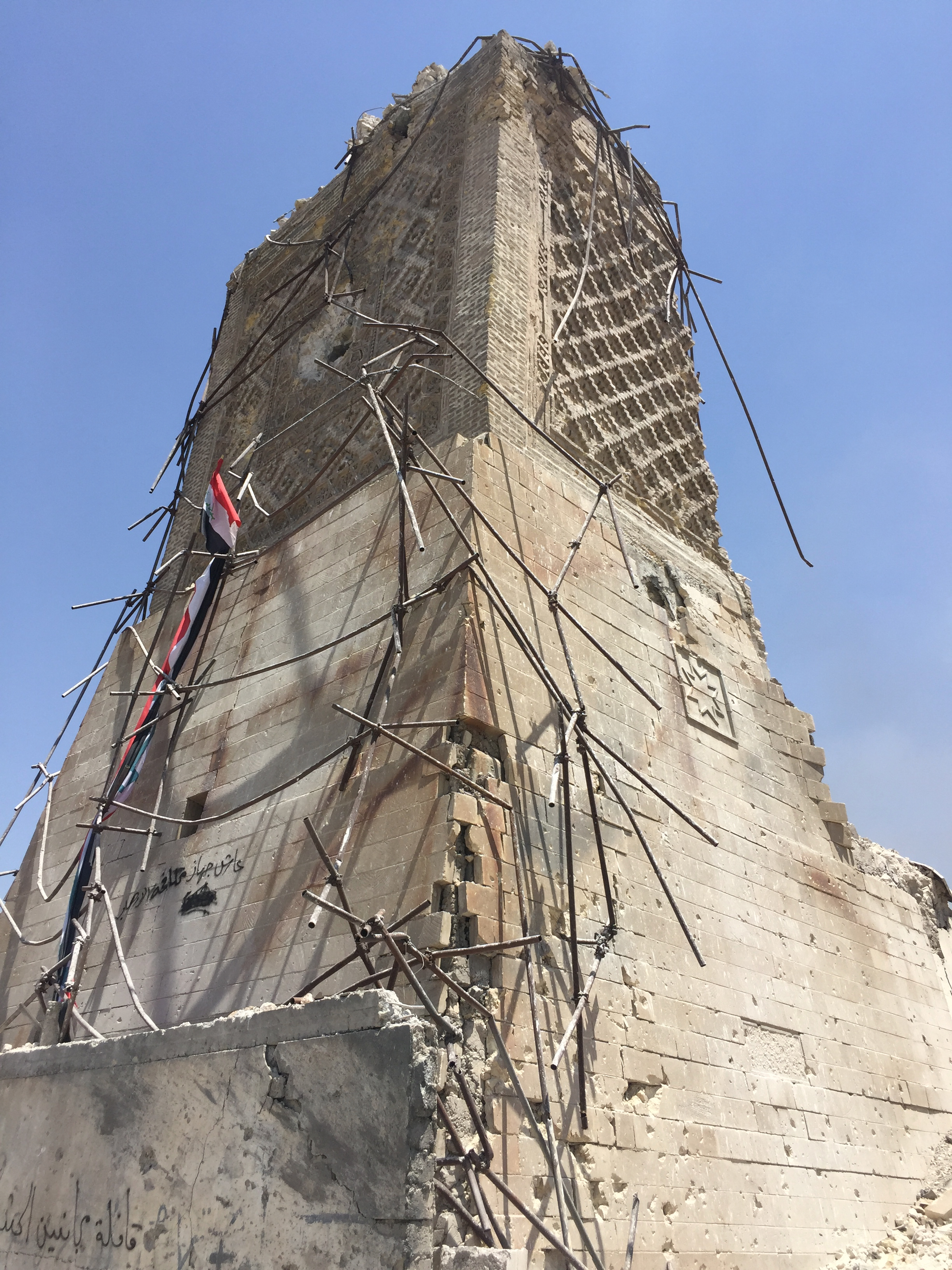
After · 2017 — The Base of Al-Hadba
Faisal Jeber photographed what remained of al-Hadba on July 5, 2017. The tall brick shaft had disappeared; the damaged lower structure remained.
ISIS destroyed the minaret and al-Nuri Mosque on June 21, 2017. This photograph records the immediate aftermath, before the later reconstruction of the complex.
Creative Commons Attribution-ShareAlike 4.0 International (CC BY-SA 4.0). Original Commons photograph; resized for display. The photograph retains its original license.
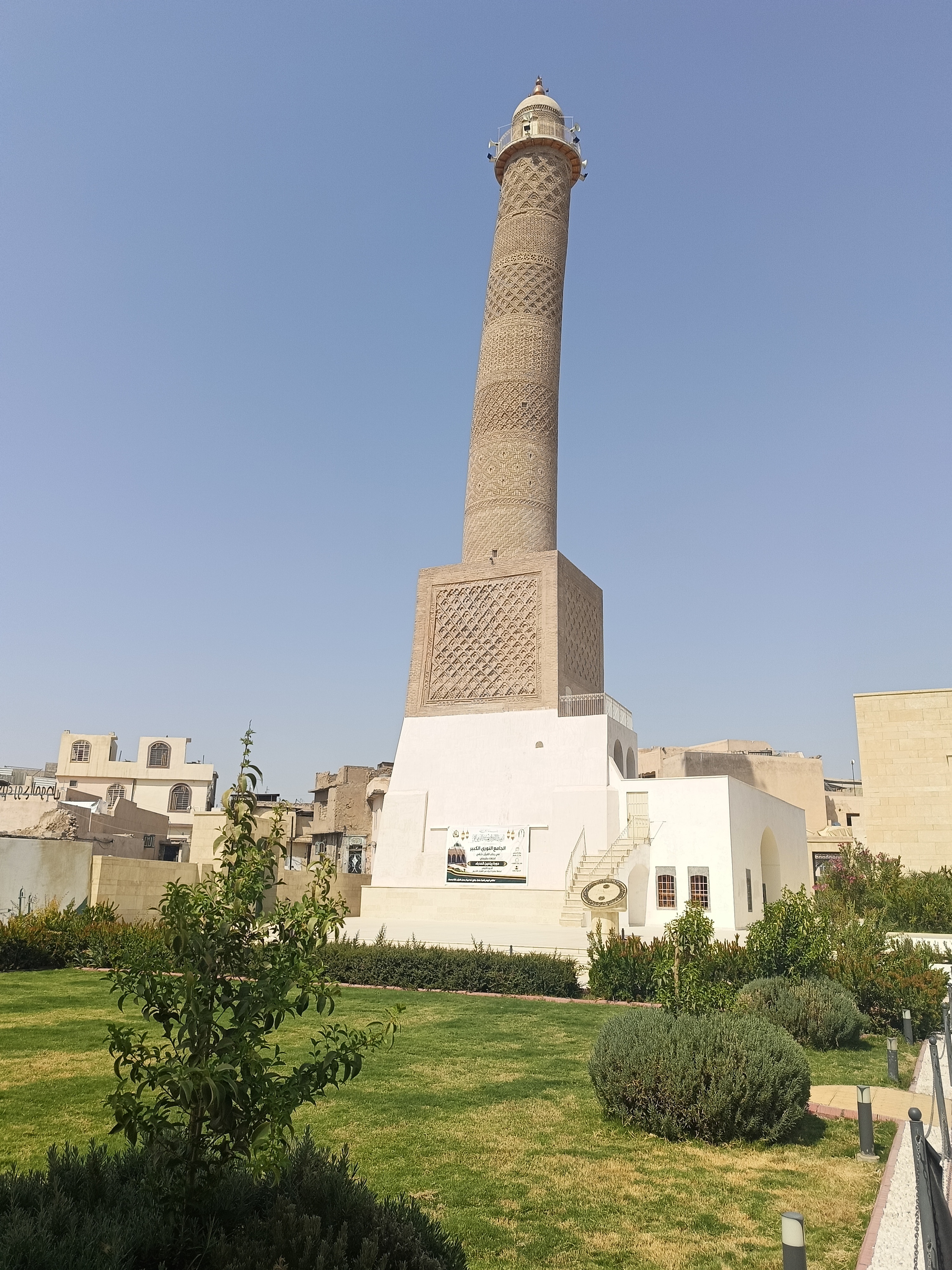
Rebuilt · 2026 — Al-Hadba Returns to Mosul’s Skyline
Rosan Jassim photographed the reconstructed al-Hadba minaret on September 26, 2026. The tower seen here was rebuilt after the destruction of 2017; the photograph shows the restored landmark.
UNESCO worked with Iraqi authorities, local craftspeople and international partners on the reconstruction. The al-Nuri Mosque complex was inaugurated on September 1, 2025. This final image records the site after that work was completed.