Britain issued the Balfour Declaration on November 2, 1917, while its armies were still fighting the Ottoman Empire. Before the letter reached Lord Rothschild, cabinet ministers had debated what Britain should promise and to whom. These records follow the argument from Edwin Montagu’s objection through successive drafts, cabinet approval and newspaper publication, then turn to the British entry into Jerusalem in December.
Topic: World History
01 / 06
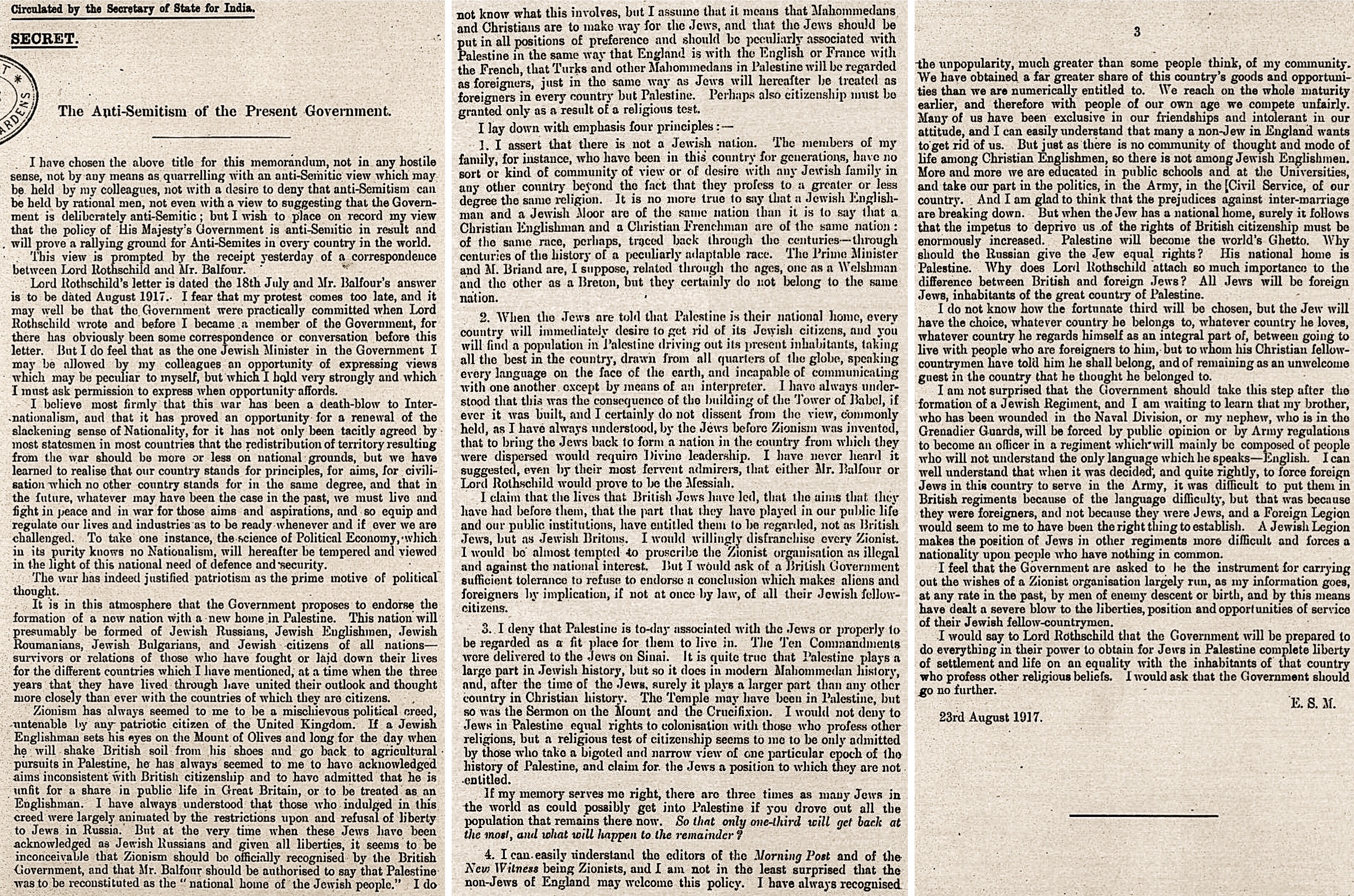
A dissenting cabinet paper
Edwin Montagu challenged the proposed policy from inside the British government. His August memorandum worried about what a separate national home would mean for Jews who regarded their existing countries as home. The forceful title exposes a disagreement often lost when the declaration is reduced to a single, unanimous British promise.
Photo details
Date
August 23, 1917
Location
London, United Kingdom
Photographer
Edwin Samuel Montagu
Archive / collection
The National Archives, CAB 21/58; Wikimedia Commons
Edwin Samuel Montagu / The National Archives, CAB 21/58; Wikimedia Commons
02 / 06
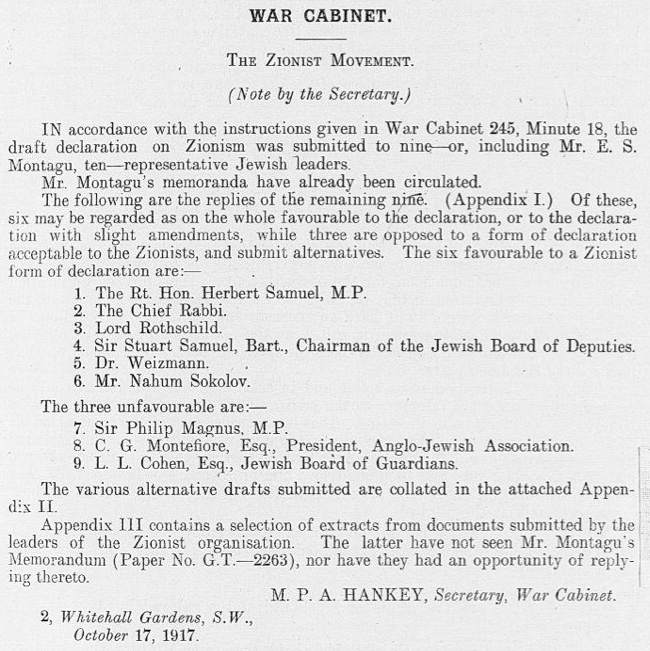
Words still under discussion
An appendix to the October 17 War Cabinet minutes preserves wording still under discussion. Officials were deciding how to express support for Zionist aspirations while qualifying the commitment. The compact final letter emerged from this process of revision, with phrases carrying consequences far beyond the room in which ministers considered them.
United Kingdom Government / The National Archives; Wikimedia Commons
03 / 06
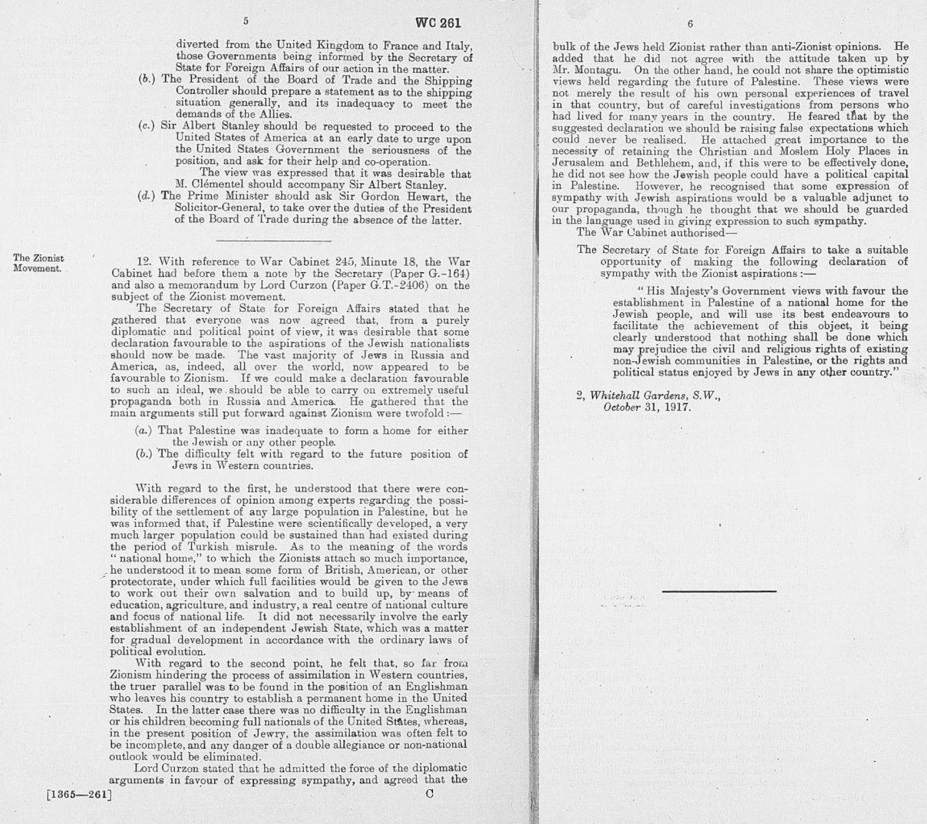
The cabinet authorizes release
The War Cabinet approved release of the declaration on October 31, two days before Balfour sent his letter. This record places the policy within the machinery of government: a minister’s signature would announce a commitment that the cabinet had authorized. The decision also arrived while Britain’s campaign against Ottoman forces in Palestine continued.
United Kingdom Government / British War Cabinet record; Wikimedia Commons
04 / 06
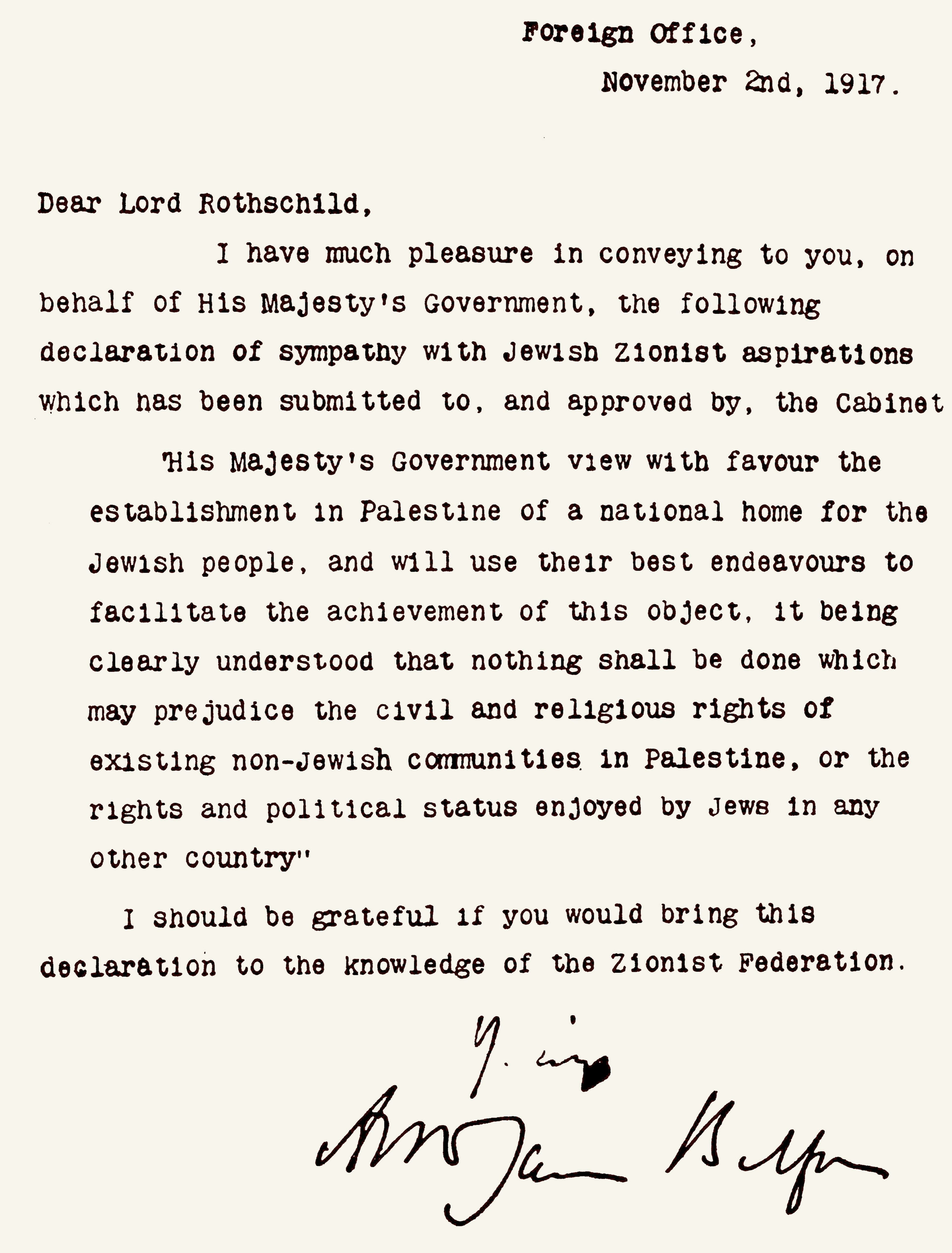
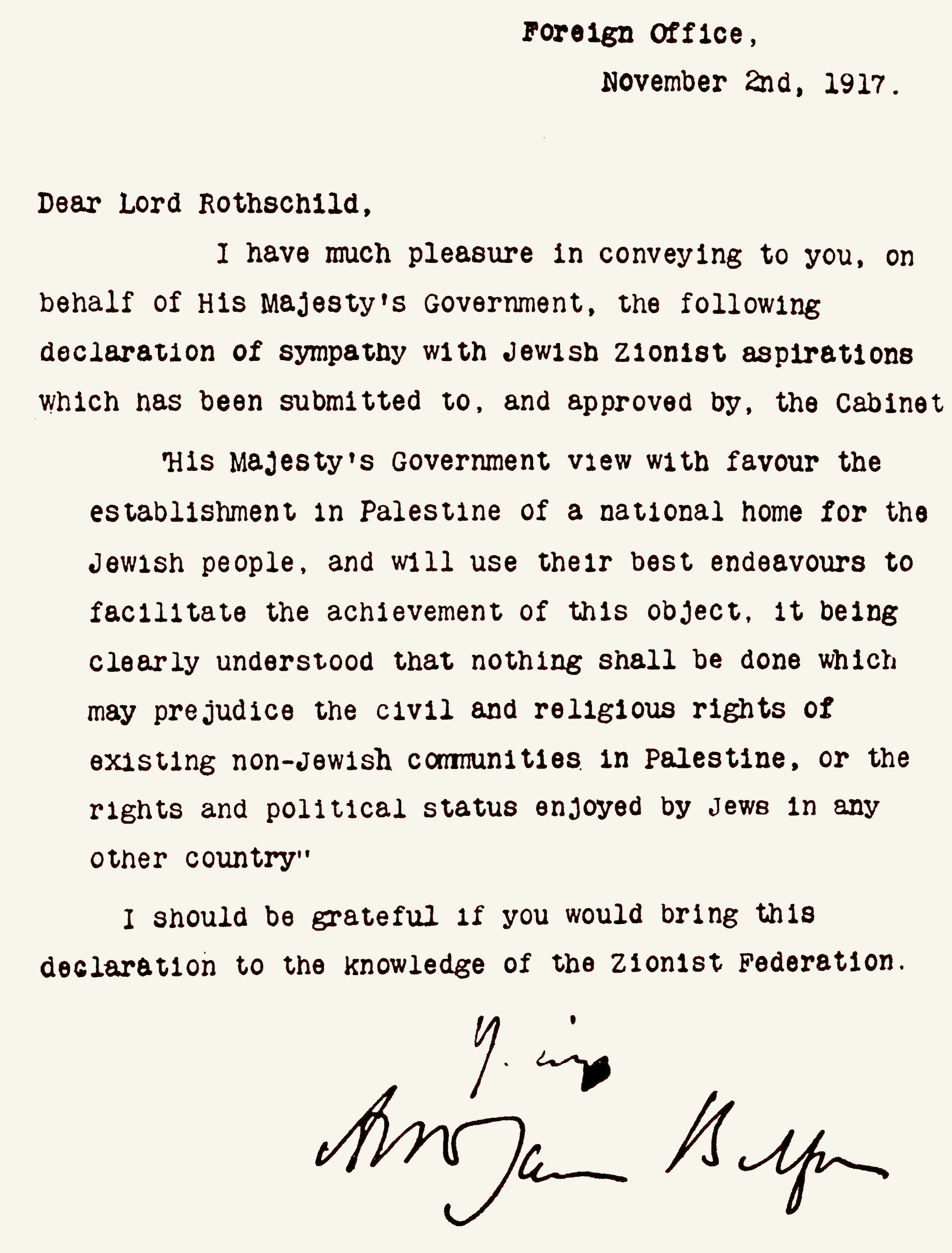
The letter of November 2
Balfour conveyed cabinet support for a Jewish national home in Palestine and asked Rothschild to inform the Zionist Federation. The same paragraph included safeguards concerning Palestine’s existing non-Jewish communities and Jews living elsewhere. It did not draw a border or describe the institutions of a future state.
Photo details
Date
November 2, 1917
Location
London, United Kingdom
Photographer
United Kingdom Government; signed by Arthur James Balfour
United Kingdom Government; signed by Arthur James Balfour / British Library; Wikimedia Commons
05 / 06
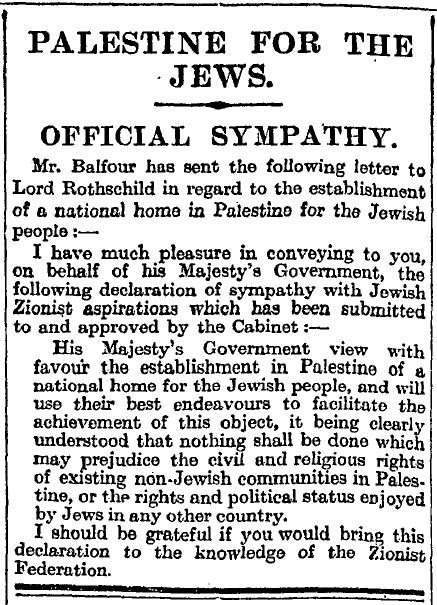
The statement reaches newspaper readers
The Times printed the declaration on November 9, a week after the letter’s date. A policy debated within government now reached newspaper readers in a short column. The announcement’s small physical size contrasts with the territorial, political and communal questions that its implementation would soon bring into sharper conflict.
Photo details
Date
November 9, 1917; later digital reproduction
Location
London, United Kingdom
Photographer
The Times of London
Archive / collection
The Times; Wikimedia Commons
Rights / license
Public domain; copyright expired as recorded on source page
The Times of London / The Times; Wikimedia Commons
06 / 06
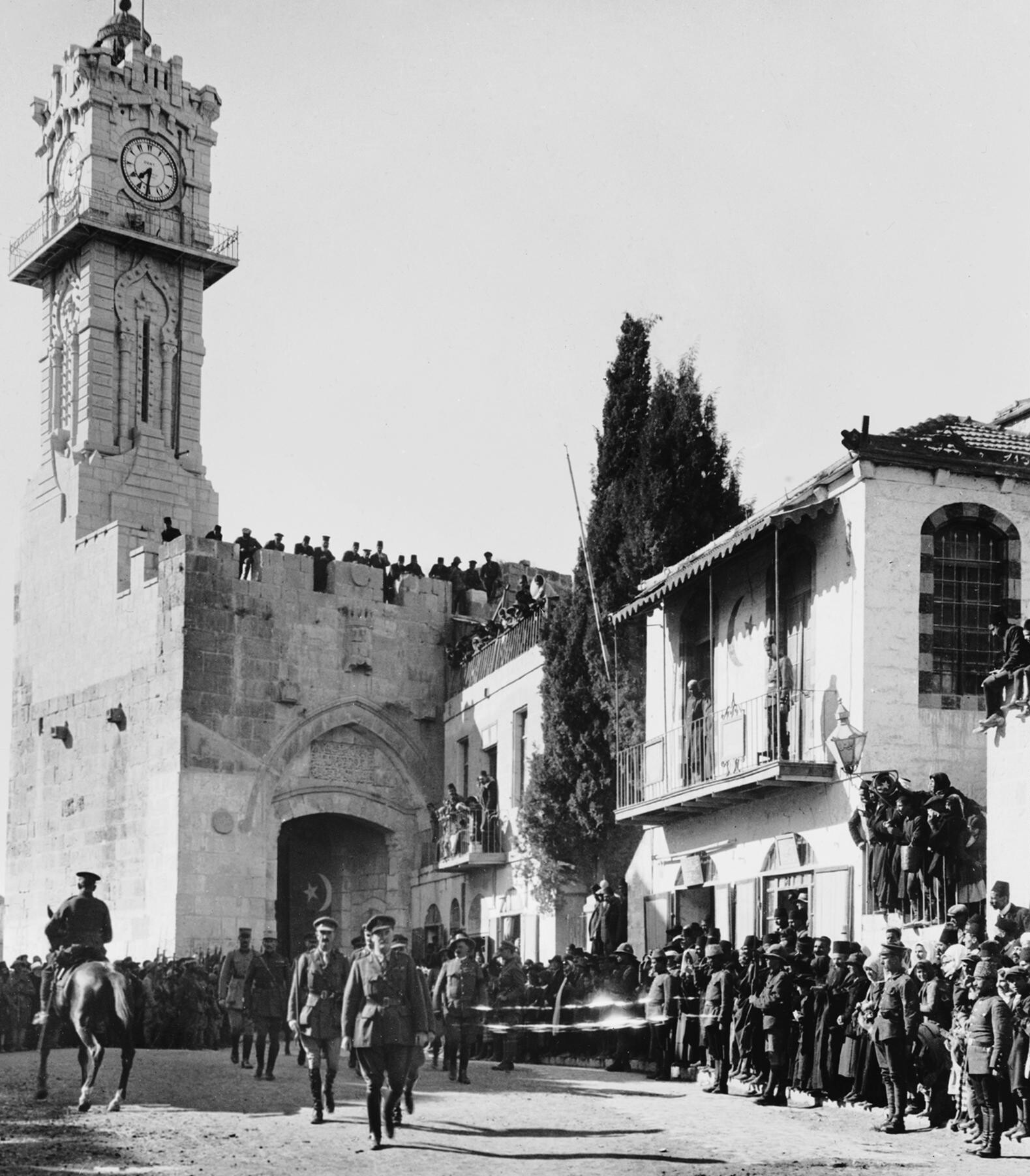
Jerusalem, five weeks later
General Edmund Allenby entered Jerusalem on foot on December 11, 1917, after Ottoman forces had surrendered the city. The officers passing through Jaffa Gate belong to the military sequel of the declaration. Britain was becoming an occupying power in the territory whose future it had discussed in London.
Photo details
Date
December 11, 1917
Location
Jaffa Gate, Jerusalem, Ottoman Palestine
Photographer
Underwood & Underwood
Archive / collection
Library of Congress, cph.3b47734; Imperial War Museums, Q 12616; Wikimedia Commons
Rights / license
Public domain in the United States; Library of Congress records no known copyright restrictions