
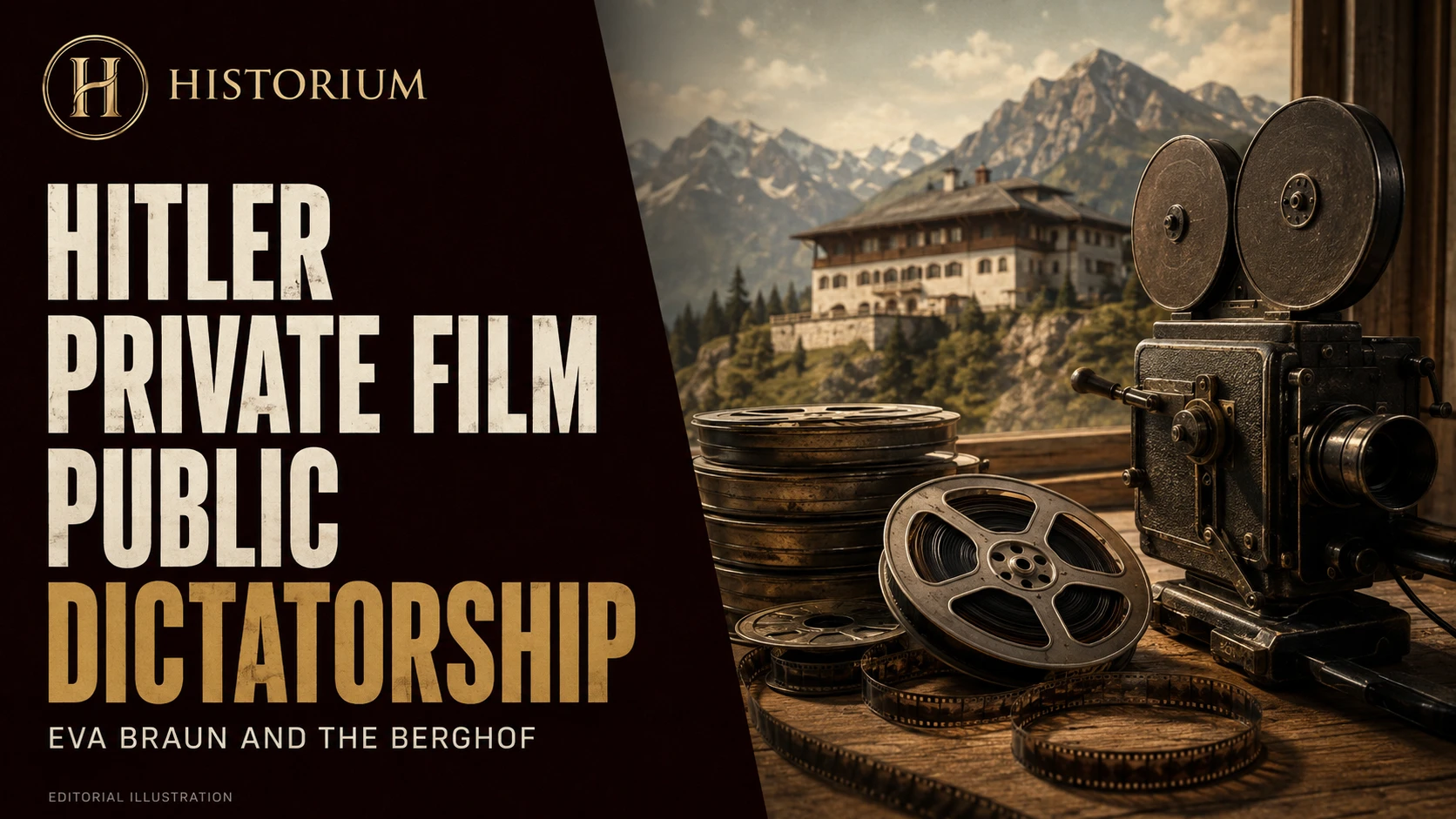
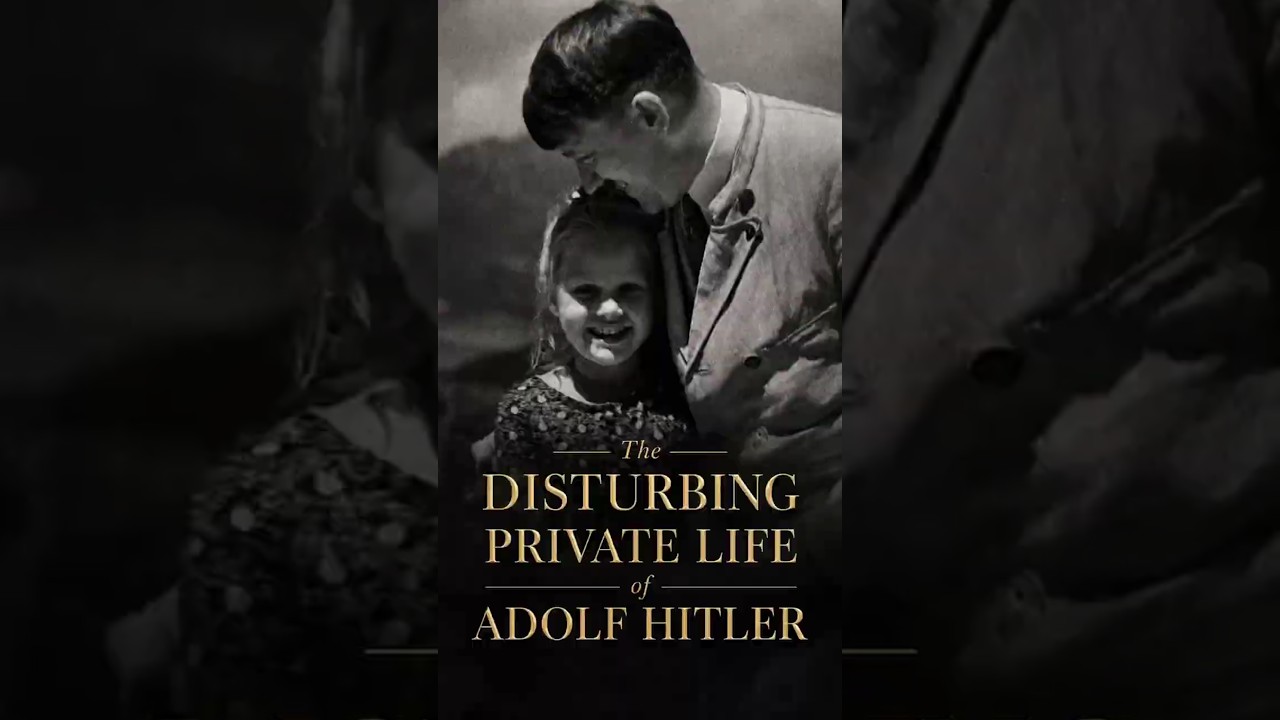
A mountain terrace, people chatting, children and dogs: private footage of Adolf Hitler can look disconcertingly familiar. The actions belong to the visual language of a family film, while the central figure led a dictatorship responsible for persecution, war and genocide. The historical task is to understand how those realities coexisted without allowing a few domestic scenes to replace the larger record.
Much of the surviving material associated with this private world comes from Eva Braun’s home movies. This article explains that archival collection and its context. It does not claim to identify or authenticate every shot in a modern compilation.
What Kind of Films Survived?
The U.S. National Archives’ guide to captured German films describes Braun’s private footage as silent 16mm film in both black and white and color. It includes recreation, family occasions and informal scenes with Hitler, sometimes accompanied by senior figures in the regime. These are home movies with a particular circle of people at their center.
The silence is consequential. The original pictures do not preserve the conversations taking place. Music, sound effects or spoken dialogue heard in a later presentation need their own explanation and source. Seeing a person’s mouth move is not the same as possessing a recording of what they said.
Imperial War Museums catalogues one reel, GWY 1175, as amateur footage around the Berghof and the lakes at Königssee and Starnberger See. Such descriptions help restore the films’ varied subjects. They document Braun’s surroundings and activities, not simply an uninterrupted portrait of Hitler.
The Berghof Was Also a Place of Power
The Berghof stood on the Obersalzberg near Berchtesgaden. According to Dokumentation Obersalzberg’s history of the site, the area became a major center of Nazi power alongside Berlin between 1933 and 1945. Hitler’s residence lay within a tightly restricted district. The apparent openness of an Alpine view should not be confused with unrestricted access to the people standing before it.
The Documentation Center’s permanent exhibition, Idyll and Atrocity, describes the Berghof as both a private residence and a seat of government. It also examines the use of the landscape to project a congenial public image of Hitler. Photographs and films circulated that image far beyond the mountain.
Private filming and organized publicity were different activities, but the surroundings could support a similar impression of ease and approachability. A viewer encountering the footage decades later sees the pleasures available to an enclosed circle. That is information about privilege and the presentation of power, not proof that power had ceased operating during a social gathering.
Read the Catalogue’s Uncertainty Carefully
The detailed description of IWM reel GWY 1182 demonstrates how cautious identification works. It associates some aircraft scenes with Braun’s Italian holiday in summer 1940 but qualifies the identification. It places scenes on the snow-covered Berghof terrace probably in the winter of 1941–42. Other people and locations remain unidentified or uncertain.
Those qualifications belong in any retelling. A compilation can put winter, summer, travel and social scenes beside one another without showing that they took place on the same day. Clothing and scenery can contribute to identification, but an attractive edit is not a chronology. The archive’s specific record is a better starting point than a confident caption detached from it.
This also matters when naming visitors. A person identified in one shot cannot automatically be identified in a neighboring shot, especially when reels and dates have been combined. Descriptions should preserve the difference between an established identification and a plausible suggestion.
The Dictatorship Outside the Frame
The United States Holocaust Memorial Museum’s account of Hitler’s rise explains how the Nazis used laws, decrees, intimidation and violence to destroy German democracy after his appointment as chancellor in January 1933. By 1934, political institutions no longer provided constitutional limits on his authority. That political structure is part of the context for later scenes of his private circle.
The Museum’s history of the Final Solution places the murder of Europe’s Jews within the development of Nazi persecution and wartime policy. The Holocaust cannot be understood from the appearance of Hitler in a leisure film. Its history depends on evidence about decisions, institutions, deportations and killing operations across Europe.
Bringing that evidence alongside the films does not require inventing crimes in a room or conversation that the camera never documented. Nor does a friendly gesture contradict responsibility for a criminal regime. Social behavior toward selected companions and political actions affecting millions answer different historical questions.
From Private Reels to Public Archives
The films also have a history after they were made. The Archivist of the United States’ annual report for 1946–47 records the receipt of motion pictures concerning Hitler and Braun from the War Department. This contemporary administrative record provides a documented point in their passage into an archive. It is a firmer reference than a vague claim that the pictures remained completely unknown for half a century.
Once preserved and reused, footage can acquire new meanings through selection, narration and juxtaposition. The National Archives’ introduction to audiovisual research emphasizes distinctions between film types and the production information that helps interpret them. A home movie, a newsreel and a later documentary can use related images while making different arguments.
To watch these films responsibly is to hold several things in view: the people and activities actually recorded, the limits of identification and sound, the social setting that enabled the filming, and the political history beyond the camera. The footage offers evidence of a private world inside the dictatorship. It cannot serve as the whole history of that dictatorship.