The U.S. Invasion of Grenada: Operation Urgent Fury, 1983
Period
Cold War, October 1983
Place
Grenada, Eastern Caribbean
On October 25, 1983, U.S. and Caribbean forces landed on Grenada after a deadly political crisis. Original military photographs show the airborne assault and street patrols.
Early on October 25, 1983, American troops began landing on the Caribbean island of Grenada. Army Rangers parachuted toward the unfinished airport at Point Salines; Marines approached other parts of the coast. The operation, codenamed Urgent Fury, brought together U.S. forces and troops from several Caribbean countries.
Six days earlier, Prime Minister Maurice Bishop had been killed amid an internal power struggle. A military council took control, declared a curfew, and deepened the uncertainty facing the island and the American medical students studying there. President Ronald Reagan’s administration pointed to the danger to those students and requests from Caribbean governments as reasons for military intervention. The invasion also reflected Washington’s Cold War fears about Soviet and Cuban influence.
The landings quickly met armed resistance from Grenadian and Cuban personnel. Rangers fought to secure Point Salines while Marines and soldiers moved inland. The photographs in this gallery document the aircraft, parachutists and ground patrols used during the campaign. The fighting lasted beyond the first day, and individual photograph dates are distinguished from the operation’s opening date.
Urgent Fury brought a new government and a rapid end to the military council, but the use of force was sharply criticized abroad. The United Nations General Assembly condemned the intervention. Decades later, Grenada remains an important case in debates about security, sovereignty and how Cold War calculations shaped events in small states.
Topic: Invasion of Grenada; Operation Urgent Fury; Ronald Reagan; Cold War
01 / 04
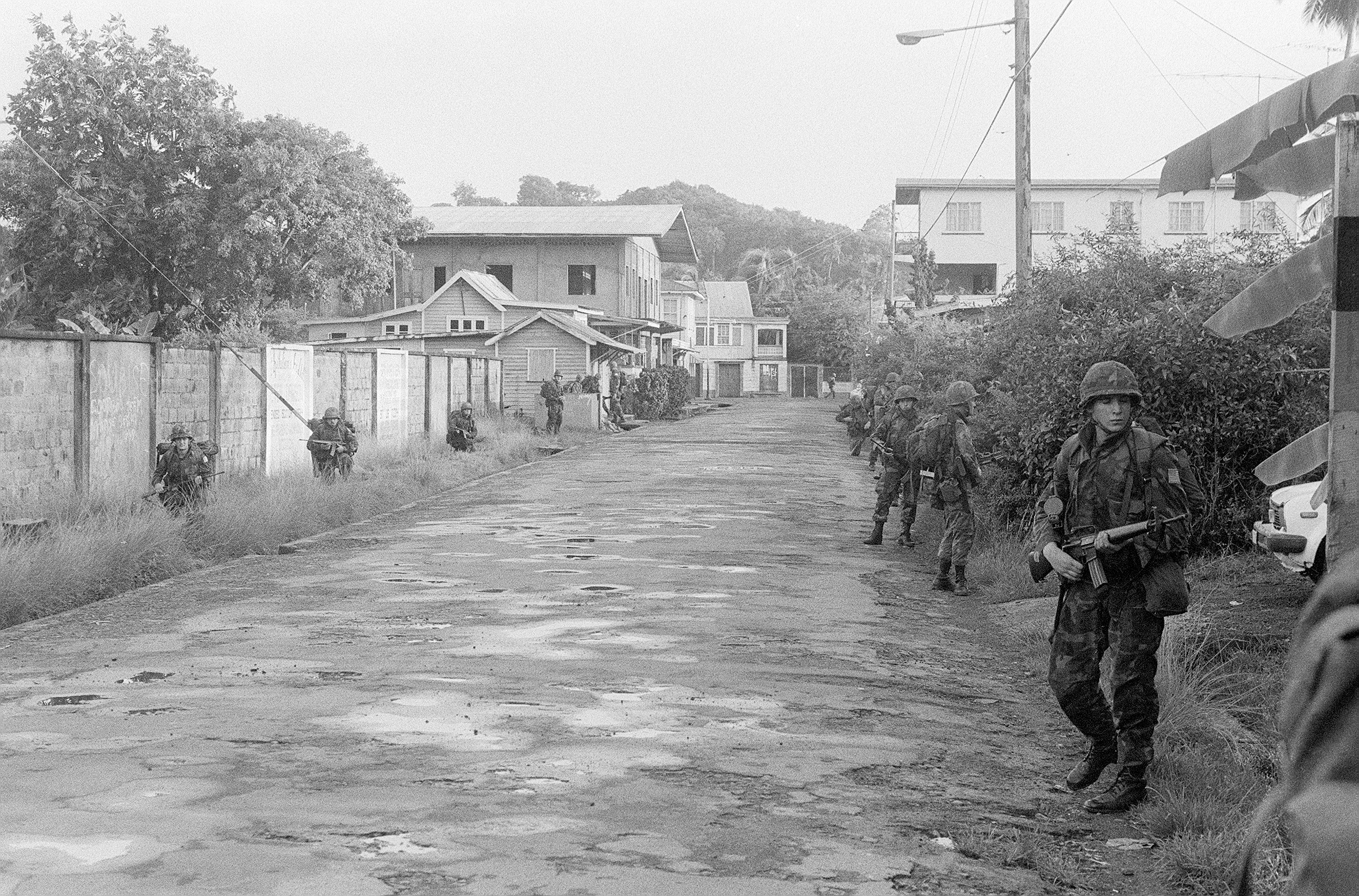
Marines patrol the town of Grenville
U.S. Marines move through Grenville during Operation Urgent Fury, carrying M16 rifles and watching the streets. The official military caption dates the scene to October 25, 1983. The image reminds us that the invasion was not limited to the better-known parachute assault at Point Salines; Marines also secured positions on Grenada’s eastern side.
U.S. Department of Defense / Wikimedia Commons, public domain
02 / 04
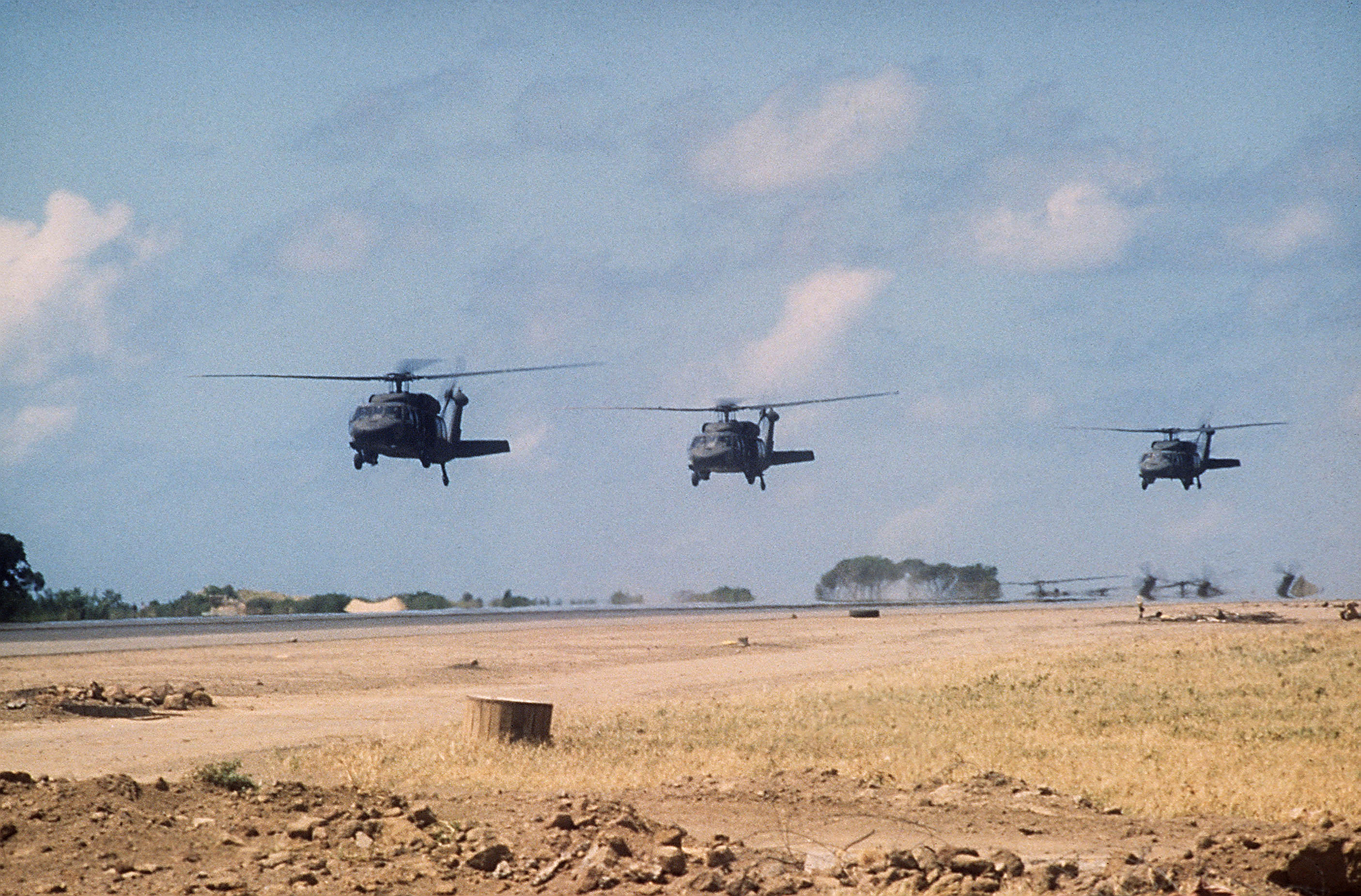
Black Hawk helicopters at Point Salines
U.S. Army UH-60A Black Hawk helicopters maneuver near Point Salines Airport on the day of the invasion. The airfield was a principal objective for the Rangers who arrived first by parachute. Control of its runway made it possible to bring in reinforcements and supplies, turning a contested landing zone into a base for further operations.
U.S. Department of Defense / Wikimedia Commons, public domain
03 / 04
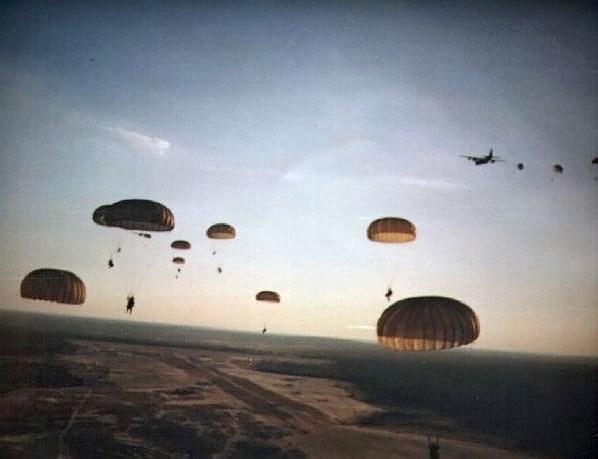
Army Rangers parachute into Grenada
Army Rangers descend during the airborne phase of Operation Urgent Fury, which began on October 25. More than 500 Rangers jumped near Point Salines, where they had to seize the airport under fire. The archive labels this as an October 25 image. It shows how the opening phase of the invasion depended on an exposed parachute landing rather than an uncontested arrival.
Photo details
Date
October 25, 1983 (U.S. Army source)
Location
Point Salines, Grenada
Photographer
United States Army; individual photographer unlisted
Archive / collection
U.S. Army historical photograph / Wikimedia Commons
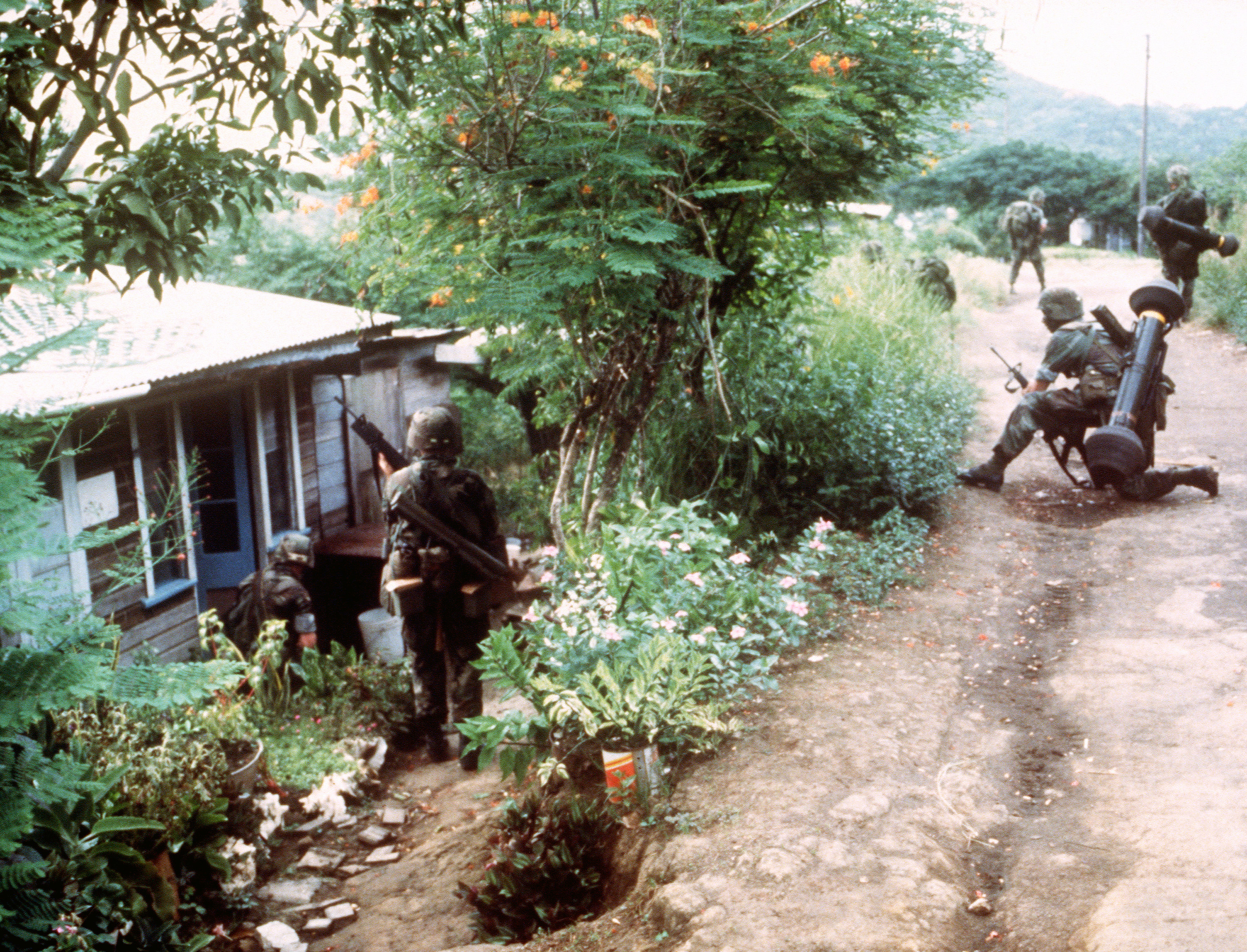
Soldiers of the U.S. Army’s 82nd Airborne Division patrol Grenada during the campaign. The source dates the photograph to October 1983 and lists October 25, but the division’s deployment occurred in stages during the operation, so this caption does not treat the picture as proof that this particular unit was at this position on the first morning. It represents the ground phase that followed the initial landings.
Photo details
Date
October 1983; exact patrol date not independently confirmed