On November 4, 1956, Soviet forces launched the decisive attack against Hungary’s revolution. This gallery concentrates on the intervention and its aftermath, beginning with two photographs made two days before the assault and ending with the women’s demonstration of December 4.
Two Budapest street photographs are dated only to 1956. Their captions preserve that uncertainty; neither is presented as an eyewitness frame from November 4.
Topic: Cold War
01 / 06
Two days before the assault
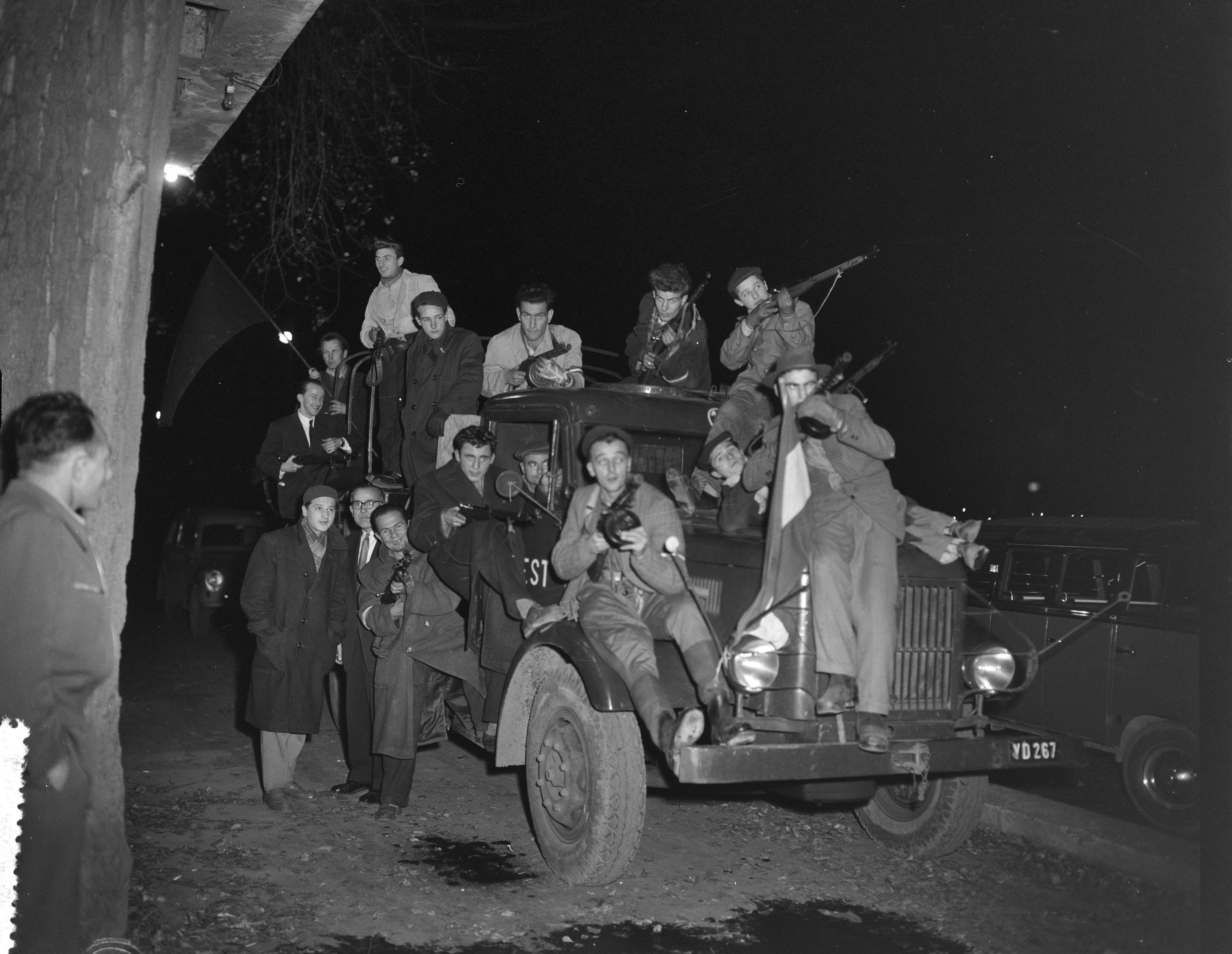
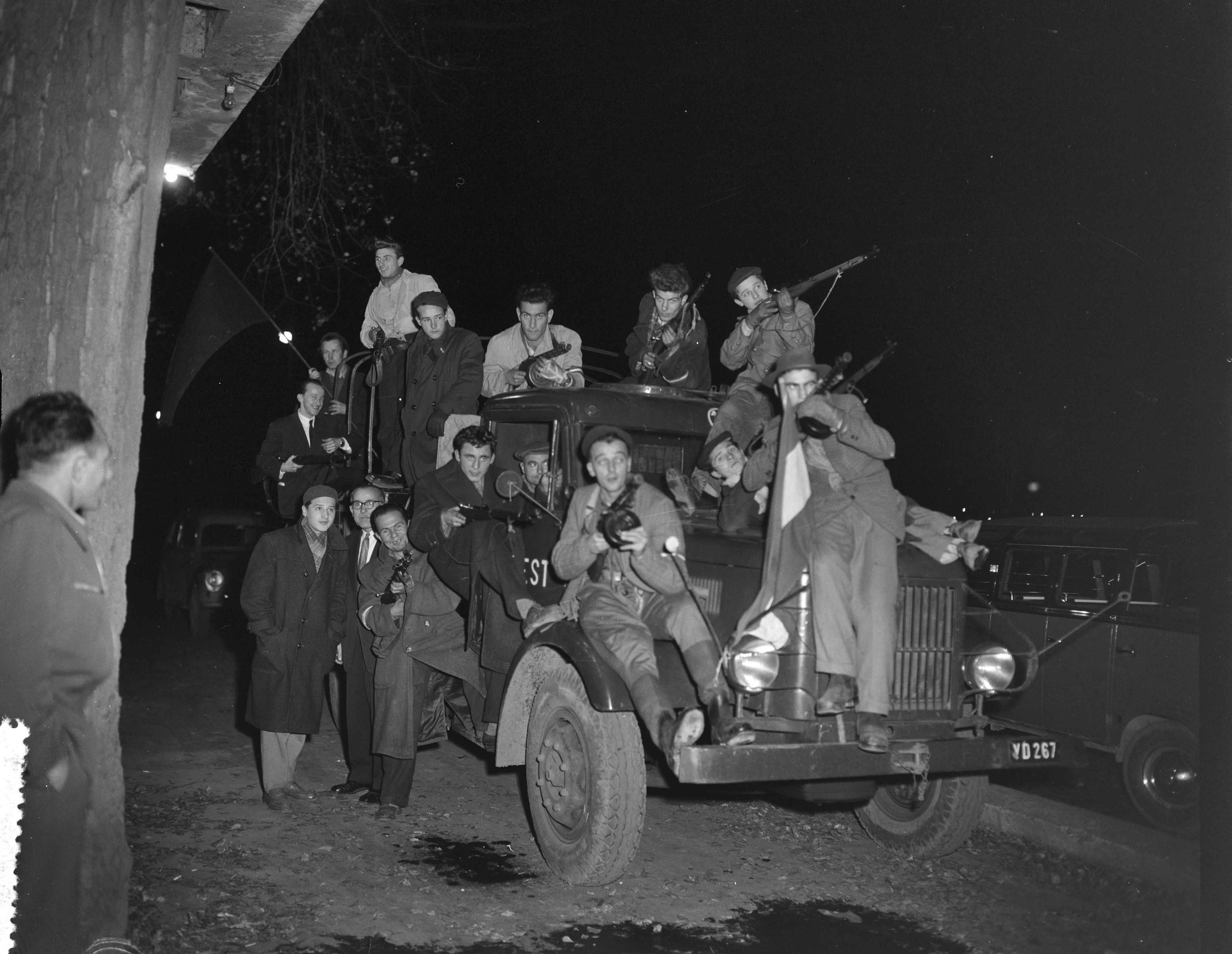
Armed revolutionaries gather on a truck during a night patrol. Joop van Bilsen’s photograph is dated November 2, two days before the decisive Soviet attack. Several men face the camera and raise their weapons; the image records their presence and public confidence, rather than an exchange of fire.
Joop van Bilsen / Anefo / Nationaal Archief, 908-1191
02 / 06
A handful of cartridges
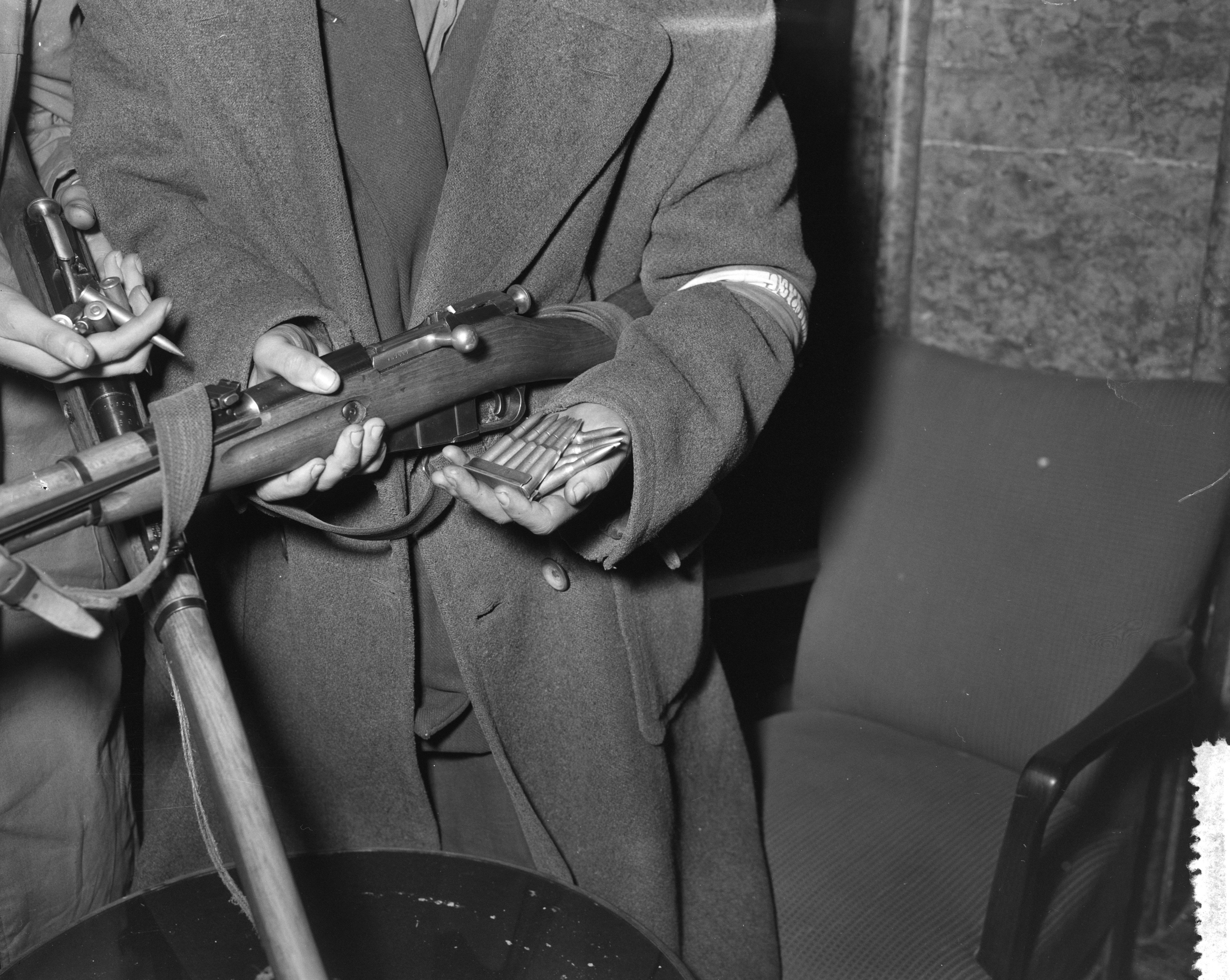
The archival title identifies these as the last cartridges. The close view concentrates on hands, ammunition and a rifle, leaving the fighters’ faces outside the frame. It was made before the November 4 assault; it cannot establish the ammunition supply of every resistance group or district.
Joop van Bilsen / Anefo / Nationaal Archief, 908-1204
03 / 06
Tanks at a Danube crossing
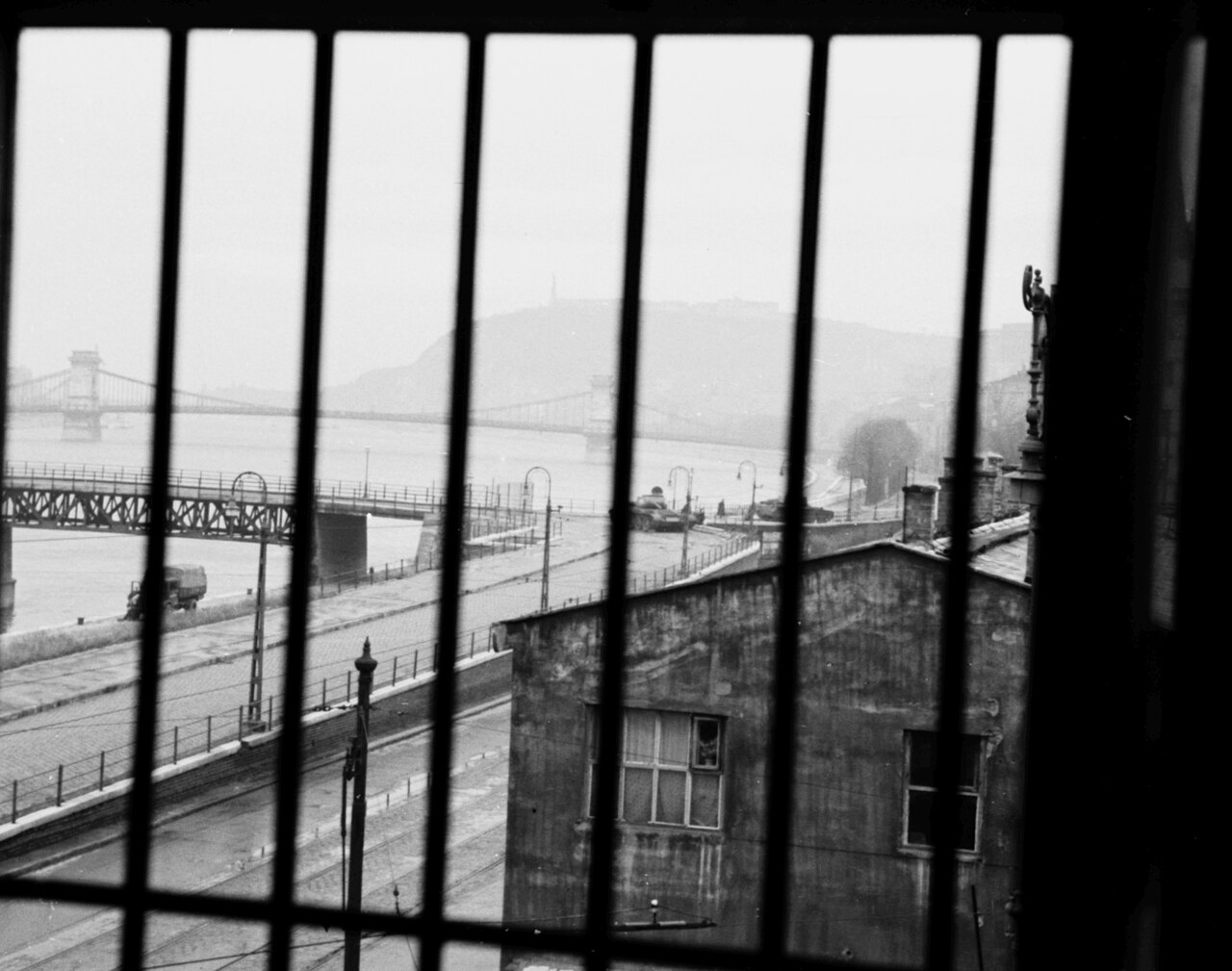
Two tanks stand near the Buda end of Kossuth Bridge, seen through the bars of a window. The Danube and Chain Bridge stretch beyond them. Fortepan dates the photograph to 1956 without assigning a day, so it serves here as a contemporary view of the militarized city, not a verified November 4 exposure.
Photo details
Date
1956; exact day unrecorded
Location
Kossuth Bridge, Buda bridgehead, Budapest, Hungary
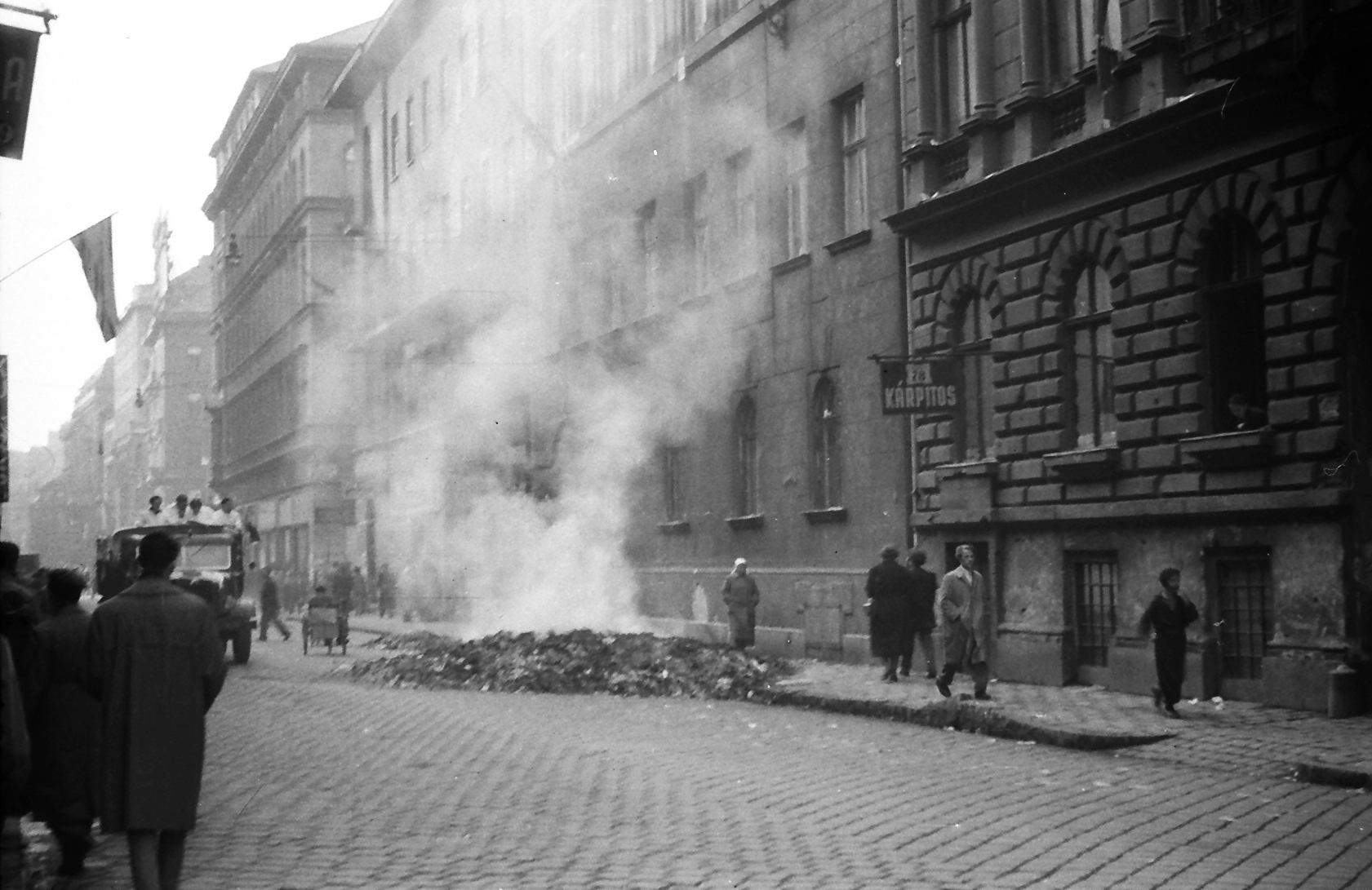
Smoke rises from material in the roadway as people walk past buildings on Dohány Street. The archive locates the camera outside number 78, facing the boulevard. Its year-level date does not establish whether this scene preceded or followed the second Soviet intervention; the photograph documents the disrupted street environment of the uprising.
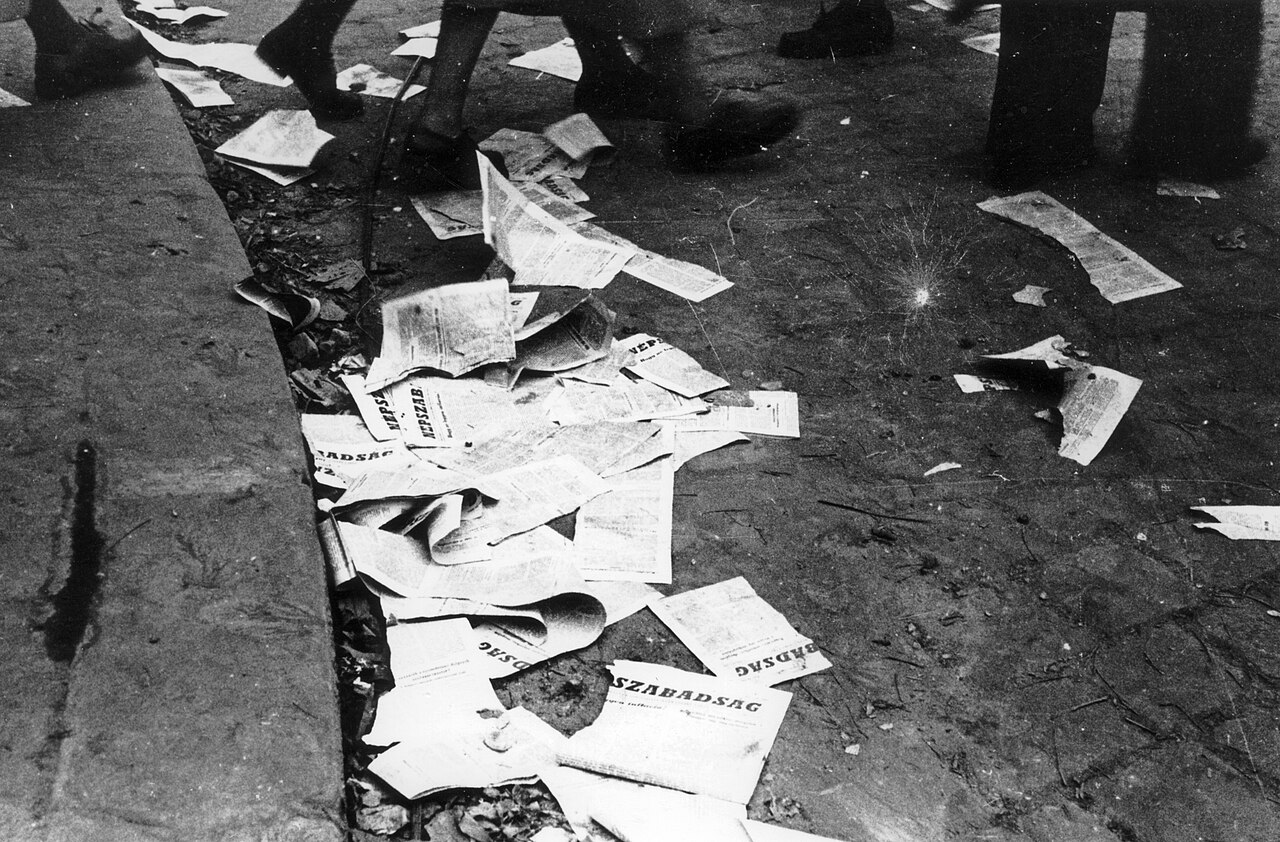
Torn copies of Népszabadság lie along a curb. The archive identifies the issue as November 13, 1956, giving the photograph an earliest possible date after the Soviet intervention. The discarded party newspaper is a small but pointed remnant of a political struggle that continued after the main street battles.
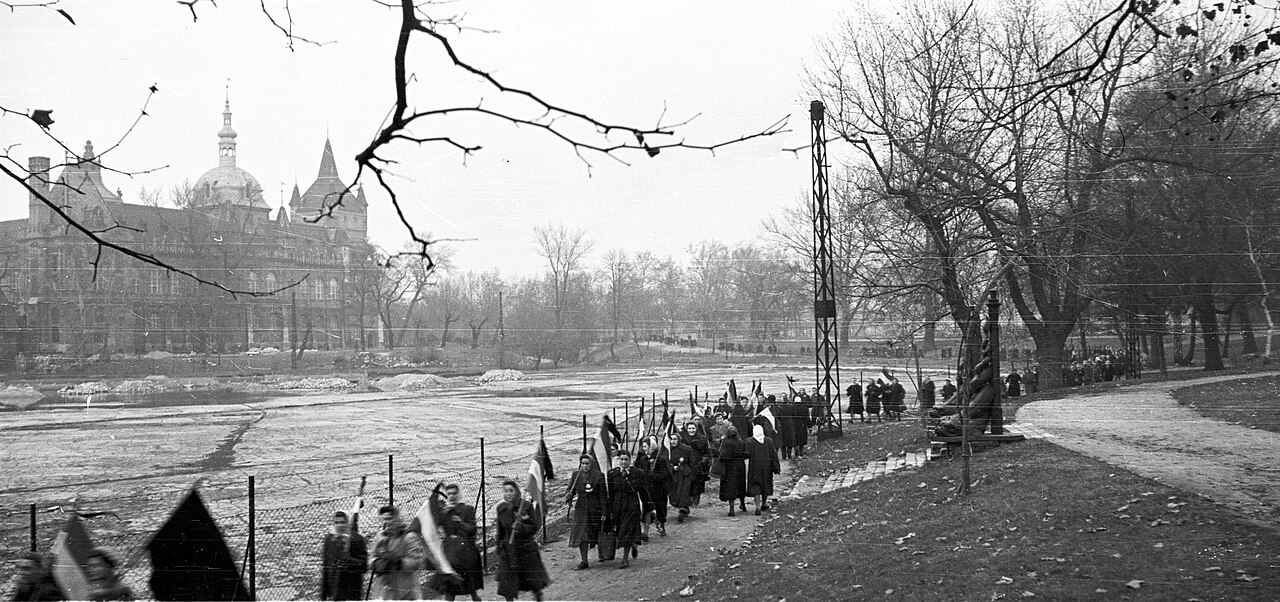
Women walk in a procession near Heroes’ Square on December 4, one month after the Soviet attack. Nagy Gyula’s photograph records the silent demonstration commemorating the dead and opposing the intervention. Its orderly line and winter setting belong to the revolution’s aftermath, when public protest remained possible but dangerous.