The election of November 6, 1860 survives in objects made to persuade voters and documents produced while the votes were being counted. This gallery combines one photograph with contemporary prints and a manuscript. The campaign material is dated 1860; only the final telegram was created on election day.
Topic: American Political History
01 / 06
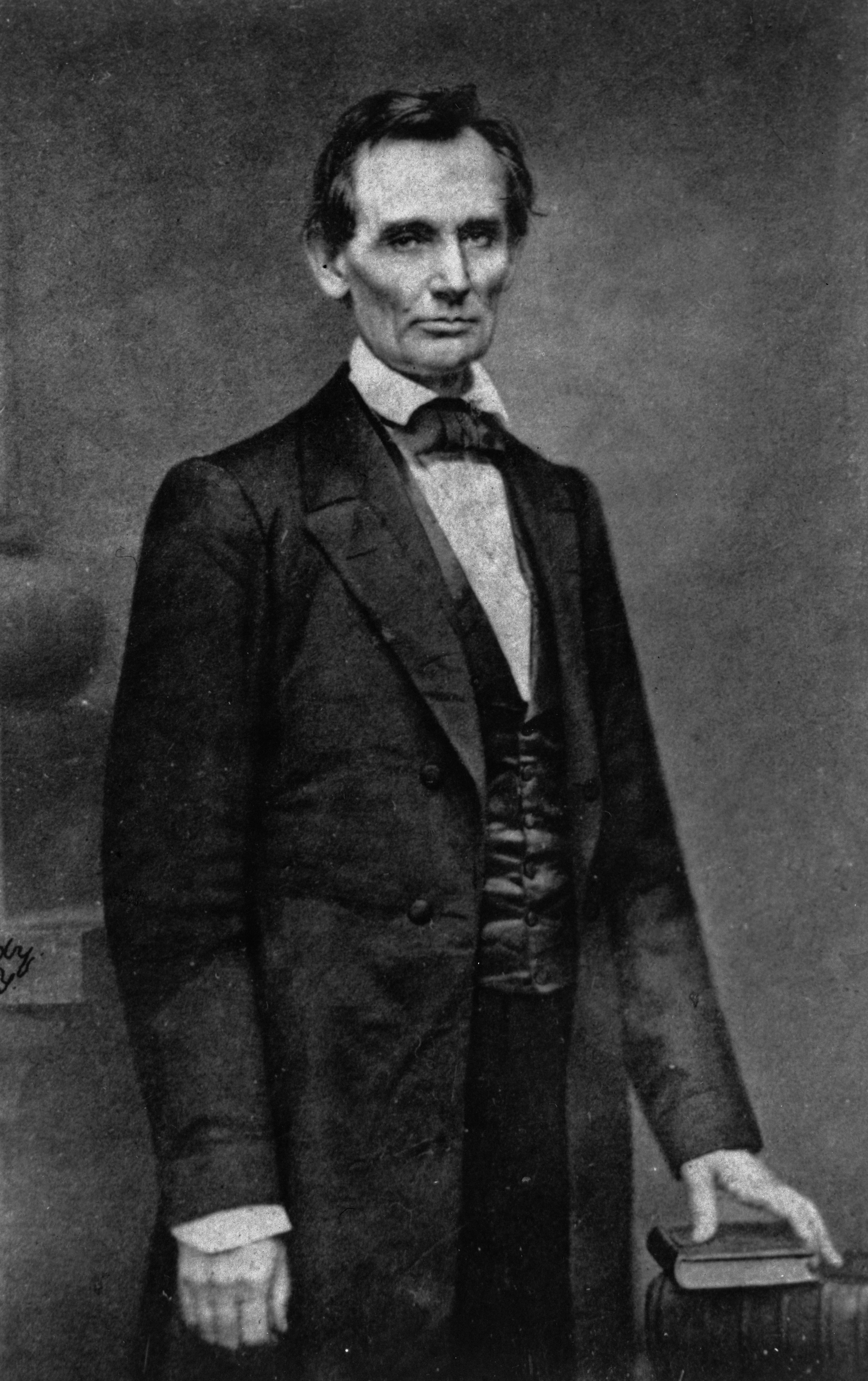
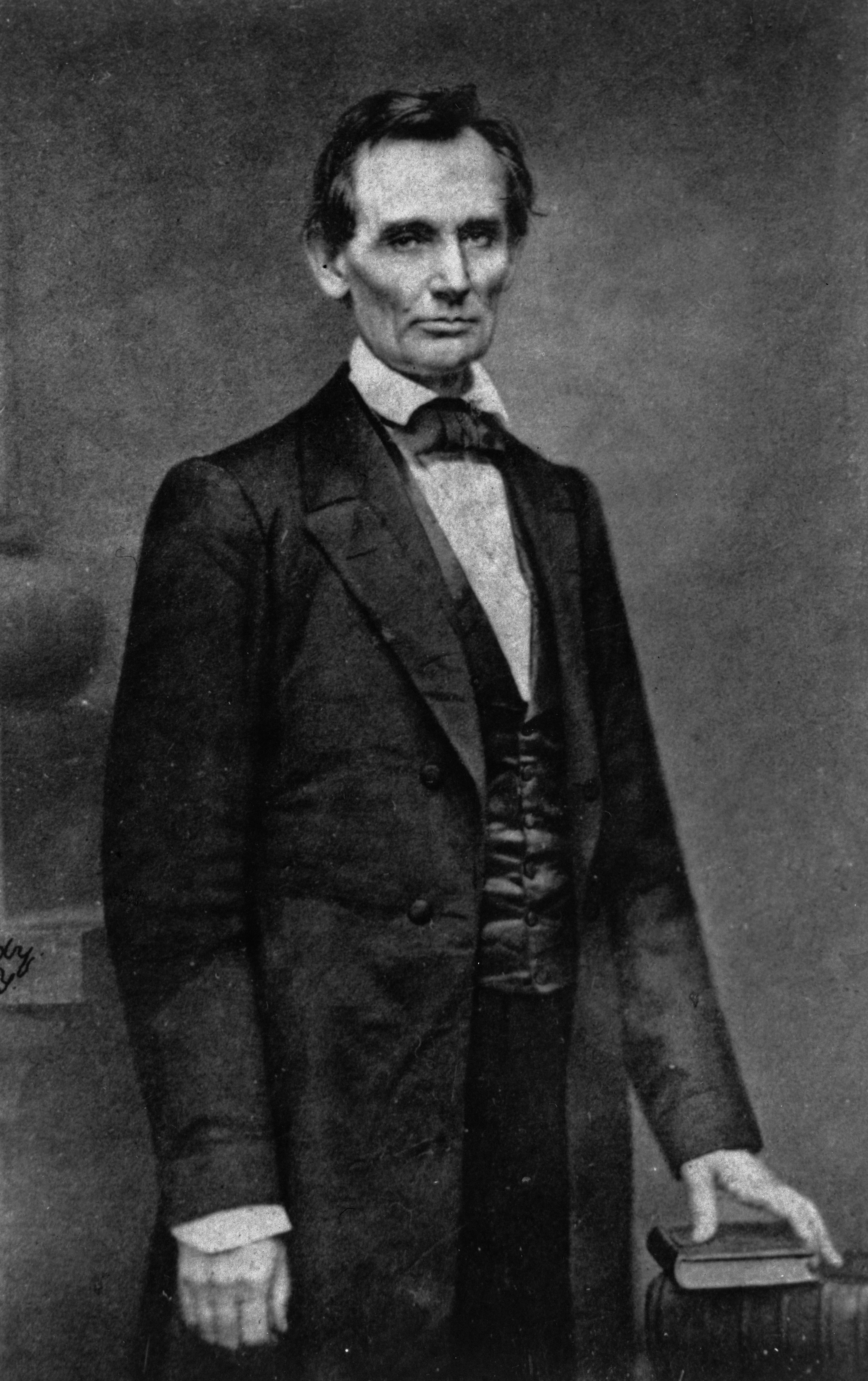
Lincoln before Cooper Union
Mathew Brady photographed Lincoln on February 27, 1860, before his Cooper Union address in New York. He is still beardless. This is a campaign-year portrait, not a photograph of the election. It puts a recognizable face beside the mass-produced images that followed him through the contest.
Photo details
Date
February 27, 1860
Location
New York City, United States
Photographer
Mathew Brady
Archive / collection
Library of Congress, cph.3a09102
Rights / license
Public domain; photographer died in 1896. Commons identifies this scan as free of known restrictions.
Mathew Brady / Library of Congress; via Wikimedia Commons
02 / 06
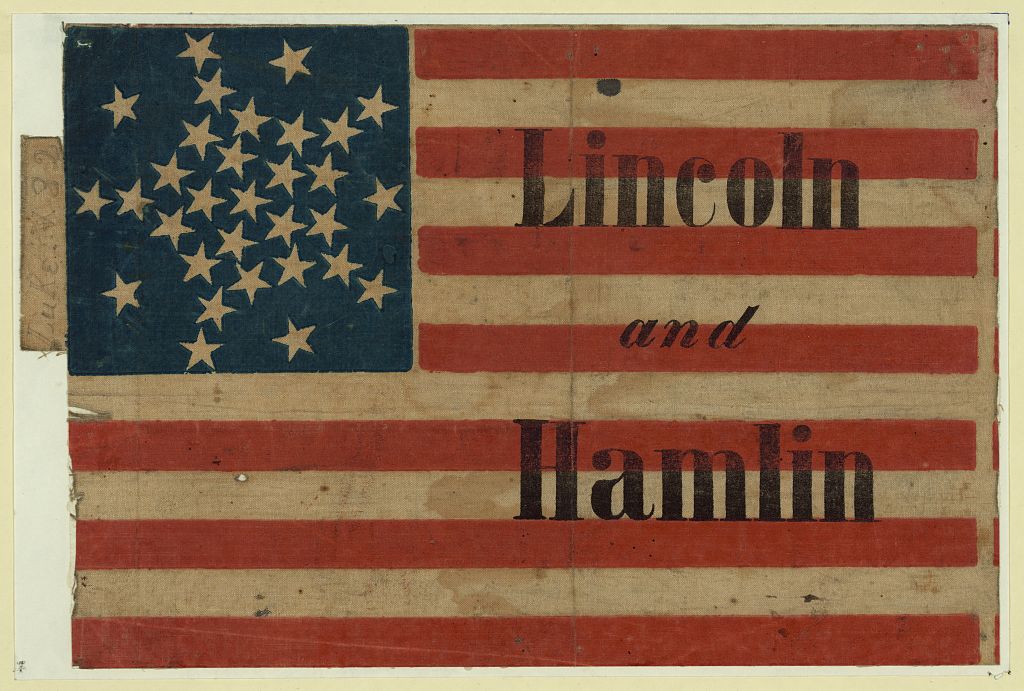
Two names on a flag
H. C. Howard printed Lincoln and Hamlin’s names across a small fabric flag. The design reduced a national campaign to a portable object. The Library of Congress dates its copyright deposit to July 12, 1860. Its thirty-one-star pattern should not be mistaken for a precise count of the states at election time.
Photo details
Date
1860; deposited July 12
Location
Philadelphia, Pennsylvania, United States
Photographer
H. C. Howard, publisher
Archive / collection
Library of Congress, ppmsca.19302
Rights / license
No known restrictions on publication, per Library of Congress.
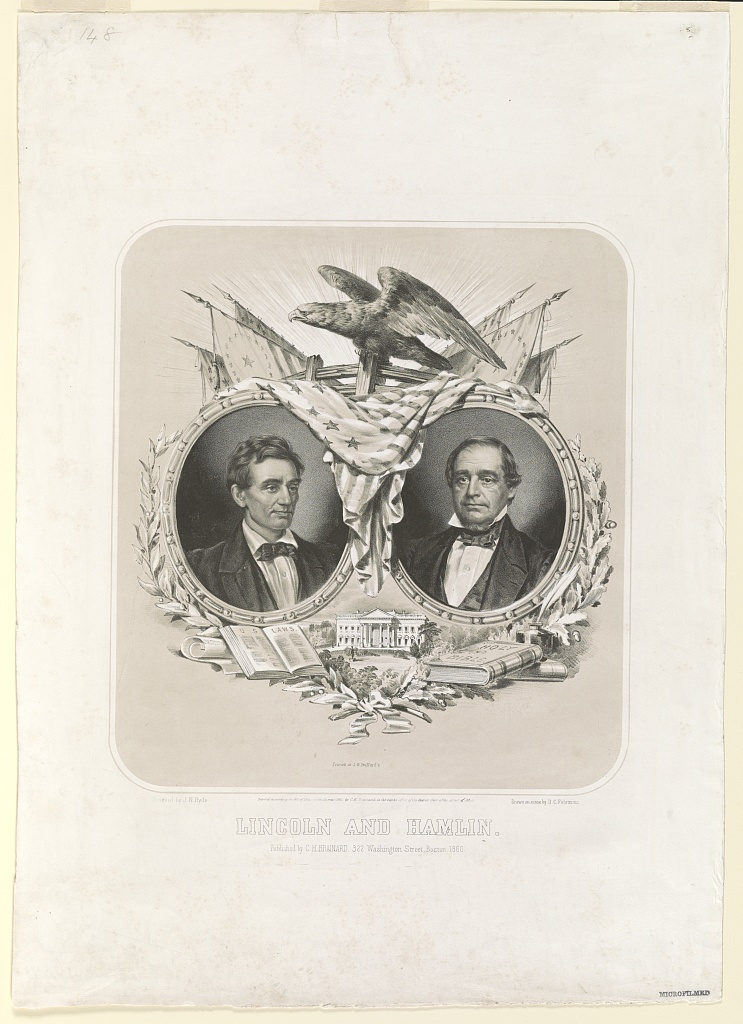
In this Boston lithograph, Lincoln and Hamlin sit beneath an eagle and a rail fence. The White House appears below them. Books, flags and carefully arranged branches help the design present the candidates as respectable custodians of national institutions. This is campaign advertising, not a neutral portrait of their political program.
Photo details
Date
1860 campaign; exact date unknown
Location
Boston, Massachusetts, United States
Photographer
John N. Hyde and Dominique C. Fabronius; J. H. Bufford lithographer
Archive / collection
Library of Congress, pga.04545
Rights / license
No known restrictions on publication, per Library of Congress.
Hyde and Fabronius / J. H. Bufford / Library of Congress
04 / 06
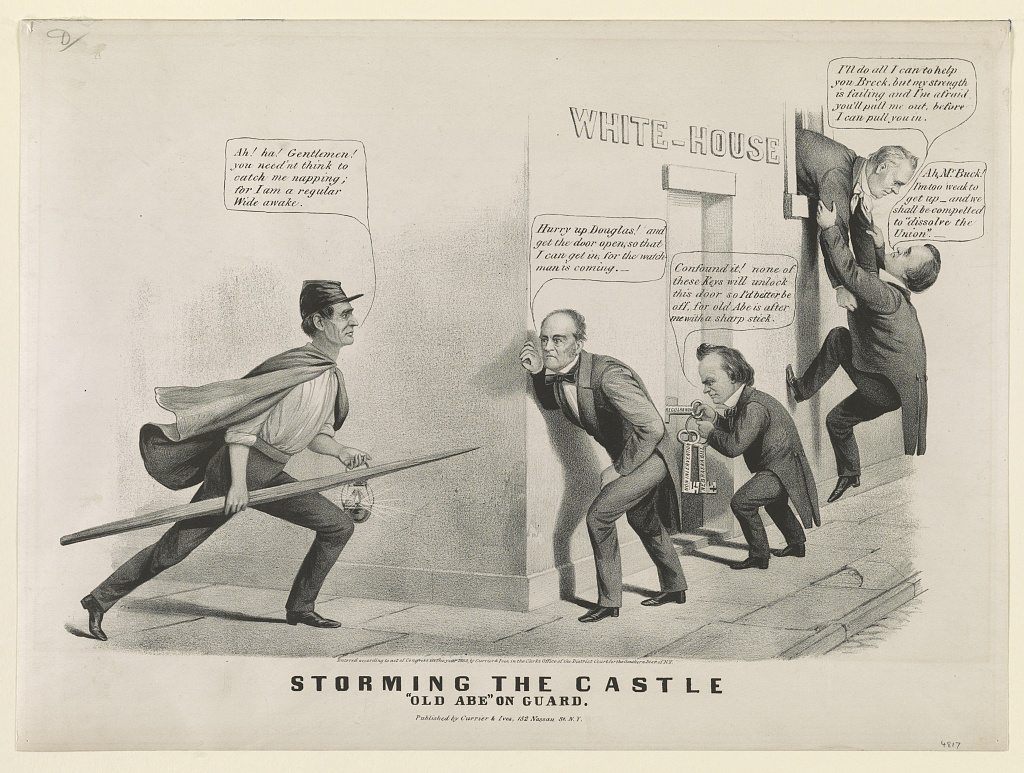
A cartoon contest for the White House
Currier & Ives made the presidential race into a struggle to enter the White House. Lincoln approaches in Wide Awake dress, holding a lantern and a rail. His opponents are caricatured as intruders. The cartoon records an argument made during the campaign; its jokes are evidence of partisan persuasion, not eyewitness reporting.
Photo details
Date
1860 campaign; exact date unknown
Location
New York City, United States
Photographer
Louis Maurer, artist; Currier & Ives, publisher
Archive / collection
Library of Congress, pga.05033
Rights / license
No known restrictions on publication, per Library of Congress.
Louis Maurer / Currier & Ives / Library of Congress
05 / 06
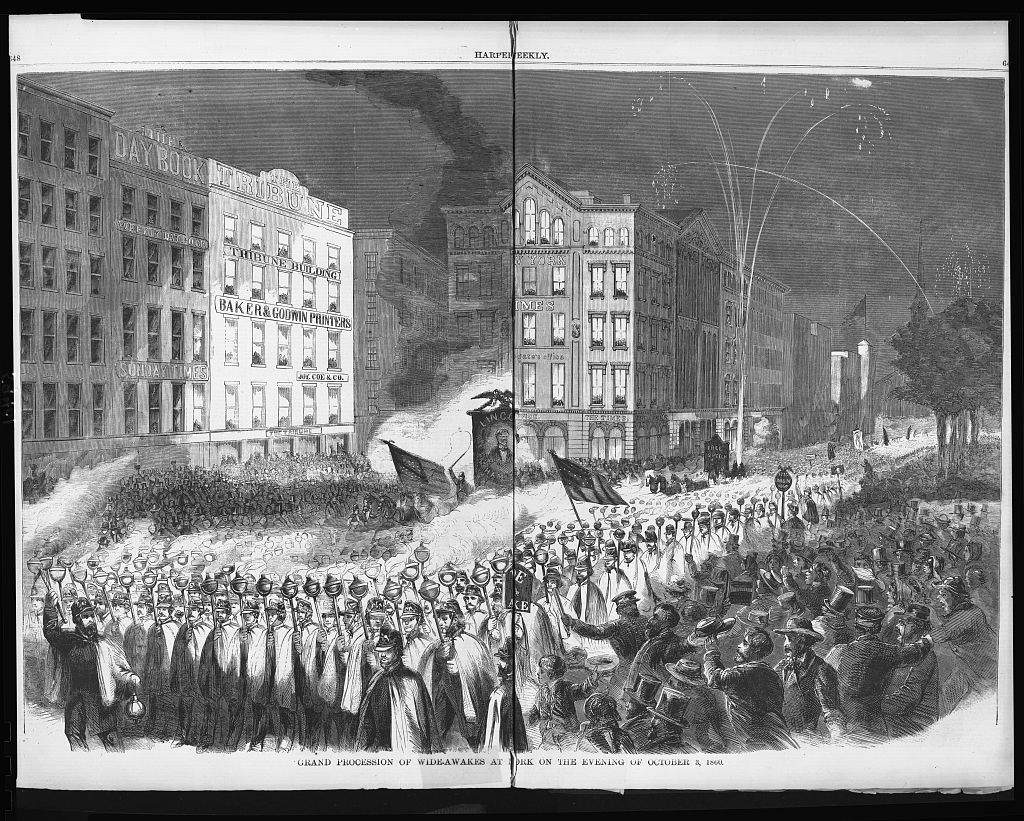
The Wide Awakes fill the street
This wood engraving depicts the Republican procession in New York on October 3, 1860. It appeared in Harper’s Weekly ten days later. The crowded streets show how a campaign could occupy public space, although the engraving remains an illustrated representation. Its event date and publication date are deliberately kept separate here.
Photo details
Date
October 3, 1860 event; published October 13
Location
Printing House Square, New York City, United States
Photographer
Artist not identified in the catalog; Harper’s Weekly
Archive / collection
Library of Congress, cph.3b07146
Rights / license
No known restrictions on publication, per Library of Congress.
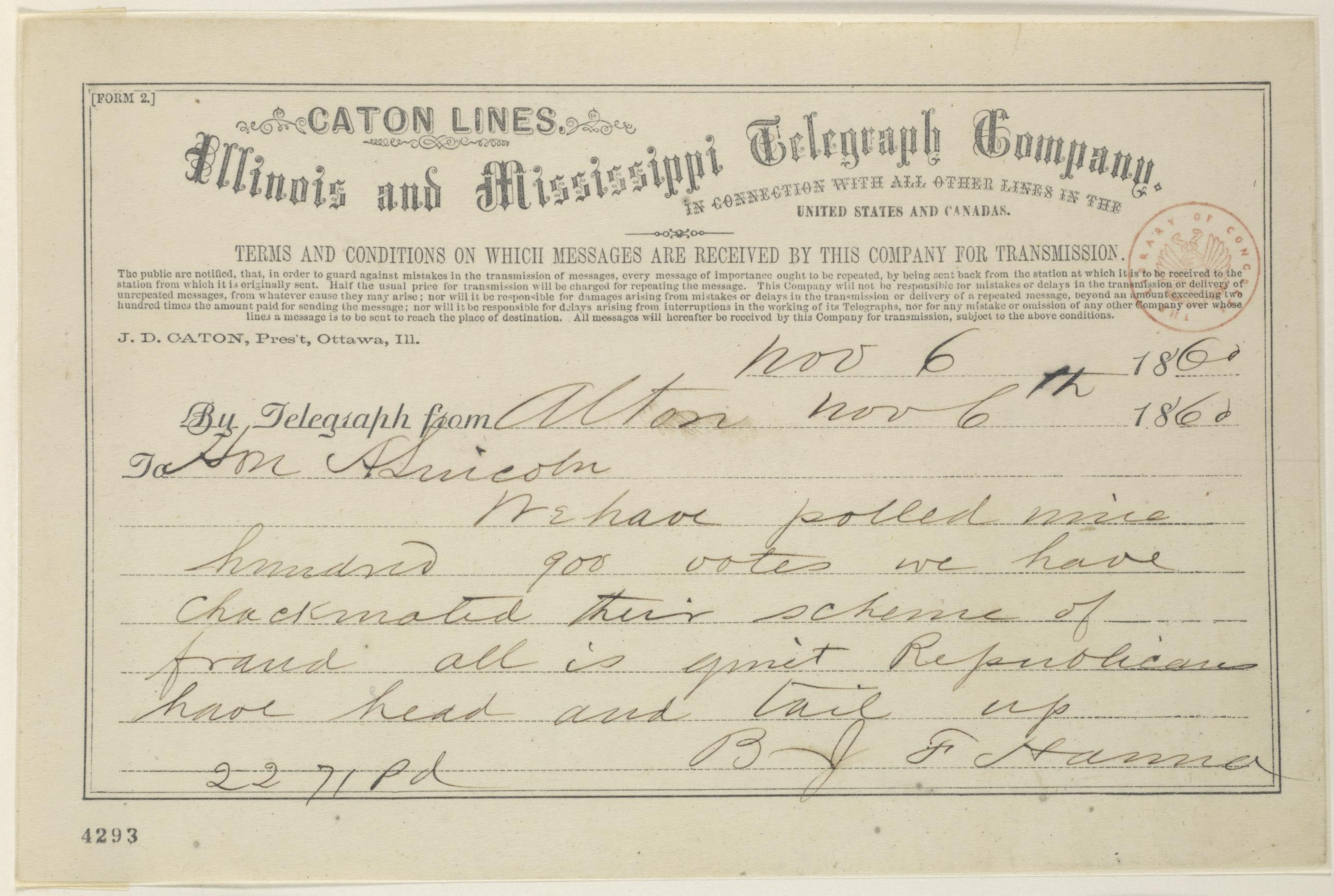
B. J. F. Hanna’s telegram to Abraham Lincoln is dated November 6, 1860. It reports election results and belongs to Lincoln’s surviving correspondence. After the portraits and campaign prints, this modest sheet brings the story to voting day itself: information moving toward the candidate as a national result took shape.
Photo details
Date
November 6, 1860
Location
United States; exact sending location not asserted
Photographer
B. J. F. Hanna, sender; telegraph clerk not identified
Archive / collection
Library of Congress, Manuscript Division, Abraham Lincoln Papers
Rights / license
Public domain digital scan, expressly stated by Library of Congress.