No camera recorded the Lisbon earthquake of November 1, 1755. This gallery presents six genuine historical prints by Jacques-Philippe Le Bas, published in 1757, showing its aftermath. They are works of art and historical documents: composed views of ruined buildings, with human figures arranged by the artist. Their dates and medium are stated throughout.
Topic: European History
01 / 06
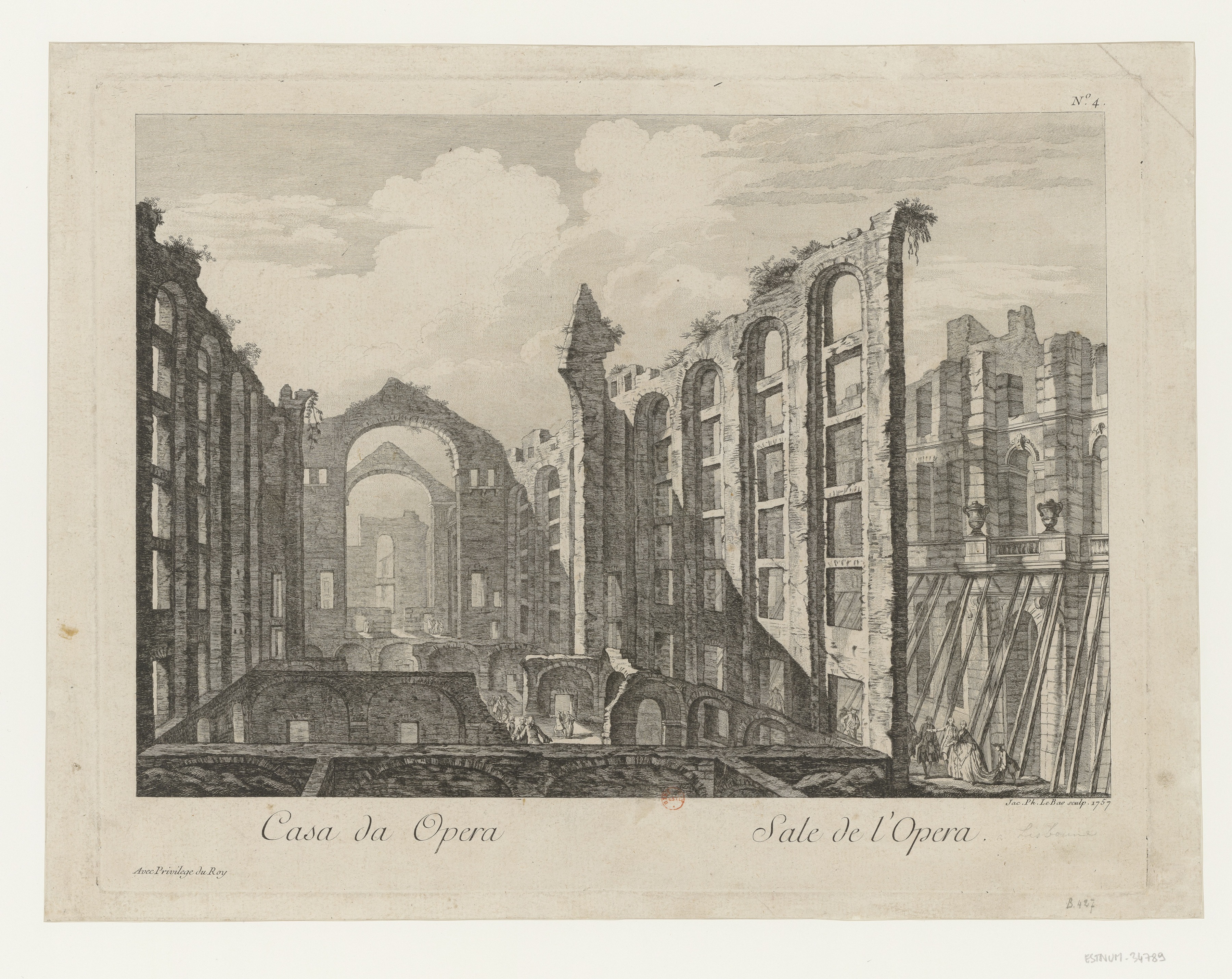
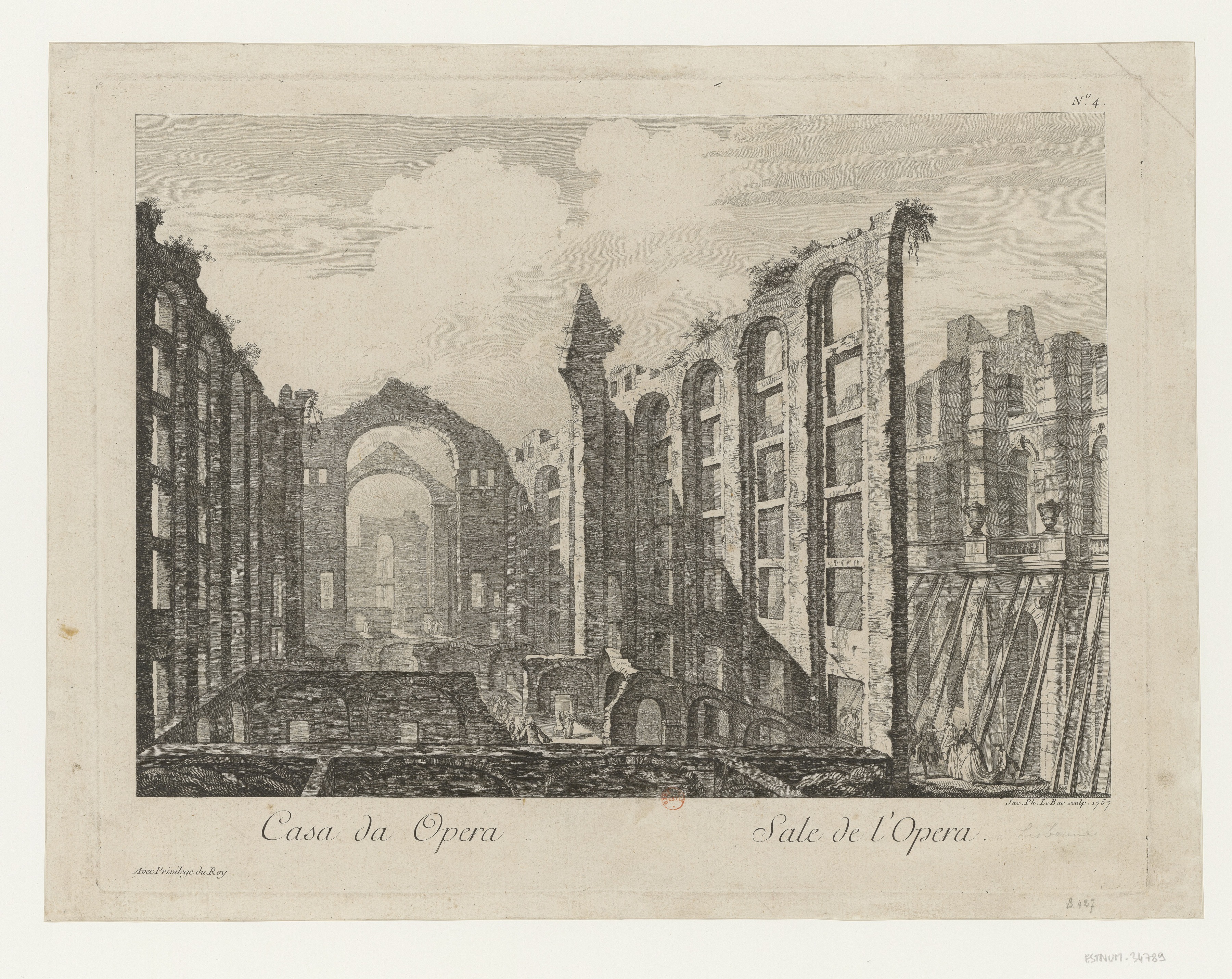
The opera house opened to the sky
Le Bas presents the ruined opera house as a vast interior exposed by destruction. Small figures give the broken architecture a human scale. Published in 1757, this print belongs to the aftermath of the November 1755 disaster. It is a composed engraving, not a photograph or an eyewitness snapshot of the collapse.
Photo details
Date
1757; depicts the aftermath of the November 1, 1755 earthquake
Location
Lisbon, Portugal (depicted); print published in Paris, France
Photographer
Jacques-Philippe Le Bas, engraver; reproduction photographer not identified
Archive / collection
Bibliothèque nationale de France, département Estampes et photographie, btv1b53274779w
Jacques-Philippe Le Bas, 1757 / Bibliothèque nationale de France, département Estampes et photographie, btv1b53274779w; public domain.
02 / 06
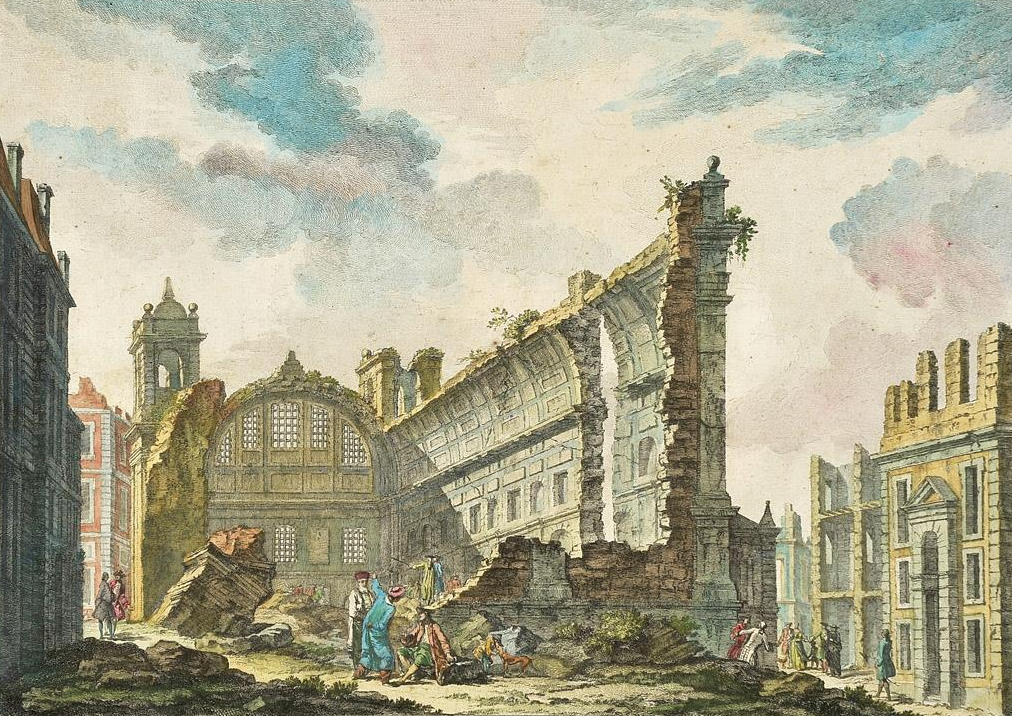
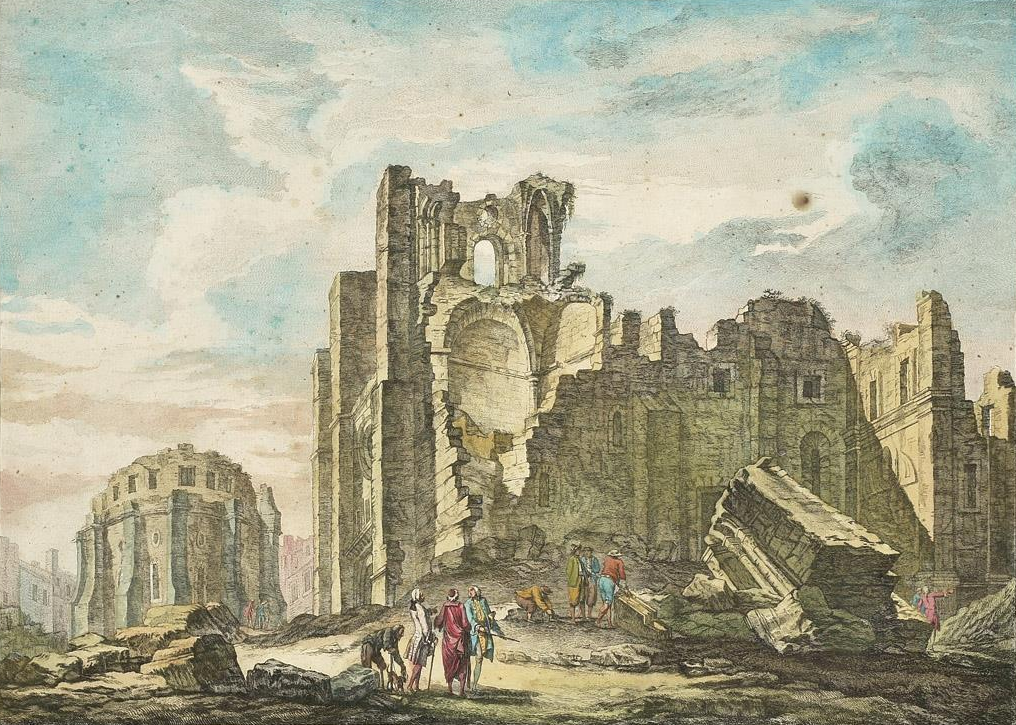
Saint Nicholas after the earthquake
The Church of Saint Nicholas appears as a damaged landmark within a city that still had to be crossed, inhabited and supplied. Le Bas’s 1757 view lets the eye move between broken masonry and the people placed around it. Those figures are part of the artist’s composition; they cannot be identified as documented survivors.
Photo details
Date
1757; depicts the aftermath of the November 1, 1755 earthquake
Location
Lisbon, Portugal (depicted); print published in Paris, France
Photographer
Jacques-Philippe Le Bas, engraver; reproduction photographer not identified
Archive / collection
Historical print reproduction from Cabral Moncada Leilões, via Wikimedia Commons
Jacques-Philippe Le Bas, 1757 / Historical print reproduction from Cabral Moncada Leilões, via Wikimedia Commons; public domain.
03 / 06
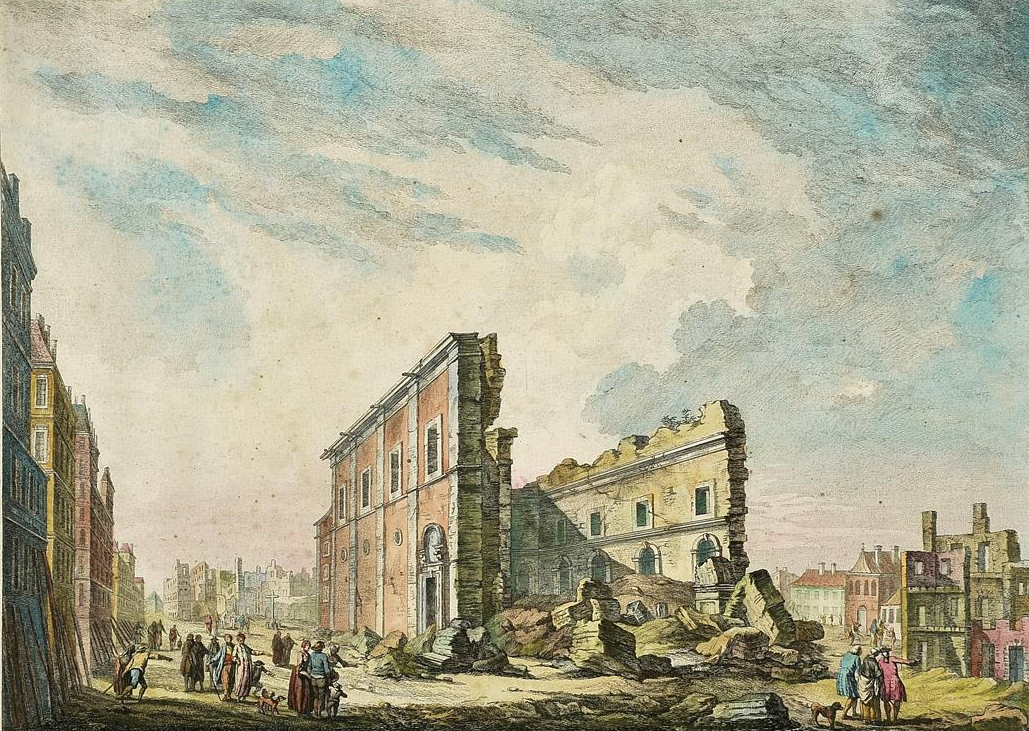
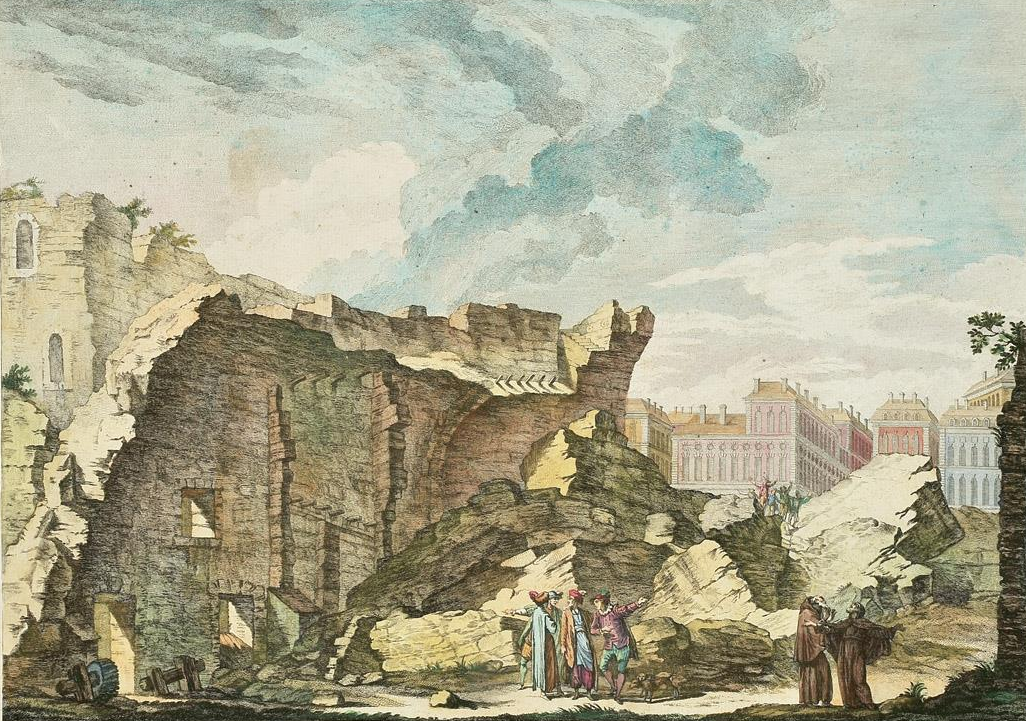
The remains of Saint Paul’s Church
A colored impression of Le Bas’s Saint Paul’s view records the church as a ruin. Churches had been crowded for All Saints’ Day when the earthquake struck, giving their destruction particular emotional force. The print was issued two years later and should be read as an artistic response to the aftermath, rather than a minute-by-minute account.
Photo details
Date
1757; depicts the aftermath of the November 1, 1755 earthquake
Location
Lisbon, Portugal (depicted); print published in Paris, France
Photographer
Jacques-Philippe Le Bas, engraver; reproduction photographer not identified
Archive / collection
Private collection; reproduction from Cabral Moncada Leilões, via Wikimedia Commons
Jacques-Philippe Le Bas, 1757 / Private collection; reproduction from Cabral Moncada Leilões, via Wikimedia Commons; public domain.
04 / 06
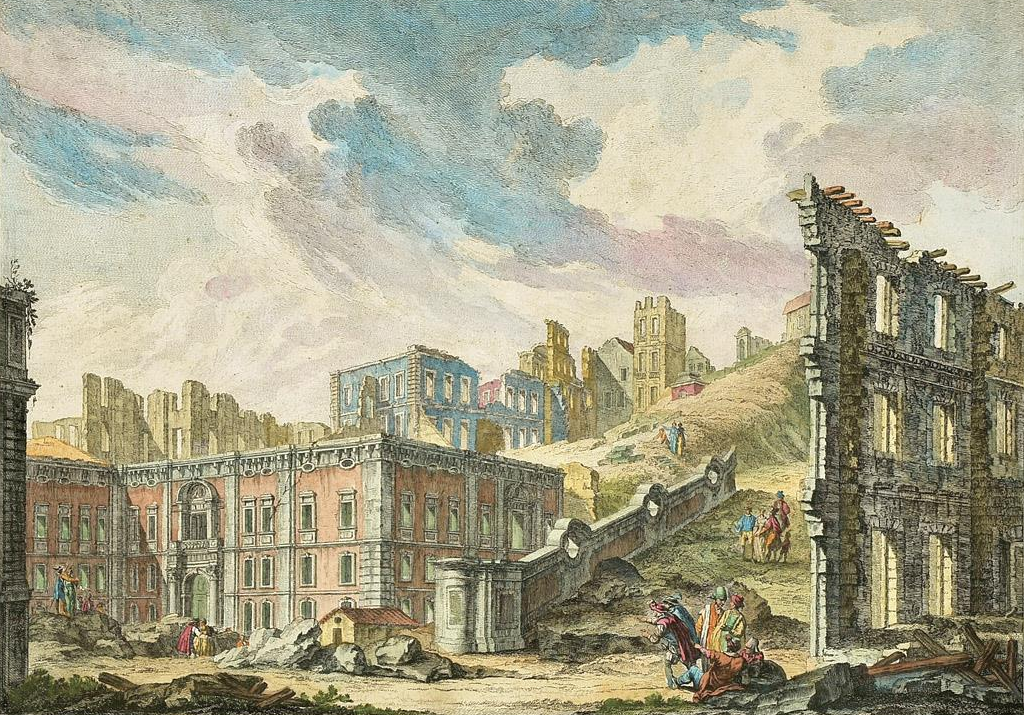
A ceremonial square becomes a ruined space
The Patriarchal Church Square had belonged to the capital’s ceremonial landscape. In this 1757 print, damaged buildings change the meaning of the open space. Le Bas shifts attention from a single fallen structure to the relationships among streets, monuments and people. Reconstruction would alter those relationships again as new plans replaced much of the old lower city.
Photo details
Date
1757; depicts the aftermath of the November 1, 1755 earthquake
Location
Lisbon, Portugal (depicted); print published in Paris, France
Photographer
Jacques-Philippe Le Bas, engraver; reproduction photographer not identified
Archive / collection
Historical print reproduction from Cabral Moncada Leilões, via Wikimedia Commons
Jacques-Philippe Le Bas, 1757 / Historical print reproduction from Cabral Moncada Leilões, via Wikimedia Commons; public domain.
05 / 06
The cathedral in a damaged city
Lisbon Cathedral remains recognizable in Le Bas’s view, but its surroundings bear the earthquake’s damage. A surviving landmark can make a disaster seem legible without making it complete: the frame excludes most homes, workplaces and lives affected. This image is one view from a six-print series, published in 1757.
Photo details
Date
1757; depicts the aftermath of the November 1, 1755 earthquake
Location
Lisbon, Portugal (depicted); print published in Paris, France
Photographer
Jacques-Philippe Le Bas, engraver; reproduction photographer not identified
Archive / collection
Historical print reproduction from Cabral Moncada Leilões, via Wikimedia Commons
Jacques-Philippe Le Bas, 1757 / Historical print reproduction from Cabral Moncada Leilões, via Wikimedia Commons; public domain.
06 / 06
The tower and the memory of a skyline
The Tower of Saint Roch, also called the Patriarch’s Tower in the print’s title, closes the series with another broken marker of the old city. Le Bas made ruins available to viewers far from Lisbon. His engravings helped preserve an image of the disaster while rebuilding was already transforming the places they represented.
Photo details
Date
1757; depicts the aftermath of the November 1, 1755 earthquake
Location
Lisbon, Portugal (depicted); print published in Paris, France
Photographer
Jacques-Philippe Le Bas, engraver; reproduction photographer not identified
Archive / collection
Historical print reproduction from Cabral Moncada Leilões, via Wikimedia Commons