Nevada entered the Union on October 31, 1864. Its surviving constitution telegram records the last-minute rush; portraits identify two officials behind the decision. Three photographs of Virginia City, taken in 1866, provide a later view of the mining community whose interests helped shape the new state.
Topic: American History
01 / 06
The president before the proclamation
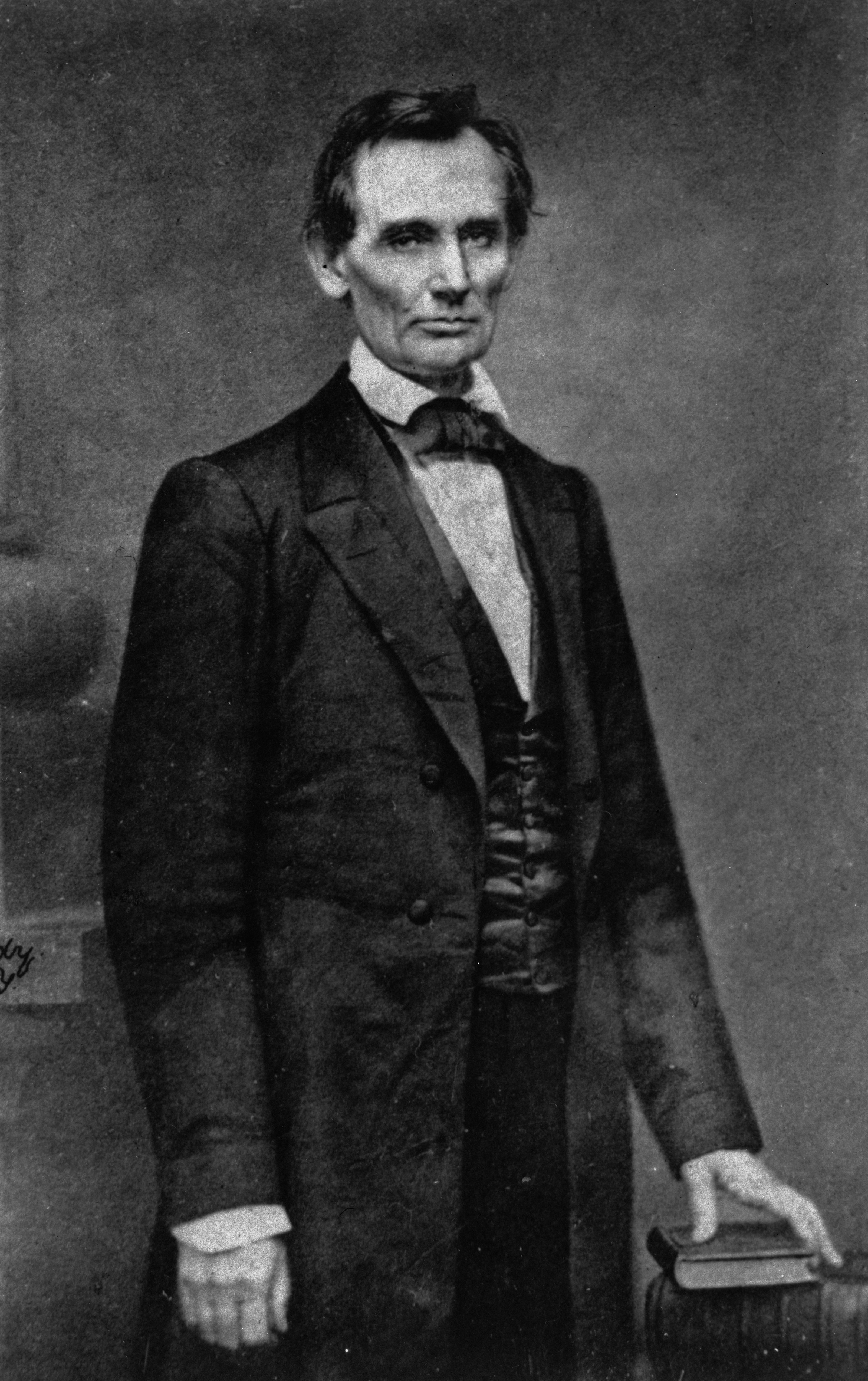
Abraham Lincoln sat for this portrait four years before signing Nevada’s admission proclamation. By October 1864, he was a wartime president seeking reelection. Nevada’s admission promised additional political support, although its electoral votes would not prove decisive in his eventual victory. This is an earlier studio portrait, not a photograph of the signing.
Photo details
Date
February 27, 1860
Location
New York City, United States
Photographer
Mathew Brady
Archive / collection
Library of Congress, cph.3a09102
Rights / license
Public domain; nineteenth-century work with expired copyright, as identified by the archive copy.
Mathew Brady / Library of Congress, cph.3a09102; public domain, via Wikimedia Commons.
02 / 06
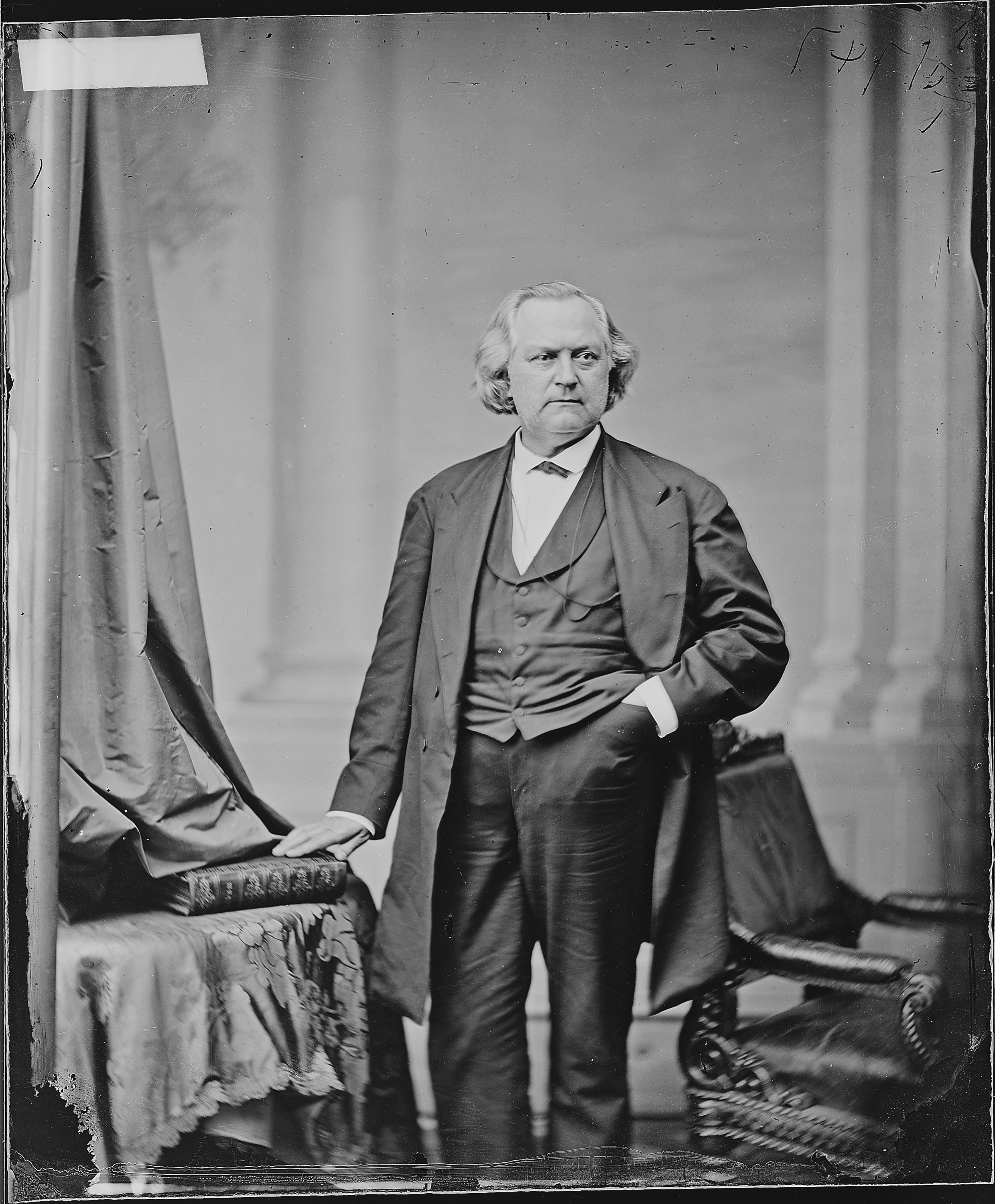
The governor who ordered the whole text wired
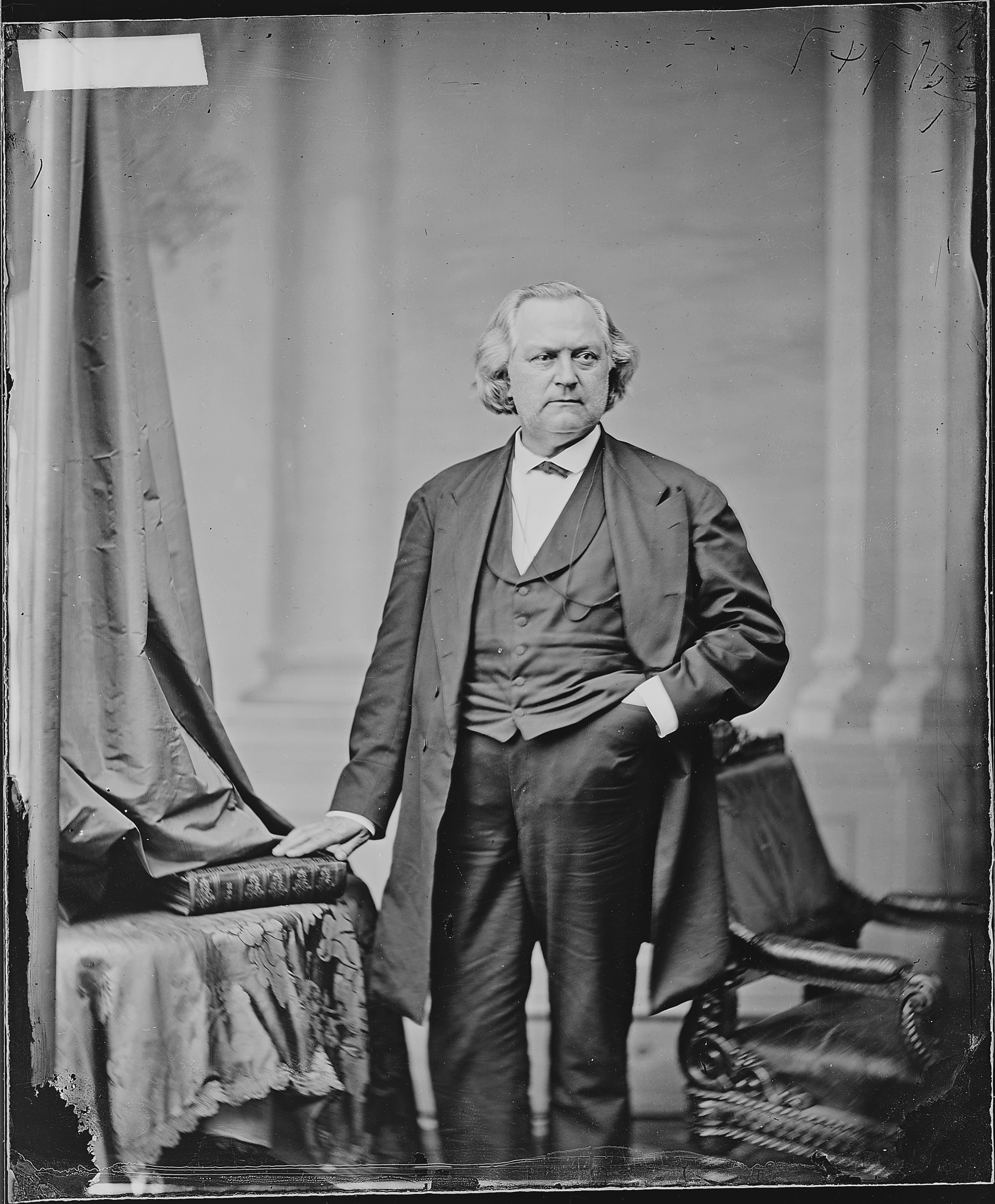
James W. Nye served as Nevada’s territorial governor during the push for statehood. When the mailed constitution failed to arrive in Washington promptly, he ordered it sent by telegraph. The resulting message ran to more than sixteen thousand words. Nye later represented the new state in the United States Senate.
Photo details
Date
Around 1860–1865
Location
Studio location not recorded
Photographer
Mathew Brady
Archive / collection
National Archives, 527208
Rights / license
Public domain; nineteenth-century work with expired copyright, as identified by the archive copy.
Mathew Brady / National Archives, 527208; public domain, via Wikimedia Commons.
03 / 06
A constitution carried over the wires
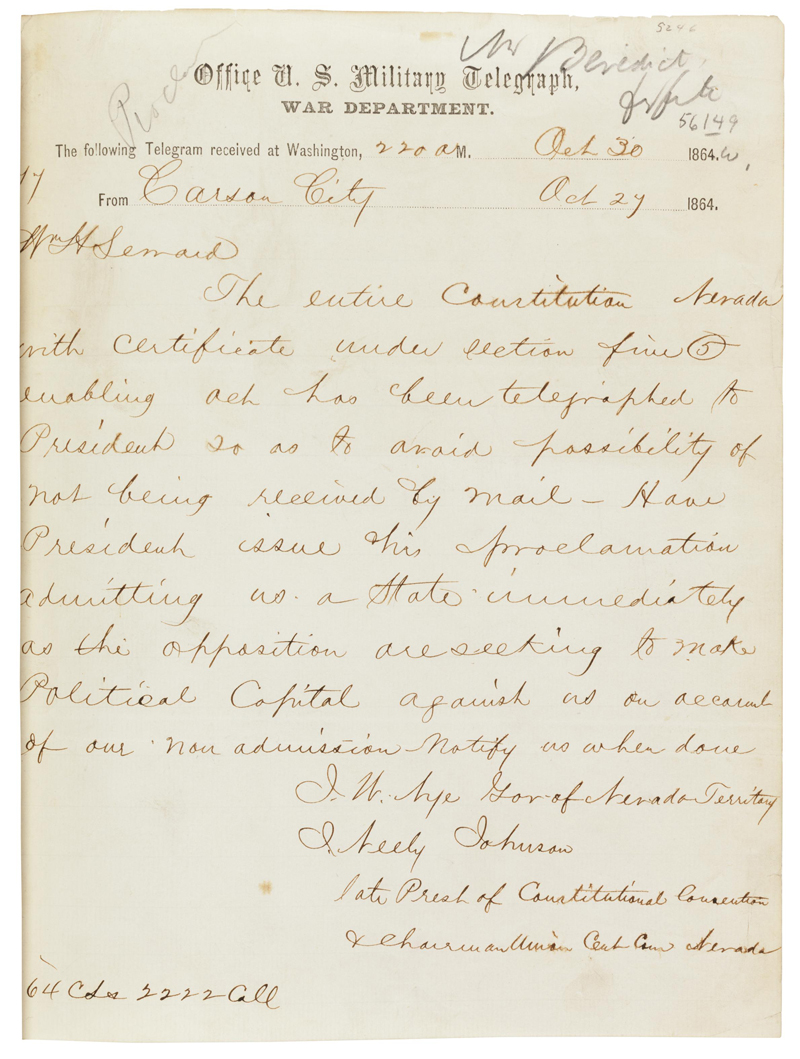
The first page of the telegraphed constitution turns an abstract story about haste into a physical record. Guild began transmitting from Carson City on October 26; relays carried the text east, and it reached Washington two days later. The complete surviving transcription fills 175 pages. This is a historical document, not a photograph of the telegraph office.
Photo details
Date
October 26, 1864
Location
Carson City to Washington, District of Columbia
Photographer
Nevada territorial government; telegraphed by James H. Guild
Archive / collection
National Archives, 2642326
Rights / license
Public domain; nineteenth-century work with expired copyright, as identified by the archive copy.
Nevada territorial government; telegraphed by James H. Guild / National Archives, 2642326; public domain, via Wikimedia Commons.
04 / 06
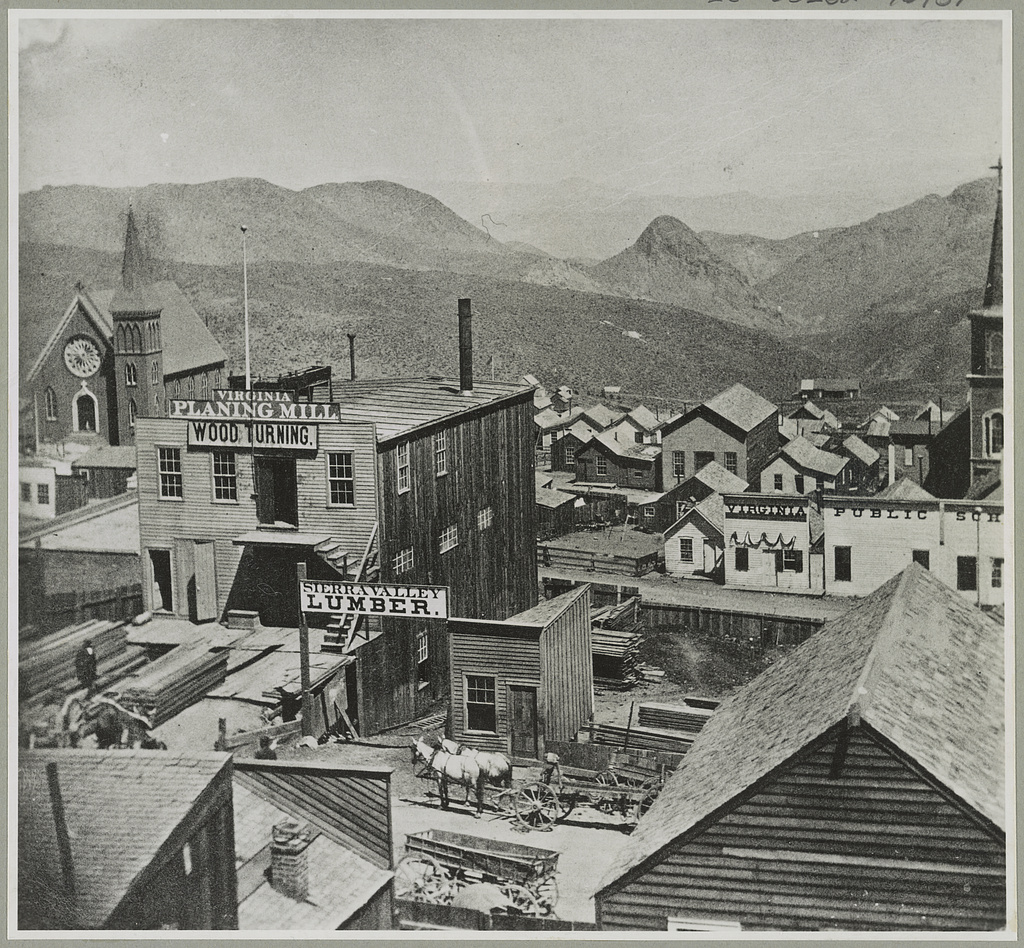
The mining town after admission
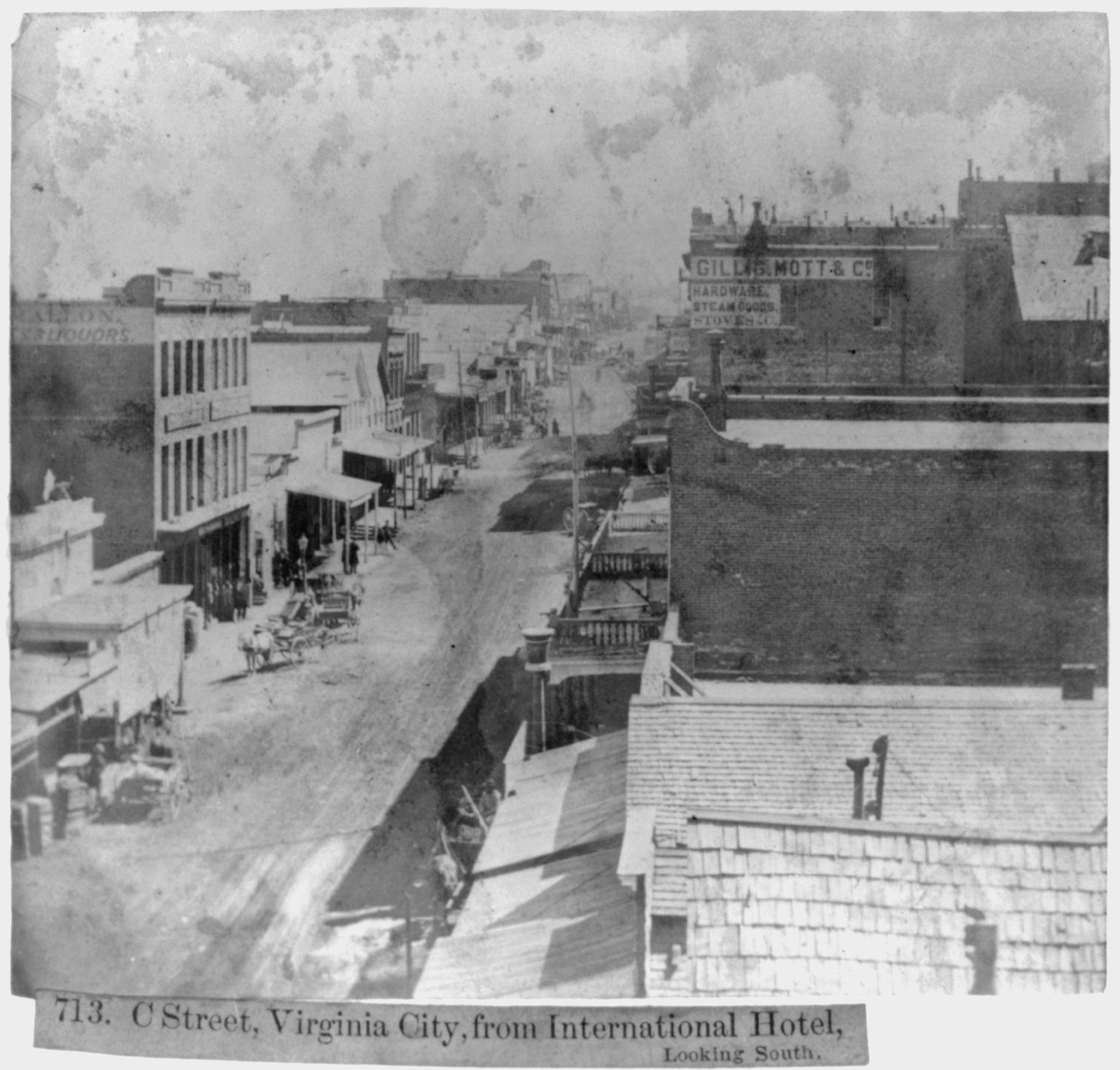
Virginia City’s C Street appears here two years after statehood. Buildings, shops and traffic show the settled commercial world that grew around the Comstock mines. Mining interests had influenced the constitutional debate, especially the question of taxation. The later date matters: this view illustrates the town behind the politics, rather than admission day itself.
Photo details
Date
1866
Location
C Street, Virginia City, Nevada, United States
Photographer
Lawrence & Houseworth, publisher
Archive / collection
Library of Congress, 2002722013
Rights / license
Public domain; nineteenth-century work with expired copyright, as identified by the archive copy.
Lawrence & Houseworth, publisher / Library of Congress, 2002722013; public domain, via Wikimedia Commons.
05 / 06
A city opening onto mining country
The camera looks from C Street toward Six Mile Canyon in this 1866 view. Virginia City depended on a wider landscape of extraction, processing and transport. Debates over taxing mines therefore reached into the structure of the proposed state. The successful constitution emphasized net proceeds, a change from the earlier rejected proposal.
Photo details
Date
1866
Location
Six Mile Canyon, Virginia City, Nevada, United States
Photographer
Lawrence & Houseworth, publisher
Archive / collection
Library of Congress, 2002719064
Rights / license
Public domain; nineteenth-century work with expired copyright, as identified by the archive copy.
Lawrence & Houseworth, publisher / Library of Congress, 2002719064; public domain, via Wikimedia Commons.
06 / 06
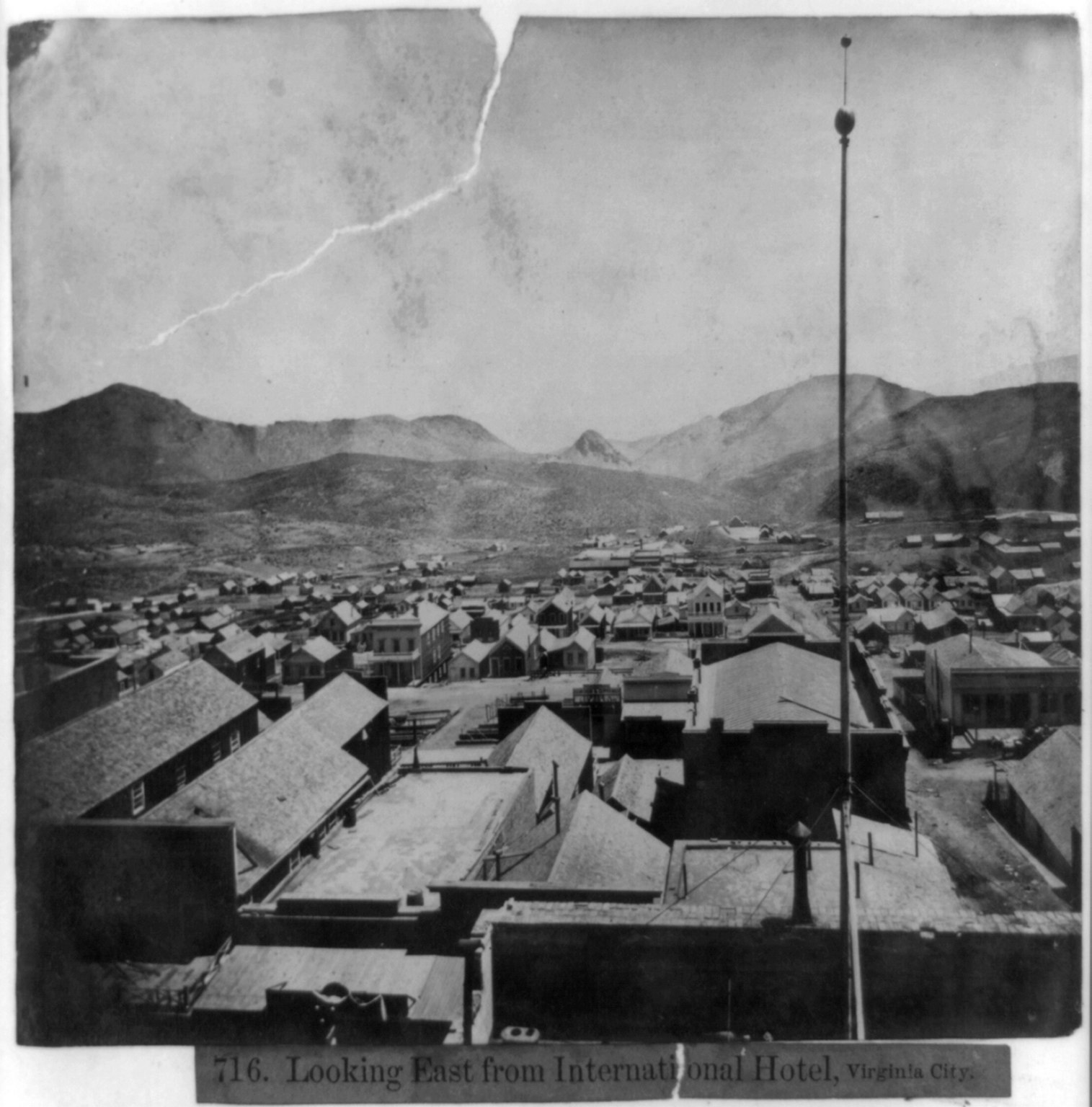
Looking beyond the new state’s main street
An eastward view from the International Hotel places Virginia City’s rooftops against the surrounding country. Photographs taken after admission can show the community that benefited from the political change, but they cannot speak for everyone living in the region. Indigenous communities faced an expanding settler government whose constitution did not grant them equal political participation.
Photo details
Date
1866
Location
Virginia City, Nevada, United States
Photographer
Lawrence & Houseworth, publisher
Archive / collection
Library of Congress, 2002719072
Rights / license
Public domain; nineteenth-century work with expired copyright, as identified by the archive copy.