The message contained 16,543 words. Its arrival cleared the way for Abraham Lincoln to proclaim Nevada the thirty-sixth state on October 31, 1864. The presidential election was eight days away, and the Civil War was still being fought. Speed mattered.
The territory behind the telegram
Nevada Territory had existed only since 1861. Its rapid growth owed much to the Comstock Lode, the rich silver discovery that drew miners, merchants and speculators to the region around Virginia City. Mining camps became towns; fortunes appeared on paper and sometimes disappeared underground.
This was already an inhabited country. Northern and Southern Paiute, Western Shoshone and Washoe communities had histories and claims that did not begin with a federal boundary. The territorial and state institutions created by settlers expanded American control over their lands. Admission to the Union was a political milestone for the new government, not the beginning of Nevada's human history.
Nor was statehood simply a reward for sending silver east. Nevada was already part of the United States as a territory. Its mineral wealth did not need admission to become available to the Union economy. The urgency in 1864 concerned political representation as well as local ambition.
Getting a constitution that voters would accept
An earlier attempt had failed. Delegates drafted a constitution in 1863, but territorial voters rejected it. Mining taxation helped sink the proposal, along with objections to the slate of prospective state officeholders associated with it. Enthusiasm for statehood did not mean agreement about who would pay for the state.
Congress passed an enabling act in March 1864, and another convention assembled that July. The revised constitution taxed the net proceeds of mines rather than all mining claims. It also avoided attaching a slate of state candidates to the constitutional question. Those changes helped produce a document that voters approved in September.
The admission terms required a republican government and prohibited slavery. They also preserved federal authority over unappropriated public lands. Nevada's original electorate was restricted to white men. A constitution could reject slavery while still excluding much of the population from political power.
Seven hours at the telegraph key
By late October, Washington still needed the authoritative text. Nye could not count on the postal copies arriving before the election. Telegraph operator James H. Guild spent seven hours sending the constitution from Carson City on October 26. It traveled through relay points including Salt Lake City, Chicago and Philadelphia before reaching the War Department in Washington two days later.
The surviving transcription runs to 175 pages. Its very bulk explains the decision: this was an expensive, laborious substitute for a physical document, chosen because the clock had become more troublesome than the distance. The telegram is now preserved by the National Archives.
A state before the election
Lincoln's proclamation declared that Nevada had met the conditions Congress set. On October 31, territorial status ended. Republicans expected a friendly new state to strengthen their position in the presidential contest and in Congress. Nevada's votes did not decide Lincoln's eventual landslide, but the outcome had not been certain when officials hurried the paperwork.
The familiar phrase “Battle Born” remembers that wartime admission. It should not conjure a decisive Civil War battle on Nevada soil. The immediate struggle behind statehood involved constitutional language, mining interests, party calculations and the practical problem of moving information. For a few consequential days, the road into the Union ran through a telegraph office.
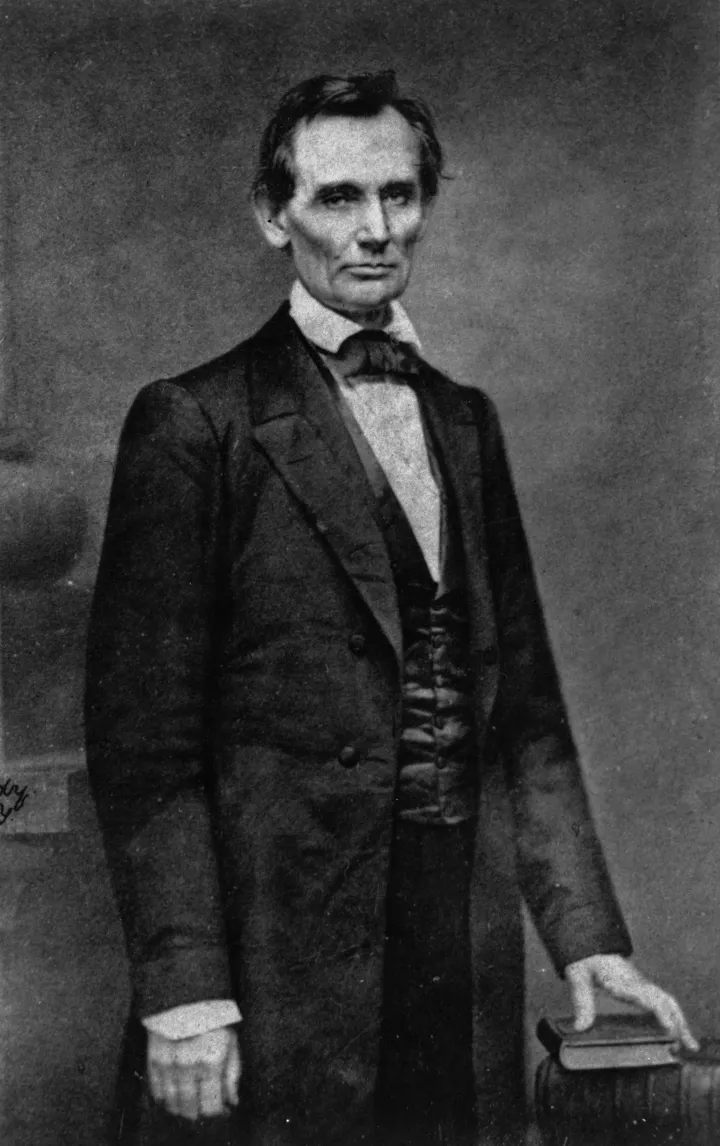
Cover image: Mathew Brady / National Archives, 527208; public domain, via Wikimedia Commons.