An incumbent president and his predecessor faced one another in 1912, while Woodrow Wilson and Eugene Debs offered different routes to economic reform. The November 5 result gave Wilson a decisive electoral majority without a majority of the popular vote.
These photographs follow the candidates and the people around them. The final document records Congress’s count in February 1913.
Topic: United States Elections
01 / 06
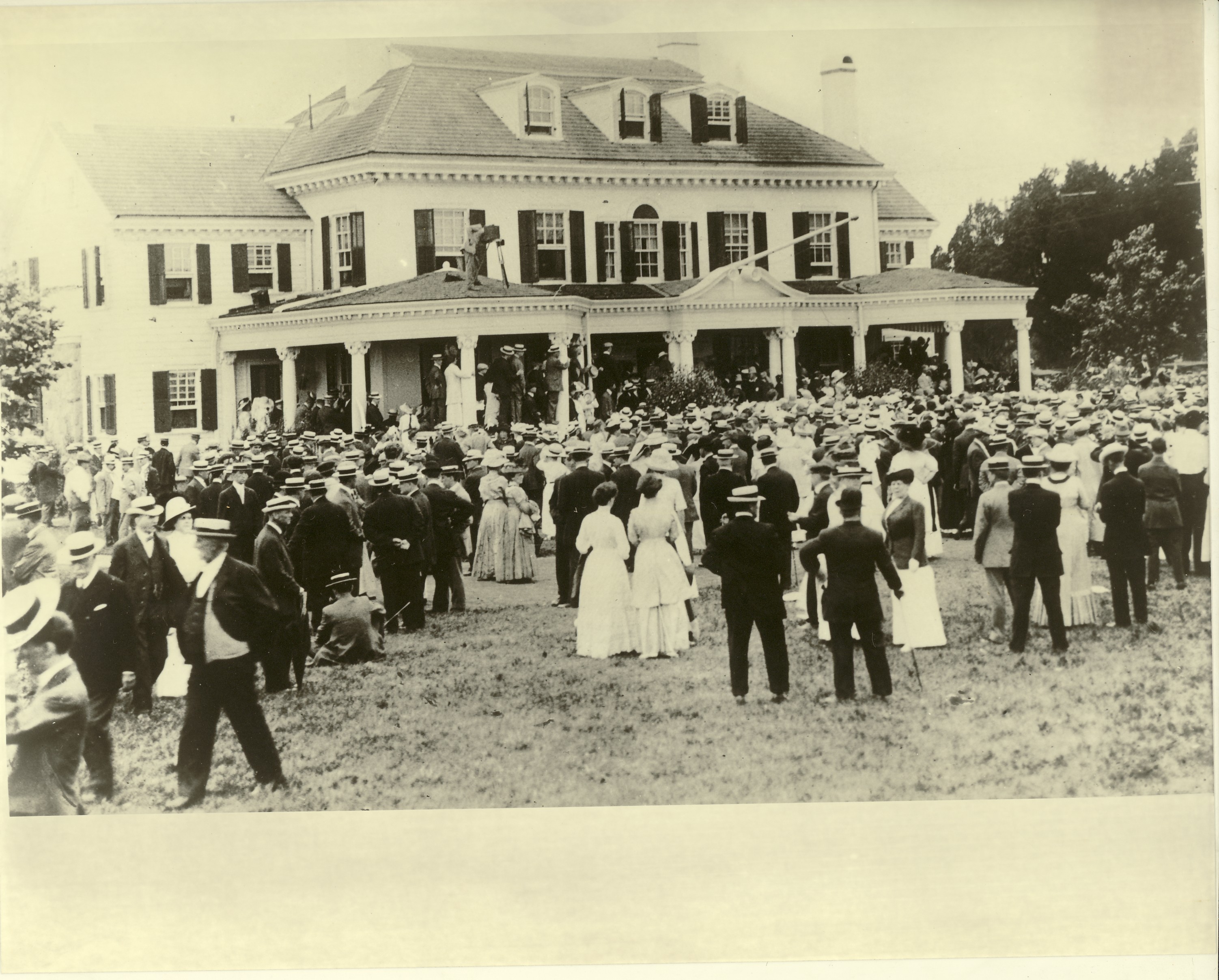
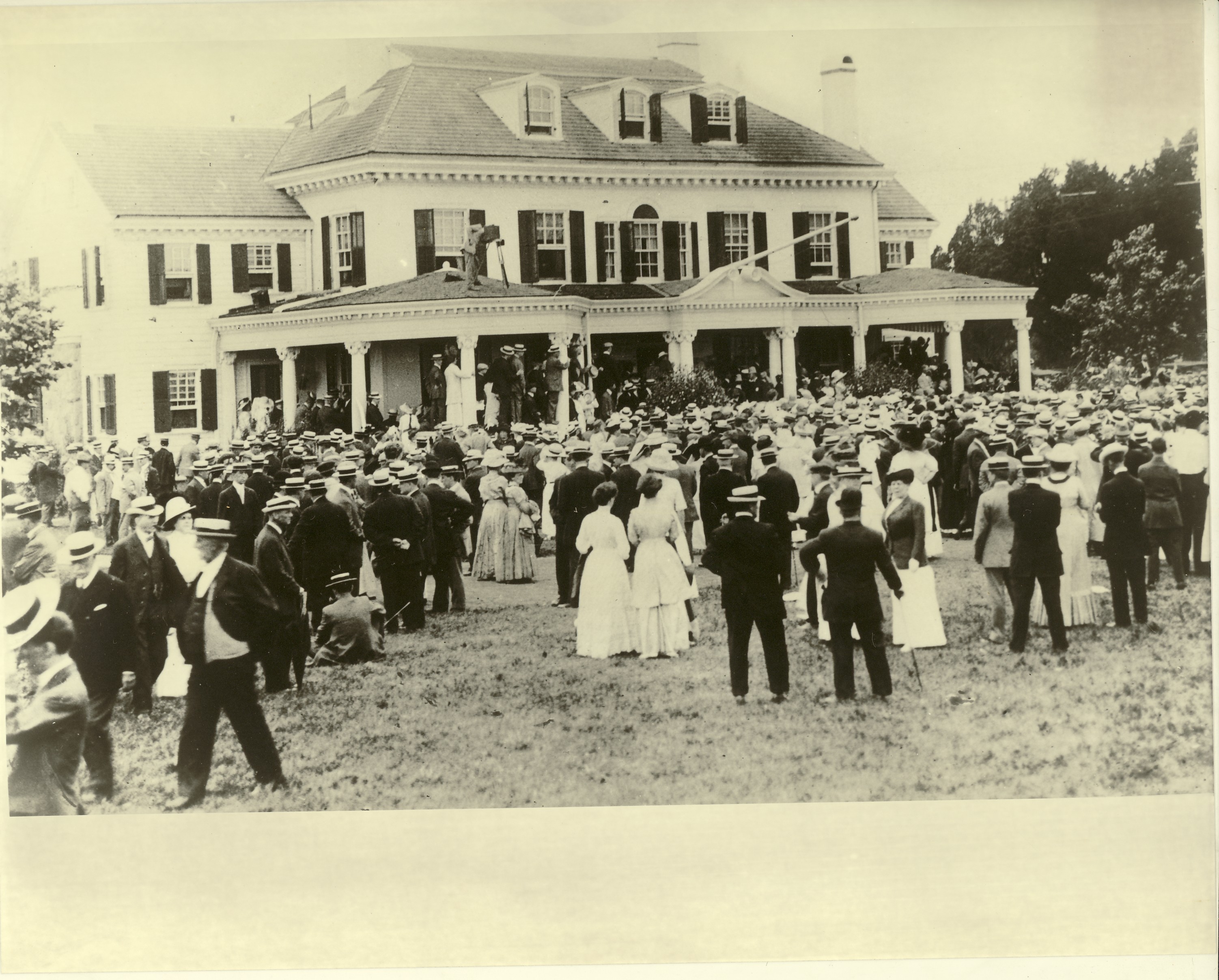
A crowd at Sea Girt
People gather outside the building where Wilson campaigned at Sea Girt, New Jersey, in 1912. The scene includes the audience as much as the candidate’s surroundings. Wilson entered the national contest as a governor facing two men who had already occupied the White House.
Photo details
Date
1912 campaign
Location
Sea Girt, New Jersey, United States
Photographer
Unknown photographer
Archive / collection
Woodrow Wilson Presidential Library Archives, accession 1832; source Princeton University Library
Unknown photographer / Woodrow Wilson Presidential Library Archives, accession 1832; source Princeton University Library · No known copyright restrictions
02 / 06
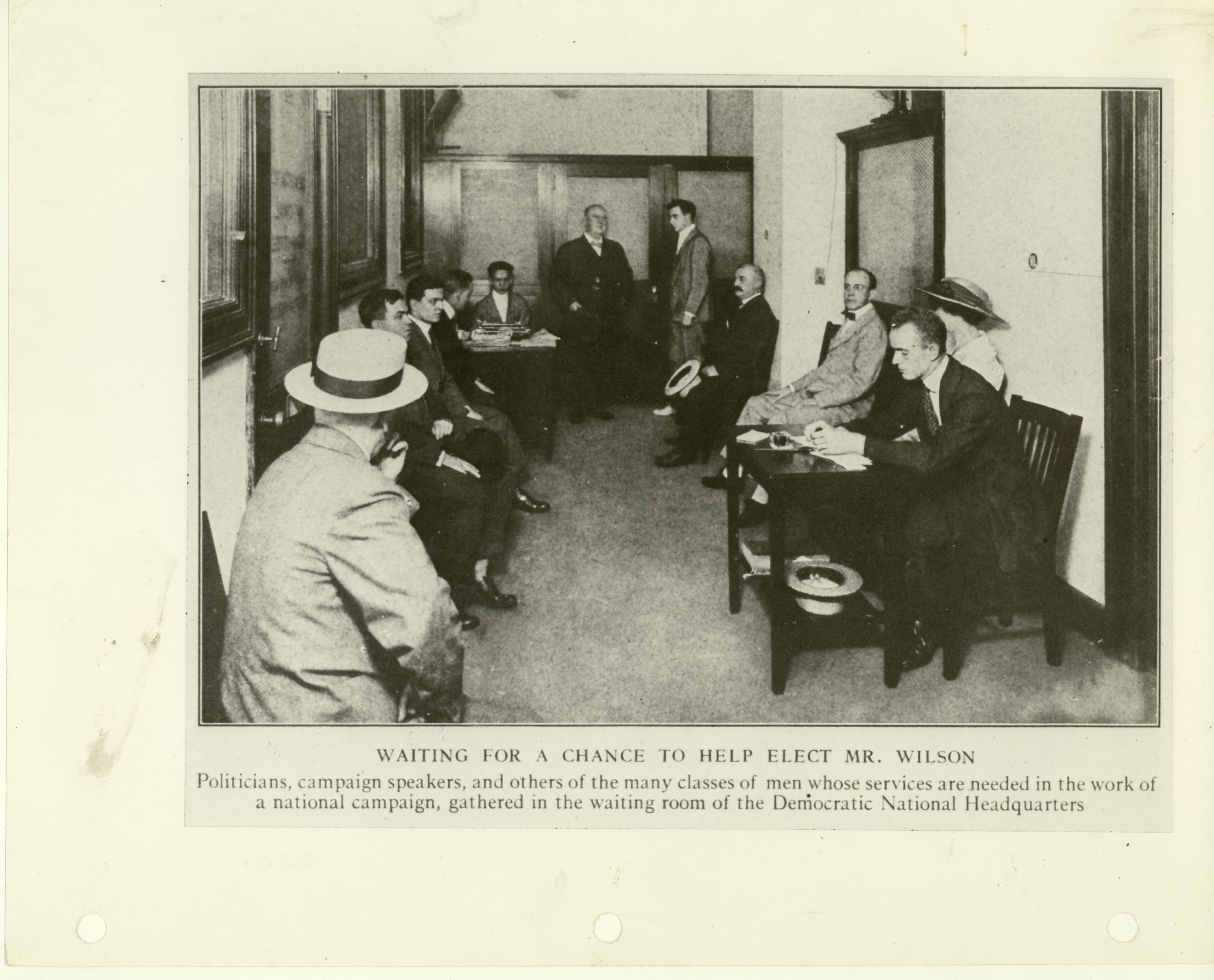
Waiting at headquarters
The printed caption describes politicians and campaign workers waiting for a chance to help elect Wilson. Chairs line the room at Democratic National Headquarters. National campaigns depended on these less spectacular spaces too, where speakers, organizers and would-be volunteers sought a place in the effort.
Photo details
Date
1912 campaign
Location
United States; Democratic National Headquarters
Photographer
Unknown photographer
Archive / collection
Woodrow Wilson Presidential Library Archives, accession 129-A; source Research Library, 20th Century Fox
Unknown photographer / Woodrow Wilson Presidential Library Archives, accession 129-A; source Research Library, 20th Century Fox · No known copyright restrictions
03 / 06
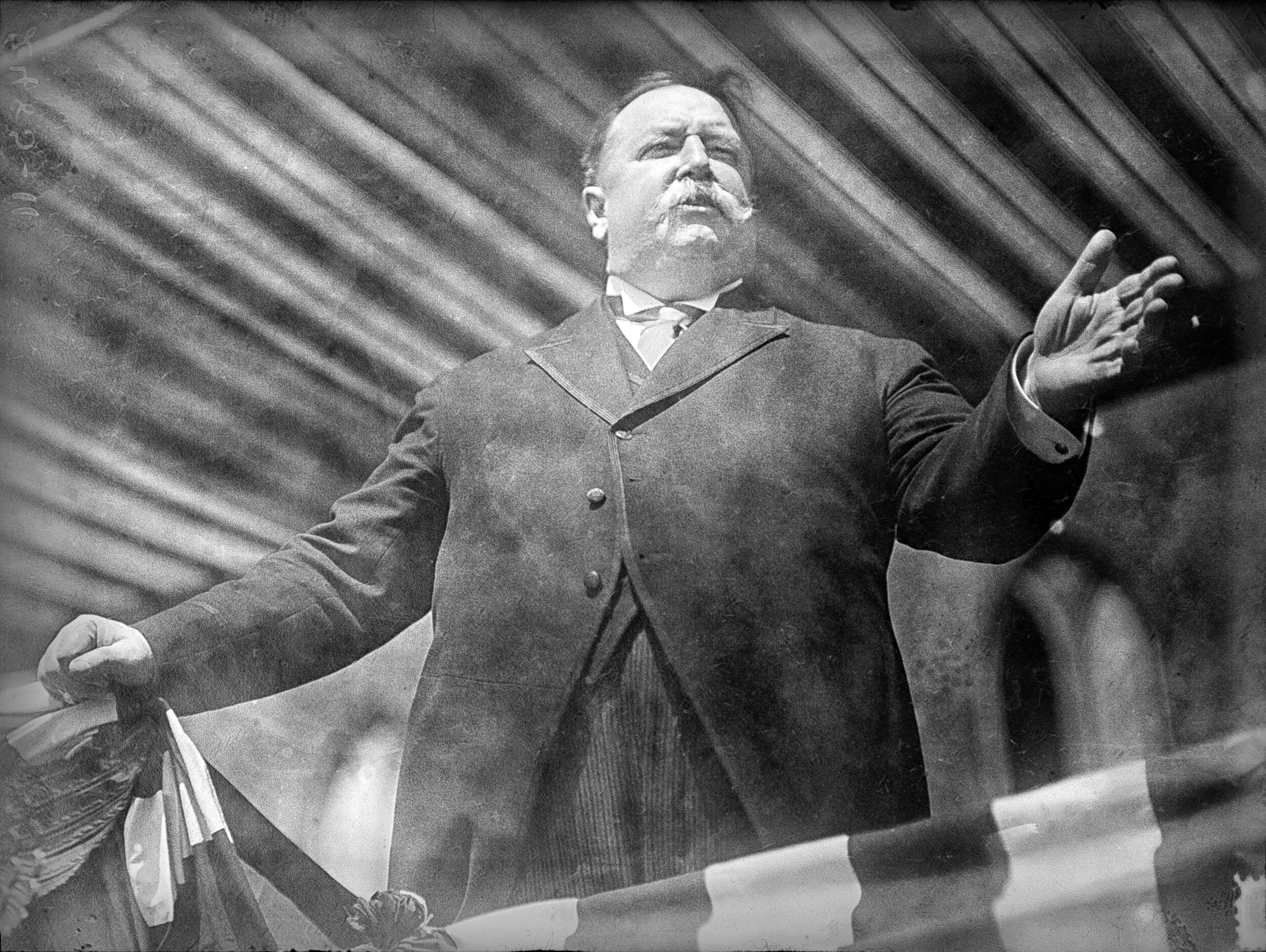
The incumbent speaks
President William Howard Taft addresses an audience in Springfield, Massachusetts. The Library of Congress dates the photograph probably to April 25, 1912, while noting that he had also visited in 1909. The uncertainty remains part of the record. By the election, his party’s divided support would leave him with only eight electoral votes.
Photo details
Date
Probably April 25, 1912
Location
Springfield, Massachusetts, United States
Photographer
Bain News Service
Archive / collection
Library of Congress, George Grantham Bain Collection, ggbain.11216
Public domain in the United States: published before 1931 or federal congressional record. Existing Commons version has borders removed, dust and scratches retouched, and contrast adjusted by Simtropolitan in 2018; no additional edits.
Bain News Service / Library of Congress, George Grantham Bain Collection, ggbain.11216 · Public domain
04 / 06
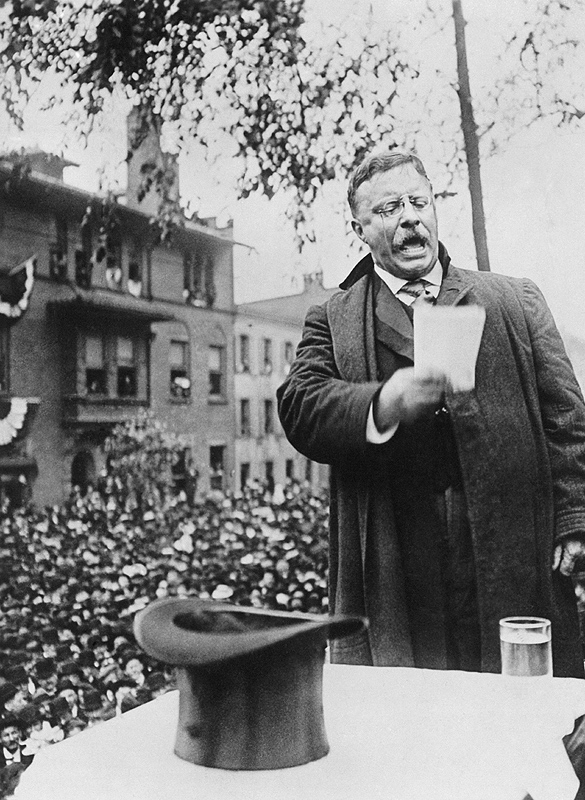
Roosevelt returns to the campaign trail
Theodore Roosevelt speaks to a crowd during the 1912 campaign. His break with the Republicans gave the Progressive Party a candidate with an established national following. The former president would finish ahead of Taft in both the popular and electoral vote, but well behind Wilson.
Unknown photographer / The New York Times photo archive · Public domain
05 / 06
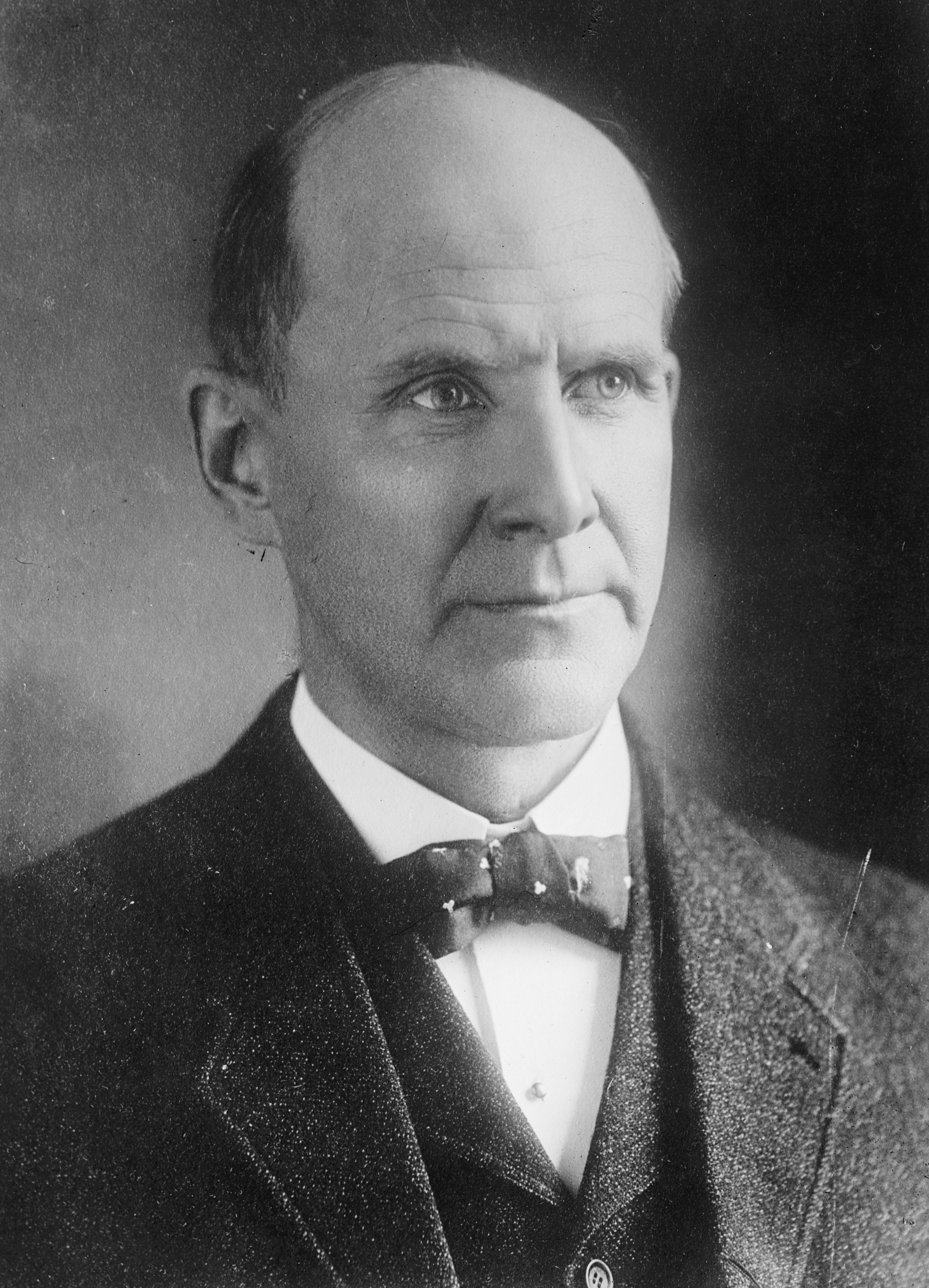
The Socialist candidate
Eugene V. Debs appears in a portrait dated around 1912. His candidacy widened the election’s debate beyond the competing programs of Wilson, Roosevelt and Taft. Around six percent of voters chose the Socialist ticket, though its support did not produce an electoral vote.
Photo details
Date
circa 1912
Location
United States; portrait location not identified
Photographer
Unknown photographer; Bain News Service
Archive / collection
Library of Congress, Bain Collection, LCCN 2014680881
Unknown photographer; Bain News Service / Library of Congress, Bain Collection, LCCN 2014680881 · Public domain
06 / 06
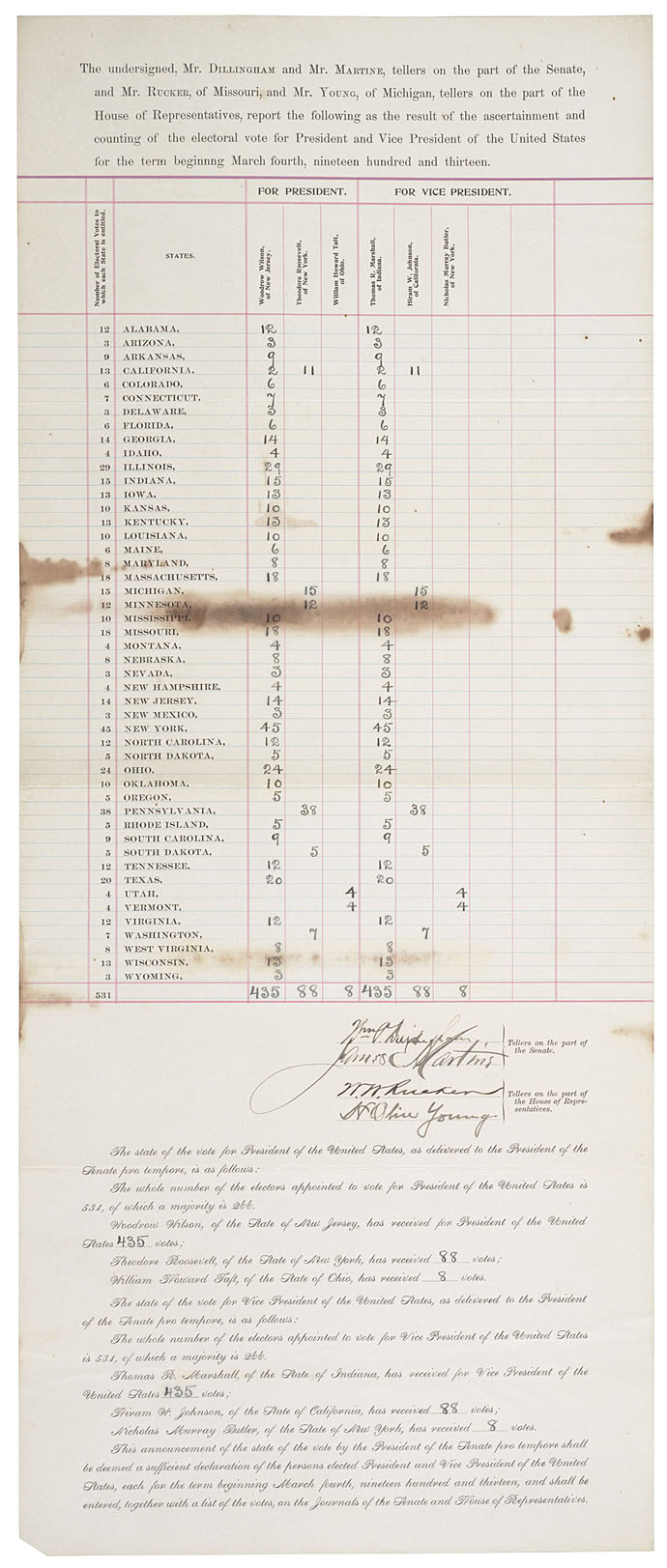
The campaign becomes a tally
Congress counted the electoral votes on February 12, 1913. This original document records the totals that made Wilson president. It also preserves a detail easily lost in retelling: Nicholas Murray Butler received the Republican vice-presidential votes because James Sherman had died shortly before election day.
Photo details
Date
February 12, 1913
Location
Washington, D.C., United States
Photographer
United States Congress
Archive / collection
National Archives, Center for Legislative Archives