Harry Houdini died on October 31, 1926. These photographs look back at the career that made his death international news: the publicity portraits, the performances that gathered crowds, the family behind the stage name and his campaign against fraudulent spiritualism. The final image is a historical composite produced as a demonstration, not a record of a real encounter.
Topic: Cultural History
01 / 06
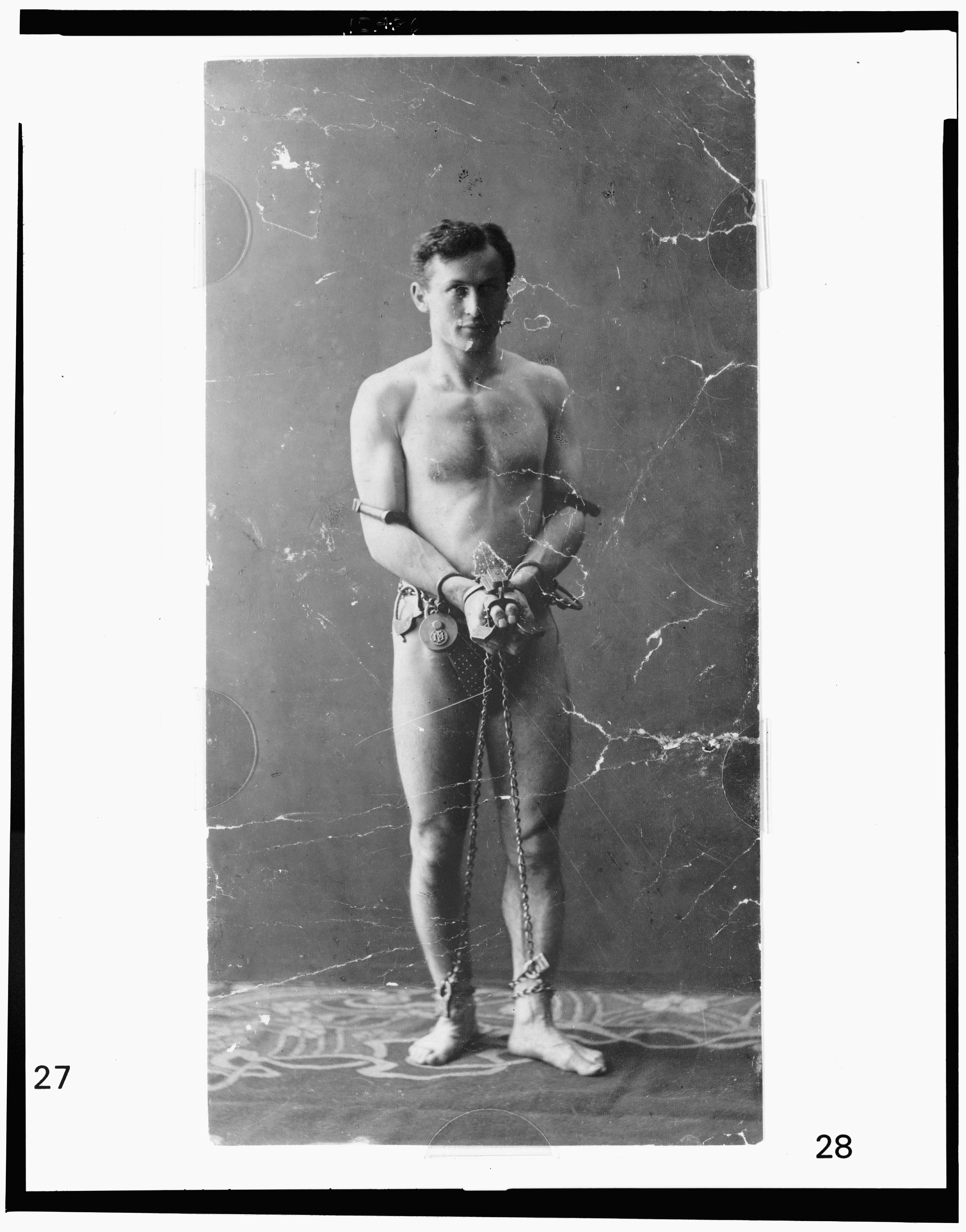
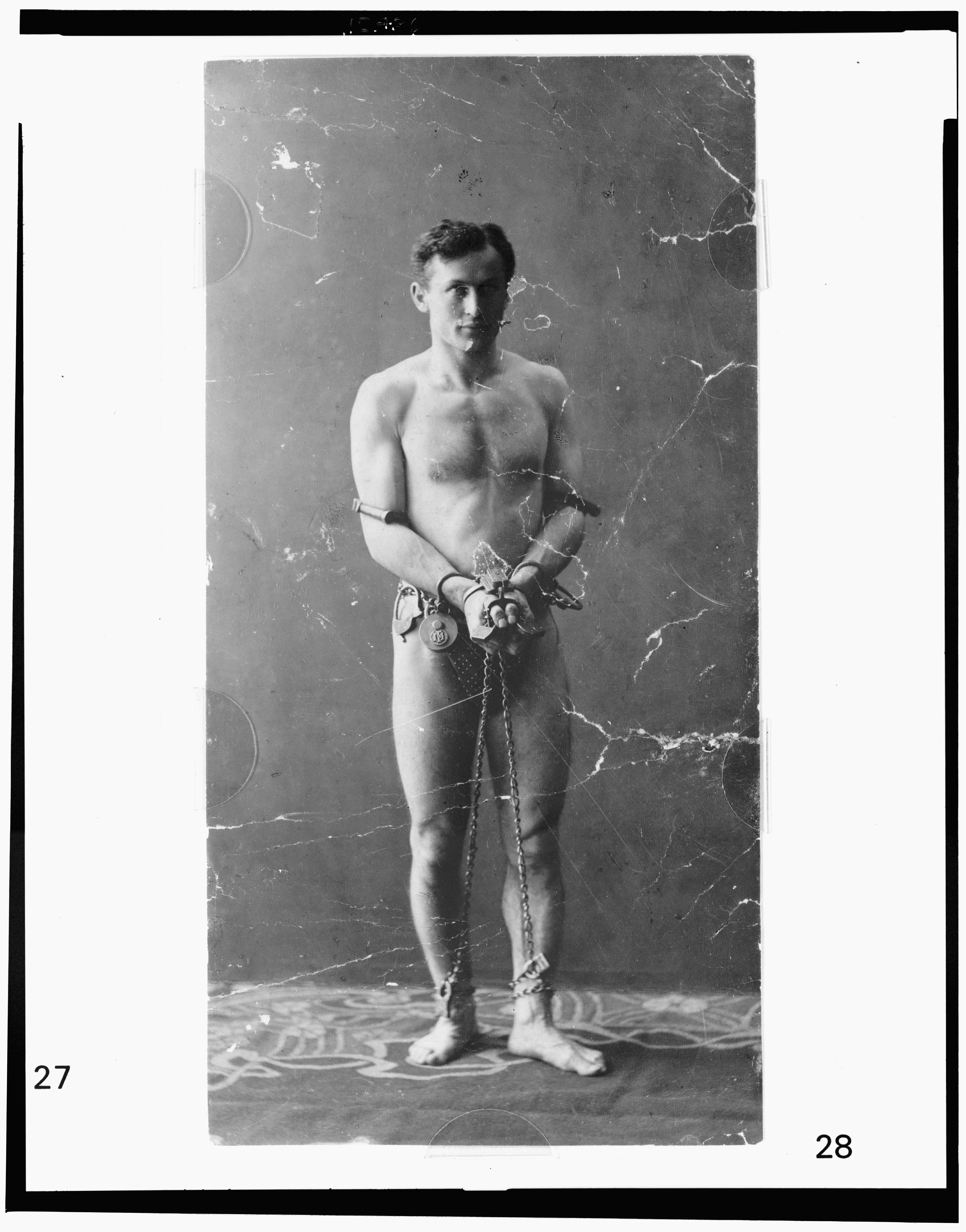
The Handcuff King takes his position
A publicity portrait makes the problem visible before the performance begins. Houdini stands in chains, presenting the restraints as something an audience can inspect and understand. The photograph belongs to the period when escapes were becoming the center of his career. It is a posed portrait, not a record of an arrest.
Photo details
Date
Around 1900
Location
Location not recorded
Photographer
Photographer unidentified
Archive / collection
Library of Congress, McManus-Young Collection, cph.3c12436
Rights / license
Public domain in the United States; historical work with expired copyright, as identified by the archive copy.
Photographer unidentified / Library of Congress, via Wikimedia Commons; public domain.
02 / 06
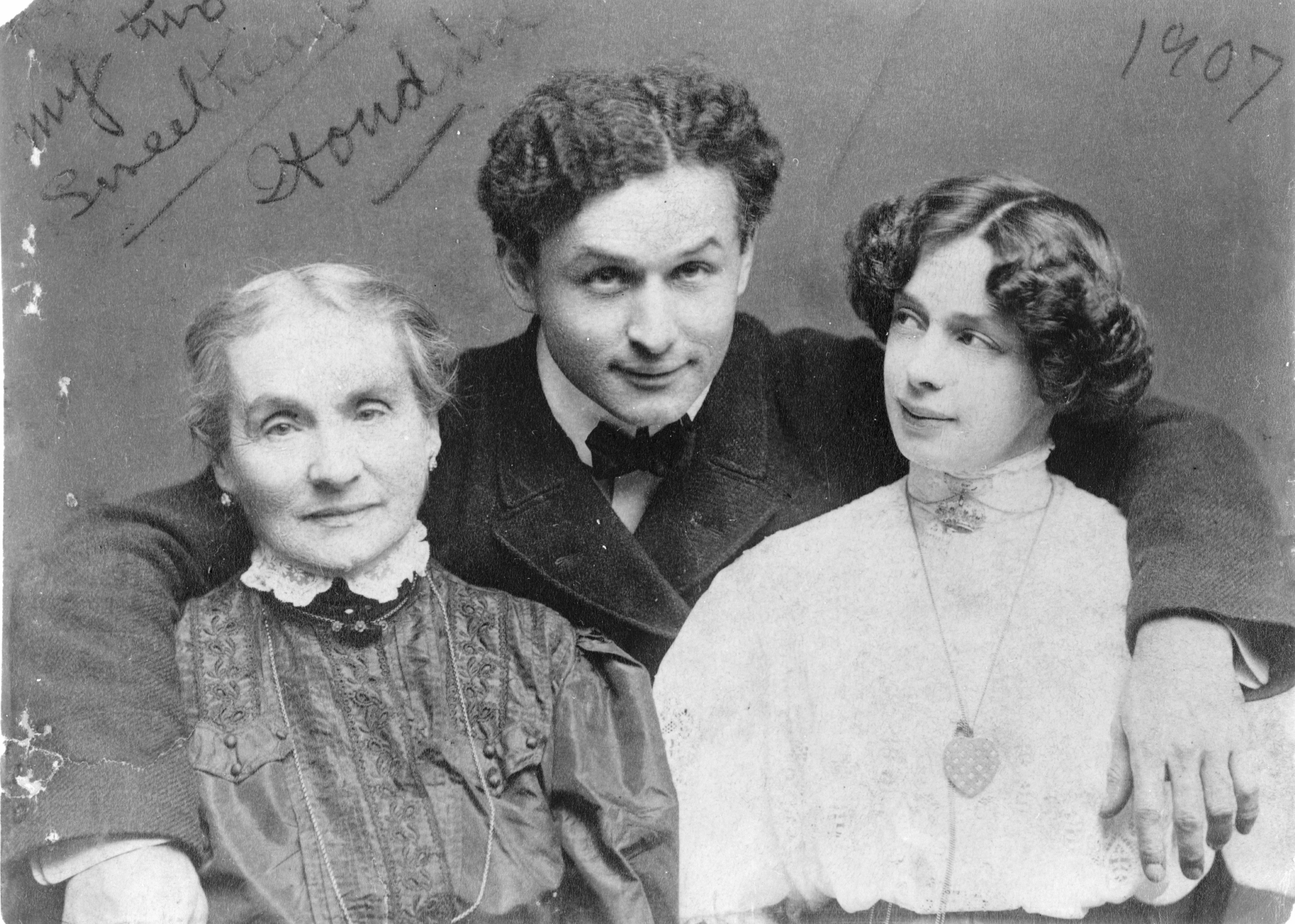
The family beside the famous name
Houdini appears with his wife and performing partner, Beatrice, and his mother, Cecilia Steiner Weiss. Bess had worked beside him long before his name became internationally recognizable. The formal portrait records a family circle behind an entertainment business that usually advertised the solitary figure of the escape artist.
Photo details
Date
1907
Location
Location not recorded
Photographer
Photographer unidentified
Archive / collection
Library of Congress, McManus-Young Collection, 96518798
Rights / license
Public domain in the United States; historical work with expired copyright, as identified by the archive copy.
Photographer unidentified / Library of Congress, via Wikimedia Commons; public domain.
03 / 06
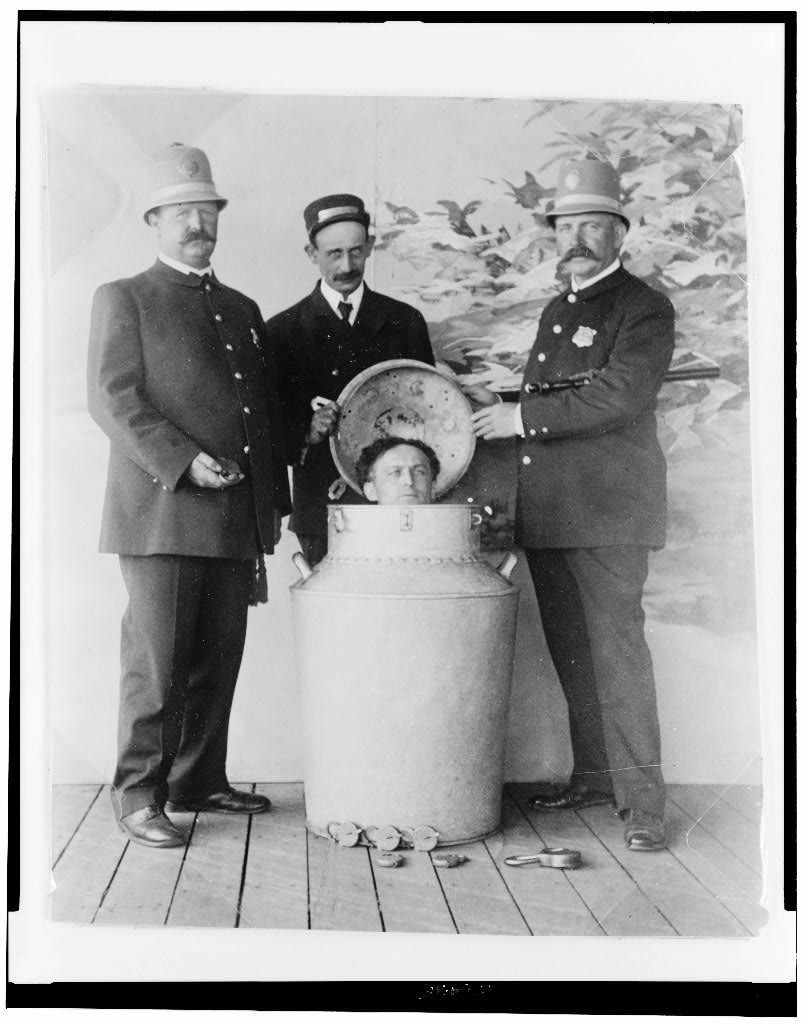
A familiar container becomes a stage threat
The milk-can escape, introduced in 1908, replaced the familiar jail cell with a water-filled container. Its plain appearance helped the effect: spectators did not need an explanation of what a sealed vessel and limited air might mean. Assistants and staging were part of a carefully organized performance, though the billing concentrated on Houdini.
Photo details
Date
Around 1908
Location
Performance location not identified
Photographer
Photographer unidentified
Archive / collection
Library of Congress, McManus-Young Collection, cph.3c12435
Rights / license
Public domain in the United States; historical work with expired copyright, as identified by the archive copy.
Photographer unidentified / Library of Congress, via Wikimedia Commons; public domain.
04 / 06
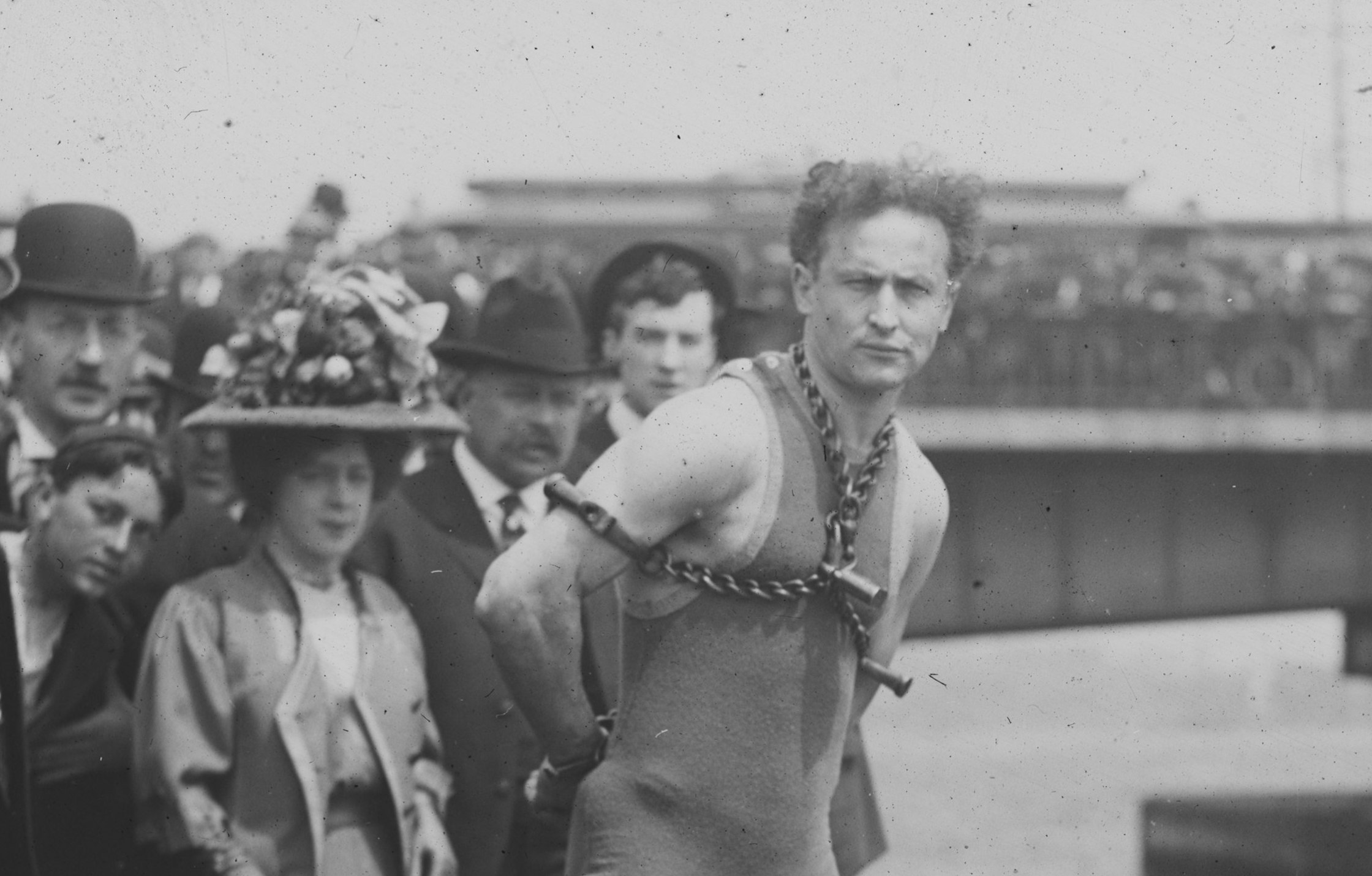
An audience beyond the theater
At Harvard Bridge, Houdini brought the escape into the street and river. The Library of Congress identifies this view with his manacled jump into the Charles River on April 30, 1908. Public feats like this advertised theater engagements while allowing crowds who had bought no ticket to witness the setup.
Photo details
Date
April 30, 1908
Location
Harvard Bridge, Boston, Massachusetts, United States
Photographer
John H. Thurston
Archive / collection
Library of Congress, ppmsca.40859
Rights / license
Public domain in the United States; historical work with expired copyright, as identified by the archive copy.
John H. Thurston / Library of Congress, via Wikimedia Commons; public domain.
05 / 06
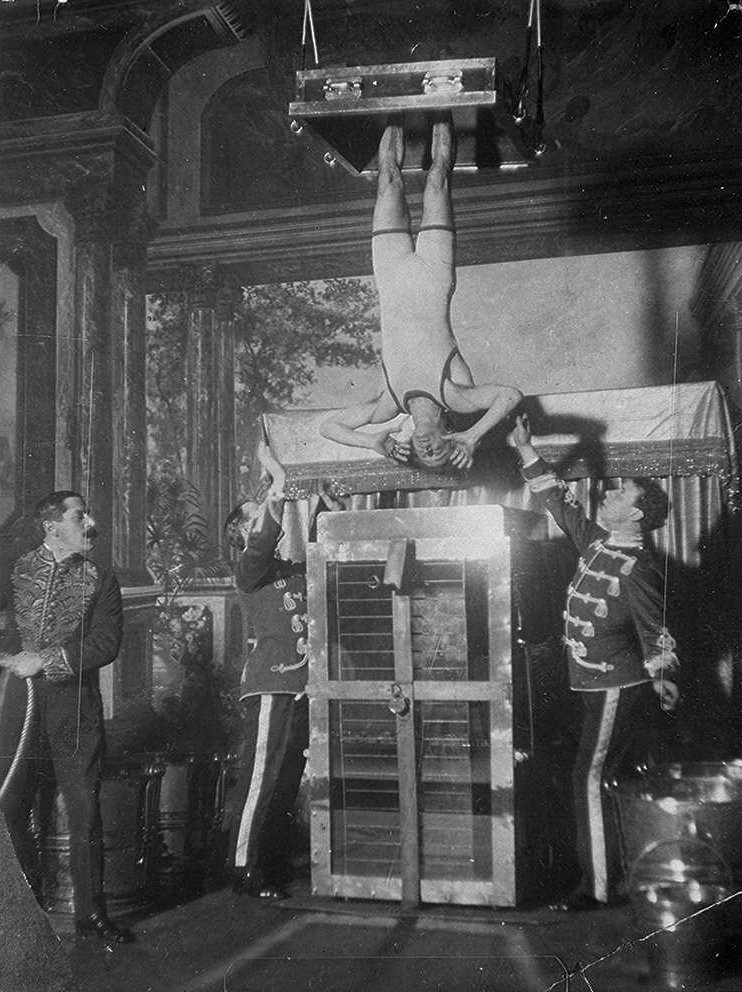
The water cell, years before his death
Houdini hangs inverted above the water cell, with his ankles secured. The physical arrangement is immediately legible even in a still photograph. This image is often drawn into stories about his death, but it records an earlier act. He died from peritonitis in Detroit in 1926, not during a fatal escape from this tank.
Photo details
Date
Around 1913
Location
Performance location not identified
Photographer
Photographer unidentified
Archive / collection
Library of Congress, McManus-Young Collection, 96518829
Rights / license
Public domain in the United States; historical work with expired copyright, as identified by the archive copy.
Photographer unidentified / Library of Congress, via Wikimedia Commons; public domain.
06 / 06
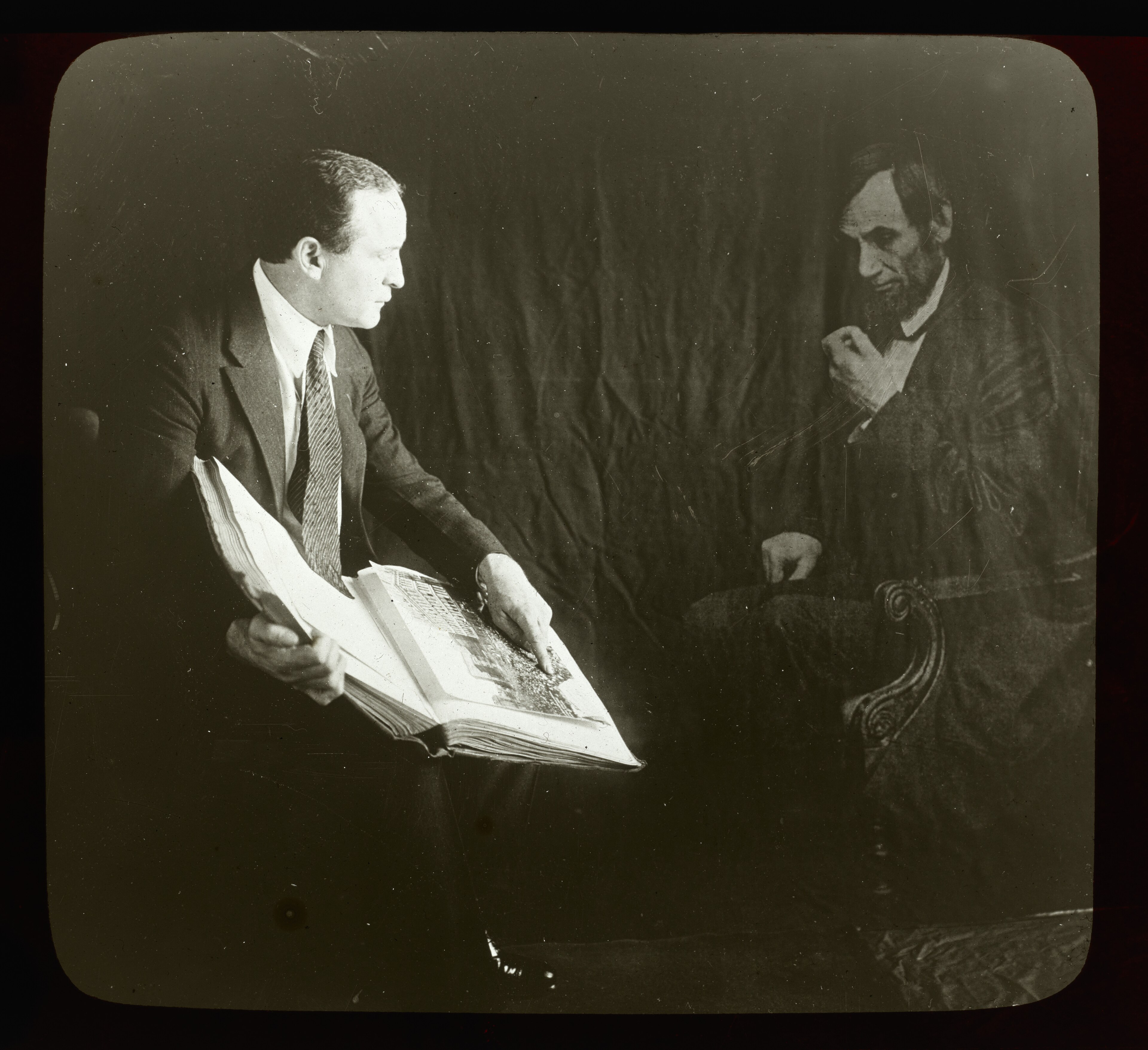
A ghost manufactured for the camera
This historical composite deliberately places Houdini beside an apparent Abraham Lincoln. It was a demonstration of the techniques behind fraudulent spirit photographs. Lincoln died before Houdini was born. The image belongs here as evidence of Houdini’s campaign against supernatural claims, with its manipulation stated openly rather than mistaken for a real meeting.
Photo details
Date
Cataloged between 1920 and 1930; created during Houdini’s lifetime
Location
Location not recorded
Photographer
Attributed to Harry Houdini; camera operator unidentified
Archive / collection
Library of Congress, ppmscd.04010
Rights / license
Public domain in the United States; historical work with expired copyright, as identified by the archive copy.