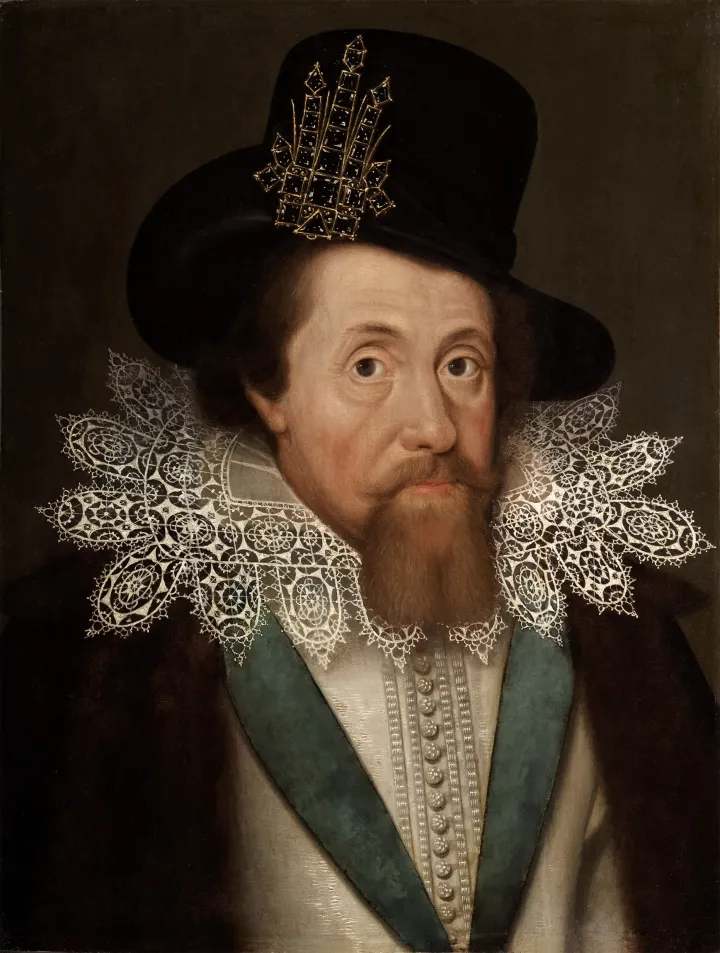
The attack would have struck at King James I, his ministers and members of both houses gathered for the state opening. It was intended to destroy the center of English government in a single act. Its failure left behind a different kind of power: an anniversary that rulers, preachers and crowds would use for centuries.
The man at the center was Catesby
Fawkes became the famous name, but Robert Catesby organized the conspiracy. A small circle of Catholic gentlemen had lost hope that James would substantially ease the restrictions under which English Catholics lived. Catesby proposed blowing up the king and Parliament in 1604. Thomas Percy helped secure access to property around the parliamentary buildings.
By March 1605 the conspirators had rented an undercroft directly beneath the House of Lords. Fawkes, a soldier who had served abroad, watched over the explosives. The opening of Parliament was repeatedly postponed before being fixed for November 5. The plotters also hoped to stir an uprising in the Midlands and seize the king's daughter Elizabeth. Destroying the government was more fully imagined than governing afterward.
A letter, then a search
The Monteagle letter remains unsigned. Francis Tresham, one of the conspirators and Monteagle's brother-in-law, has often been suspected, but the author's identity is not established. The conspirators learned that the warning had reached the authorities. They argued over the danger and decided to continue.
Searches of the parliamentary buildings on November 4 led officials to Fawkes, who was using the name John Johnson. Gunpowder had been concealed beneath firewood. Accounts describe the discovery as occurring late on November 4 or in the early hours of November 5; the entry made in the Commons Journal on November 5 refers to the search of the previous night. The date remembered ever since is the day on which Parliament was meant to be destroyed.
The journal records thirty-six barrels. It is a brief administrative entry, written while the full conspiracy was still being uncovered. It captures the immediate shock without supplying every detail that later accounts would add.
Flight, torture and punishment
Other conspirators fled toward the Midlands. The uprising they had hoped for failed to gather substantial support. On November 8, forces pursuing them reached Holbeach House. Catesby, Percy and the Wright brothers were killed; surviving suspects were captured or arrested afterward.
Fawkes was interrogated in the Tower of London. James authorized torture on November 6, and subsequent examinations disclosed more names and plans. Those statements are indispensable records, but they were produced under coercion. They cannot be treated as a relaxed, voluntary account of events. Fawkes and the other surviving defendants were tried in January 1606; he was executed on January 31.
How a failed attack became a national ritual
Parliament's Thanksgiving Act established annual religious observance on November 5. Sermons, bells, bonfires and eventually familiar effigies kept the story in public life. The ceremonies carried a strong anti-Catholic charge, often becoming more intense during later religious crises.
Most Catholics had taken no part in the conspiracy. They nevertheless lived with its consequences, including a new oath of allegiance and renewed suspicion. Remembering the plot only as a tale of one man caught in a cellar loses both the ambition of the attack and the much wider population made to answer for it.
Cover image: Unknown printmaker / John Gerard, What Was the Gunpowder Plot? (1897)