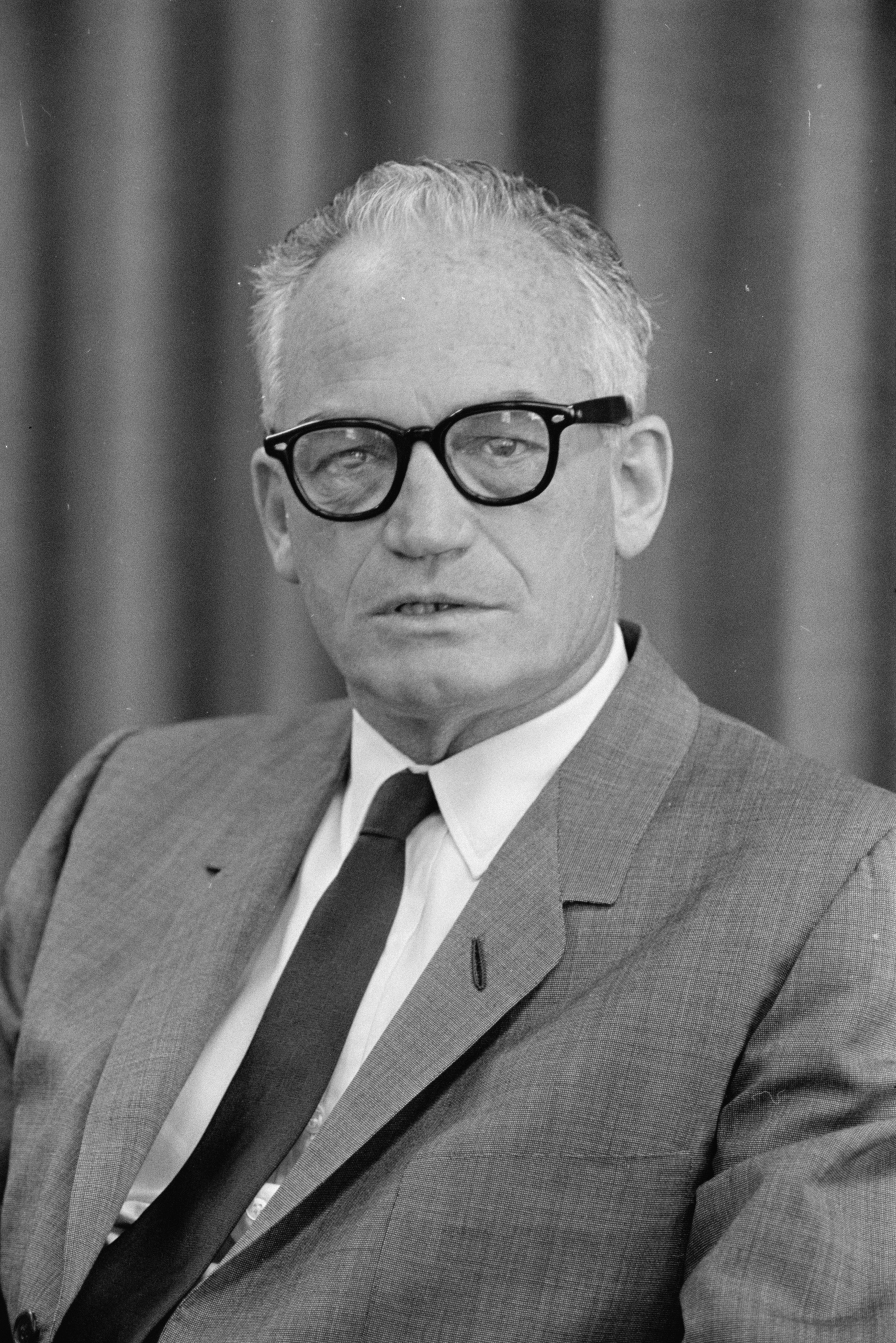
Johnson had succeeded John Kennedy after the assassination of November 22, 1963. Now voters chose between the Democratic president and Republican senator Barry Goldwater of Arizona. Johnson won about 61 percent of the popular vote. The final Electoral College tally was 486 votes to Goldwater’s 52.
A large victory with a divided map
Johnson carried forty-four states and the District of Columbia. Goldwater carried Arizona, Alabama, Georgia, Louisiana, Mississippi and South Carolina. The scale of the national result was unmistakable, but those six states were not a random assortment. Five lay in the Deep South, where resistance to civil-rights legislation had become a powerful force in the campaign.
Johnson signed the Civil Rights Act on July 2, 1964. The law prohibited discrimination in public accommodations, strengthened federal authority over school desegregation and barred employment discrimination. Its passage depended on a coalition that crossed party lines. Democratic senator Hubert Humphrey, Johnson’s running mate, and Republican senator Everett Dirksen both played major roles in overcoming the Senate filibuster.
Goldwater voted against the act, placing him at odds with most Senate Republicans. The dispute exposed divisions within both parties, rather than a neatly settled partisan alignment. November’s results would become an important point in the longer transformation of Southern presidential politics, but that transformation was not completed in a single election.
The campaign beyond the candidates
Lady Bird Johnson took the argument directly to Southern audiences. In October she traveled on a four-day whistle-stop tour, defending the administration and seeking support in a region where the civil-rights law had provoked hostility. A photograph of her meeting the president in New Orleans on October 9 records the end of that journey.
The campaign also argued over the reach of federal government, social programs and the dangers of nuclear war. Democratic advertising portrayed Goldwater as a dangerous choice in international affairs. Republican campaign material attacked Johnson’s spending and policies. The Smithsonian’s collection of buttons, pamphlets and other campaign objects preserves how those arguments reached voters outside the formal speeches.
Television was part of that contest, and it was also how much of the country experienced the result. The three sets beside Johnson offered a practical way to follow several broadcasts at once. The photograph makes the candidate look momentarily like another viewer waiting for information, even as his administration’s future was being decided.
The morning after
Johnson’s formal broadcast to the country came at 1:40 a.m. on November 4, from Austin’s Municipal Auditorium. The transcript is dated the fourth, although it belongs to the conclusion of election night. He presented the outcome as support for national unity and for continuing the program associated with Kennedy, while thanking supporters from both parties.
The victory strengthened the administration’s position as it pursued the Great Society. Medicare, expanded federal aid to education and the Voting Rights Act followed in 1965. These required legislation and political work; they were not automatic consequences of the presidential vote.
Nor did the landslide settle the questions that would dominate the rest of Johnson’s presidency. American involvement in Vietnam deepened, and the coalition assembled in 1964 faced severe strains. The election remains a striking example of the distance between winning an overwhelming mandate and sustaining the agreement that appeared to produce it.
Cover image: Cecil W. Stoughton / LBJ Presidential Library