
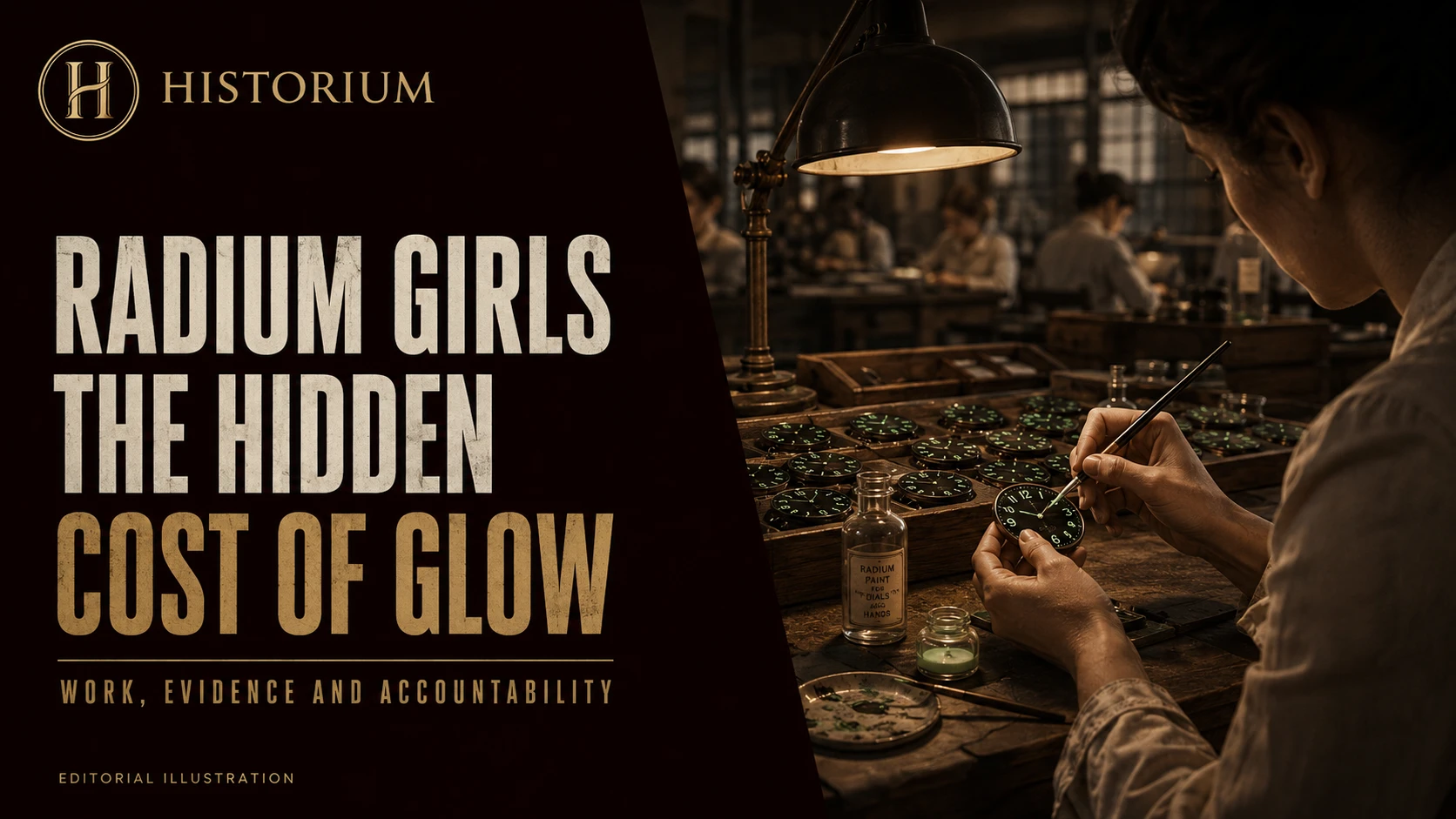
The danger in a luminous watch dial was not obvious to the person reading it. The numbers made darkness convenient. For workers painting those tiny surfaces, however, the manufacturing process could move radioactive material from a workbench into the body. The Radium Girls’ story connects an everyday object with occupational disease, contested evidence and an industrial legacy that outlasted the factories.
The name is useful, but it can flatten different women’s experiences into a single dramatic episode. A fuller account follows several timelines: the repeated task at the bench, the appearance of illness, the effort to establish its cause, and the much longer work of measuring exposure and cleaning contaminated places.
A Useful Glow and a Dangerous Routine
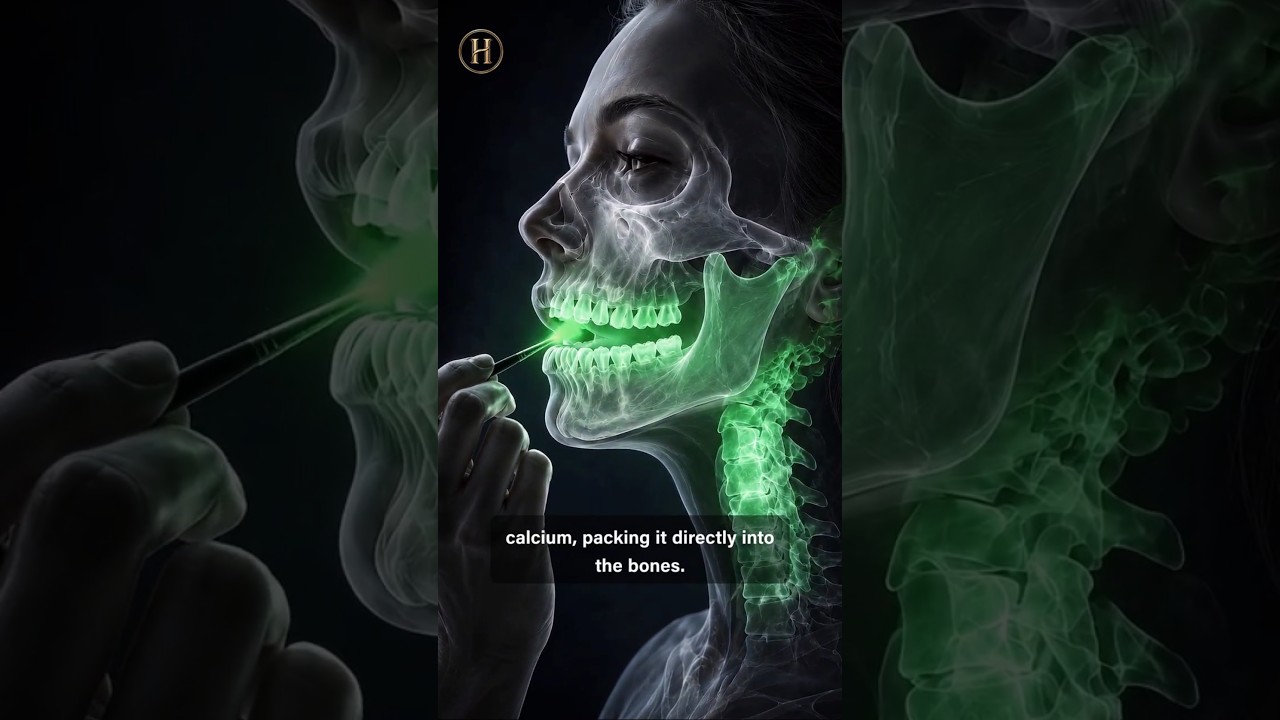
Luminous paint made watches, clocks and aircraft instruments readable without another light source. The Environmental Protection Agency’s account of radioactive antiques explains that dial painters often sharpened their brushes with their mouths. Repeated contact with paint meant that small quantities could be swallowed. Once inside the body, radioactive material could damage nearby cells; the usefulness of the finished dial gave no indication of this route of exposure.
The distinction between product and process is central. A manufacturer might advertise what a watch could do while leaving invisible the conditions in which someone produced it. The painter’s precision was part of the product’s value. The same precision, achieved through an unsafe routine, made her vulnerable. The work should be understood as skilled labor, rather than as a story about workers casually choosing to handle something dangerous.
Why Illness Could Outlast Employment
Radium could enter through inhalation or ingestion, and absorbed material could reach bone. The Agency for Toxic Substances and Disease Registry’s toxicological profile describes harmful effects associated with substantial exposure, including anemia and bone cancer, with some effects developing only after years. That delay helps explain why leaving a workplace did not necessarily end the consequences of having worked there.
Delay also changes what counts as persuasive evidence. A worker can become ill after the daily exposure has stopped, making the connection less visible to outsiders. A convincing investigation must reconstruct what entered the body, when it entered, and how it behaved afterward. The absence of immediate injury cannot settle those questions. Neither should every later illness in an exposed person be assigned the same cause without supporting evidence.
Elizabeth Hughes and the Evidence in Breath
One important investigator was Elizabeth Elmore Damon, later Elizabeth Hughes. Trained in radium measurement at the National Bureau of Standards, she assisted the New Jersey dial painters’ lawyer in 1927. According to the NIST Museum’s account of her work, she analyzed exhaled breath for radon, a product of radium decay, using techniques related to her earlier laboratory research.
Her contribution connected the workers’ experience with a measurable physical process. The source of exposure could no longer be discussed only as a disputed memory of factory practice: evidence persisted in their bodies. It is also significant that another woman supplied technical expertise. Remembering the painters without remembering the scientists who helped investigate their condition leaves out part of how their claims became harder to dismiss.
Settlement Was Not the End of the Story
Bert Coursey’s research history published by NIST records a June 1928 settlement between five New Jersey claimants and the U.S. Radium Corporation. The company did not admit liability. The paper also follows later public-health investigations and radiation-protection guidance, including a 1941 handbook on handling radioactive luminous compounds. These were developments over time, rather than a single courtroom moment that solved every problem.
A settlement, a scientific finding and a workplace precaution answer different questions. Compensation concerns a particular dispute. Measurement helps establish exposure. Prevention changes how future work is performed. None automatically repairs an injured person’s health. The historical consequences become clearer when these outcomes are kept separate, instead of turning the case into an uncomplicated victory followed by universal protection.
Workers Became Participants in Long Research
The story continued in research institutions decades later. In a Department of Energy oral history, Argonne biophysicist Robert Rowland describes efforts to contact exposed people, obtain their cooperation and bring them for medical histories and physical measurements. He also explains how radium’s behavior in bone helped researchers reconstruct earlier exposure.
That account makes the human work behind a scientific dataset visible. A measurement depended on someone agreeing to participate, sharing information and maintaining contact. Long studies required records and trust as well as instruments. It is therefore misleading to describe the women merely as evidence left behind by an industrial accident. Their later participation also contributed to knowledge, although that contribution did not justify the exposure that made the research possible.
The Factory’s Reach Beyond Its Walls
Contamination was not confined to bodies. The EPA’s U.S. Radium Corporation site history records radium processing in Orange, New Jersey, from 1917 to 1926. Waste contaminated the plant and nearby properties. Investigations in the early 1980s preceded the site’s addition to the Superfund National Priorities List in 1983.
The industrial timeline and the environmental timeline were therefore different. Ending a manufacturing operation could stop one activity while leaving material in soil and buildings. A factory’s apparent disappearance from the local economy did not necessarily mean its physical consequences had disappeared from the neighborhood.
Remembering More Than the Glow
The most lasting question raised by the Radium Girls is who bears the cost when production is organized around benefits that are easy to sell and dangers that are difficult to see. The finished dial, the worker’s body and the contaminated site belong to the same history, even though different institutions recorded them.
Following that history requires attention to the women as people with skills, claims and lives beyond the workshop. Their story is more substantial than an eerie image of glowing paint. It shows why industrial responsibility must be examined across the entire life of a product, including the evidence and damage that remain after its useful moment has passed.