

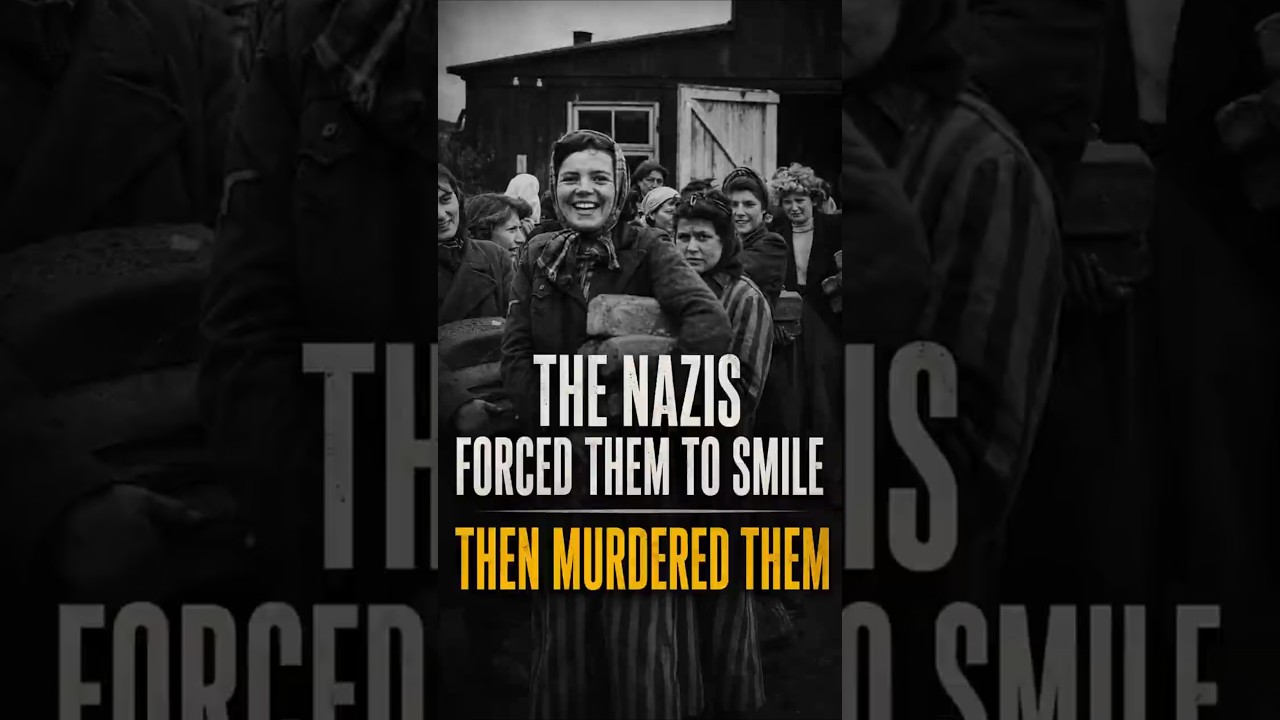
The surviving images from Theresienstadt can be deeply unsettling.
Children play outside. Men watch a football match. Musicians perform. Prisoners sit together, read, work and appear to live something resembling ordinary lives.
At first glance, the footage seems almost incompatible with what we know about the Holocaust.
That was exactly the purpose.
The people appearing before the cameras were prisoners of Nazi Germany, and the apparent normality surrounding them formed part of an elaborate propaganda operation designed to conceal persecution, deportation and mass murder.
Theresienstadt—Terezín in Czech—was not the humane Jewish settlement the Nazis wanted outsiders to believe it was. More than 140,000 Jews were imprisoned there during the Holocaust. About 34,000 died inside the ghetto, while roughly 88,000 were deported to other ghettos, camps, killing sites and killing centers. Only about 3,500 of those deported survived.
Yet in 1944, Nazi authorities managed to transform part of this deadly system into something that looked, for a few carefully controlled hours, almost peaceful.
And international observers were invited inside.
Watch the Historium video:
Holocaust Victims Forced to Smile Before Being Sent to Auschwitz
What Was Theresienstadt?
Theresienstadt was established in the Czech fortress town of Terezín in November 1941.
It occupied an unusual position within the Nazi system.
It served as a transit ghetto for Jews who would later be deported farther east, but it was also presented as a special settlement for elderly Jews, decorated Jewish veterans of the First World War and certain prominent artists, intellectuals and community leaders.
That made Theresienstadt particularly useful for propaganda.
If questions were raised about the disappearance of prominent Jews from Germany, Austria or occupied Europe, Nazi authorities could claim that these people had been resettled in a Jewish community rather than sent into a system of persecution and murder.
The reality was radically different.
Overcrowding was severe. Food was inadequate. Disease spread easily. Thousands died inside the ghetto, and deportation transports regularly carried prisoners toward Auschwitz and other sites in German-occupied eastern Europe.
Theresienstadt therefore served two functions that seem contradictory only at first.
It was both a place of imprisonment and a stage.
Why the Red Cross Wanted to See Theresienstadt
The events that eventually led to the famous inspection were closely connected to Denmark.
In October 1943, German authorities attempted to arrest and deport Denmark’s Jewish population. Most Danish Jews escaped to neutral Sweden with assistance from a remarkable rescue network, but hundreds were captured.
In October 1943 alone, 456 Danish Jews were deported to Theresienstadt. The Danish authorities repeatedly pressured Germany for information about their treatment and demanded some form of outside access.
Eventually, the Reich Security Main Office agreed to allow an international delegation to inspect the ghetto.
The visit was scheduled for June 23, 1944.
For the SS, this created an obvious problem.
An uncontrolled inspection would reveal the overcrowding, coercion and deprivation that characterized Theresienstadt.
So the Nazis did not prepare to show the visitors the real ghetto.
They prepared a performance.
Building the Illusion
Months before the delegation arrived, Nazi authorities launched an extensive beautification campaign.
Prisoners were forced to repair and repaint buildings. Streets and visible public spaces were improved. Selected areas were made to appear cleaner and more spacious. Decorative elements, benches and facilities were introduced to create the impression of a functioning civilian community.
But there was one problem that cosmetic improvements could not easily hide.
There were simply too many prisoners.
Between May 15 and May 18, 1944, Nazi authorities deported approximately 7,500 Jews from Theresienstadt to Auschwitz. One purpose was to make the ghetto appear less overcrowded when the international visitors arrived.
Most of the people in those transports were murdered at Auschwitz in July 1944.
The apparent improvement in Theresienstadt therefore came at a horrifying price.
The Nazis did not solve overcrowding by improving living conditions.
They solved it by removing thousands of prisoners.
The Prisoners Were Part of the Stage
The buildings were not the only things prepared for inspection.
The prisoners themselves had to become part of the performance.
Selected prisoners were moved into improved accommodation. Danish Jews were instructed on how to behave during the visit. Nazi authorities controlled where the visitors would go, what they would see and whom they would be permitted to encounter.
This context is essential when looking at surviving photographs from Theresienstadt.
A child playing outside does not demonstrate freedom.
A football match does not demonstrate normal life.
A smiling face does not demonstrate happiness.
The people shown in these scenes remained prisoners inside a system in which the authorities controlled their movement, food, labor and ultimately their chances of survival.
The illusion depended not on creating an entirely imaginary world, but on carefully selecting fragments of reality.
June 23, 1944
Three international representatives entered Theresienstadt on June 23.
They represented the International Committee of the Red Cross, the Danish Red Cross and the Danish government. Among them was Swiss ICRC delegate Maurice Rossel.
The visit was not an unrestricted investigation.
Rossel was accompanied and monitored by Nazi officials. According to the ICRC’s own historical examination of the episode, he could not move freely through the ghetto and had almost no opportunity to speak independently with its prisoners.
Instead, the delegation followed a prepared route.
They encountered renovated spaces and selected groups of prisoners.
Children were visible outside.
A football match was presented.
Cultural activity was emphasized.
The famous children’s opera Brundibár formed part of the staged cultural presentation surrounding the inspection.
Everything reinforced the same message:
Theresienstadt was supposedly a tolerable Jewish settlement rather than a place embedded within the Nazi system of persecution and deportation.
The Deception Worked
The most disturbing part is that the operation was, in important respects, successful.
The visiting representatives subsequently produced positive reports about what they had seen. The United States Holocaust Memorial Museum describes those reports as evidence that the Nazi deception had succeeded.
Rossel’s report has remained especially controversial.
Decades later, filmmaker Claude Lanzmann interviewed him about the visit. Rossel continued to defend the observations he had recorded, while Lanzmann challenged him over his failure to recognize or expose the deception.
The ICRC’s own historical discussion is more complicated. Rossel was clearly shown a manipulated environment and was closely monitored. Yet the episode remains an uncomfortable example of how an inspection can fail when the perpetrator controls access, movement and information.
The Nazis did not need the visitors to believe that Theresienstadt was a paradise.
They only needed them to believe that conditions were acceptable.
The Famous Film Came Later
One of the most important details about the Theresienstadt story is frequently misunderstood.
The surviving Nazi propaganda footage was not simply footage of the June 23 Red Cross visit.
The visit and the film were related, but they were separate propaganda operations.
After the inspection, Nazi authorities produced a much more elaborate film depicting life inside the ghetto.
Filming took place primarily during August and September 1944. The production was eventually completed in March 1945. It was titled:
Theresienstadt: Ein Dokumentarfilm aus dem jüdischen Siedlungsgebiet
or:
Theresienstadt: A Documentary Film About the Jewish Settlement Area.
Despite the title, it was anything but an independent documentary.
It was a controlled propaganda production that deliberately misrepresented the deprivation, inequality and fear that defined life in Theresienstadt.
Kurt Gerron: A Prisoner Forced to Direct the Illusion
The man placed in charge of the film was Kurt Gerron.
Before the Nazi period, Gerron had been a successful German Jewish actor and director.
By 1944, he was a prisoner at Theresienstadt.
Nazi authorities forced him into the grotesque position of directing a film intended to present Jewish prisoners as comfortable and well treated.
A Jewish filmmaker imprisoned by the Nazi regime was being used to create propaganda for that same regime.
Gerron had no control over the political purpose of the production.
The SS did.
After the filming, Gerron and many other prisoners associated with the production were deported from Theresienstadt to Auschwitz.
Gerron was murdered there.
The director of the illusion became one of the victims whose fate the illusion was designed to conceal.
What the Camera Showed
The surviving footage is effective precisely because it does not look overtly terrifying.
Prisoners appear to work.
Others socialize.
Children play.
People attend cultural activities.
Musicians perform.
Sports are shown.
The environment appears orderly.
The images communicate normality without needing to say explicitly that conditions were humane.
What the camera did not show was more important.
It did not show the approximately 7,500 prisoners deported before the Red Cross inspection.
It did not show the full reality of overcrowding and deprivation.
It did not follow deportation trains to Auschwitz.
It did not show what would later happen to many of the people appearing before the camera.
The lie existed largely outside the frame.
Real Culture, Weaponized as Propaganda
One of the complexities of Theresienstadt is that cultural life inside the ghetto was not entirely invented by the Nazis.
Jewish prisoners really did create art.
They performed music.
They wrote.
They taught children.
They organized theatrical productions.
These activities could provide moments of solidarity, dignity and psychological survival under horrific circumstances.
The Nazi propaganda operation appropriated that genuine prisoner culture and changed its meaning.
A musical performance created by prisoners as a form of human expression could be filmed and presented as evidence of good treatment.
A football match could become evidence of supposed leisure.
Children performing could become evidence of supposed normality.
The propaganda did not always need to fabricate an event.
Sometimes it simply removed the context that gave the event its real meaning.
What Happened After the Visitors Left?
The staged appearance of Theresienstadt did nothing to change the underlying system.
Deportations continued.
By the end of the ghetto’s existence, about 140,000 Jews had passed through Theresienstadt. Around 34,000 died there.
Approximately 88,000 were deported onward.
Only about 3,500 of those deportees survived.
In total, more than three quarters of the Jews imprisoned at Theresienstadt died either inside the ghetto or after being deported elsewhere.
Those figures reveal what the propaganda film was designed to hide.
The people seen sitting in parks, watching football or performing music belonged to a prisoner population with an extraordinarily high likelihood of death.
A Propaganda Film That Almost No One Saw
There is another strange irony in the story.
After all the work invested in producing the Theresienstadt film, it was never publicly released during the war.
It was completed only in March 1945 and shown privately several times the following month.
The complete film has not survived.
Today, historians have recovered only about 23 minutes of fragments from the production.
Those surviving images now perform the opposite function from the one their creators intended.
The Nazis wanted the footage to demonstrate their supposed humanity.
Today, the same footage demonstrates their ability to manipulate appearances while mass murder continued elsewhere.
The propaganda became evidence against the propagandists.
Why the Smiles Matter
The smiling prisoners of Theresienstadt are sometimes presented without sufficient context.
Taken alone, such images can appear confusing.
How can prisoners of the Holocaust be smiling, playing football, performing music or watching children play?
The answer is that photographs and films do not automatically explain the conditions under which they were created.
A camera records what stands in front of it.
It does not necessarily record the threat behind it.
The Nazis controlled the environment, the route, the staging and, in the later film, the production itself. International observers were shown selected spaces. Prisoners had no freedom to explain openly what the images omitted.
The smiles therefore do not contradict the history of Theresienstadt.
They are part of it.
The Camera Did Not Need to Lie
Theresienstadt demonstrates one of the most powerful principles of propaganda:
A camera does not need to record something fake in order to create a false story.
The children could be real.
The football match could be real.
The musicians could be real.
The flowers, buildings and streets could be real.
Even the smiles could be real in the instant when the camera captured them.
The deception came from deciding what the viewer would see—and what would remain invisible.
Outside the frame were overcrowding, hunger, coercion, deportation and death.
Before the inspectors arrived, thousands had been transported to Auschwitz.
After the cameras stopped, many of those who participated in the propaganda production would follow them.
The Nazis had created the image of a peaceful Jewish community inside a system designed to persecute and destroy the people living there.
That is why the surviving footage remains so disturbing.
It does not show us that Theresienstadt was humane.
It shows us how easily carefully selected images can be made to hide an inhumane reality.