It was an effective performance by a president whose health was failing. The election was still six weeks away, the country was at war, and Roosevelt was asking voters to do something without precedent: elect him for a fourth term. On November 7 they did. He defeated New York governor Thomas E. Dewey, securing 432 electoral votes to Dewey’s 99.
Another campaign in the middle of a war
Roosevelt had already broken the two-term tradition in 1940. Four years later, the circumstances had changed sharply. The United States was fighting in Europe and the Pacific. The choice of president concerned the conduct of the war and the terms of the peace that would follow it, as well as the long-running argument over the New Deal.
Dewey offered an alternative to an administration approaching twelve years in office. He ran with Ohio governor John Bricker. Roosevelt’s position as commander in chief gave him enormous authority, but it did not remove ordinary partisan politics. The campaign still required appearances, fundraising, local organizers and a public case for another term.
The photographs show that work at several levels. There is the carefully lit official portrait, taken by Leon Perskie in August. There are women holding campaign signs in New York. And there is Roosevelt, bundled in a car beside Treasury Secretary Henry Morgenthau Jr., campaigning in Poughkeepsie on November 6. Wartime responsibilities had shortened his campaigning; they had not made it unnecessary.
The other name on the ticket
Roosevelt’s running mate was no longer Henry Wallace. Democratic leaders who considered the sitting vice president too liberal worked to replace him. Senator Harry S. Truman of Missouri emerged from the convention struggle as the compromise candidate.
This was more than routine ticket balancing. People close to Roosevelt knew his health was seriously impaired. A March 1944 medical examination had revealed major cardiovascular problems, though the public did not receive a full account of his condition. The vice-presidential choice therefore carried a weight that many voters could not fully assess.
That makes the cheerful campaign images difficult to read. They document genuine public appearances, but a smiling portrait is not a medical record. Roosevelt’s ability to deliver a sharp speech, or endure a demanding afternoon in public, could coexist with dangerous illness. The Fala episode helped him project confidence without answering that larger question.
A victory with a short fourth term
Roosevelt won about 53.4 percent of the popular vote, against Dewey’s 45.9 percent. The Electoral College made the victory look more overwhelming than that national division. Millions of Americans had voted for a change of administration, even as a clear majority supported keeping Roosevelt in office.
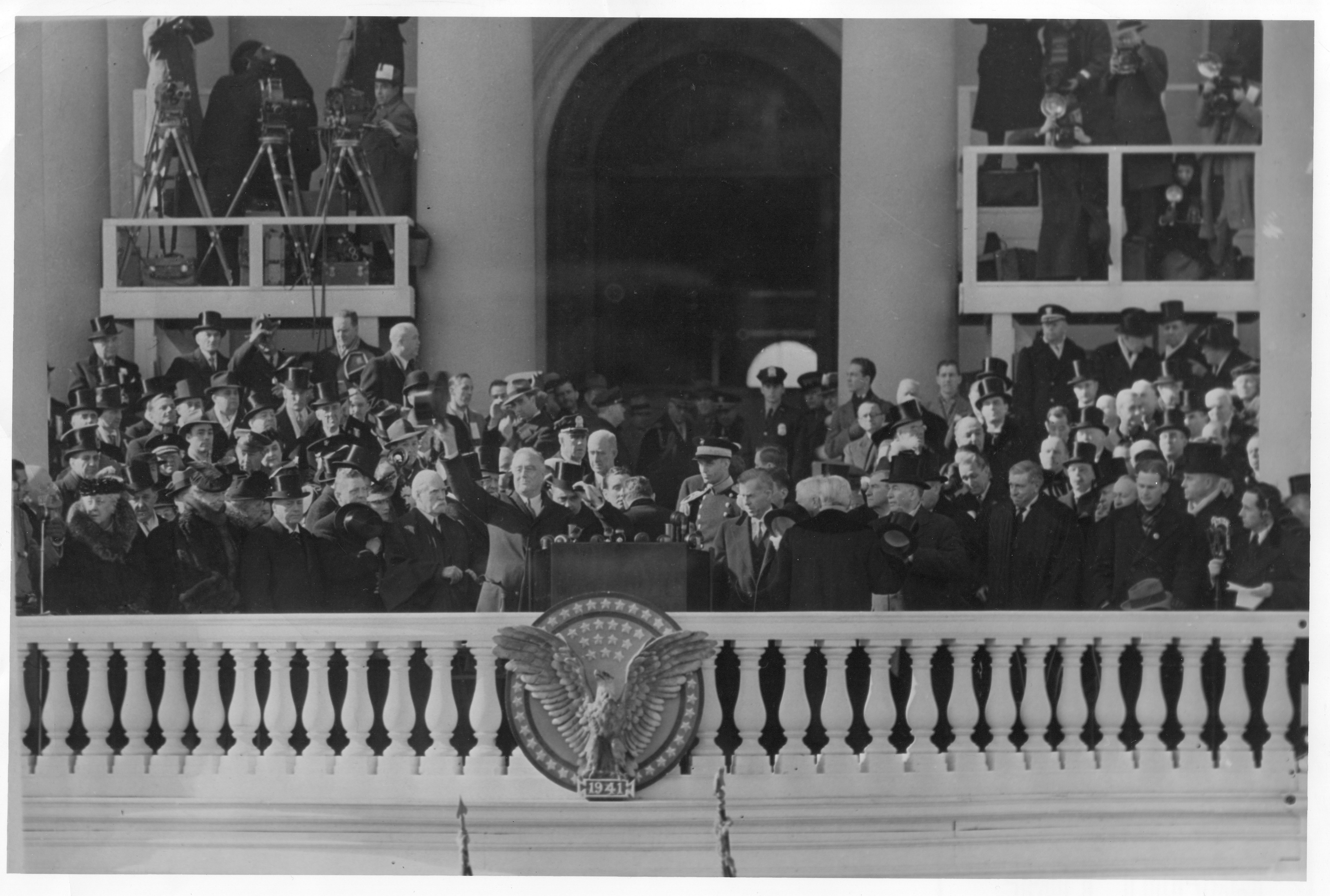
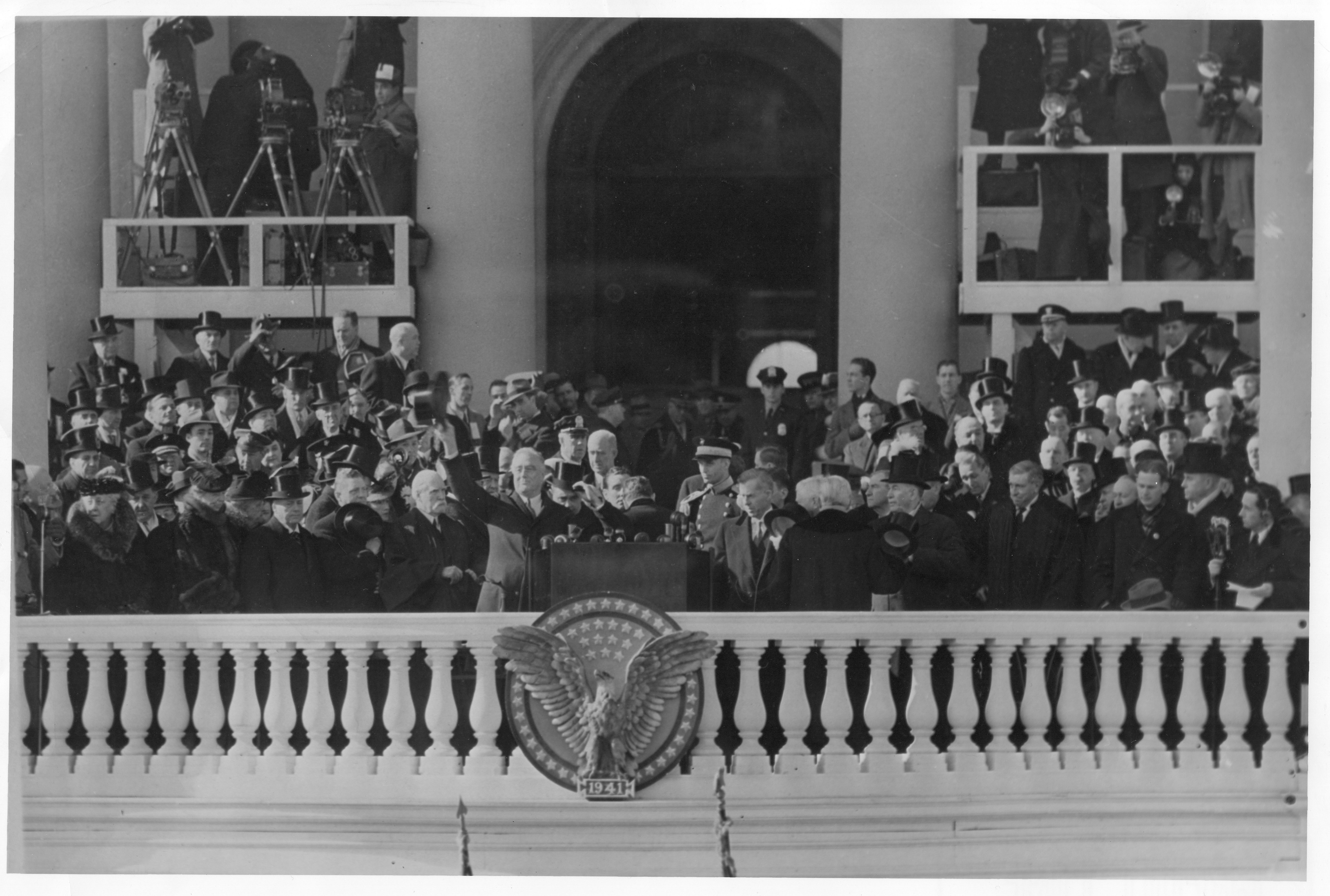
Dewey conceded on November 8, accepting the result and expressing hope for victory in the war and a lasting peace. Roosevelt began his fourth term on January 20, 1945. It lasted less than three months. He died on April 12, and Truman took the oath that same day.
The November vote had returned a familiar president. It had also placed a comparatively unfamiliar successor one step from the office. By the spring, the second choice embedded in the Democratic ticket had become the person responsible for carrying the war through its final months.
Cover image: Unknown photographer / FDR Presidential Library and Museum, 59-239. CC BY 2.0.