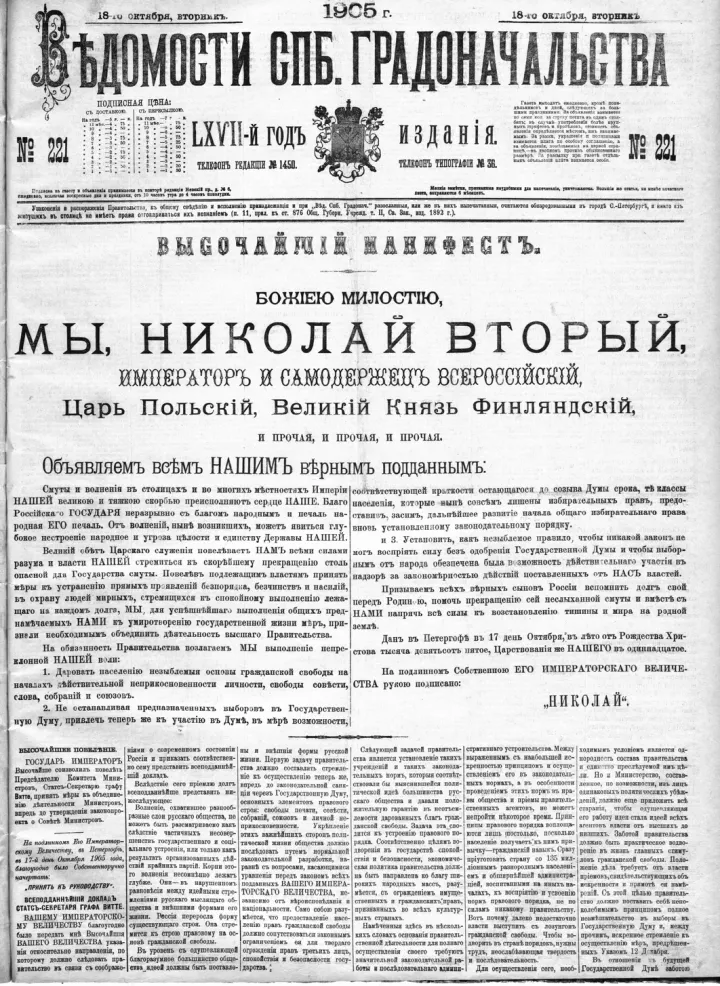
Nicholas II had signed it the previous day: October 30 in the Gregorian calendar, October 17 in the Julian calendar then used in Russia. The October Manifesto promised civil freedoms and a legislative role for an elected Duma. It was issued by an emperor trying to keep control of a country his government could no longer make function normally.
The pressure behind the signature
Strikes, military mutinies and political protests had spread through 1905. The war against Japan added defeat abroad to discontent at home. Industrial workers were not the only people taking action; students, professionals and railway employees also challenged the existing order. The interruption of transport made a political crisis into a practical one.
Sergei Witte urged constitutional concessions as a way to preserve the state. Earlier that year he had helped negotiate peace with Japan at Portsmouth, New Hampshire. By October the urgent negotiation was between the monarchy and its own subjects, though the manifesto remained an imperial pronouncement rather than a settlement signed with an opposition delegation.
Three promises, with room for dispute
The document committed the government to personal security and freedoms of conscience, expression, assembly and association. It promised to bring previously excluded groups into the coming Duma elections and to develop electoral rights further. That wording was a promise of broader participation, not a declaration of immediate universal suffrage.
The most substantial institutional concession concerned legislation. New laws were to require the Duma’s approval, and elected representatives were to have a means of supervising the legality of official conduct. The text also called on loyal subjects to help restore order. Rights and the preservation of imperial authority appeared in the same short document.
Those demands could pull in different directions. A person welcoming an elected chamber might expect it to control ministers. The emperor could regard the chamber as a limited addition to his own government. The manifesto did not resolve every dispute about where power would ultimately lie.
The celebration Repin remembered
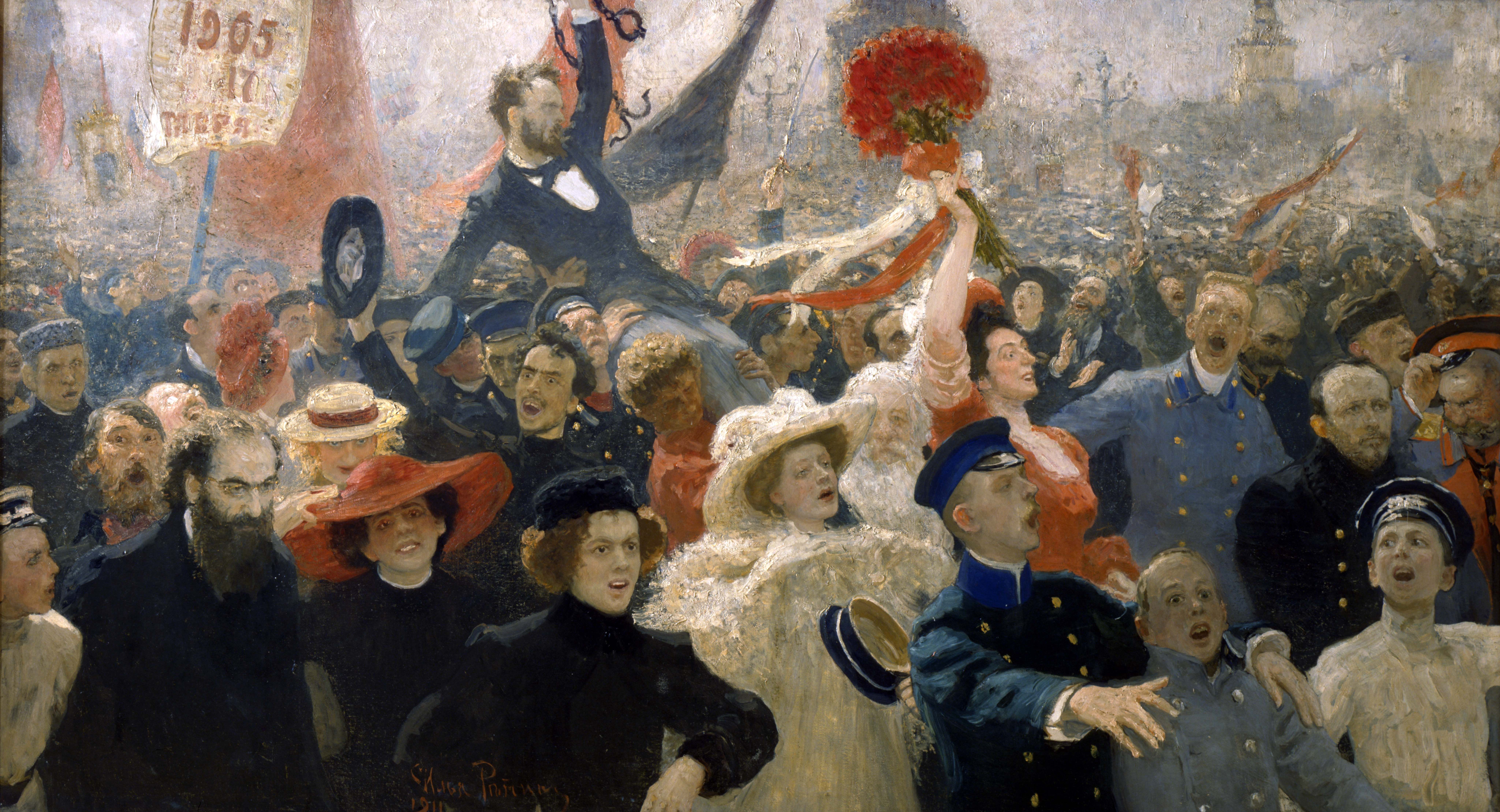
Ilya Repin later painted a jubilant crowd carrying a freed prisoner and red flags. His canvas, worked on in 1907 and modified in 1911, records an artist’s interpretation of the hopes released by the announcement. It is often reproduced beside accounts of the manifesto, but it is not an eyewitness photograph from October 1905.
The Russian Museum identifies students, workers and intellectuals in the scene. Repin’s crowded composition makes the political promise feel immediate: people who had been excluded from public power imagined that they were about to acquire a voice. The uncertainty lies outside the frame.
A parliament inside an autocracy
The Fundamental Laws of 1906 preserved extensive imperial powers. Nicholas appointed ministers, retained authority over government and had to approve legislation. The Duma shared lawmaking with the State Council; it could not revise the fundamental settlement on its own initiative.
The first Duma opened on May 10, 1906, Gregorian date. It lasted only months. In dissolving it, Nicholas accused its members of entering matters outside their authority. Russia now had an elected national assembly, but the boundary between representation and autocracy remained a struggle. The signature of October 30 had opened that struggle to new institutions. It had not settled it.
Cover photograph: Ilya Repin / State Russian Museum, Ж-6666 / Wikimedia Commons; public domain.