
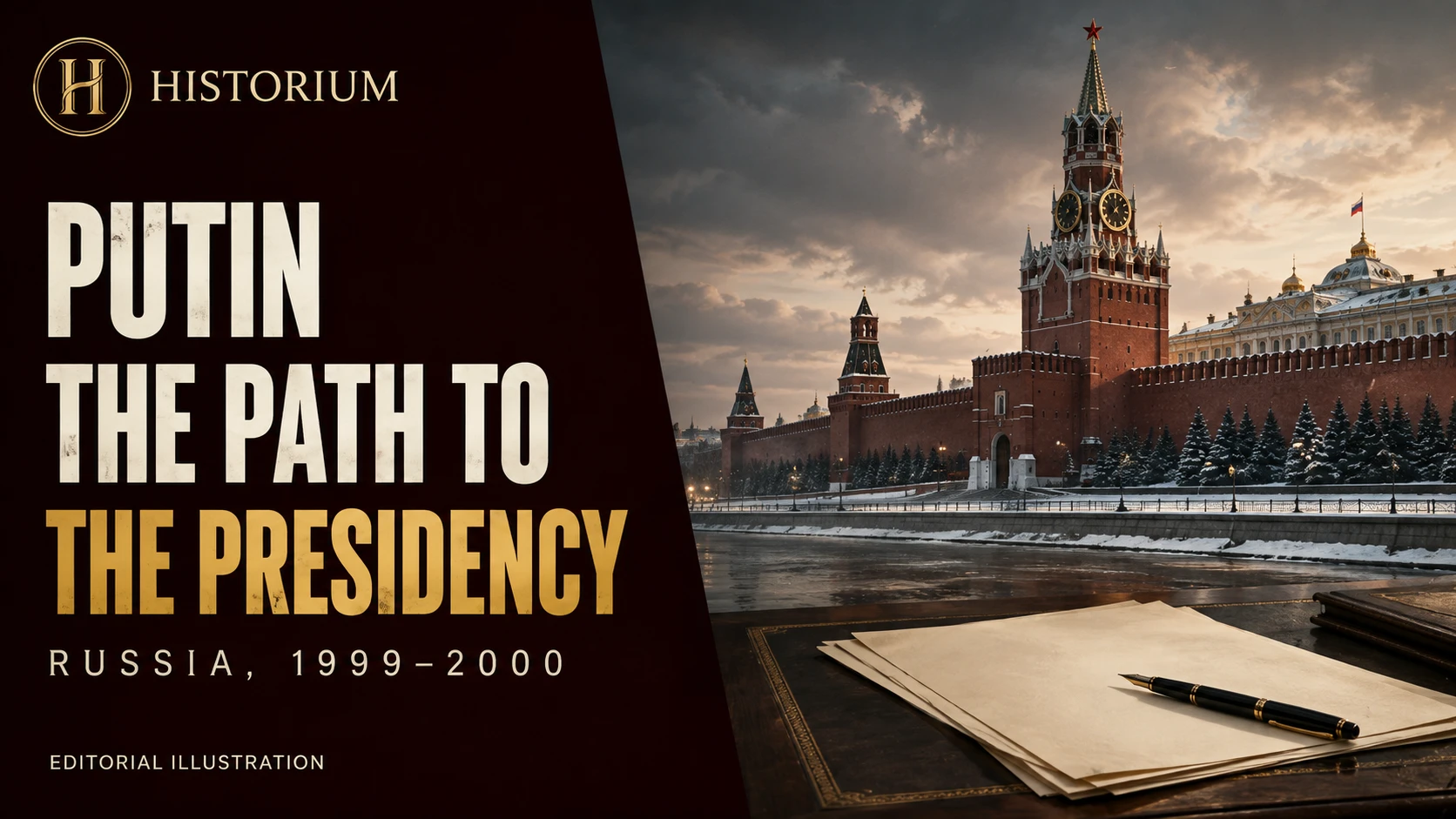
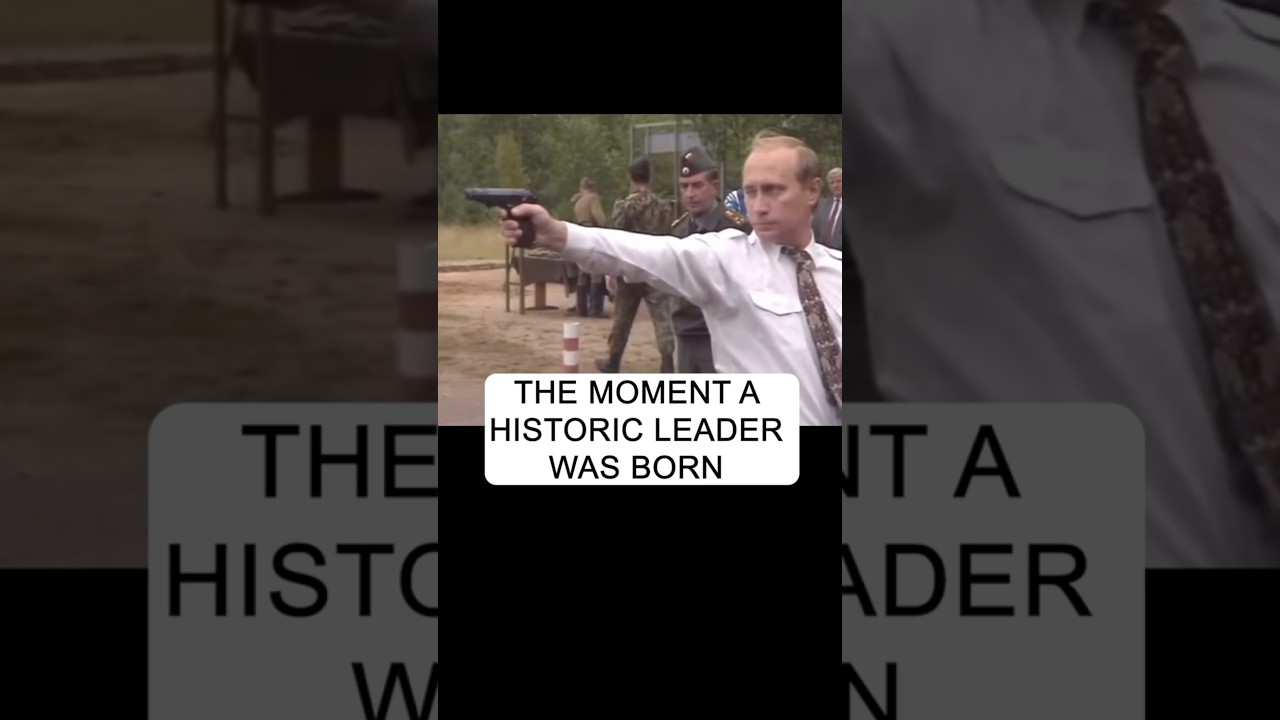
A brief piece of political footage can make power appear to change hands in an instant. Russia's transition from Boris Yeltsin to Vladimir Putin involved several different steps: resignation, temporary succession, an election and the beginning of a presidential term. Keeping those steps separate gives the images a more useful historical context than treating personal confidence as an explanation for a country's future.
This article examines that transition through dated institutional records. It does not identify an undated shot in the accompanying montage as a particular meeting, or suggest that everything that followed was inevitable to people watching at the time.
The resignation and the acting presidency
On 31 December 1999, Yeltsin resigned. The Kremlin's notice of Putin's decree records that Putin began exercising presidential powers temporarily at noon that day, under Article 92 of the constitution. It explains that the prime minister assumed those functions when the president could no longer perform them, with an election to follow within three months of the early vacancy.
That was a transfer of the functions of office, not an election held on television. Calling Putin president without the word “acting” at this stage hides the distinction. The temporary arrangement gave the government continuity, while leaving a separate question of electoral authorization still to be decided.
An archival photograph held by the Yeltsin Center documents the two men together in the Kremlin on Yeltsin's final day. Its catalogued date and description establish the setting of that particular image. Such cataloguing matters: when a photograph moves into a documentary, the identifying information can disappear while a new narration supplies a different meaning.
An election with an incumbent already in office
The presidential election took place on 26 March 2000. The US Helsinki Commission's report records the Central Election Commission's result: Putin received almost 53 percent of the vote, ahead of Communist Party candidate Gennady Zyuganov, who received just under 30 percent. Eleven candidates competed, and voters could also choose an option rejecting all of them. Reported turnout was 68.74 percent.
Those figures identify the outcome and the formal alternatives available to voters. They do not, by themselves, measure whether competing candidates had equal opportunities to reach the public. An election result and an assessment of the campaign are different historical evidence, and both belong in an account of this transition.
What observers praised and what concerned them
The OSCE/ODIHR final report, issued on 19 May 2000, contains a more complicated assessment than a simple verdict of either success or failure. It recognized professional election administration and a legal framework broadly consistent with international standards. It also identified pressure on independent and opposition media, weak party pluralism and the extensive use of advantages associated with holding office.
The observers considered Putin's position as prime minister and then acting president crucial to his electoral advantage. They also described the shortened period available to opponents after Yeltsin's early departure. In Chechnya, the mission declined to observe election-day activities because conditions necessary for campaigning, domestic observation and transparency were lacking.
These findings should be read as an assessment of the 2000 contest. They are neither a retrospective endorsement of later Russian governments nor a substitute for examining subsequent events through their own records.
The international response was conditional
On 27 March, US President Bill Clinton issued a statement after congratulating Putin. Clinton expressed a desire to work with him and set out areas in which cooperation and reform would matter. The statement is evidence of Washington's publicly stated position at that moment.
Diplomatic language serves a purpose: it addresses the government with which another state expects to negotiate. A congratulatory message should therefore not be read as an independent audit of every aspect of an election, or as proof that the sender correctly anticipated the new leader's future course. Reading it beside the observer report reveals two institutions asking different questions.
Reading the footage with the record
The camera can show a handshake, a walk through a corridor or the delivery of a speech. It cannot show the complete operation of a constitution, the distribution of campaign resources or the range of information available to voters. Those elements require records beyond the frame.
The transition of 1999–2000 is most clearly understood by putting those sources together: a decree identifies the temporary succession; an archival catalog identifies a photographed occasion; the recorded vote establishes the election result; an observer mission evaluates conditions; and a diplomatic statement records an external response. This approach gives the viewer a sequence that can be checked, while leaving judgments about political leadership open to evidence rather than a dramatic edit.