The change also answered a practical problem. Ministers had resigned two days earlier, and assembling a replacement government under the existing system had proved difficult. Declaring a republic changed the machinery through which a cabinet could be formed.
Ankara before the republic
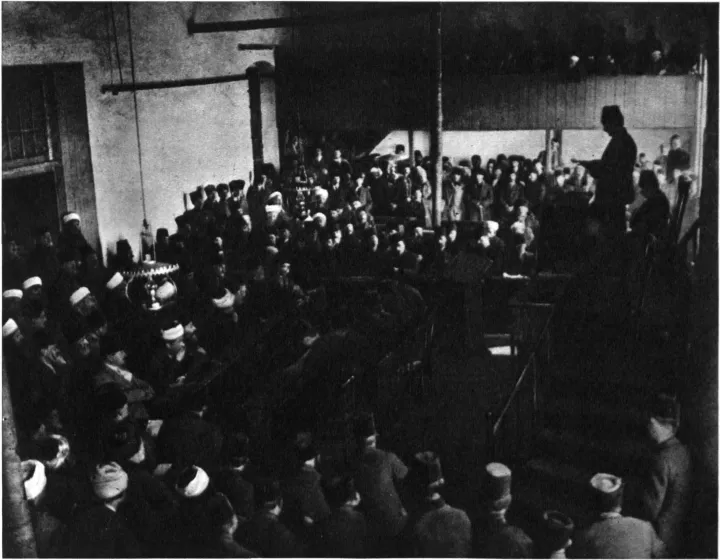
The assembly had opened in Ankara on April 23, 1920, during the War of Independence. Its claim was that sovereignty belonged to the nation, expressed through its representatives. That principle appeared in the 1921 constitution, while legislative and executive authority rested in the assembly.
The setting was modest. The first parliament occupied a building in Ulus that needed repairs and equipment. Parliament’s own history describes roof tiles obtained locally and furnishings gathered from schools and public offices. There was no grand purpose-built capital waiting for the nationalist government. Its institutions were assembled while the war continued.
The sultanate was abolished on November 1, 1922. The following July, the Treaty of Lausanne established a new international settlement after the fighting. Ankara became the capital on October 13, 1923. By then the question was no longer whether the Ottoman sultan would govern from Istanbul. It was how the state centered on Ankara would organize its highest offices.
A cabinet crisis becomes a constitutional decision
The resignation of the executive council on October 27 brought that question to a head. On October 28, Mustafa Kemal and İsmet Pasha worked on amendments that would define the government as a republic and establish a presidency. The proposal moved through the ruling party’s group and the assembly’s constitutional process the next day.
On the evening of October 29, deputies approved the change. Contemporary Anadolu Agency bulletins, preserved in its archive, record the decision and the cheers that followed. The assembly then elected Mustafa Kemal president. He appointed İsmet Pasha prime minister on October 30.
The arrangement put a president chosen by parliament at the head of state. The president selected a prime minister from among the deputies; the prime minister selected the other ministers, whose cabinet was submitted for parliamentary approval. The assembly remained central, but forming an executive no longer depended on selecting each minister through the earlier arrangement.
What changed, and what came later
The republic proclaimed in 1923 was not yet the finished constitutional order associated with later decades. The amendments also declared Islam the state’s religion and Turkish its official language. The caliphate remained in existence until March 3, 1924. A new constitution followed that April, and further changes to the relationship between religion and state came afterward.
Those stages help explain the scale of October 29 without loading every later reform onto a single evening. The decision created a republican head of state and a cabinet system. It also made explicit that the government’s legitimacy would no longer rest on the Ottoman dynasty.
Mustafa Kemal did not yet bear the surname Atatürk; parliament conferred it in 1934. In 1923 he was the military and political leader moving into the new presidency. The proclamation joined his personal authority to an office intended to outlast its first occupant. That institutional change is what October 29 marks.
Cover photograph: Frédéric Gadmer / Département des Hauts-de-Seine, musée Albert-Kahn, A37024S. CC BY-SA 4.0.