The distinction mattered throughout the campaign. George Washington had retired after two terms, and no president had served longer. Roosevelt's opponents treated that precedent as a safeguard against personal rule. His supporters argued that the danger overseas made experienced leadership unusually valuable. Both positions spoke to a fear of dictatorship, though they drew opposite conclusions about what Americans should do.
The war outside the election
France had fallen to Germany, and Britain was fighting for survival. The United States remained outside the war, but neutrality no longer meant standing still. In September, Roosevelt approved an agreement exchanging American destroyers for access to British bases in the Western Hemisphere. He also signed the country's first peacetime military draft.
These decisions put an uneasy combination before voters: preparations for war and assurances that American soldiers would not be sent into one. In an October 30 speech in Boston, Roosevelt promised that American boys would not be sent into foreign wars. The reassurance became a central part of the campaign's final days. What events might make that promise impossible was a question the election could not answer.
A third nomination, carefully presented
Roosevelt did not begin by openly demanding another term. At the Democratic convention in July, Senator Alben Barkley read a statement authorized by the president saying he had no desire to remain in office and that delegates were free to choose. They chose Roosevelt. Henry Wallace joined the ticket as the vice-presidential nominee, replacing John Nance Garner.
The Republican alternative was unusual too. Willkie was a business executive who had never held public office. His campaign attacked the concentration of power in the presidency and made the third-term question visible on buttons, posters and speeches. A voter did not have to reject every New Deal program to worry about another four years under the same president.
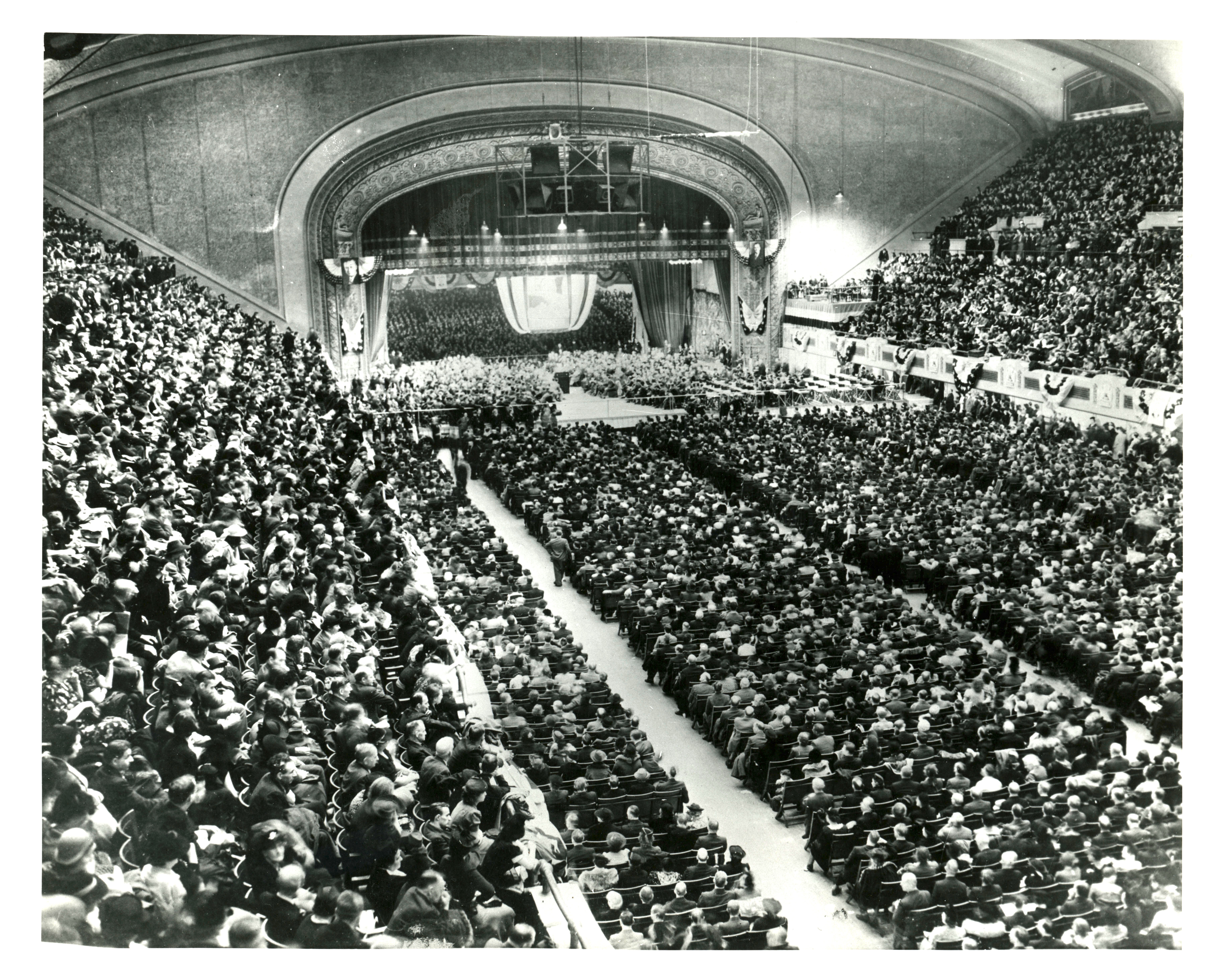
Campaign photographs preserve the argument in less formal language. A sign glowed opposite Radio City Music Hall. A Hollywood billboard lined up famous names behind Roosevelt and Wallace. In Cleveland, an enormous audience packed the Public Auditorium for one of Roosevelt's closing addresses. Politics occupied streets and entertainment districts as well as newspapers and radio schedules.
The result and the rule that followed
Roosevelt secured 449 electoral votes to Willkie's 82. The popular vote was much closer than that division suggests: approximately 54.7 percent for Roosevelt and 44.8 percent for Willkie. The incumbent had a clear majority, but millions of Americans had voted against the precedent he was setting.
The election did not make the two candidates permanent enemies. Willkie subsequently supported Roosevelt's efforts to aid the Allies and traveled abroad during the war. Their cooperation did not erase the campaign's disagreements; it showed that opposition to a president's reelection could coexist with support for parts of his foreign policy.
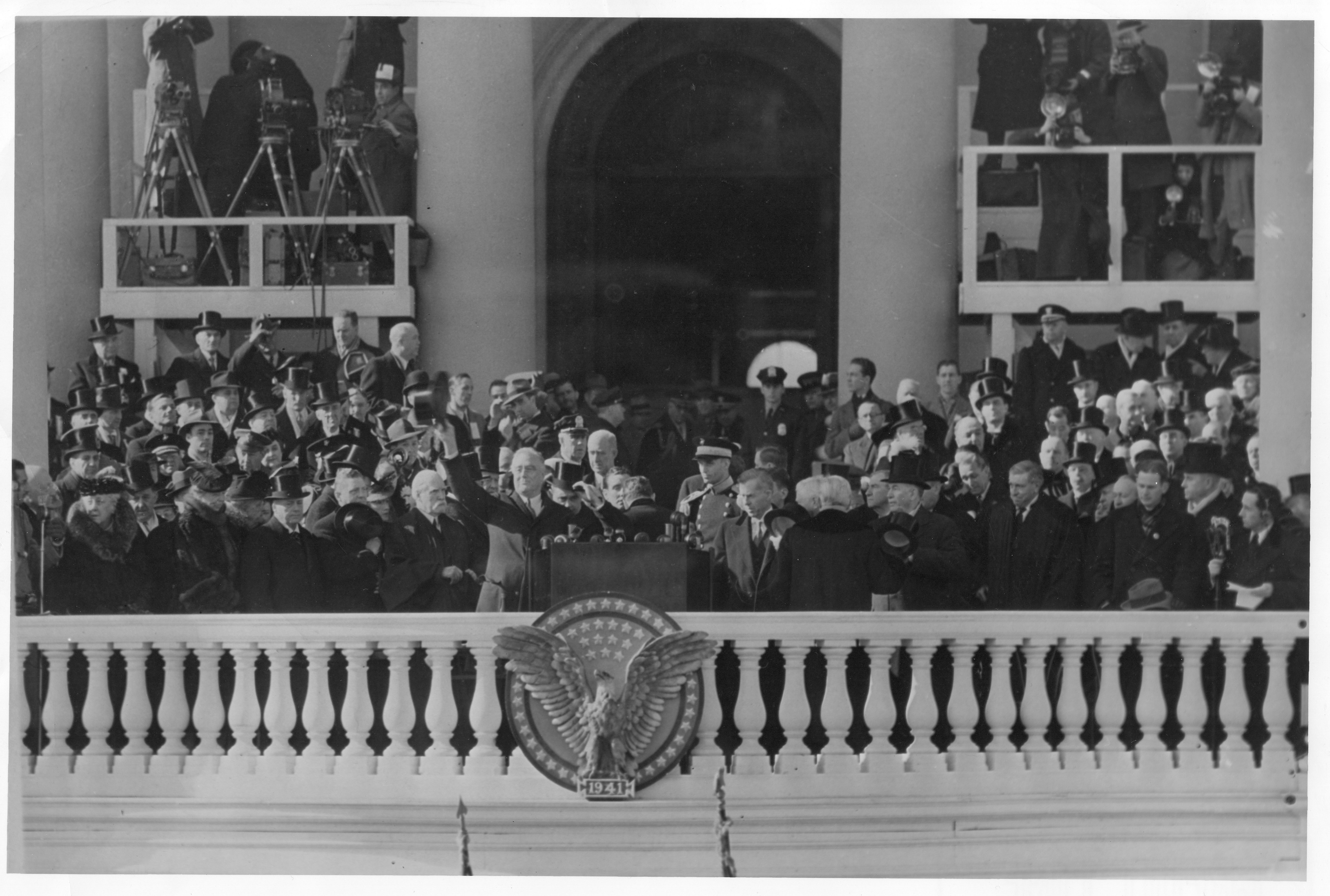
Roosevelt took the oath again on January 20, 1941. He would win a fourth election in 1944 and die the following April. In 1951, ratification of the Twenty-second Amendment placed a constitutional limit on presidential elections to office. The choice made in November 1940 therefore belongs to two histories: the country's approach to the Second World War, and its eventual decision to turn a presidential custom into a written rule.
Cover image: Unknown photographer / FDR Presidential Library and Museum, 63-122 · CC BY 2.0