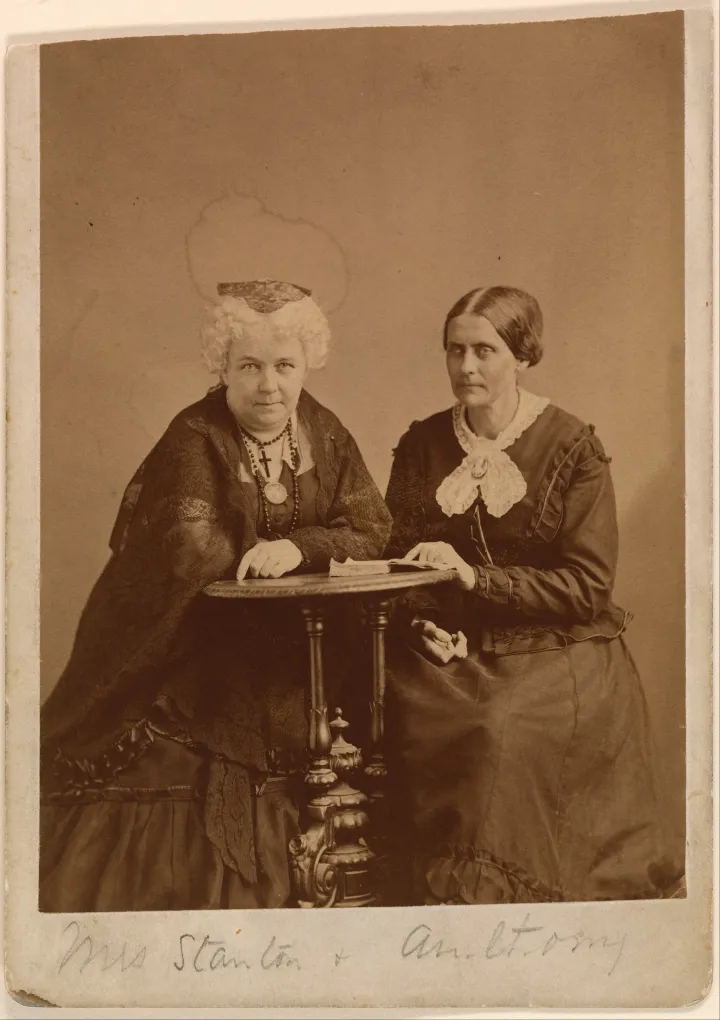
The election inspectors accepted her vote. They had registered her four days earlier, after she challenged their authority to refuse her. Fourteen other Rochester women also voted in that election. Anthony's act was deliberate, public and intended to force a constitutional question into court. Two weeks later, a federal deputy marshal arrested her.
A test of citizenship
The Civil War amendments had transformed the language of American citizenship, but they had not settled who could vote. The Fourteenth Amendment established national citizenship and equal protection. The Fifteenth prohibited denying the vote because of race, color or previous enslavement. It did not prohibit discrimination based on sex. Anthony and other suffragists argued that women's existing citizenship already carried voting rights, without the need for a new amendment.
That argument was being tested in several places. Rochester became especially visible because Anthony was already an experienced organizer, accustomed to petitions, conventions and a relentless speaking schedule. She and Elizabeth Cady Stanton had founded the National Woman Suffrage Association in 1869 to press for federal action. The ballot offered another route: exercise a claimed right, then make the government explain its refusal.
The strategy also exposed divisions within reform politics. Anthony and Stanton had opposed the Fifteenth Amendment when it omitted women, and their campaign included racist appeals that alienated former allies. Their demand for women's political equality existed alongside those failures. The legal challenge of 1872 should not require smoothing them away.
A verdict without deliberation
Anthony's trial took place in Canandaigua in June 1873. The federal prosecution concerned her vote in an election that included members of Congress. Her lawyer, Henry Selden, argued that she had voted believing she possessed the right. Her understanding of the Constitution, he maintained, mattered to the accusation that she had knowingly voted unlawfully.
Justice Ward Hunt rejected the defense. He directed the jury to return a guilty verdict, without allowing the jurors to deliberate. Anthony protested both the exclusion of women from political rights and the conduct of the proceeding. The court fined her $100, plus costs. She refused to pay.
Hunt did not imprison her for nonpayment. That left Anthony without the usual route for challenging her detention in a higher court. The prosecution had produced a conviction, but it had not supplied the decisive constitutional appeal she wanted. The official conviction record survives in the National Archives, a brief administrative document carrying the consequences of a much larger dispute.
From one ballot to an amendment
Anthony helped publish the trial proceedings in 1874, giving the arguments a life beyond the courtroom. Petitions continued to reach Congress. In 1875, the Supreme Court's decision in Minor v. Happersett rejected the claim that citizenship by itself guaranteed women the vote. Campaigners increasingly concentrated on changing constitutions and laws rather than persuading courts that voting rights were already theirs.
Anthony died in 1906. Ratification of the Nineteenth Amendment came in 1920, barring voting discrimination on account of sex. Other barriers, particularly those directed against Black voters, remained. The Rochester ballot had not opened the polls to all women, nor had the trial secured Anthony an acquittal. It had made a contradiction hard to ignore: a citizen could be prosecuted for attempting to participate in the government that claimed her allegiance.
Cover image: Napoleon Sarony / Smithsonian National Portrait Gallery, S.NPG.77.48 · Public domain